Retaining Walls That Last: A Twin Cities Drainage Guide
What actually causes a retaining wall to fail? Most people assume it's the materials—cheap blocks, rotting wood, poor craftsmanship. But after twenty years of building and replacing retaining walls across the Twin Cities, I can tell you: it's almost always drainage.
This surprises homeowners. They expect me to talk about stone quality or construction technique. Those matter, but they're not what separates walls that last decades from walls that fail in ten years. The difference is what's happening behind the wall, where water either drains away or builds up pressure until something gives.
Whether you're in Minneapolis, St. Paul, or anywhere across the metro, the same principles apply. This article covers what actually matters most in retaining wall construction, why drainage trumps material selection, what professional measurement looks like versus the shortcuts that cause problems, and how to evaluate whether a proposal will result in a wall that performs long-term.
The Real Reason Retaining Walls Fail
Here's the counterintuitive truth: material quality matters less than drainage. I've seen stone walls fail because drainage wasn't installed. I've seen wood walls outlast expectations because drainage was excellent. The material you choose is visible and feels important. The drainage behind the wall is invisible and actually determines the outcome.
The physics are straightforward. When it rains, water percolates through soil and collects behind your retaining wall. Without somewhere to go, that water creates hydrostatic pressure—force pushing against the wall face. Given enough pressure and time, any wall moves. It leans, bulges, and eventually fails.
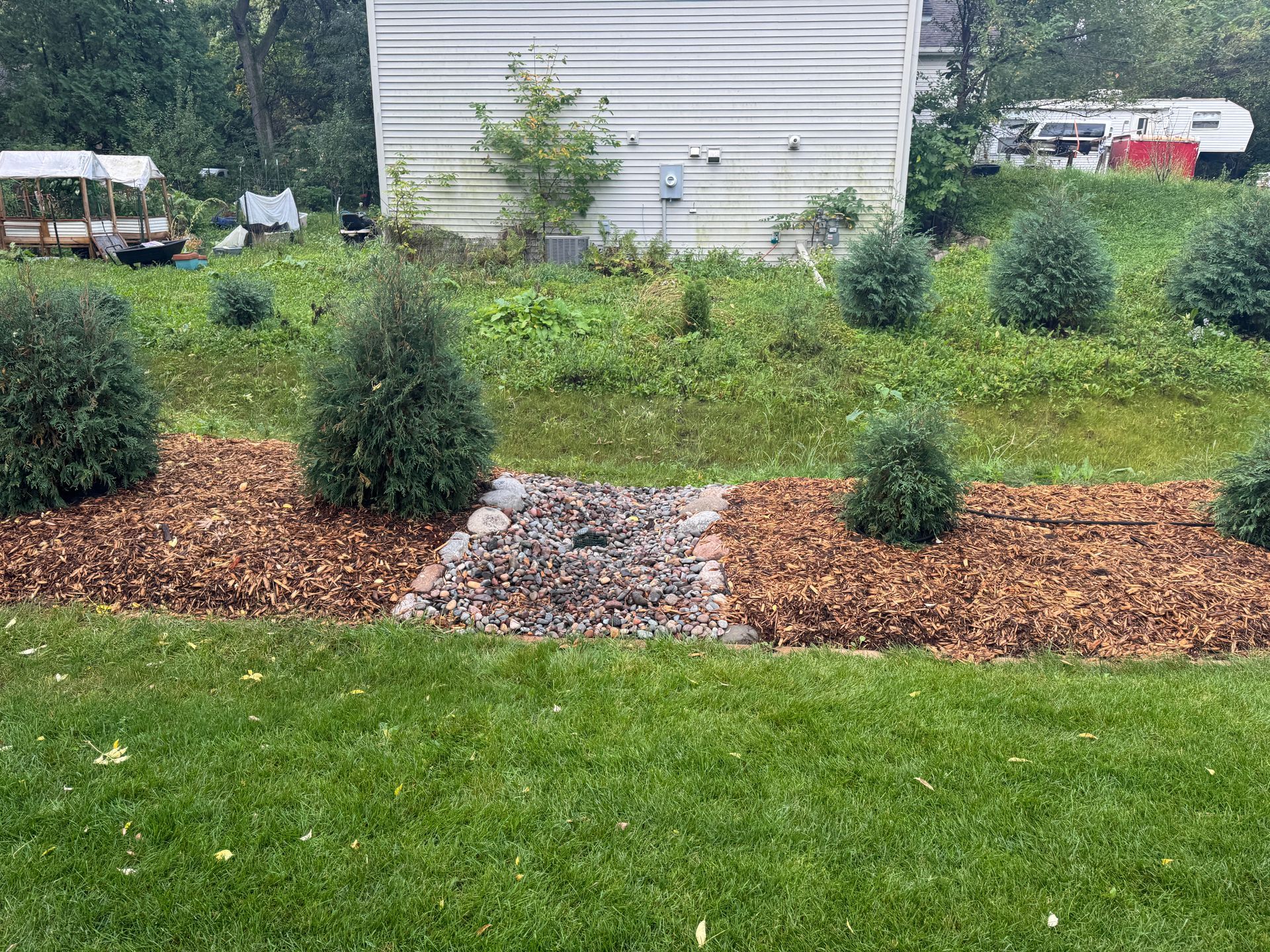
Proper drainage eliminates this pressure entirely. Gravel backfill behind the wall allows water to move freely instead of building up. A drain pipe at the base collects that water and channels it to an outlet—a storm drain, dry well, or daylight at a lower point on your property. With drainage functioning, there's no pressure buildup, no force pushing the wall, no failure mechanism.
When a retaining wall is built with durable materials, proper construction for the site conditions, and functioning drainage, there's no limit to how long it can last. That's not an exaggeration. Stone walls with proper drainage have been standing for generations. The walls I replace failed not because they wore out, but because drainage was skipped or failed.
Why "Eyeballing" Grading Causes Failures
The second most common cause of wall problems—after drainage—is imprecise grading. And this one often traces back to how the wall was built in the first place.
There's a meaningful difference between professional measurement and visual estimation. When we build, we're actually measuring with a level and grade rod—at this distance we need to be at this elevation. It's checked as we work and verified when it's done. The pitch behind the wall, the slope directing water to the drain pipe, the angle of the wall face—these are measured, not guessed.
What I see from other installations, and especially from builder-grade work on new construction: eyeballing. Someone looks at it and thinks "that looks right." But small errors compound. A pitch that's slightly off means water collects where it shouldn't. A drain pipe that doesn't maintain consistent slope traps water instead of moving it.
This is particularly common with builders. They subcontract grading, the work gets done quickly, and nobody has much investment in how it performs five years later. The builder has very little buy-in—it's just an expense they want done quickly. Problems surface three or more years after construction, long after warranties expire and the builder has moved on.
Across Minneapolis and St. Paul, I see this pattern in newer developments especially. The wall looked fine at closing. By year four or five, it's leaning.
Pro Tip: When evaluating retaining wall proposals, ask how grading and pitch will be verified. "We'll make sure it drains" isn't the same as "We measure elevation at set intervals and verify pitch with a level as we work." The difference in language often reflects the difference in method.
When Walls Need Engineering
Not all retaining walls are created equal. The four-foot threshold changes everything.
Walls under four feet can be built as gravity walls—they rely on their own mass and weight to resist soil pressure. Properly constructed with drainage, these walls are straightforward and don't require special engineering.
Walls over four feet need geo-grid reinforcement. This isn't optional or a premium upgrade—it's a structural requirement. Taller walls face exponentially more soil pressure. Without reinforcement, they're fighting physics with inadequate tools.
Geo-grid consists of layers of reinforcement material that extend back into the retained soil. These layers tie the wall to the earth behind it, distributing pressure across a much larger area. Instead of the wall face alone resisting all that force, the entire reinforced soil mass works together.
Skipping geo-grid on a tall wall doesn't save money. It guarantees eventual failure and a more expensive rebuild.
Properties with significant grade changes are common across the Twin Cities—St. Paul's Highland Park with its bluffs and elevation shifts, neighborhoods along the Mississippi River, Minneapolis hillside lots. These sites often require taller walls, which means engineering matters. A contractor who treats a six-foot wall the same as a three-foot wall doesn't understand the structural requirements.
What to Verify Before Signing a Contract
The challenge with retaining walls is that quality and shortcuts look identical on day one. Both walls stand straight and look solid. The difference shows up years later.
This makes proposal evaluation critical. Before signing, verify that the proposal specifies:
Materials: What blocks or stone, from what supplier. Vague descriptions like "quality retaining wall block" don't tell you anything.
Backfill: Should specify gravel, not native soil. If backfill isn't mentioned, it's probably being skipped.
Drainage: Drain pipe inclusion, diameter, and outlet location. Where does collected water go? This should have a clear answer.
Base preparation: How deep, what material, how compacted. The base determines whether the wall stays level.
For walls over four feet: Geo-grid specification—what product, how many layers, how deep into the retained soil.
Red flags include vague language about drainage, no mention of backfill material, prices significantly below other quotes, and no discussion of water outlet. A low price usually means skipped steps, and skipped steps mean premature failure.
When Professional Management Makes Sense
For larger landscape investments, professional project management provides real value. Finding qualified subcontractors, coordinating the work, ensuring proper specifications are followed, quality control throughout—this is worth paying for on significant projects.
If you're spending fifty, a hundred, or two hundred thousand dollars on landscape construction, having professional oversight is the insurance policy that ensures you get what you're paying for. You skip the headache of managing contractors yourself while getting accountability for the result.
I'll be honest about the flip side: for smaller standalone projects, professional management adds cost that may not make sense. If you just need a simple three-foot wall, getting quotes directly from wall contractors is reasonable. The value of oversight scales with project complexity and investment.
Pro Tip: Ask where the drain pipe outlets. Water collected behind your wall has to go somewhere—to a storm drain, dry well, or daylight at a lower point on your property. If a contractor can't show you on a site plan where that water ends up, the drainage plan isn't complete.
How Location Affects Your Wall
The same construction principles apply everywhere, but soil conditions and site challenges vary across the Twin Cities.
Clay-heavy areas like Plymouth, Maple Grove, and parts of the west metro make drainage even more critical. Clay doesn't percolate—water that gets into clay soil stays there. Walls in clay need robust drainage because there's no natural escape route for water.
Sandy areas like Blaine, Fridley, and the northeast metro drain more naturally. This doesn't mean you can skip drainage, but the soil works with you rather than against you.
Urban cores in Minneapolis and St. Paul present variable conditions. Soil has often been disturbed by previous construction. Older infrastructure—buried utilities, abandoned foundations, previous drainage systems—complicates new work. Permit requirements add complexity and timeline.
Established neighborhoods across both cities often have retaining walls built in the 1980s and 1990s that are now reaching end of life. These walls frequently lack proper drainage because standards were different then. If you're dealing with an aging wall, replacement with proper drainage is usually better than repeated repairs.
Properties in St. Paul's Highland Park, Summit Hill, and Mac-Groveland neighborhoods commonly have elevation changes that require retaining walls. Minneapolis hillside properties face similar conditions. Understanding what's typical for your specific area helps set realistic expectations for what construction requires.
Frequently Asked Questions
How much does a retaining wall cost in the Twin Cities?
Cost ranges significantly based on wall height, total length, material selection, site access, and soil conditions. A short gravity wall under four feet with good access costs considerably less than a tall reinforced wall on a difficult site. The variables that drive cost most are wall height (over four feet requires geo-grid), length, drainage complexity, and whether you're replacing an existing failed wall. One thing worth noting: material selection matters less to cost than most people assume. Don't overspend on premium block while underspending on what's behind it—the drainage and base work that actually determine longevity.
Do I need a permit for a retaining wall in Minneapolis or St. Paul?
Generally yes for walls over four feet, though requirements vary by specific circumstances and location. Both Minneapolis and St. Paul have permit requirements for larger walls, and some situations trigger permits for shorter walls too—proximity to property lines, impact on drainage patterns, or total project scope. Check with your city's building department before starting. A qualified contractor handles permit requirements as part of the project, including any engineering documentation required for taller walls.
How long should a retaining wall last?
A properly built retaining wall with functioning drainage has no defined lifespan. Stone walls can last indefinitely when drainage, materials, and construction are all correct. What shortens lifespan is failed drainage, skipped reinforcement on tall walls, and wood materials in soil contact. The walls I replace usually failed not because they wore out, but because one of these elements was missing from the start. If you're building new, building right means building once.
What's the difference between a gravity wall and a reinforced wall?
Gravity walls rely on their own mass and weight to resist soil pressure—the wall is heavy enough to stay in place. Reinforced walls use geo-grid layers that extend back into the retained soil, tying the wall to the earth behind it and distributing pressure across a larger area. The four-foot rule determines which you need: walls under four feet can be gravity construction; walls over four feet require geo-grid reinforcement. Using the wrong method for your wall height means eventual failure regardless of material quality.
How do I know if my existing retaining wall has drainage problems?
Warning signs include visible leaning or bulging, water seeping through the wall face after rain, gaps opening between blocks or timbers, and soil washing out behind or beneath the wall. The challenge is that drainage failure is often invisible until wall movement begins—by the time you see leaning, the drainage has been failing for years. For walls showing any warning signs, or walls over twenty years old even without obvious symptoms, professional assessment reveals what's actually happening behind the visible surface. Catching problems early costs less than emergency replacement after failure.
The Invisible Determines the Outcome
The irony of retaining wall construction is that the most important elements disappear once the project is complete. You can't see the gravel backfill. You can't see the drain pipe. You can't verify geo-grid depth by looking at the finished wall. What you can see—the wall face, the cap stones, the finished appearance—matters least to long-term performance.
This is why contractor selection and proposal evaluation matter so much. The finished wall looks identical whether it was built right or built cheap. Both stand straight on day one. The difference emerges years later, when one wall is still performing perfectly and another is leaning into the neighbor's yard.
For Twin Cities property owners planning retaining wall projects—or evaluating walls showing signs of age—understanding what actually matters is the foundation for good decisions. The visible details are easy to compare. The invisible ones determine whether you're building once or building twice.
Schedule a consultation to discuss your retaining wall project and learn what proper construction looks like for your specific site.
KG Landscape serves Minneapolis, St. Paul, and communities across the Twin Cities metro with retaining wall construction and drainage solutions built to last.
Ready to Start on Your Next Project?
Call us at (763) 568-7251 or visit our quote page.