What Makes A Good Hedge Plant?

Hedges are perfect for screening and for replicating a fence without the cost or hassle of a fence. They are particularly great for very formal landscapes. A good hedge plant should have dense growth habit. The dense growth habit gets that hard to see through hedge if you’re using it for screening. If the plant you choose has a pyramidal shape, you’ll want to plant them a little closer together.

Evergreen or deciduous hedge?

There are two big choices when it comes to the type of hedge to plant, evergreen or deciduous. They both have their pros and cons and we will discuss those here.  Evergreens last all year long so they provide screening and interest even in winter which is valuable if you think you will be outside in the winter and early spring/late fall. But, unlike deciduous plants, the evergreens do not flower and provide different interest throughout the year. You won’t get the beautiful white or lavender flowers from a lilac in the spring/summer or the fire colored leaves from dogwoods. Also, evergreens are about twice the cost of deciduous. We believe that every landscape is different so consulting with a landscape design professional is recommended to find the best use of your money for your yard.
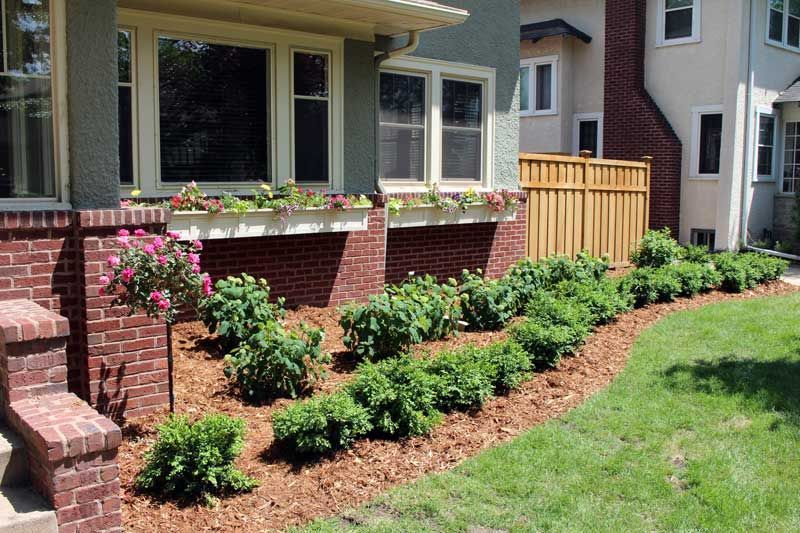
Well-maintained front yard with brick house, flower boxes, and neatly trimmed green bushes.

LOW HEDGE

These are fantastic for a more modern, formal plant bed, especially in the front yard. Boxwoods are the best option for this type of hedge (we like green velvet for Minnesota climates).They grow slowly, are low lying, and can be easily shaped. Alpine currant also work and arborvitae or barberry.

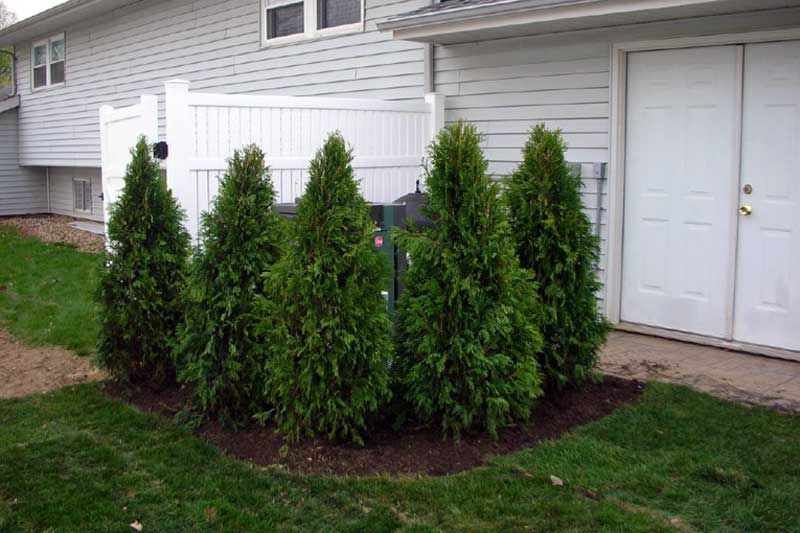
Five green evergreen trees planted in a garden bed near a white fence and building.

MID-SIZE HEDGE

We use mid sized hedges for hiding air conditioner units or other unsightly objects around a home. They’re also nice along neighboring yards if you don’t have a patio or true outdoor space (like you want some privacy but not a ton). Specific plants that we use often for these applications include lilacs, burning bush, coneyester, ninebark, and dark green yew.

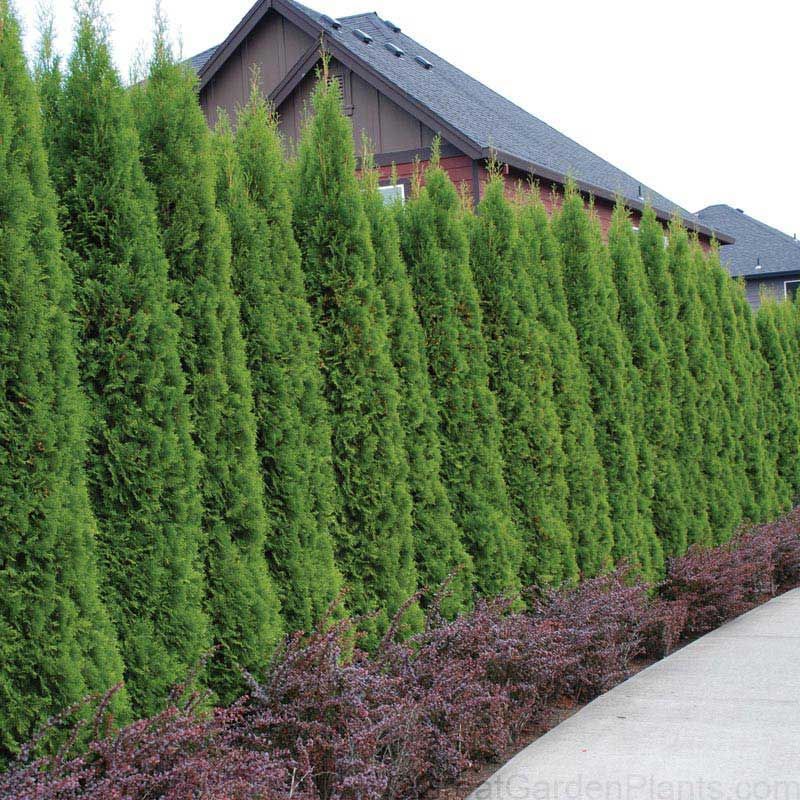
A row of tall, green conifer trees forming a hedge, with a low purple bush beneath, next to a sidewalk.

LARGER HEDGE

The larger hedge is of course used when you want the ultimate privacy. This comes with a high cost but the results are undeniable. We love using these two ypes of plants for a large one: holmstrup arborvitae, techny arborvitae, upright yew japanese, and pinnacle birch.

Again, if you’re looking for a hedge for your plant bed, we strongly suggest you consult with a trusted, experienced landscape designer who can help you get the most value for your money.

Ready to Start on Your Next Project?

Call us at (763) 568-7251 or visit our quote page.
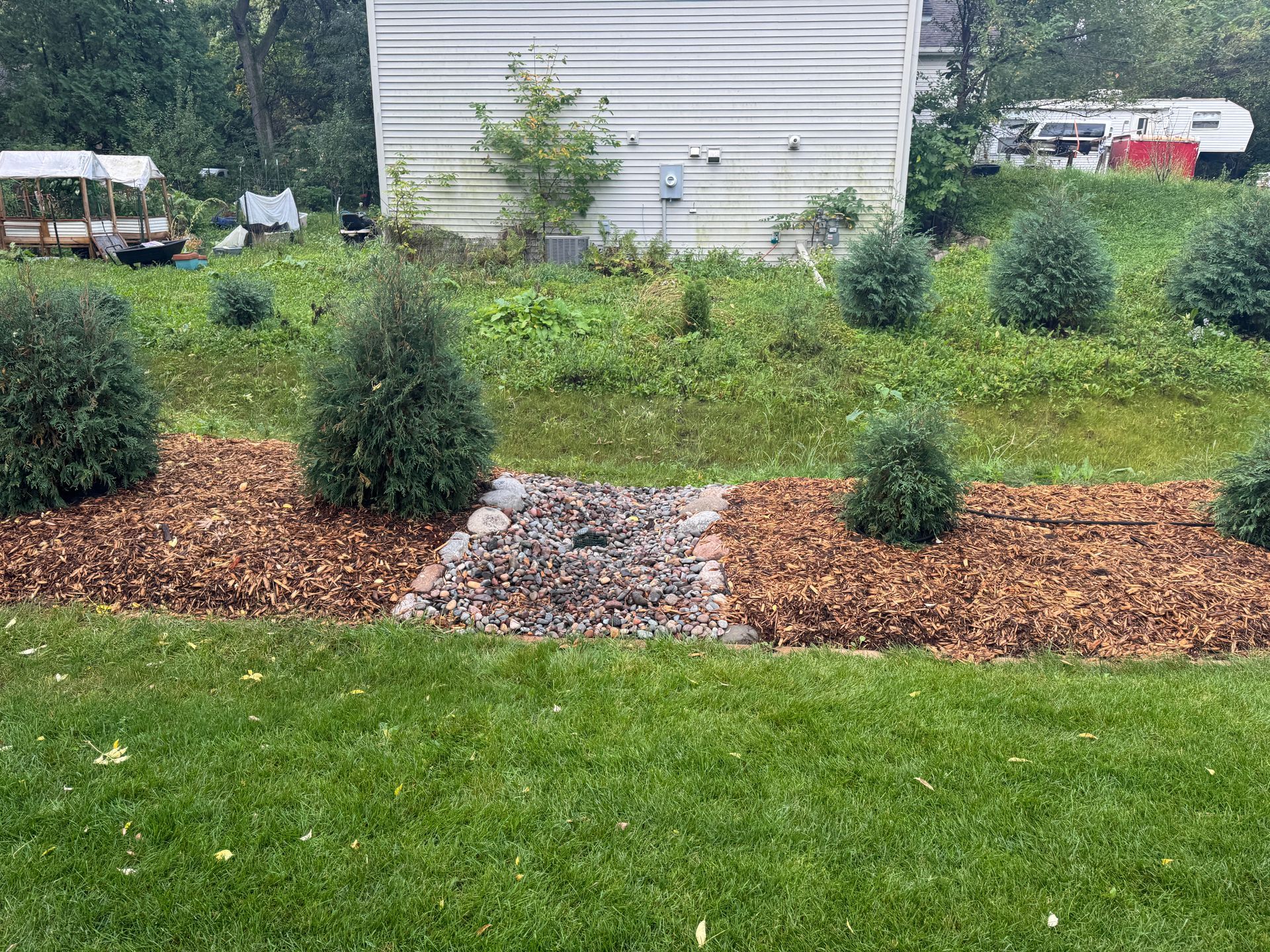
Picture of a side yard KG Landscape regraded to solve a problem in Minneapolis
By Kent January 26, 2026
Struggling with side yard water problems in Minneapolis–St. Paul? See when French drains or re-grading works best for small yard drainage fixes.
By Kent Gliadon January 22, 2026
Protect your Plymouth patio and deck from frost heave by installing French drains that keep clay soil dry around hardscape and footings.
Backyard fire pit area with plantings around it
By Kent Gliadon January 15, 2026
One Edina family had a 25-foot slope and nowhere for their kids to play. See how we turned it into a lawn, sport court, and fire pit.
Front yard landscaping at corner of the garage with waist bin storage
By Kent Gliadon January 14, 2026
See how one Plymouth project turned an overlooked side yard into a design feature that matches the rest of the property.
By Kent Gliadon January 12, 2026
A Plymouth family turned a steep, unusable side yard into a private hot tub area with stone steps, drainage solutions, and boulder walls.
By Kent Gliadon January 11, 2026
See how a Plymouth family replaced basic builder landscaping with a custom flagstone walkway, strategic plantings, and a front yard that matches their home.
By Kent Gliadon January 9, 2026
Learn how French drains solve drainage problems in tight Minneapolis side yards without sacrificing walkway space or function.
By Kent Gliadon January 7, 2026
Stop roof water and sump pump discharge from saturating your Plymouth yard. Learn how to tie everything into one drainage system.
By Kent Gliadon January 3, 2026
Where All That Water Is Actually Coming From  Your backyard stays wet. You've noticed the soggy spots, the mud, maybe some frost heave damage to your patio or fence. You're thinking about French drains. But before you start digging trenches, look up. A huge amount of water hitting your yard isn't coming from rain falling on the lawn. It's coming from your roof. A moderate rainfall on a typical Plymouth home puts hundreds of gallons through your gutter system. Every bit of that water exits through your downspouts. Where it goes from there determines whether you have a drainage problem or not. Then there's your sump pump. Every time it kicks on, it's pushing water out of your basement and into your yard. On a wet property, that pump might run dozens of times a day. All that water has to go somewhere. If your downspouts dump water next to your foundation and your sump pump discharges into a side yard that drains toward your backyard, you're adding water to an already saturated situation. French drains alone might not be enough. You need to manage the sources. The Problem With Surface Discharge Most downspouts in Plymouth end with a splash block or a short extension that dumps water a few feet from the foundation. That's technically moving water away from the house, but not far enough.
By Kent . December 6, 2025
Why wooden lake steps always fail—and why Minnetonka and Orono homeowners are switching to stone. A contractor explains the replacement.