Custom Patios That Transform Plymouth Backyards
The Real Difference a Custom Patio Makes
In Plymouth, backyards tell the story of how a home is lived in. You can always tell when a patio was built as an afterthought — cracked pavers, uneven surfaces, a soggy corner where water never drains right. That’s what happens when projects start without the right design and drainage plan. The truth is, Minnesota’s freeze-thaw cycles and Plymouth’s heavy clay soils make patios one of the most technically demanding features you can build.
That’s exactly why every patio we design starts with a clear purpose: to create a space that looks beautiful and holds up to the realities of our environment. A well-built patio isn’t just a surface for furniture — it becomes an extension of the home, where people gather for coffee in the morning, cook dinner outside, or sit around a fire feature on cool fall evenings. And when it’s done right, it solves a lot of problems most homeowners don’t even realize they have — from drainage that keeps basements dry to grading that turns uneven ground into usable, level space.
Whether it’s a flagstone terrace tucked behind a walkout or a large paver courtyard for entertaining, the transformation goes beyond aesthetics. It’s about creating a backyard that works every day — not just on perfect summer afternoons.
Why Plymouth Yards Need Smart Patio Design
Plymouth’s biggest challenge isn’t design style — it’s the ground beneath your feet. The heavy clay soil that defines this area doesn’t drain well, which means water tends to sit near patios and foundations. When that trapped moisture freezes, it expands, and the pressure pushes pavers and concrete up, down, and apart. That’s what causes the cracks, uneven surfaces, and patio edges that start pulling away from your home after just a few seasons.
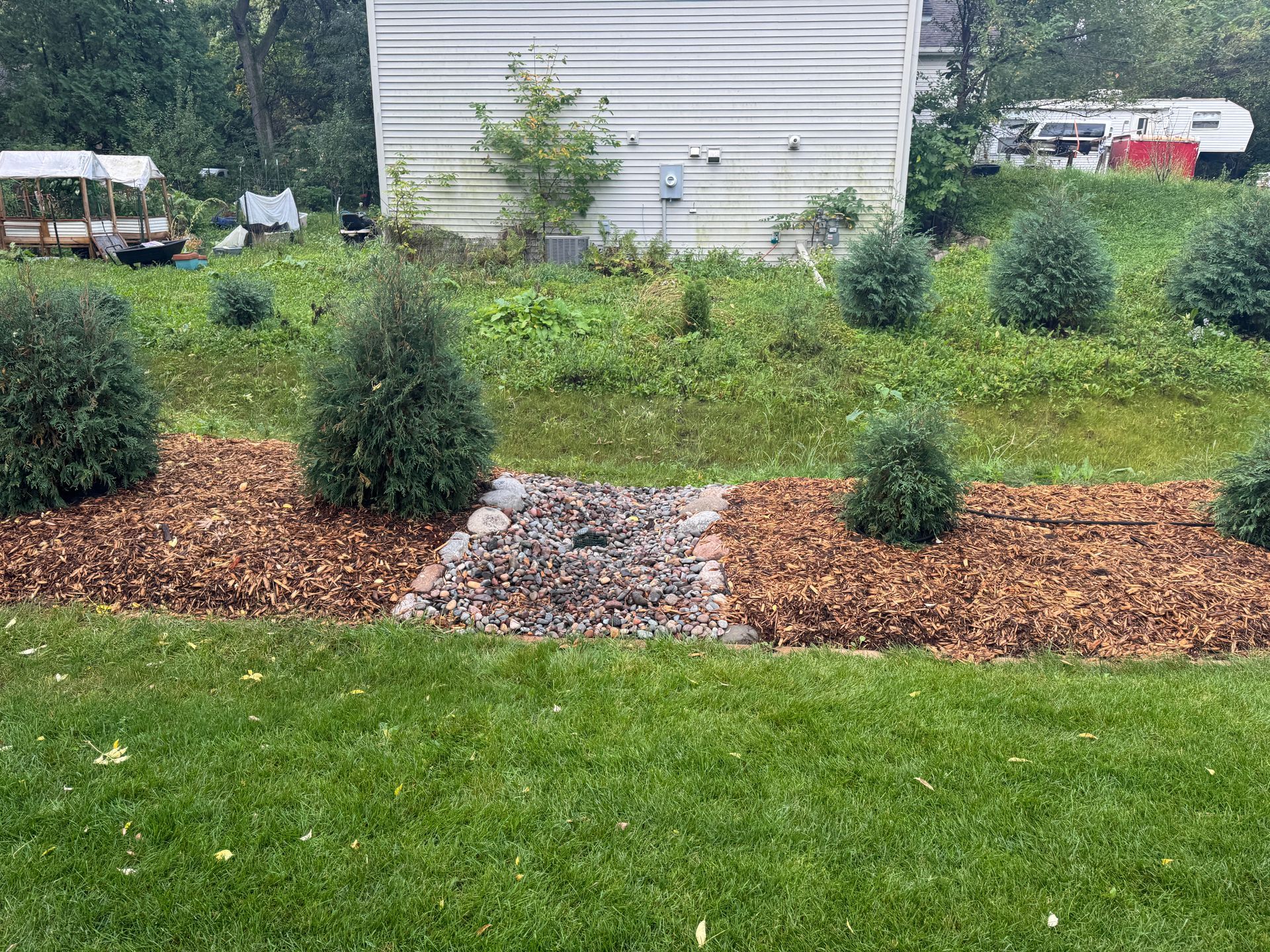
We’ve replaced plenty of patios that failed because nobody addressed the soil conditions or drainage. It’s not that the materials were wrong — it’s that the system underneath wasn’t designed to handle Plymouth’s reality. Our approach starts below the surface: compacted base layers, drain tile systems where needed, and proper slope that directs water away from both the patio and the home. Every detail matters because once the frost hits, there’s no room for error.
Homeowners often come to us after growing tired of maintaining an old wooden deck that just doesn’t hold up anymore. Replacing a deck with a custom paver or natural stone patio solves multiple problems at once. You get a long-lasting space that doesn’t require staining or replacement boards every few years, and you eliminate the feeling of being “up on a platform” that disconnects you from the yard. With a patio, you step directly into your outdoor space — it feels grounded, permanent, and more natural to live on.
And because we tie every patio project to its surroundings — grading, planting, retaining walls, even lighting — it becomes part of the overall landscape design rather than a separate structure sitting on top of it. That’s what makes the difference between a backyard that just looks nice and one that truly functions as an outdoor living space.
Materials That Work With, Not Against, Minnesota Weather
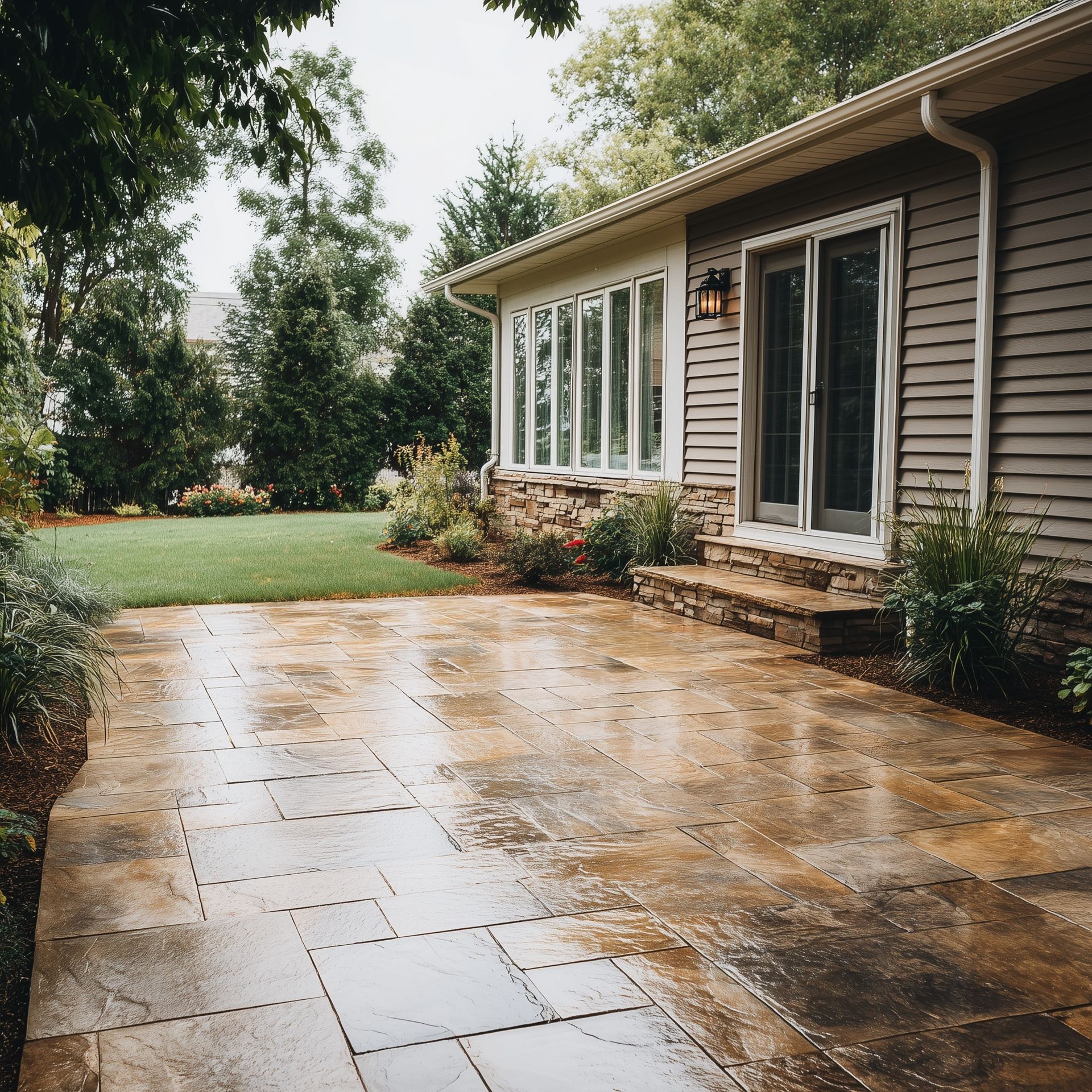
Choosing the right materials for a Plymouth patio isn’t just about looks. It’s about performance in a climate that tests every joint, seam, and base layer year after year. We work with premium concrete pavers, natural flagstone, and high-end materials that can handle both summer heat and deep winter freeze without cracking or shifting.
For homeowners used to the look of concrete slabs, the durability and repairability of pavers often come as a surprise. If one ever shifts or cracks, it can be replaced individually instead of tearing out the whole surface. Natural stone — especially local varieties — offers an unmatched, timeless look, but it still needs the same engineering underneath: compacted base, proper drainage, and footings where required.
In some cases, especially near retaining walls or outdoor kitchens, we’ll tie the patio structure into those elements for stability and seamless design. That integration is one reason we don’t build pergolas or outdoor structures unless we’re also doing the patio — it all has to be engineered together to handle Minnesota’s movement and moisture.
The details behind the beauty are what make the difference. Frost-resistant joint sand, the right edge restraints, and geotextile fabric layers that prevent base contamination — these things don’t get noticed in photos, but they’re what keep a patio looking level and lasting decades instead of years.
Transforming How Families Use Their Yards
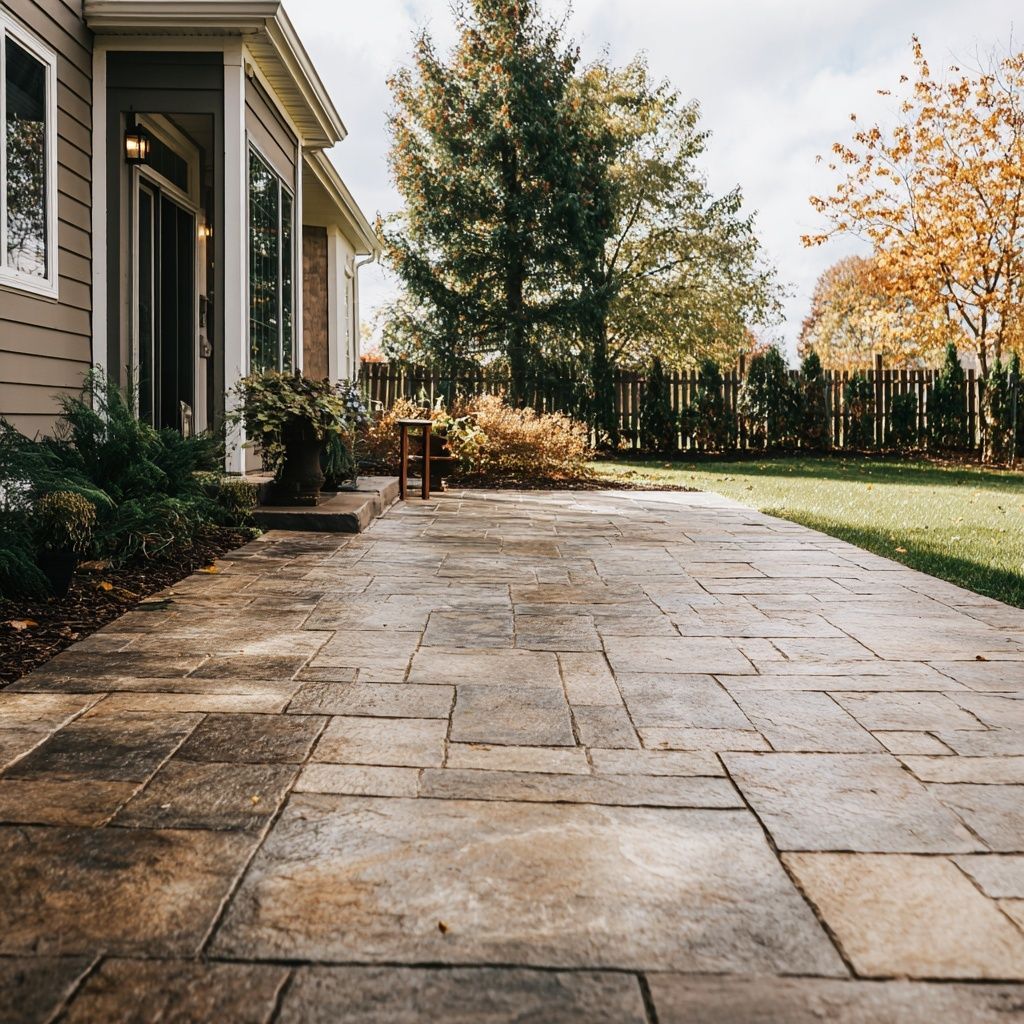
When homeowners talk about their dream backyard, it’s rarely about the materials — it’s about what they want to do there. They want a place to unwind, entertain, or just enjoy the outdoors without dealing with maintenance headaches. That’s why custom patios have become the foundation of modern outdoor living in Plymouth.
We design patios that naturally connect with how people already use their homes. A dining area outside the kitchen doors for easy serving. A built-in seating wall that doubles as overflow seating for parties. A fire feature or outdoor fireplace that makes the space feel inviting in all four seasons. These aren’t luxuries — they’re what make the investment worthwhile.
Every family has different needs, but they all share one thing: they want a space that lasts. When you invest in a professionally designed patio, you’re not just paying for materials — you’re investing in drainage that protects your foundation, grading that keeps your yard usable, and craftsmanship that holds up year after year.
We’ve seen firsthand how the right patio can transform a property — and a lifestyle. Families who used to avoid their backyards because they were uneven or muddy suddenly find themselves outside every evening. Homeowners who were constantly dealing with deck maintenance now spend that time relaxing instead. It’s not about selling luxury — it’s about creating something that genuinely works, day in and day out, through every season Minnesota can throw at it.
Ready to reimagine your Plymouth backyard?
Start with a consultation to see how a custom patio can turn your uneven or high-maintenance yard into a durable, beautiful, and fully usable outdoor space that lasts for decades.
FAQs
How long should a well-built patio last in Plymouth?
When built correctly for Plymouth’s clay soil and freeze-thaw cycles, a paver or natural stone patio should last 30 to 50 years with minimal maintenance. The surface itself rarely fails — it’s usually drainage or base prep that causes issues. That’s why we use compacted aggregate bases, proper slope, and drain tile where needed. If one paver ever shifts or cracks, it’s easily replaced without disturbing the rest. Regular joint sand maintenance every few years helps prevent weeds and keeps the surface tight, but overall, a professionally built patio should stay structurally sound for decades.
What’s the best material choice for Minnesota weather?
Concrete pavers and natural stone both hold up well when properly installed, but pavers offer the most flexibility for repair and adjustment. They handle movement better than poured concrete, which tends to crack in freeze-thaw conditions. In Plymouth, where heavy clay amplifies ground expansion, pavers make long-term sense. Natural flagstone offers a more organic, timeless look, but both materials require the same foundation principles — compacted base, geotextile fabric, and correct drainage. The key is how it’s built underneath, not just what it looks like on top.
Can a patio replace my existing deck?
Yes — and for many Plymouth homeowners, it’s the smarter long-term investment. Decks require ongoing maintenance, and with today’s lumber costs, they’re not necessarily cheaper anymore. Patios don’t rot, don’t need staining, and connect directly to the yard, making the space feel larger and more natural. When we replace decks with patios, we often regrade the yard at the same time to create smooth transitions and better drainage, especially if the old deck caused water to pool against the foundation. The result is a seamless outdoor space that feels built to last.
Why is drainage such a big deal for patios?
Because in Plymouth, it’s everything. The heavy clay soil here holds water like a bowl. Without proper grading and sub-base design, that trapped moisture freezes in winter, expands, and causes movement in patios and nearby foundations. Drainage is the invisible insurance policy that protects your investment. We design each patio with a subtle pitch — typically between ⅛” and ¼” per foot — to move water away from the home. In some cases, we install underground drain tile or French drains beneath the patio to prevent water from saturating the base. You’ll never see it, but you’ll definitely notice the difference over time.
When’s the best time to build a patio in Minnesota?
Spring through early fall is ideal for construction, but winter is the best time to plan. That gives us time to design, handle permits if needed, and schedule your project before the busy season. Building during summer ensures the base materials compact properly and moisture levels are stable. If you’re replacing a deck, early spring construction lets you enjoy the patio for the entire season. The key is to plan ahead — by the time the first warm weekend arrives, the best contractors in Plymouth are already booked months out.
Ready to Start on Your Next Project?
Call us at (763) 568-7251 or visit our quote page.