Front Yard Landscaping for Curb Appeal in Minneapolis and the Twin Cities
Landscaping for curb appeal involves thoughtful planning and creative execution. It transforms ordinary spaces into inviting outdoor areas that capture the eye and heart. Whether you aim to impress potential buyers or simply wish to create a more enjoyable living environment, investing in curb appeal pays off in multiple ways.
In this guide, we get into how to maximize the beauty and functionality of your front yard through effective landscaping strategies. We aim to provide practical advice and inspiration for homeowners looking to enhance their outdoor space.
What is Curb Appeal and Why is it Important?
Curb appeal goes beyond mere aesthetics; it signifies your home's overall allure and charm from the first glance. It's a crucial factor for homeowners due to its significant impact on perception and value.Curb appeal defines how appealing your property looks from the street, highlighting the vital role of front yard curb appeal landscaping in creating a welcoming and attractive home exterior.
Effective landscaping strategies can transform a dull front yard into a captivating entrance, setting the tone for the entire property.
Why is Curb Appeal Important for Homeowners?
- Increase property value : Homes with strong curb appeal typically fetch higher prices on the market. A well-executed front yard landscape design not only adds beauty but also contributes to the overall valuation of your property.
- Make a great first impression: A visually appealing front yard creates a positive first impression for visitors or potential buyers, signaling that the home is well cared for.
- Boost your mood and neighborhood pride:
A beautiful front yard enhances not just your home’s appearance but also your mood and the pride of your neighborhood, fostering a sense of community and belonging.
Why Most Front Yards Don't Work
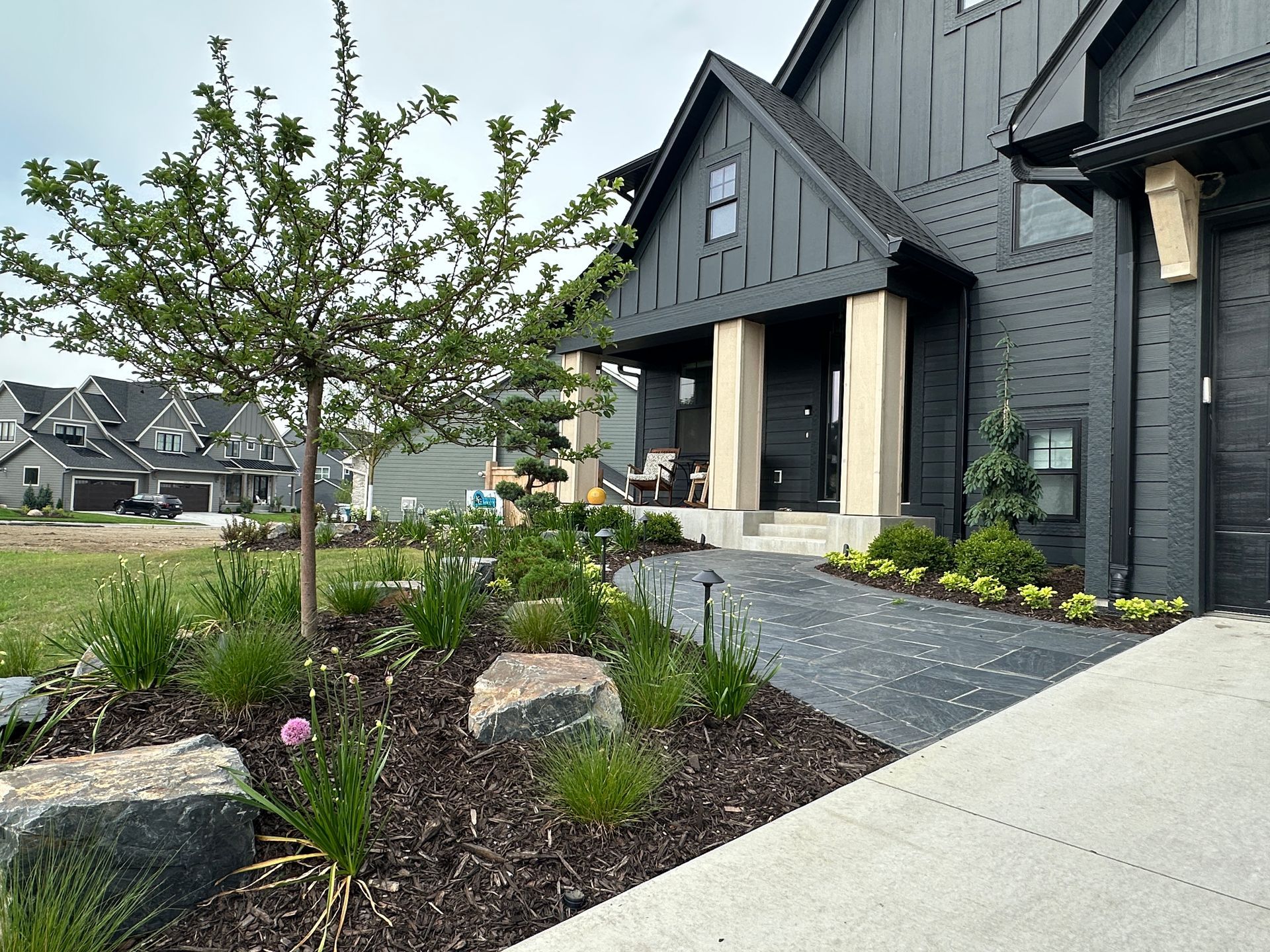
Most front yards in the Twin Cities look fine. Shrubs along the foundation, a tree or two, mulch beds with clean edges. The problem is they don't do anything for the house. The landscaping doesn't connect to the architecture. It doesn't create any sense of arrival. It's just there.
This is especially true for new construction. Builders install landscaping to make the house look finished at closing. They choose plants that are cheap and easy to install. The walkway is a straight shot of concrete from the driveway to the front door. It meets code and checks a box, but it doesn't reflect the quality of the home or the people living in it.
We see this constantly in Plymouth, Edina, Minnetonka, and throughout the Minneapolis metro. Homes worth $500,000 to $4 million with front yards that could belong to any house on any street. The inside is custom. The outside is generic.
What Changes When the Front Yard Is Designed
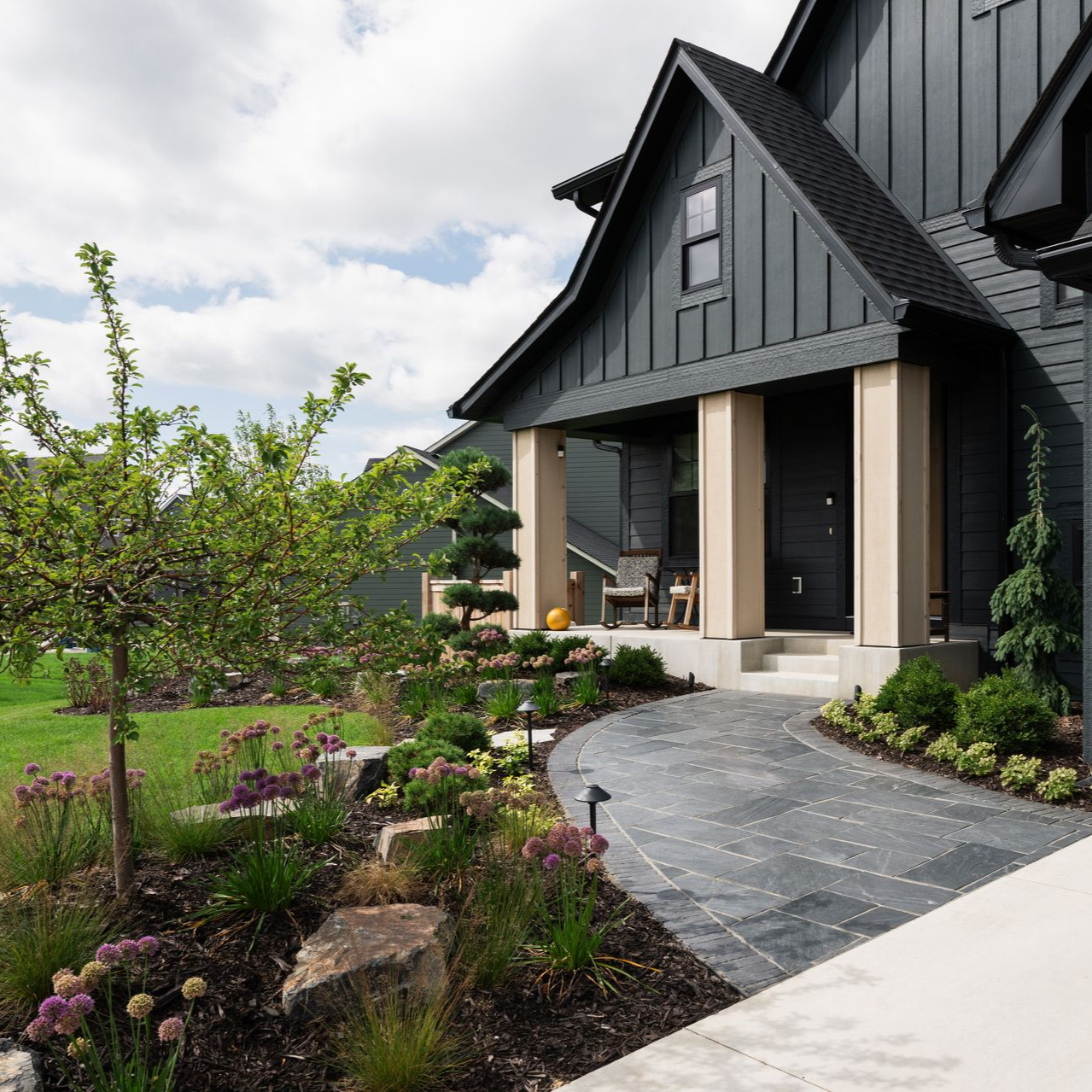
A designed front yard connects the landscape to the house. It creates privacy where you need it. It gives you something to look at in every season. Walking up to the front door feels like arriving somewhere, not just approaching a building.
One example: a home with dark modern siding and a standard concrete walkway. The house looked sharp. The front yard looked like it came with a different house. We replaced the concrete with cut black flagstone, added boulder outcroppings to give the flat lot some dimension, and planted screening trees so the entry felt private. Took about two weeks. Now the front yard matches the house.
That's what design does. The walkway connects to the architecture. The plantings connect to the seasons. The whole front yard connects to how you feel when you pull into the driveway.
Want to see what's possible for your front yard? Request a free consultation or call us at (763) 568-7251.

Common Mistakes We See in Twin Cities Front Yards
After 20 years of redesigning front yards across the metro, we see the same problems over and over.
Planting too close to the foundation. Builder landscaping often puts shrubs right against the house. Those plants grow. In five years, they're pressed against the siding, trapping moisture and blocking windows. Plants need room to reach their mature size without crowding the structure.
Ignoring winter. A front yard full of perennials looks great in July and empty in January. If there's no evergreen structure, no boulders, nothing with year-round presence, you're looking at brown mulch for five months.
Skipping drainage. Downspouts dump water onto walkways. It erodes beds, pools against foundations, and turns into ice sheets in winter. Underground drainage costs more upfront but prevents expensive problems later.
Choosing plants that barely survive here. Minnesota is Zone 4b. Winters regularly hit 20 below. Plants rated for Zone 5 or 6 might make it through a mild winter, then die the next year. We choose plants that thrive here, not ones that struggle.
No lighting. A front yard that disappears at 5pm for four months of the year is only doing half its job.
Pathway lights and a few uplights extend the value of everything else you've invested in.
The Elements That Matter
Walkways
The walkway is the first thing people interact with. A straight concrete path says nothing about the home. A flagstone walkway with natural variation says something different. So does a paver walkway with clean geometric lines.
Material matters. In Minnesota, you need stone or pavers that handle freeze-thaw cycles without cracking. The Interlocking Concrete Pavement Institute has technical resources on paver durability for cold climates.
Steel edging keeps lines crisp for a modern look. Tumbled edges work better for traditional homes. The walkway should feel like it belongs, not like it was added as an afterthought.
Plantings
Plants provide structure, color, and seasonal interest. But too many front yards rely entirely on flowering perennials. In the Twin Cities, that means bare stems and brown mulch from November through April.
The bones of a good front yard are evergreens and structural shrubs. They hold their shape through winter. Then you layer in flowering elements for spring, summer, and fall. Flowering trees for early color. Hydrangeas or similar shrubs for summer. Ornamental grasses for texture and movement into fall.
Minnesota falls in USDA Hardiness Zone 4b. Plant selection needs to account for that. We choose plants that thrive here, not ones that barely survive.
Boulders and Mounding
Flat front yards feel static. Adding elevation through soil mounding creates visual interest even when nothing is blooming. Boulders add structure that works year-round, especially in winter when they're dusted with snow.
Most new construction homes have a raised concrete stoop at the front door. Stone and plantings can wrap around it and soften the edges. Boulder size and quantity depend on the scale of the house. A smaller rambler needs different proportions than a large colonial.
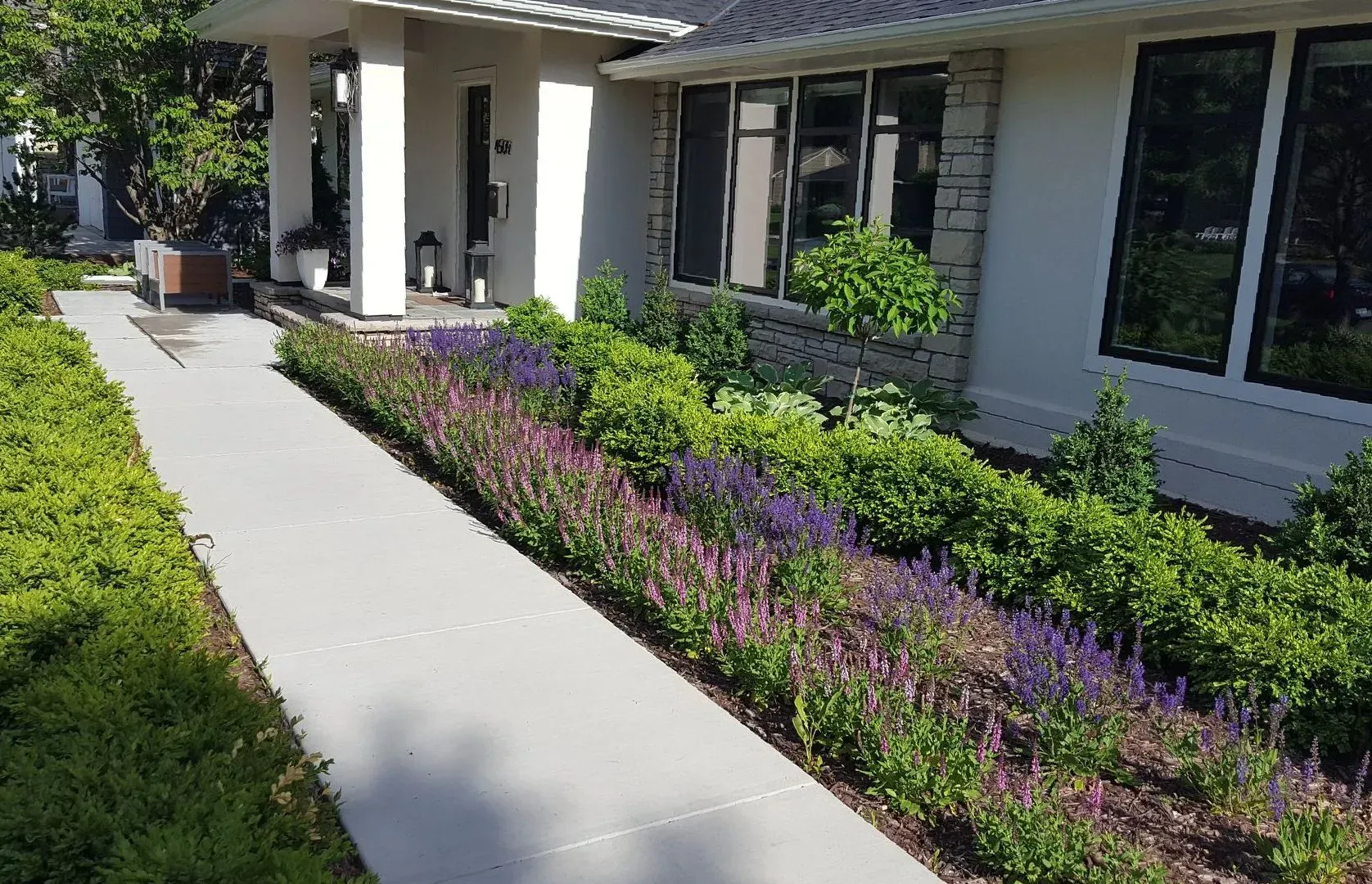
Drainage
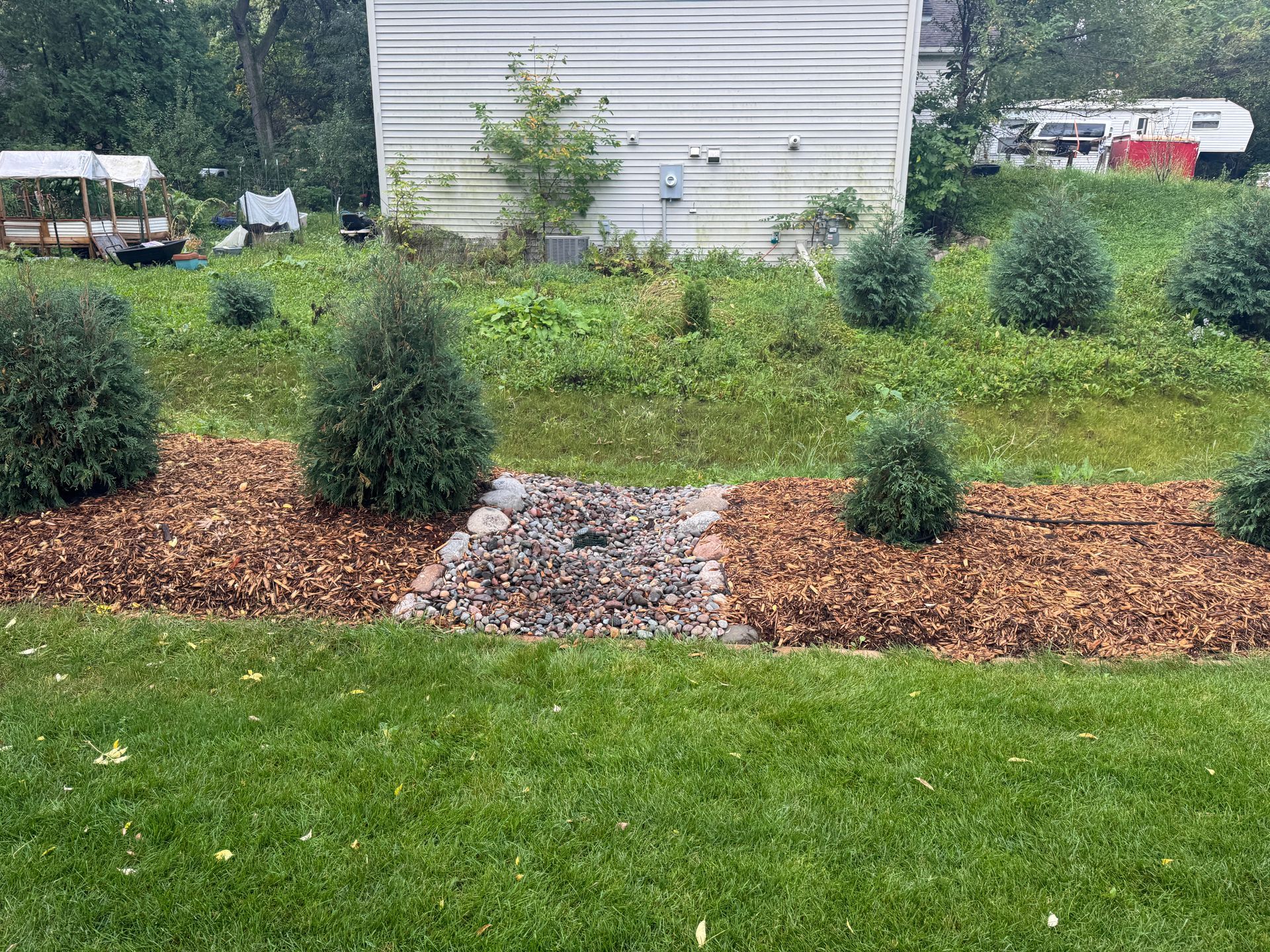
Downspouts ruin a lot of front yards. Water dumps onto the walkway, erodes beds, creates ice in winter. Most builder landscaping just lets downspouts discharge onto the surface.
We connect downspouts to underground drainage systems. Water travels through buried pipes and discharges through a pop-up emitter near the street or into a rain garden. Protects the walkway. Prevents ice buildup. Eliminates the ugly extensions.
More on how we handle downspout and drainage solutions across the Twin Cities.
Lighting
A front yard should look as good at night as it does during the day. Pathway lights let you see where you're stepping. Uplights on focal point trees and evergreens create drama after dark. Lights on porch columns tie the lighting to the house.
In Minneapolis, it's dark by 5pm for several months. Without lighting, your front yard disappears for half the day during winter.
Learn more about our landscape lighting design options for Twin Cities homes.
Privacy at the Front Entry
One thing most front yard designs ignore is what you see when you're standing at the front door. Usually you're looking at the neighbor's house, their garage, their driveway.
Strategic tree and shrub placement changes that. We position plants to block sight lines to neighboring properties. When you walk up the front path and look toward the door, your eye stops at the plantings instead of wandering next door.
The Arbor Day Foundation has resources on selecting trees for screening. In Minnesota, we often use serviceberry, crabapple varieties, or evergreen screens depending on the space and desired density. Most screening trees need several years to fully fill in, so we plan for both the immediate look and the long-term result.
This is something we think about on every front yard project. What do you see from the street? What do you see walking up? What do you see standing at the door?
Ready to Transform Your Front Yard?
We've designed hundreds of front yards across Minneapolis, Plymouth, Edina, and the Twin Cities metro. Every project starts with a conversation about your home, your goals, and what's possible.
See our front yard portfolio | Request a consultation | Call (763) 568-7251
Designing for Twelve Months
A front yard that only looks good from May through September disappoints you for half the year.
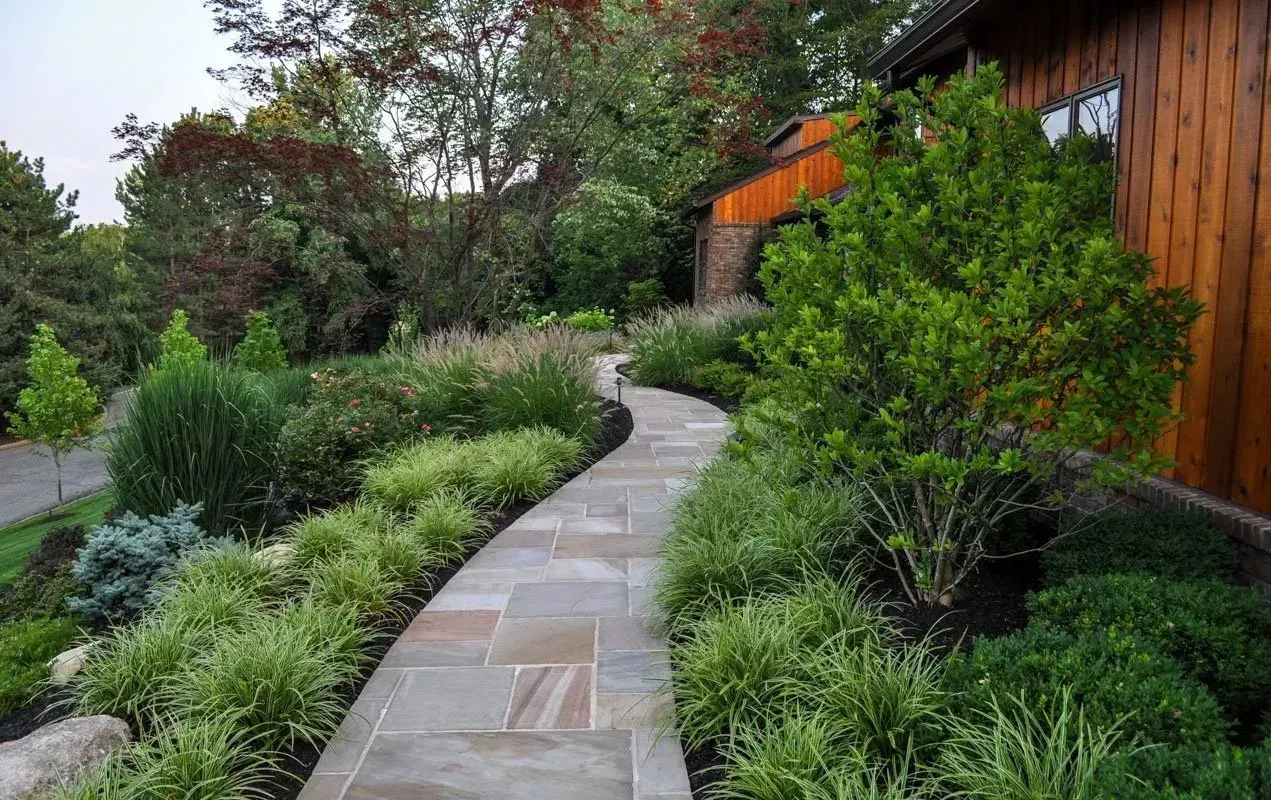
Minnesota has four seasons, and your landscaping needs to hold up through all of them. Spring brings flowering trees and emerging bulbs. Summer is when shrubs and ornamental grasses hit their peak. Fall turns the grasses golden and reveals the structure underneath as perennials die back.
Winter is where the design shows. Evergreens hold color. Structural shrubs hold shape. Boulders dusted with snow become focal points. If the front yard still looks intentional in January, the design worked.
When to Start Planning
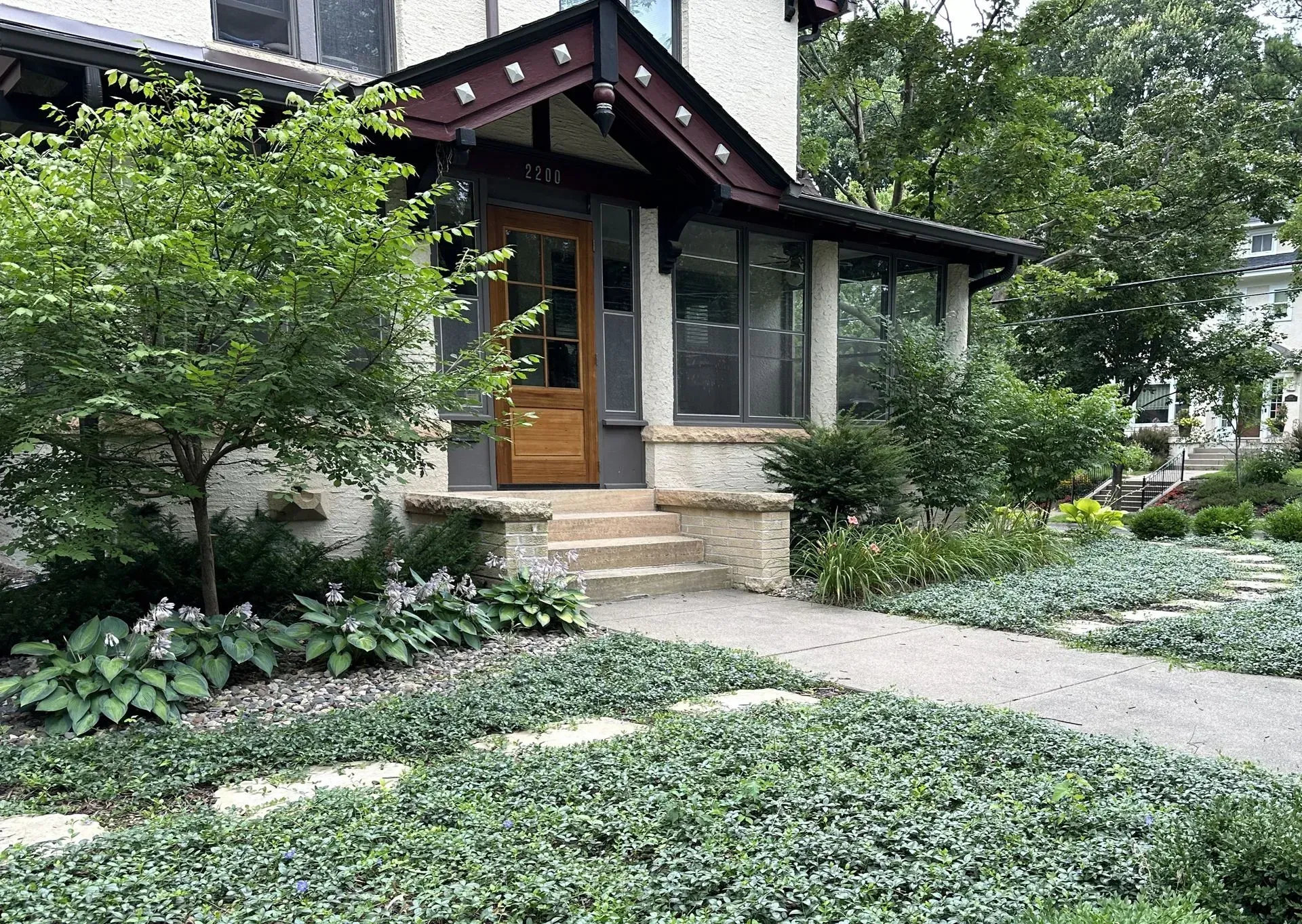
The best time to install plantings in Minnesota is spring or fall. Cooler temperatures and reliable moisture help plants establish before summer heat or winter cold. Hardscape work like walkways and walls can happen throughout the construction season, roughly April through November depending on weather.
If you want a spring installation, start the design process in winter. Design takes a few weeks depending on complexity, and we schedule installations in the order projects are confirmed. Waiting until April to start means you might not get on the schedule until mid-summer.
For fall installation, start the conversation in mid-summer. September and early October are ideal for planting in Minnesota.
Ready to start planning? Contact us today to get on the schedule.
The Difference Design Makes
According to the National Association of Realtors, 97% of real estate professionals believe curb appeal is important in attracting buyers. That tracks with what we see. In neighborhoods across the Twin Cities, where homes are well-built and landscaping is often builder-grade, a designed front yard stands out. Not because it's flashy. Because it fits.
This is true in Edina, Minnetonka, Plymouth, and throughout the Minneapolis metro. The architecture varies. Lot conditions vary. The clay soil in parts of Bloomington drains differently than the sandy soil in parts of Plymouth. But the principle holds: a front yard should match the home it belongs to.
The difference shows in how you feel pulling into the driveway.
Start a Conversation
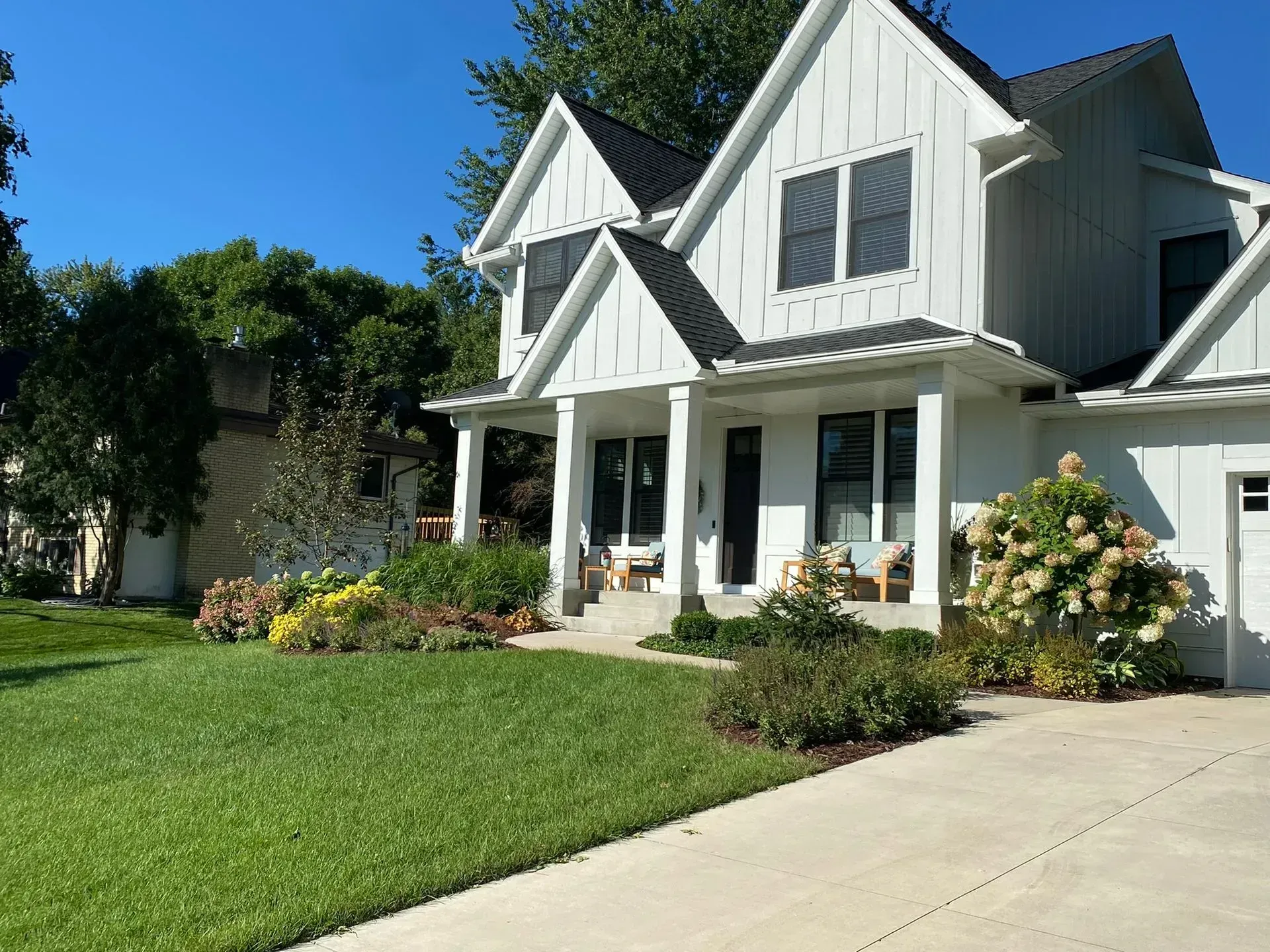
We've been designing and building front yards across the Twin Cities for over 20 years. Kent Gliadon, our principal designer, studied landscape architecture at the University of Minnesota and has worked on hundreds of front yard projects throughout the metro.
Every project starts with understanding the home, the site, and what you want to accomplish. Some people want maximum curb appeal. Others want low maintenance. Some want privacy. Most want a combination.
If your front yard doesn't match your home, we can talk through what's possible.
Request a consultation or call us at (763) 568-7251.
Related Reading:
Luxury Landscape Design Detail: Outdoor Waste Bin Storage in Plymouth
Tips to Create a Private Hot Tub Retreat on a Steep Side Yard in Plymouth
Tips to Turn Builder Grade Landscaping to Designer Curb Appeal in Minnesota
Frequently Asked QuestionsHow long does a front yard project take?
Most front yard projects take one to three weeks of active construction, depending on scope. A walkway replacement with some new plantings might be a week. A full redesign with boulders, mounding, drainage, and lighting takes longer. Design and planning happen before construction starts.
Can you work with my existing landscaping?
Sometimes. If the bones are good, we can refresh plantings, add lighting, or improve specific areas. If the layout doesn't work or the plants are wrong for the space, starting fresh makes more sense. We'll walk the property with you and give an honest assessment of what's worth keeping.
What's the best time of year to plant in Minnesota?
Spring and fall. Cooler temperatures and reliable moisture help plants establish roots before summer heat or winter cold. We avoid planting in July and August when heat stress makes establishment harder. Hardscape work can happen throughout the construction season.
Do you remove old landscaping?
Yes. Most projects include removal of existing plants, walkways, or other elements that don't fit the new design. We handle demolition, grading, and hauling as part of the project scope.
How do I get started?
Contact us to schedule a consultation. We'll visit your property, discuss your goals, and provide a proposal with design fees and estimated construction costs. Design fees are credited back toward the project when we do the work.
About the Author
Kent Gliadon is the owner and principal designer at KG Landscape, a Minneapolis-based landscape design and build company serving homeowners across the Twin Cities for over 20 years. Kent studied landscape architecture and earned a bachelor's degree in Environmental Horticulture at the University of Minnesota, with emphasis in turf science and landscape design.
Ready to Start on Your Next Project?
Call us at (763) 568-7251 or visit our quote page.