Smart Poolside Landscaping: How Proper Drainage Protects Your Orono Investment
Smart Poolside Landscaping: How Proper Drainage Protects Your Orono Investment
I can tell a lot about a poolside landscape by what's happening 48 hours after a heavy rain. In Orono, where homeowners invest significantly in their outdoor spaces, I've been called in too many times to assess pool areas where the plantings look stressed, the pavers are shifting, and water is sitting exactly where it shouldn't be. The landscaping itself often looks expensive—because it was. But somewhere in the design process, drainage became an afterthought. That's a costly mistake on any property, but especially on Lake Minnetonka-area homes where outdoor living spaces represent serious investment.
Here's what determines whether your poolside landscaping thrives for decades or fails within a few seasons: the grading and drainage work you can't see once the project is finished. This article covers why poolside drainage fails, the specific measurements that actually protect pool areas, and design strategies that look great while functioning properly. Whether you're planning new pool landscaping or troubleshooting problems with an existing setup, understanding these fundamentals will help you make decisions that protect your investment rather than compromise it.
Why Beautiful Pool Landscaping Fails
The frustrating reality about poolside landscaping failures is that they rarely look like failures at first. A new installation photographs beautifully. The plantings are lush, the hardscape is level, everything drains—or appears to. Then Minnesota's weather goes to work on it.
What I see repeatedly is expensive landscaping that wasn't designed around drainage realities. Water pools against the pool coping after rain. Pavers develop lips and edges as the base shifts underneath. Plants that looked perfect in June are struggling by September because their roots are sitting in saturated soil. The homeowner did everything right in terms of selecting quality materials and hiring contractors. But if the underlying grading doesn't move water where it needs to go, none of that matters.
Orono properties present particular challenges. The terrain around Lake Minnetonka isn't flat—that's part of what makes it beautiful. But rolling topography means water has momentum and direction. If your pool area sits in a path where water naturally wants to travel, no amount of attractive landscaping will overcome physics. The water will find its way, and it will damage whatever is in its path.
The stakes here go beyond aesthetics. Failed drainage around a pool can undermine the pool structure itself, erode expensive hardscape installations, kill plantings that cost thousands to install, and create ongoing maintenance headaches that never fully resolve. Fixing these problems after the fact typically costs more than doing it right initially—and often requires tearing out the very landscaping you invested in.
The Grading Specifications Your Pool Area Actually Needs
Here's where most pool landscaping projects go wrong: the grading gets eyeballed instead of measured. Someone looks at the slope and thinks "that looks fine, water will drain." But visual assessment isn't reliable, and "fine" isn't a specification.
The measurements that actually matter start at the structures. Any soil or landscaping material against your pool coping, house foundation, or other structures should sit at least six inches below the bottom edge of that structure. This isn't arbitrary—it's the clearance needed to prevent moisture wicking into materials and creating damage over time.
From there, you need a six-inch drop in elevation within the first ten feet extending away from the structure. That sounds like a lot, but when it's graded properly, you barely notice it visually. What you do notice is that water moves away from the pool and house instead of sitting against them.
Beyond that initial zone, the grade should continue sloping at roughly a quarter-inch per foot toward your designated drainage points—whether that's a swale, drain inlet, or the natural low point of your property. This creates the continuous pitch that keeps water moving rather than pooling.
Pro Tip: When evaluating pool landscaping plans, ask about pitch direction and measurement. Water should flow away from the pool, away from the house, and toward designated drainage points. If your contractor can't show you the grading plan with specific elevations marked, that's a red flag. The difference between professional-grade drainage work and amateur installation often comes down to whether anyone actually measured.
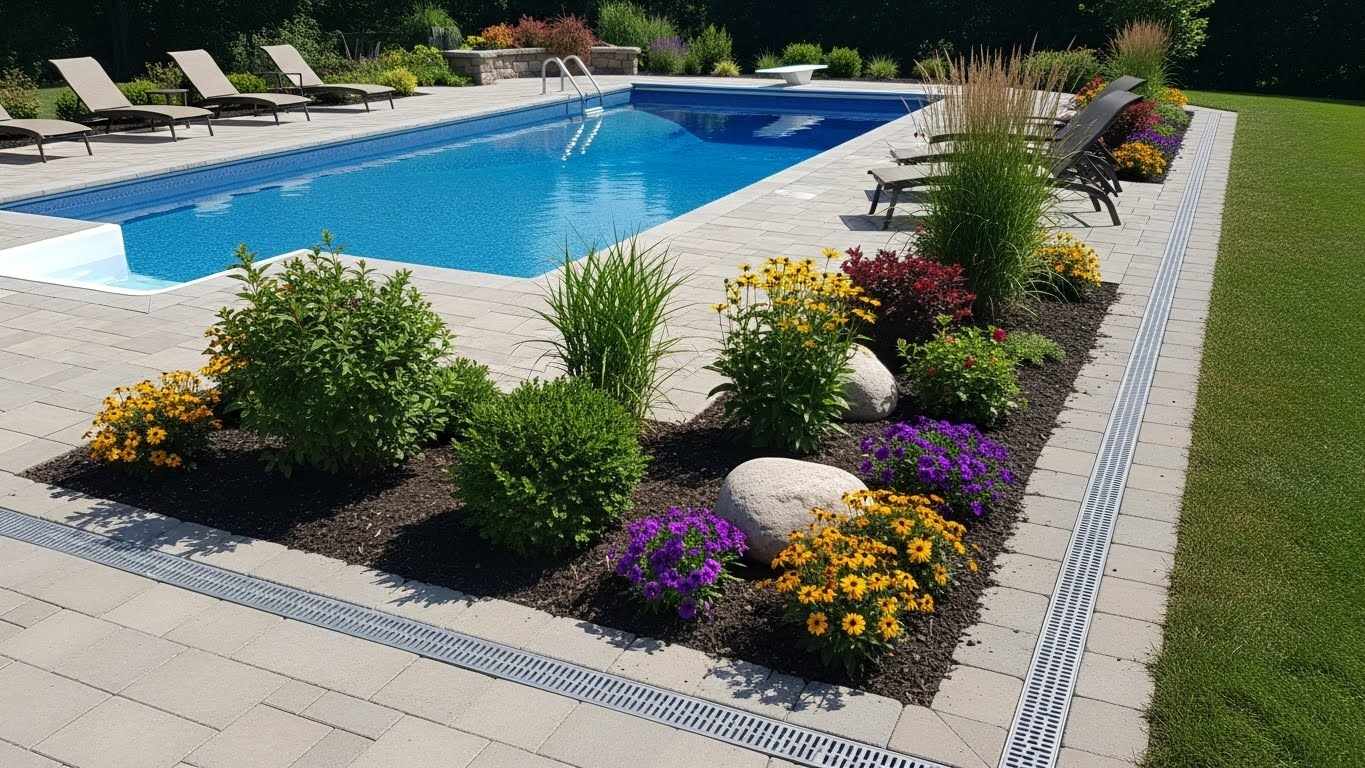
Pool areas demand more from drainage than typical yard spaces. You're dealing with splash-out, filter backwash, deck washing, and the reality that people track water across the hardscape constantly. A patio that drains adequately might fail as a pool deck because the water load is higher. The grading needs to accommodate this without creating puddles or sending water toward areas where it causes problems.
Poolside Design That Looks Great and Drains Properly
Good drainage doesn't mean sacrificing design. The best poolside landscapes integrate both so seamlessly that you don't think about the drainage at all—you just notice that the space works well and looks right.
The starting point is building hardscape at the proper grade. I see too many pool decks built as raised platforms, elevated twelve to eighteen inches above the surrounding lawn with retaining walls holding the fill in place. This approach creates problems. The fill settles over time because nobody compacts it adequately.
Once settling occurs, your carefully pitched surface loses its drainage slope—or worse, reverses it and starts directing water back toward the pool. Beyond the technical issues, raised pool decks feel disconnected from the rest of the yard. You're constantly stepping up and down, the space feels isolated, and expanding your entertaining area onto the lawn becomes awkward.
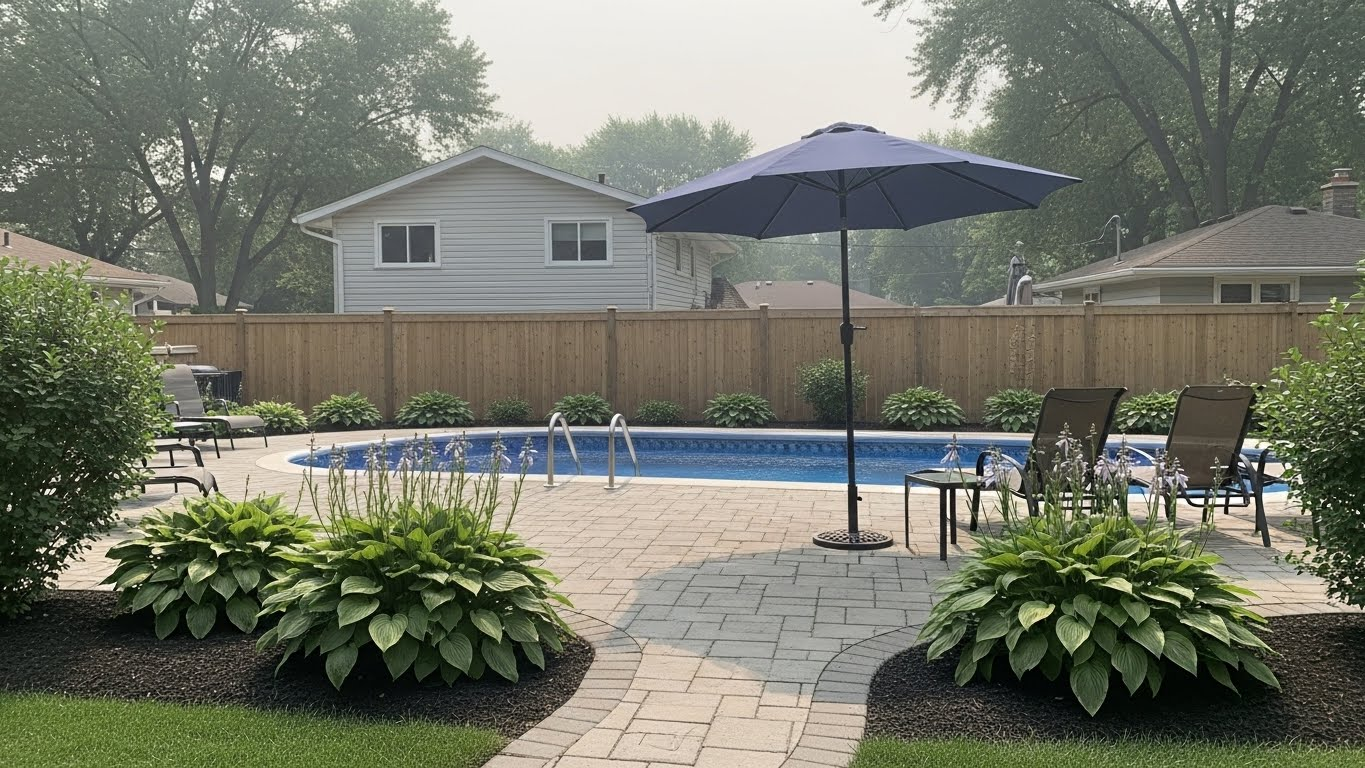
The better approach builds the pool deck close to grade—maybe an inch above the surrounding lawn so water sheets off the surface. You're fully connected to your yard. Kids can run from the pool to the lawn without navigating steps. You can extend your seating area onto the grass when you're hosting. The space flows instead of feeling like an island.
Why Planting Right Against Your Pool Deck Fails
One of the most common design mistakes I see is dense plantings installed right against the pool deck edge. It looks lush in the landscape rendering. In reality, it creates problems.
Plants grow. The ornamental grasses and perennials that looked proportional at installation will push into the hardscape within a couple seasons. Root systems work their way under pavers. Foliage overhangs the deck, dropping debris and blocking the air circulation that helps the surface dry. Worst case, you start feeling trapped in your own pool area—walled in by plantings that weren't planned for their mature size.
Dense edge plantings also interfere with drainage. Water needs a clear path off your hardscape. A wall of plants along the perimeter creates a dam that holds moisture against the materials you're trying to protect.
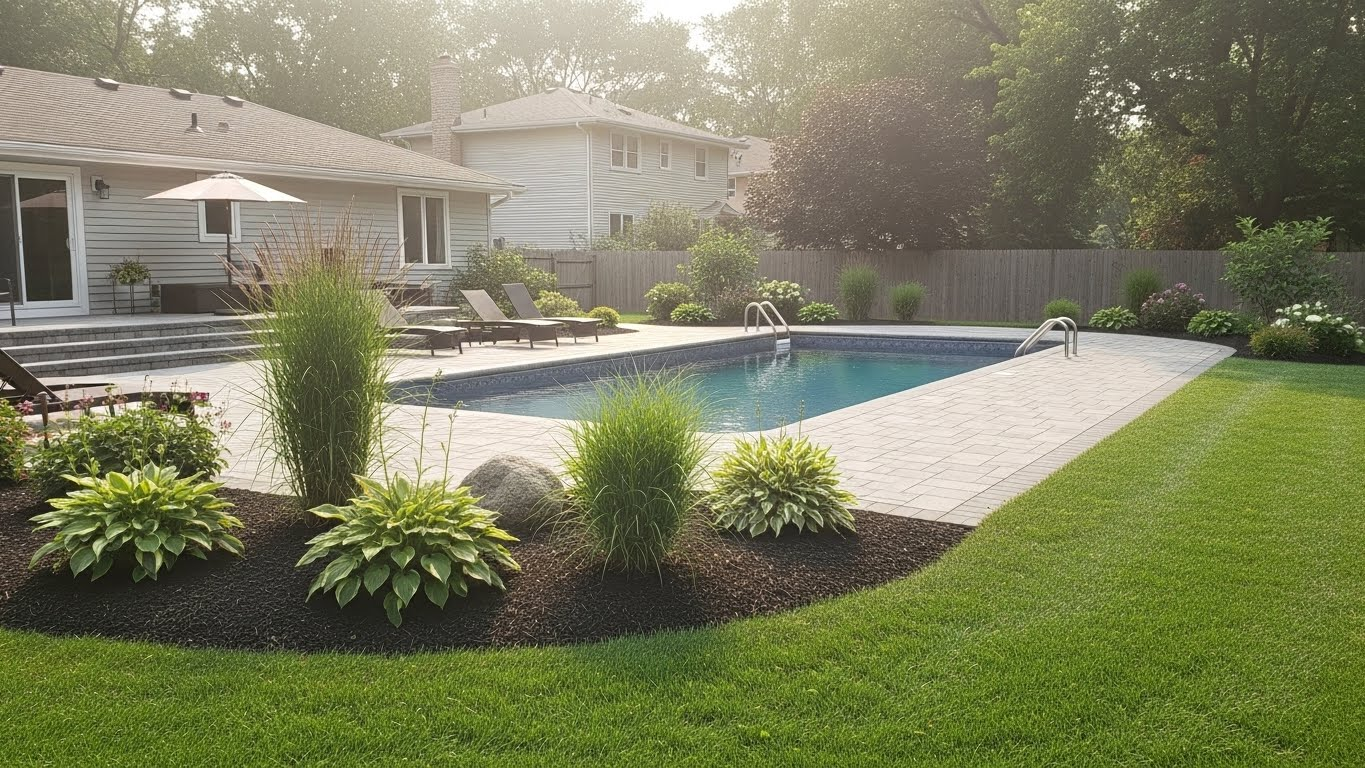
The alternative is strategic planting positioned away from the hardscape. Island beds in the lawn beyond the pool area. Specimen plants at focal points that don't crowd the usable space. If you want greenery near the pool, limit it to one section where you don't need foot traffic to the lawn—and choose plants that won't overwhelm the space at maturity.
When Simple Drainage Fixes Become Complete Reconstructions
The question I hear most often from homeowners dealing with poolside water problems: "Can't you just add a drain?" Sometimes yes. Often, no—at least not as a standalone fix.
Here's what actually happens. A homeowner notices water pooling near the pool. They call a contractor expecting a French drain or some targeted grading work. But when we assess the situation, we find that the entire pool area was built without proper pitch. The soil is right up against the pool coping. The grade actually slopes toward the house in sections. The "simple" fix would only relocate the problem.
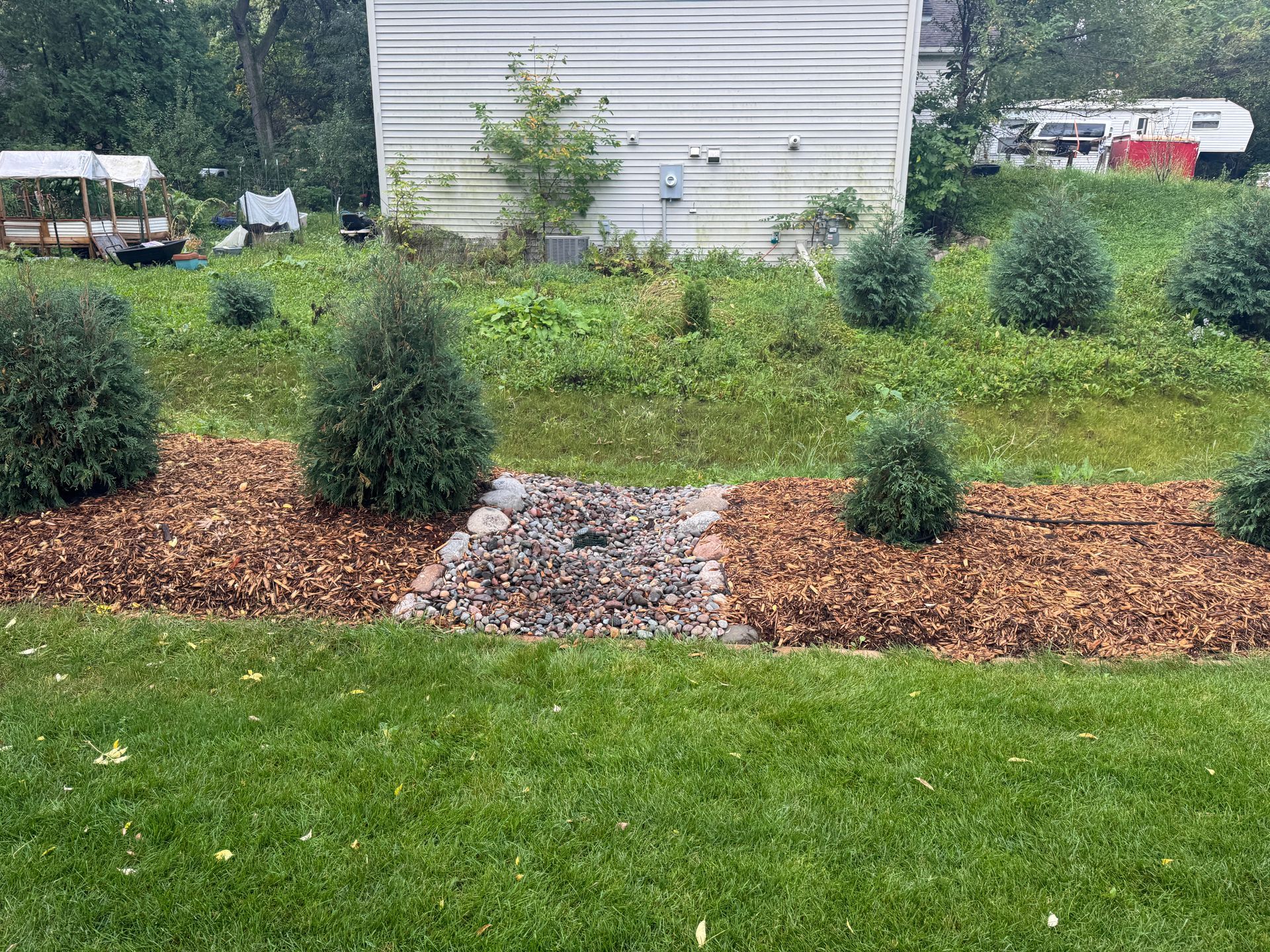
The real solution often means significant reconstruction. Lowering the grade across the entire pool area to establish proper pitch. Recutting beds and relocating plants to achieve the six-inch clearance against structures. Sometimes cutting into slopes and adding retaining walls to create the elevation changes needed for water to flow correctly. Rather than just installing a French drain, we end up re-engineering the entire space.
This is why professional assessment matters before any pool landscaping project—new installation or renovation. You need to understand what the water is doing now, what changes will affect that behavior, and what underlying corrections might be needed.
What a Professional Assessment Reveals
A proper drainage assessment isn't someone walking your yard and eyeballing the slope. It involves actual measurement of existing grades, identification of where water currently flows versus where it should flow, and evaluation of soil conditions that affect how quickly water moves through the ground.
In Orono, we're often dealing with properties that have existing mature landscaping, established drainage patterns, and specific challenges related to lake proximity or terrain. The assessment determines what can be preserved, what needs modification, and what the realistic scope of work looks like.
Pro Tip: If you're experiencing water problems around your pool, the solution rarely involves just the problem area. Water flows downhill, so fixing the symptom without addressing upstream grading often moves the problem rather than solving it. A proper assessment evaluates your entire yard's drainage pattern, not just the spot where water is currently collecting.
Maintenance and Prevention for Orono Pool Landscapes
Proper installation is the foundation, but long-term performance requires attention. Even well-designed drainage can develop problems if maintenance lapses.
The primary maintenance concern is keeping drainage paths clear. Mulch migrates. Soil accumulates in low spots. Plant material sheds into drainage channels. Over time, these small accumulations can redirect water or create blockages that compromise your grading work. Annual inspection of drainage flow—ideally during or after a heavy rain when you can actually see where water goes—helps catch developing issues before they cause damage.
Minnesota's freeze-thaw cycles stress poolside landscapes aggressively. Water that infiltrates paver joints or settles against structures expands when it freezes, creating the heaving and shifting that damages hardscape. Proper drainage minimizes this infiltration, but the cycle still takes a toll. Watch for pavers that develop lips or edges, cracks forming in concrete elements, or areas where the grade appears to have changed. Addressing these early prevents compounding damage.
The spring thaw deserves particular attention. Snow melt produces enormous water volume over a short period, and frozen ground can't absorb it. If your drainage depends on infiltration rather than surface flow, spring is when problems appear. Poolside landscapes that performed fine all summer may show stress in March and April.
Signs that warrant professional reassessment: standing water more than 24 hours after rain, soft or spongy areas near hardscape, visible erosion channels, plant stress in specific zones, or any cracking or shifting in pool deck materials. These indicate developing drainage problems that will worsen without intervention.
Frequently Asked Questions
How much does it cost to fix drainage problems around a pool in Orono?
The range is substantial depending on scope. Minor regrading work might run $5,000 to $10,000. Comprehensive reconstruction involving new base preparation, hardscape reinstallation, and landscape renovation can exceed $30,000 on larger pool areas. The variables that drive cost include how much existing material needs removal, access constraints on your property, whether retaining structures are needed, and how much of your current landscaping can be preserved. One thing I tell homeowners: the cost of fixing drainage problems is almost always less than the ongoing cost of damage from drainage that doesn't work. Pool repairs, hardscape replacement, and plant loss add up quickly when water isn't moving where it should.
Can I add landscaping around my existing pool without redoing drainage?
It depends entirely on whether your current drainage actually works. If water moves away from the pool and house, the grade is correct, and you're not experiencing any moisture-related issues, adding landscaping is straightforward—just don't create new problems by blocking drainage paths or piling material against structures. However, if you're already seeing pooling, soft areas, or plant stress, adding more landscaping without addressing the underlying drainage will compound your problems. New plantings require irrigation, which adds water load to a system that's already failing. The assessment should happen before the landscaping plan, not after.
How do I know if my pool area has drainage problems?
The most obvious sign is standing water more than 24 to 48 hours after rainfall. But there are subtler indicators. Staining on pool coping or deck materials from repeated water contact. Soft or spongy spots in the lawn near the pool. Pavers that have shifted, creating lips or uneven surfaces. Plants that struggle despite adequate care—especially if the stress appears in specific zones rather than across the entire landscape. Efflorescence (white mineral deposits) on hardscape surfaces indicates water moving through materials where it shouldn't be. If you notice any of these, professional assessment can determine whether you have a developing problem or an immediate one.
What's the best ground cover or landscaping for around a pool in Minnesota?
The right answer depends on your specific drainage situation, sun exposure, and how you use the space. But generally, I caution against dense plantings right against pool deck edges—plants overgrow, roots interfere with hardscape, and foliage drops debris into the pool. Lower-maintenance options that don't interfere with drainage include ornamental stone mulch in planting beds positioned away from hardscape edges, turf areas that can handle foot traffic, and strategic specimen plants at focal points rather than continuous borders. Whatever you choose, leave enough clearance for water to drain off hardscape surfaces and for air circulation that helps materials dry.
How long does pool landscaping last if drainage is done correctly?
When the fundamentals are right—proper grading, adequate base preparation, quality materials, appropriate plant selection—there's really no limit to how long a poolside landscape can perform. I've seen hardscape installations that look excellent after fifteen or twenty years because the drainage was designed correctly from the start. The failures I get called to fix are almost never because materials wore out. They're because drainage wasn't adequately planned, and water did what water does. The investment in getting drainage right during initial installation pays dividends for the entire life of the landscape.
Protecting Your Orono Investment
The poolside landscape you're envisioning—whether that's a new installation or a renovation of an existing space—represents significant investment. Orono homeowners don't approach these projects casually, and the results should reflect that commitment for years to come.
What separates lasting pool landscapes from expensive disappointments comes down to what happens before the visible work begins. Proper grading, measured to specification rather than eyeballed. Drainage designed for the actual water load a pool area experiences. Hardscape built at grade for usability and longevity. Plantings positioned where they'll thrive without compromising function.
These fundamentals aren't the exciting part of a pool landscaping project. But they're what determines whether you're enjoying your outdoor space a decade from now or calling someone to figure out why it's failing.
For Orono homeowners ready to approach poolside landscaping the right way—or those dealing with drainage concerns on an existing pool—the starting point is understanding your property's specific conditions and what they require.
Schedule a consultation to discuss your pool landscaping project and learn what proper drainage design looks like for your property.
KG Landscape serves Orono, Lake Minnetonka, and surrounding Twin Cities communities with professional landscape design, installation, and drainage solutions.
Ready to Start on Your Next Project?
Call us at (763) 568-7251 or visit our quote page.