Best Steps To Do A Fall Clean-Up

Doing a fall clean-up is a job that many people do themselves. Other people pay an experienced lawn care company to come out and do it for them. Either way, here are the correct steps to take to make any fall clean-up look professional. 

1. Cut back perennials.

When KG Landscape does our fall clean-ups, we cut back all flowering small plants except grasses. We cut the grasses back in the spring so there is still some winter interest. You can also cut back roses and hydrangeas at this time if they are getting a little scruffy.   
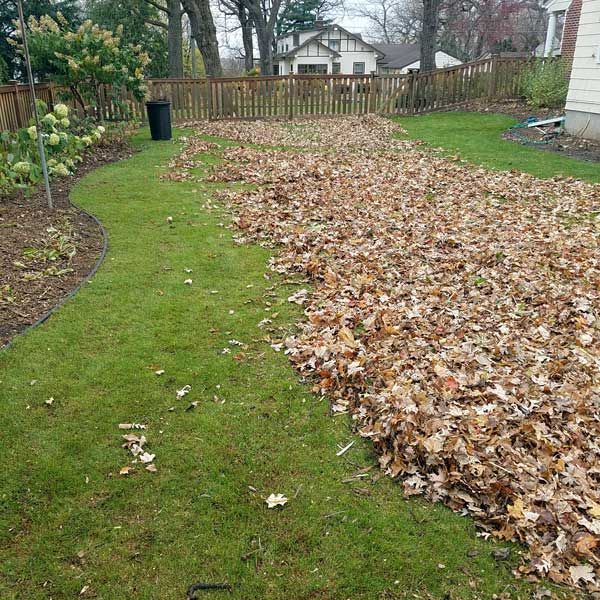
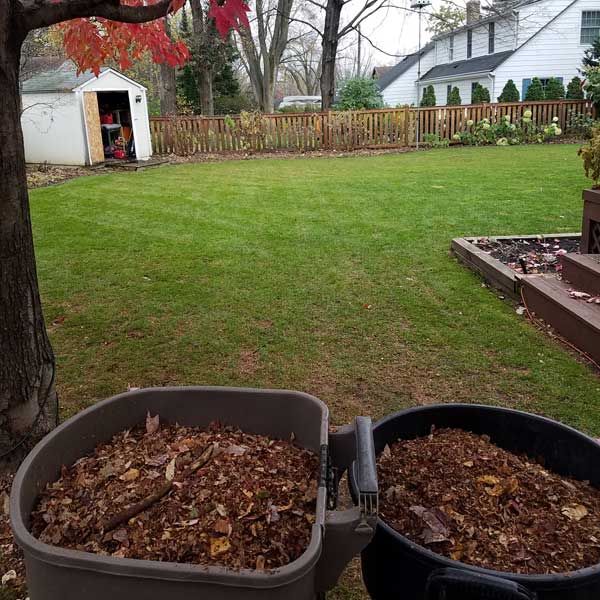
A lawn covered in fallen leaves, with a strip of green grass and a black trash can. A wooden fence and houses are in the background.

2. Blow leaves out of plant beds

Blowing out the leaves has a few different benefits. With all the leaves gone, the plant beds in the spring will look fresh and clean when plants come back in. Leaving a lot of debris around plants can stunt their growth. 

Two compost bins filled with leaves in a backyard with a shed, fence, and green lawn.

3. Turn your mower to the mulching setting.

Then mulch the lawn at least 2 times in opposite directions. Mulching the leaves reduces the size of the debris so you don’t have to bag up as often. A standard yard should be able to fit all mulched material into 2 garbage cans instead of 25+ bags of straight leaves. 

4. Turn your mower to the bagging setting and bag the mulched debris

Lots of very small pieces of leaves won’t be sucked up and can be left as fertilizer on the lawn. If you have sandy or clay soil, the small leaf pieces are a big boost of organic material so leaving some is not a big deal.

If you don’t like how it looks with some mulch debris left in the lawn, you can simply use a blower to do a final detailed cleanup at the end. 

Hire an experienced lawn care company to do your fall clean-up

KG Landscape is a lawn care and landscape company that knows how to do the job right the first time. We’ve got over 15 years of lawn care and leaf clean-up under our belt and are ready to do them for your home or business. It’s easy to get set up, just give us a call or fill out our quote form. We’ll be out to get your lawn looking in tip top shape in no time. 

Ready to Start on Your Next Project?

Call us at (763) 568-7251 or visit our quote page.
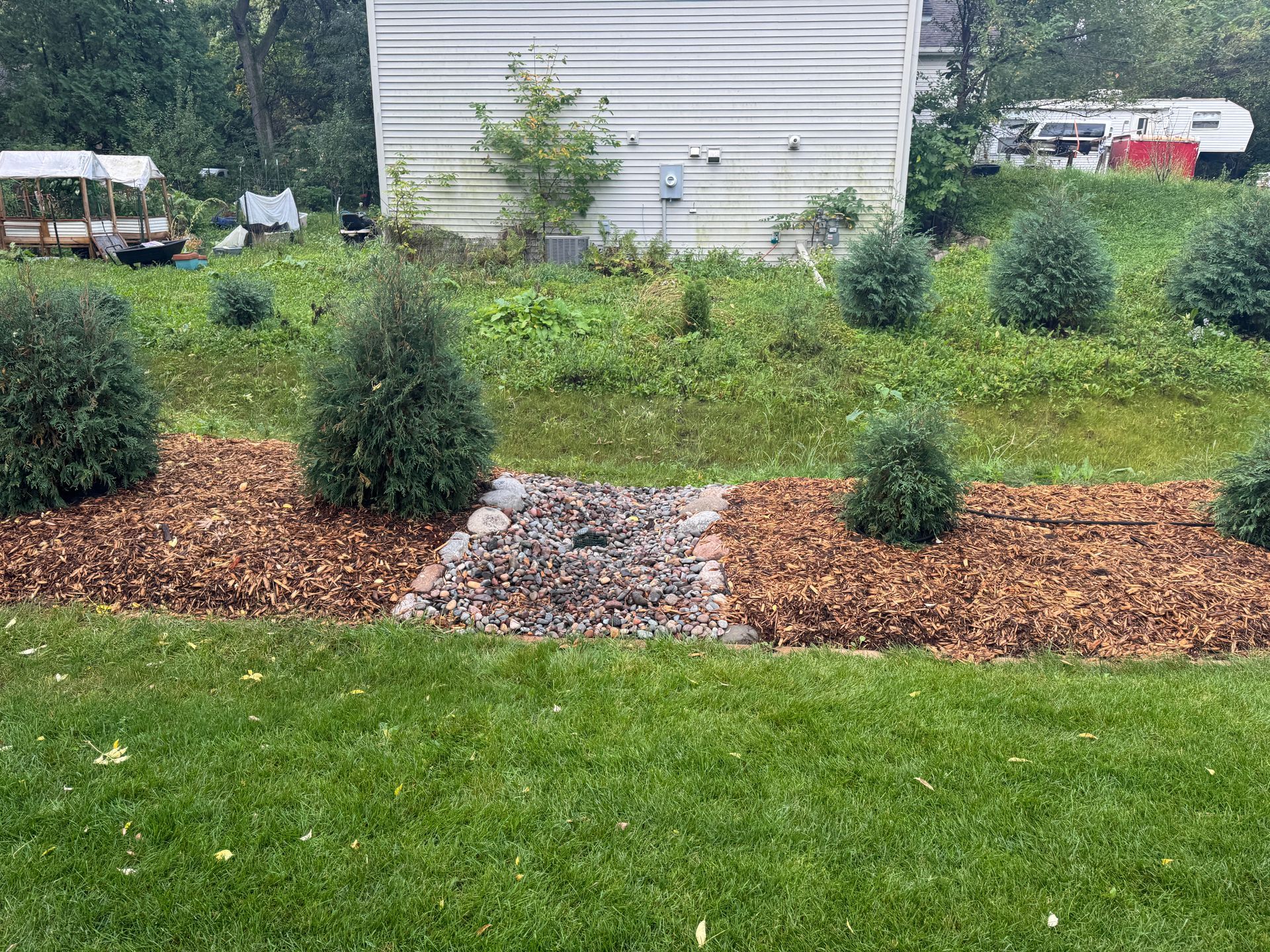
Picture of a side yard KG Landscape regraded to solve a problem in Minneapolis
By Kent January 26, 2026
Struggling with side yard water problems in Minneapolis–St. Paul? See when French drains or re-grading works best for small yard drainage fixes.
By Kent Gliadon January 22, 2026
Protect your Plymouth patio and deck from frost heave by installing French drains that keep clay soil dry around hardscape and footings.
Backyard fire pit area with plantings around it
By Kent Gliadon January 15, 2026
One Edina family had a 25-foot slope and nowhere for their kids to play. See how we turned it into a lawn, sport court, and fire pit.
Front yard landscaping at corner of the garage with waist bin storage
By Kent Gliadon January 14, 2026
See how one Plymouth project turned an overlooked side yard into a design feature that matches the rest of the property.
By Kent Gliadon January 12, 2026
A Plymouth family turned a steep, unusable side yard into a private hot tub area with stone steps, drainage solutions, and boulder walls.
By Kent Gliadon January 11, 2026
See how a Plymouth family replaced basic builder landscaping with a custom flagstone walkway, strategic plantings, and a front yard that matches their home.
By Kent Gliadon January 9, 2026
Learn how French drains solve drainage problems in tight Minneapolis side yards without sacrificing walkway space or function.
By Kent Gliadon January 7, 2026
Stop roof water and sump pump discharge from saturating your Plymouth yard. Learn how to tie everything into one drainage system.
By Kent Gliadon January 3, 2026
Where All That Water Is Actually Coming From  Your backyard stays wet. You've noticed the soggy spots, the mud, maybe some frost heave damage to your patio or fence. You're thinking about French drains. But before you start digging trenches, look up. A huge amount of water hitting your yard isn't coming from rain falling on the lawn. It's coming from your roof. A moderate rainfall on a typical Plymouth home puts hundreds of gallons through your gutter system. Every bit of that water exits through your downspouts. Where it goes from there determines whether you have a drainage problem or not. Then there's your sump pump. Every time it kicks on, it's pushing water out of your basement and into your yard. On a wet property, that pump might run dozens of times a day. All that water has to go somewhere. If your downspouts dump water next to your foundation and your sump pump discharges into a side yard that drains toward your backyard, you're adding water to an already saturated situation. French drains alone might not be enough. You need to manage the sources. The Problem With Surface Discharge Most downspouts in Plymouth end with a splash block or a short extension that dumps water a few feet from the foundation. That's technically moving water away from the house, but not far enough.
By Kent . December 6, 2025
Why wooden lake steps always fail—and why Minnetonka and Orono homeowners are switching to stone. A contractor explains the replacement.