
Yard Regrading for Drainage Problems
Serving the Twin Cities and Surrounding MN Metro Areas
Professional Yard Regrading to Fix Drainage Problems
At KG Landscape, we solve simple to highly complex yard drainage problems by designing proper yard grading that directs water safely away from homes and surrounding structures such as patios, garages, and walkways.
When water is not managed correctly, it leads to issues like standing water, muddy lawns, erosion, and basement moisture—problems that almost always begin outside.
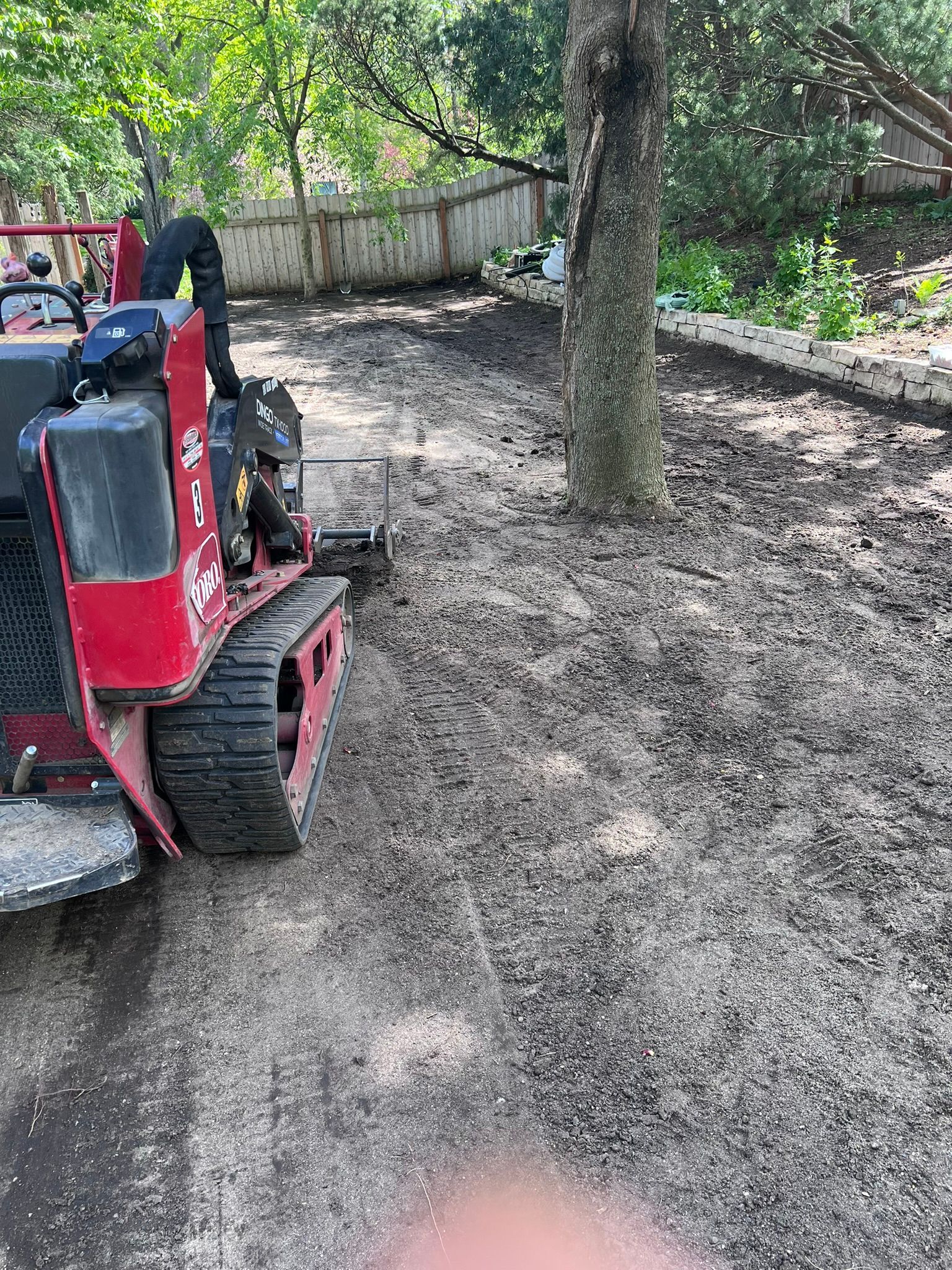
Yard regrading is the primary method we use to correct drainage issues. By reshaping the slopes and elevations of the yard near the foundation and throughout the lawn, we address the root cause of water problems.
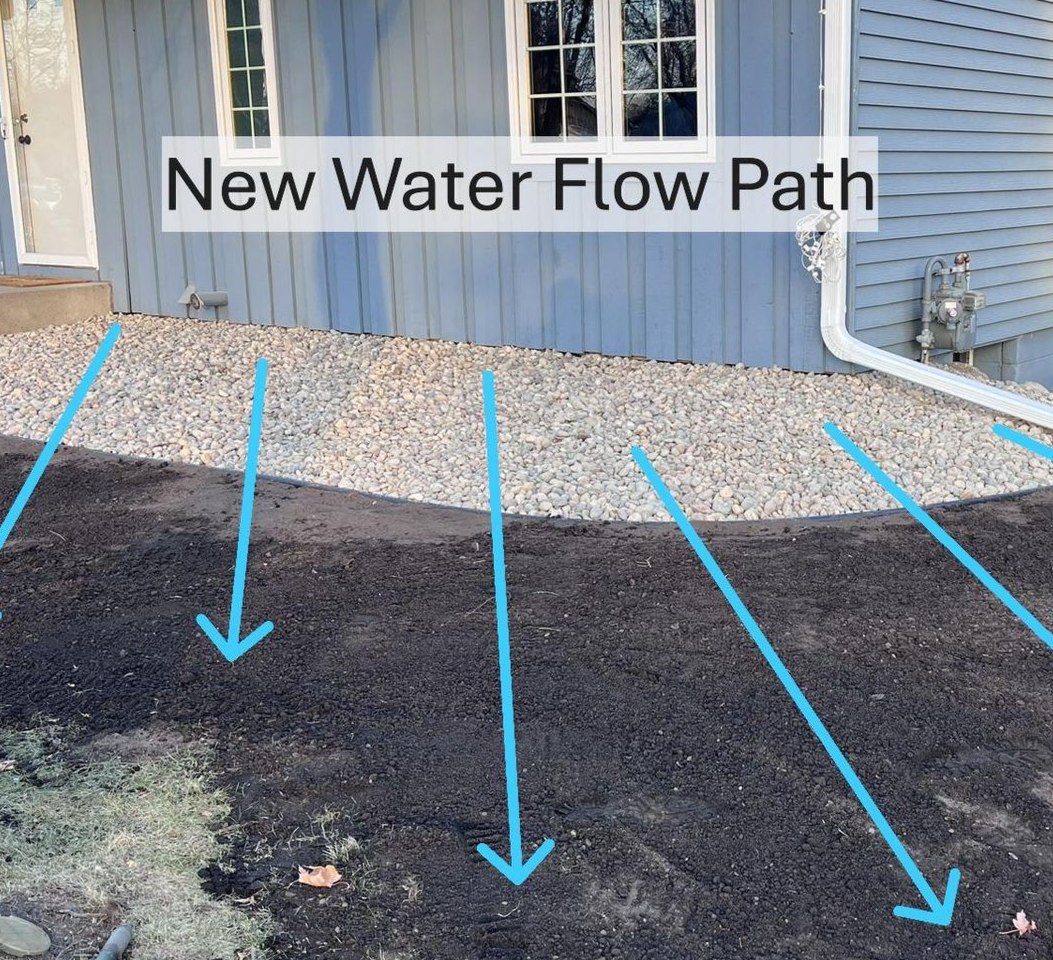
Expert yard regrading and integrated drainage solutions designed to move water away from your home and solve outdoor water problems for the long term.
In cases where grading alone is not enough, we design and install integrated drainage systems that may include regrading combined with underground downspouts, sump pump discharge solutions, swales, or other drainage features.
Our expertise lies in determining exactly what your property needs and ensuring every component works together seamlessly for a durable, long-term solution.
We provide professional yard regrading and drainage services throughout the Minneapolis–St. Paul and Twin Cities metro area and are committed to helping homeowners understand their drainage challenges and how to fix them correctly the first time.
About the Author

I’m Kent Gliadon, founder of KG Landscape and a graduate of the University of Minnesota's Landscape Design program. Since 2003, I’ve focused my career on integrating well-planned landscape design and installation work with properly engineered outdoor drainage solutions.
Regrading for optimal yard drainage to protect the home and other important landscape feature from water damage is step #1 and is my preferred solution for solving yard drainage problems whenever possible.
I believe landscaping & drainage renovation projects that are carefully planned from the beginning—accounting for water movement, via proper yard grading in addition to other drainage solution when needed - is the best way to prevent water from damaging your home and yard.
Why Improper Grading Causes Basement & Yard Water Problems in Minnesota
Minnesota’s soil conditions, heavy rainfall, spring snowmelt, and repeated freeze–thaw cycles make proper yard grading essential.
Because most homes in Minnesota have basements, directing water away from the foundation is one of the most important steps in preventing moisture and water intrusion.
When yard grading is inadequate—or has changed over time due to settling, erosion, or past landscaping—water is often directed toward the home instead of away from it. This can lead to standing water in the yard, saturated soils near the foundation, and ongoing basement moisture problems.
Water Flowing Toward the Foundation
Many homes in the Twin Cities are built into natural slopes or contoured neighborhoods where side yards or backyards slope toward the foundation. In these situations, regrading is critical not only to redirect water away from the home—even when that means grading into an uphill area—but also to recontour the surrounding land so water has a clear outlet.
This often involves creating swales or graded channels that carry water far away from the foundation, ensuring it cannot settle anywhere near the home. Our goal is always to move water as far away from the structure as possible.
Soil Settling From Freeze–Thaw Cycles
Homes in Minnesota are built with basements, which require excavating a larger area than the foundation itself. After construction, backfill soil is placed around the foundation to fill this space. Over time, this disturbed soil is prone to settling.
As water moves through this soil, freeze–thaw cycles can lift and shift the ground, gradually changing the original grade around the home. These changes can reduce the slope needed to shed water effectively.
Regrading restores proper elevations and helps prevent long-term drainage issues caused by settling and soil movement.
Low Areas That Trap Rainwater & Snowmelt
It is common for low areas to develop in yards years after initial construction. These may result from natural settling, freeze–thaw cycles, tree removal, landscape bed changes, or grading that was never ideal to begin with.
These low spots allow water to collect and remain in the yard, creating soggy lawns and drainage problems. Proper lawn regrading eliminates these depressions and restores consistent slopes that allow water to drain naturally away from the home.
How Poor Yard Slope Leads to Basement Moisture
When the grading around a home is not pitched enough to move water away, water collects near the foundation and filters into the surrounding soil. From there, it follows the path of least resistance as it moves downward—often toward basement walls.
Building standards in the United States recommend that grading around a home’s foundation drop at least six inches within the first ten feet. This slope ensures that rainwater and snowmelt are quickly shed away from the foundation rather than being absorbed into the soil next to the basement.
Proper foundation grading, combined with effective yard grading beyond the home, dramatically reduces the amount of water that can reach basement walls. This is why many basement moisture and water issues can be solved—or prevented entirely—through correct yard regrading and drainage design.
Types of This Service We Provide
1. Foundation Grading Around the Home
Foundation grading is the most important part of yard regrading because it determines how water behaves closest to the house. Since water flows downhill, proper grading ensures gravity moves water away from the foundation rather than allowing it to collect or flow back toward the home.
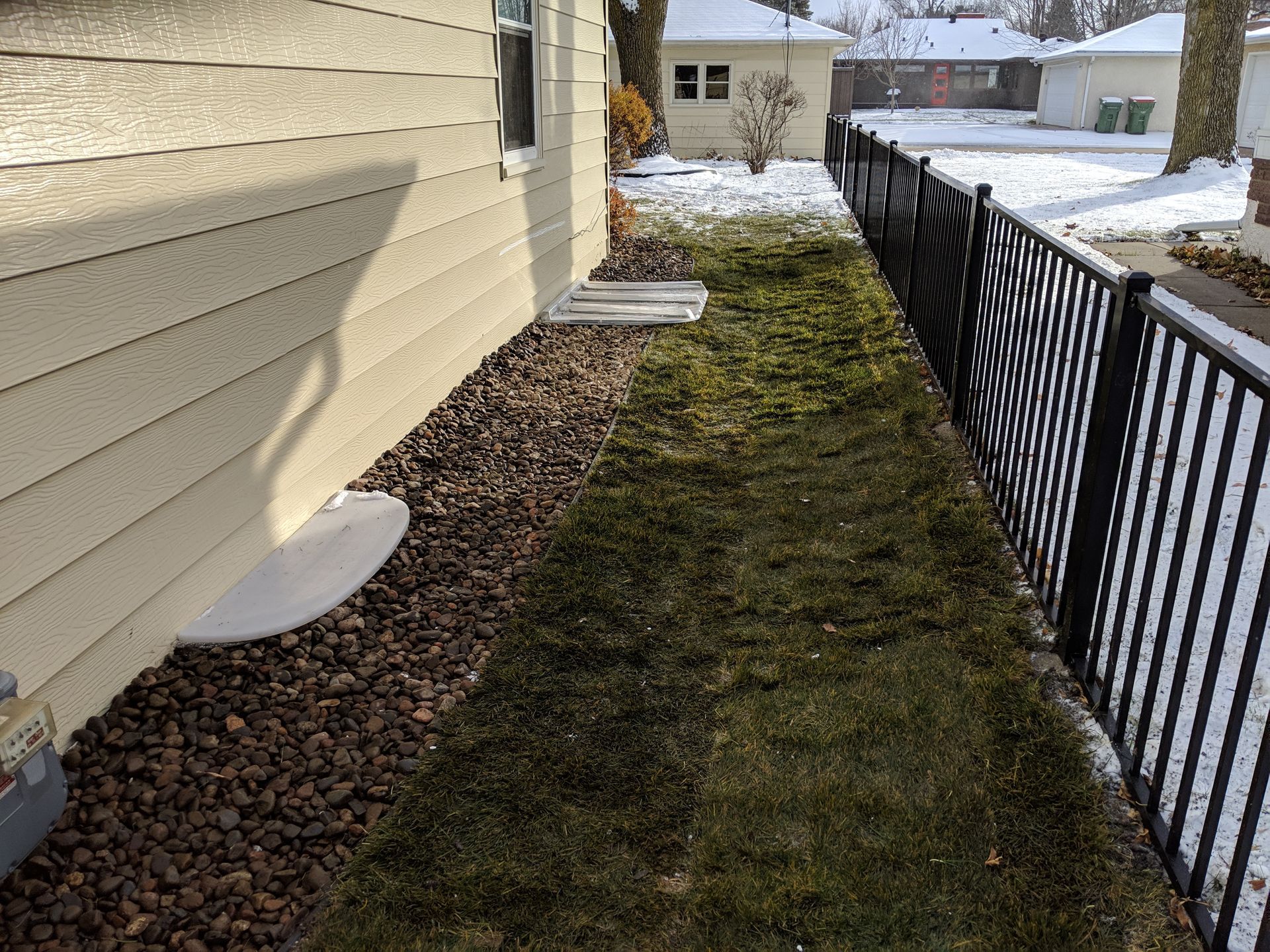
When grading near the foundation is too flat or slopes toward the house, water is able to soak into the soil directly against basement walls. Over time, this saturated soil can lead to moisture problems, water intrusion, and in some cases water entering the home through window wells or window seams.
Common problems caused by poor foundation grading include:
- Water pooling next to the foundation
- Soil remaining saturated after rain or snowmelt
- Moisture or water intrusion in basements
- Water collecting inside window wells
Fixing foundation grading is the first step in preventing these issues. The faster water is moved a safe distance away from the house, the drier the soil around the foundation remains and the lower the risk of water problems.
Proper foundation grading standards:
- Grading should slope away from the home
- A minimum drop of six inches is recommended within the first ten feet from the foundation
- This slope allows rainwater and snowmelt to shed quickly rather than absorb into the soil near basement walls
At KG Landscape, we measure elevations around the home using professional-grade tools to identify grading failures and determine the correct slope needed. We then regrade the soil to restore proper pitch while maintaining smooth transitions that integrate naturally with the surrounding yard and landscaping.
Correct foundation grading serves as the first line of defense against basement water and moisture problems and is often the most effective way to resolve drainage issues at their source.
2. Lawn Regrading to Move Water Further Away From the House
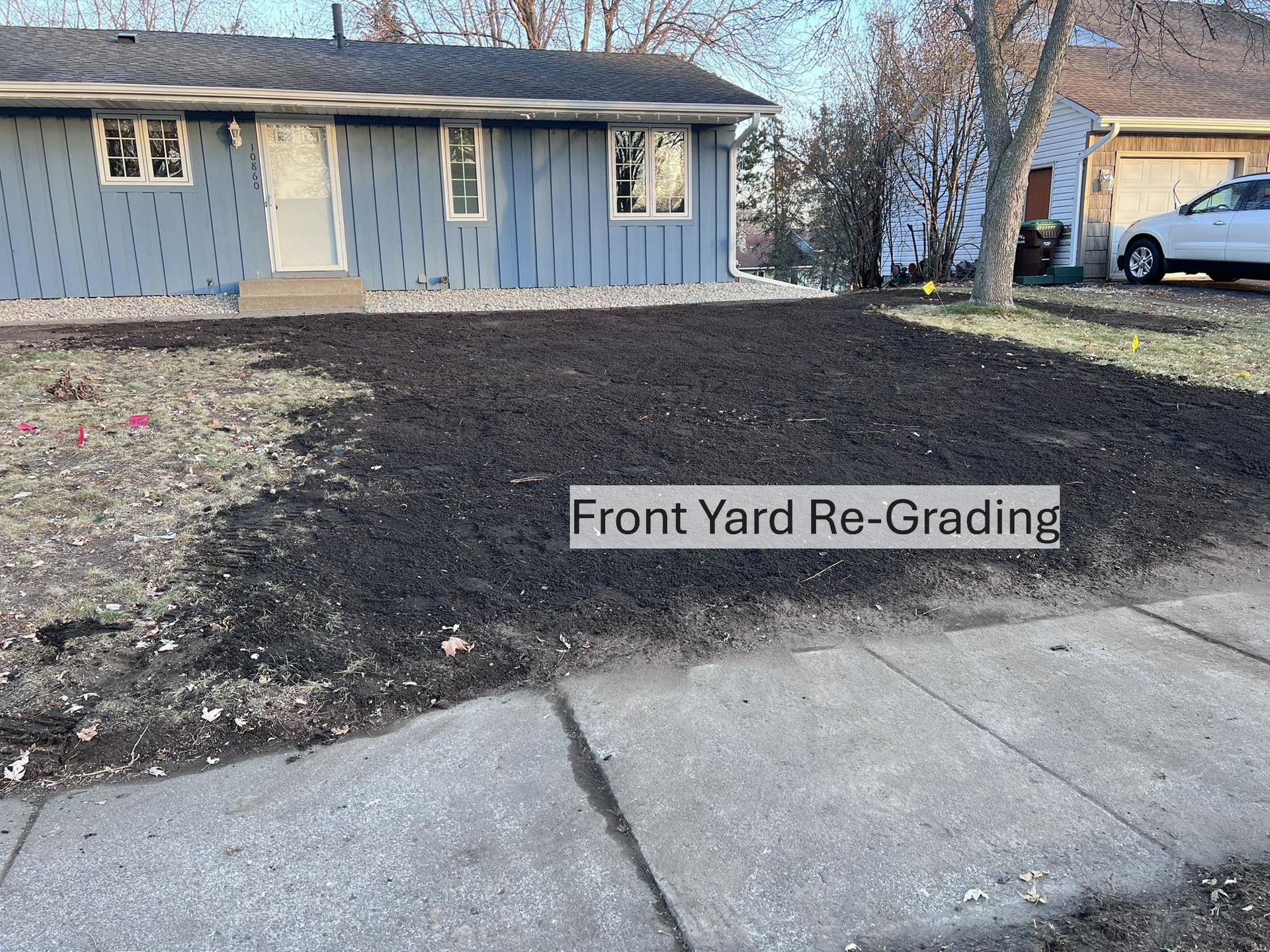
Lawn regrading plays a critical role in drainage by carrying water even farther away from the home after it has been moved away from the foundation.
While proper foundation grading protects the area closest to the house, lawn regrading ensures water continues moving across the yard to a location where it can safely disperse without causing problems.
Proper lawn regrading installs a subtle, intentional pitch that allows water to drain efficiently while keeping the yard usable and visually level. When done correctly, the yard feels flat underfoot but is shaped precisely to move water away from the house and prevent pooling.
Common drainage issues solved with lawn regrading include:
- Water collecting in low areas of the yard
- Soggy or muddy sections that never fully dry
- Poor drainage in sloped or contoured yards
- Lawns that are difficult to mow after rain events
Lawn regrading is especially important in yards with natural slopes or complex contours. In many cases, water must be moved away from the house, routed through the side yard or backyard, and ultimately directed toward the front yard, street, or another approved discharge location.
This broader yard contouring works together with foundation grading and swales to manage water across the entire property.
How lawn regrading fits into a complete drainage system:
- Foundation grading moves water away from the home
- Lawn regrading carries water farther across the property
- Swales and natural slopes guide water to its final outlet
- Water is discharged to the street, a naturalized area, or downhill flow paths built into the neighborhood
When these elements are designed together, the yard drains efficiently even during heavy rain events, keeping water off the lawn, away from the house, and out of areas where it could cause damage or limit yard usability.
Because lawn regrading reshapes the surface of the yard, existing turf is removed during the process. After regrading is complete, the lawn is reestablished using seeding, sodding, or other turf solutions appropriate for the site.
For a deeper explanation of this process, including turf restoration after grading, visit our dedicated
Lawn Grading Services page
3. Swales to Control Water Flow
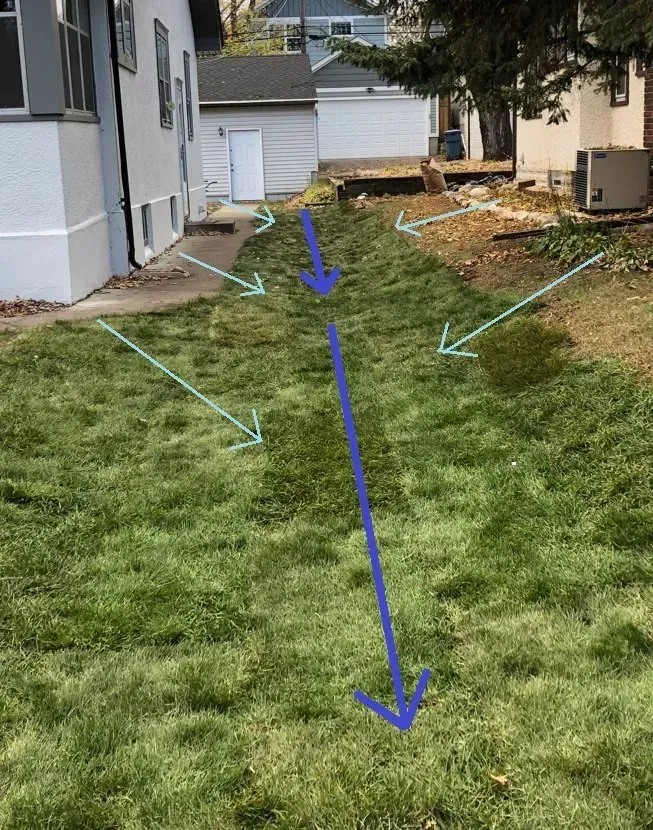
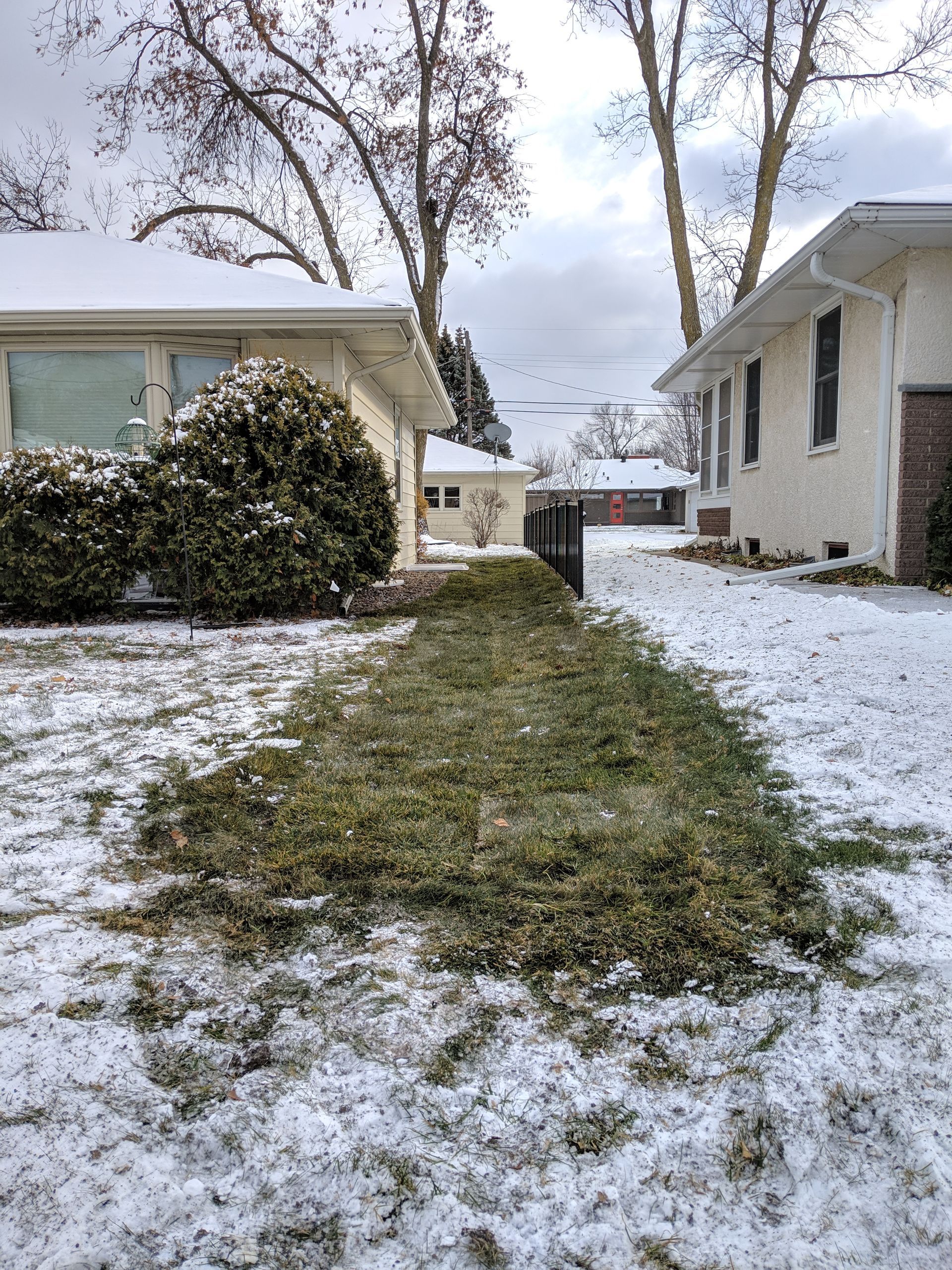
A swale is a shallow, gently shaped channel in the yard that directs water along a planned path instead of allowing it to spread, pool, or flow toward the home. When properly designed, swales work with gravity to move water safely away from problem areas and toward a suitable outlet.
At KG Landscape, swales are designed using precise elevation measurements and grading tools to ensure the slope is subtle enough to remain usable, but steep enough to move water effectively over the long term. This balance is critical—swales that are too flat may stop working over time, while steeper swales are more durable but can be more noticeable in the yard.
Many homes were originally built with swales that have gradually filled in over decades due to soil movement, erosion, landscaping changes, mulch, leaves, and grass clippings. As these swales lose their shape, they become ineffective and often need to be re-carved and regraded to restore proper drainage.
Key considerations when designing or restoring a swale include:
- Slope needed for long-term drainage performance
- Walkability and day-to-day yard use
- Location relative to the home and property lines
- How water exits the property or connects to other drainage features
Not every yard is best served by a swale alone. In some cases, alternatives or complementary solutions such as underground downspouts, yard drains, French drains, or drain tile may be more appropriate.
We help homeowners understand the pros and cons of each option and design the solution that best fits the property, the problem, and long-term performance goals.
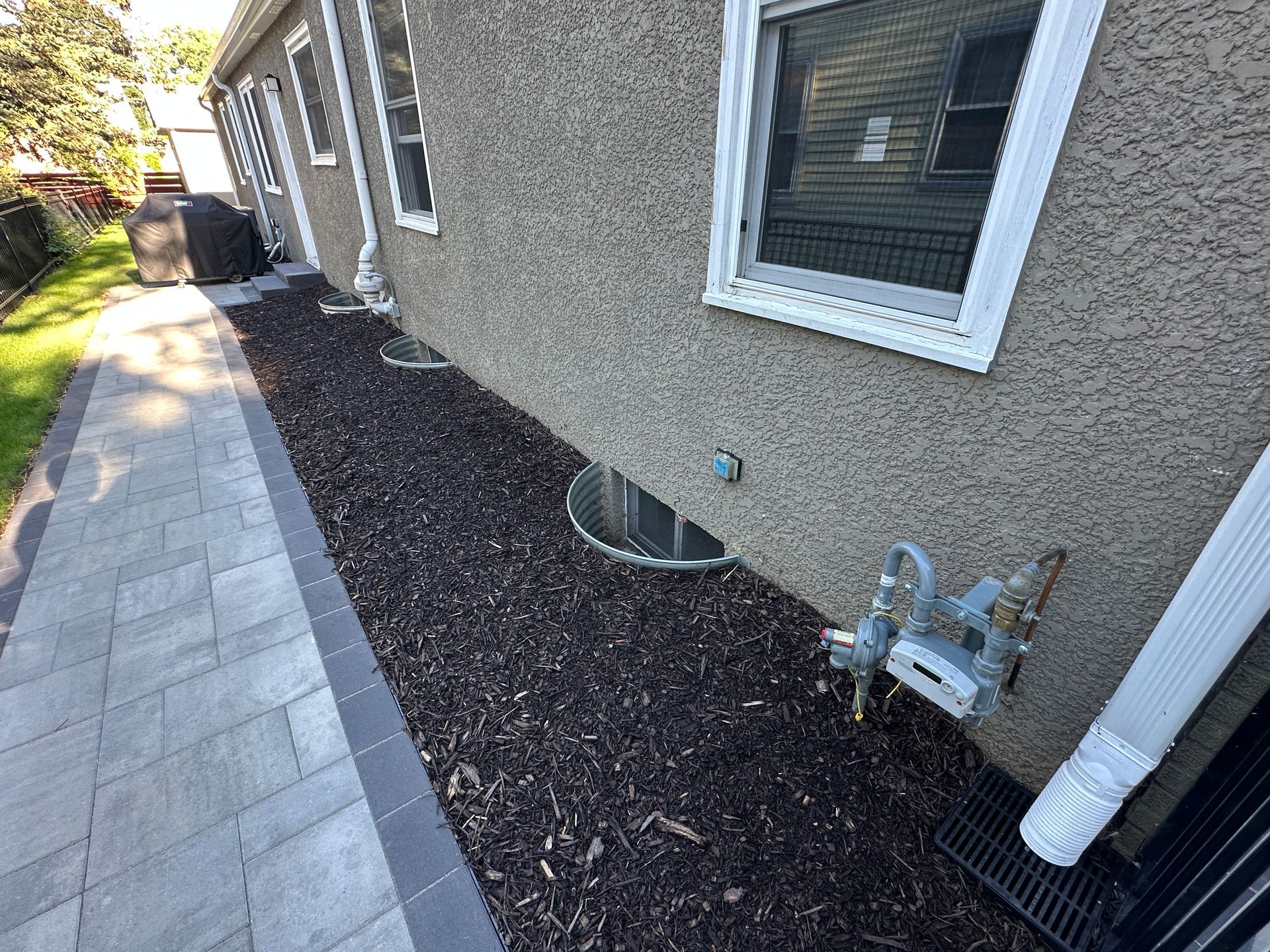
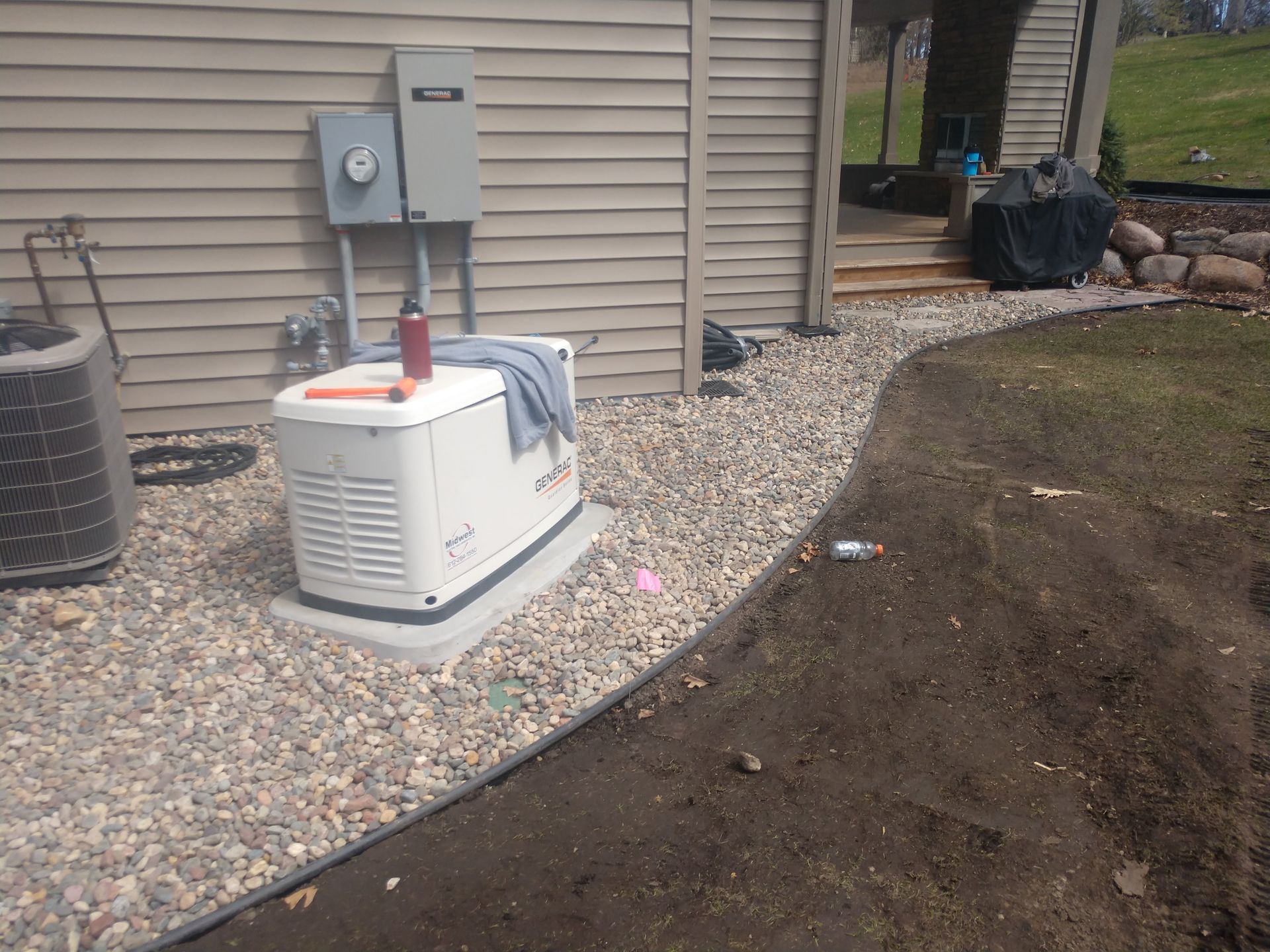
How Yard Regrading Solves Basement Water Issues
Yard regrading is the primary method we use to correct drainage problems. By reshaping slopes and elevations near the foundation and throughout the yard, we address the root cause of water issues—not just the symptoms.
In situations where grading alone isn’t enough, we design
integrated drainage solutions, which may include:
- Precision regrading combined with underground drainage
- Downspout extensions or buried downspout lines
- Sump pump discharge solutions
- Swales or other surface drainage features
Our expertise is knowing exactly when grading is enough—and when it needs to work together with drainage systems to create a durable, long-term solution.
Yard Regrading as the Foundation of a Successful Landscaping Project
At KG Landscape, we view yard regrading as the foundation of every successful landscape project—no exceptions. Whether we’re improving landscaping around a home, correcting yard issues, or designing a full-scale outdoor living space, proper grading and drainage always come first.
In Minnesota, this approach is especially critical. Our heavy clay soils, flat urban lots, snowmelt, and intense rain events make drainage problems both common and costly when overlooked. Unfortunately, many landscaping projects fail prematurely because grading issues were never addressed before new features were installed.
A landscape can look great on day one—but without proper grading underneath, it often won’t last.
Why Drainage Must Be Addressed First in Minnesota Landscapes
Many drainage and water-related issues begin long before homeowners notice them. Water that isn’t directed away from the foundation can lead to standing water, erosion, muddy lawns, and even basement moisture. These problems are rarely caused by the landscaping itself—they’re caused by improper grading beneath it.
We frequently see homes in Minneapolis and St. Paul that were recently re-landscaped without correcting existing grading problems. In these cases, new mulch beds, edging, decorative rock, or plantings were added on top of failing drainage conditions, creating a situation where the improvements may eventually need to be removed just to fix the original issue.
At KG Landscape, drainage is never an afterthought. It is the starting point for everything we design and build.


Incorporating Proper Grading Into New Lawns, Patios & Plantings
When installing new lawns, patios, walkways, or planting beds, grading determines how well those features perform over time. Without proper slopes and water management, even high-quality materials can fail.
Our process ensures:
- Water is directed safely away from the home and hard surfaces
- New plantings are not subjected to pooling or erosion
- Lawns drain evenly and remain usable
- Hardscapes remain stable and dry
By addressing grading first, we ensure that every lawn, patio, and planting is built on a solid, functional foundation—both structurally and visually.
Preventing Drainage Failures in Larger Landscape Renovations
For larger landscape renovations—such as outdoor living spaces, patios, retaining walls, or full property redesigns—proper grading is absolutely essential. These projects involve significant investment, and drainage failures after installation can mean tearing out finished work just to correct problems that should have been addressed at the beginning.
KG Landscape integrates grading and drainage into the
earliest stages of the design process, ensuring:
- All features work together as one system
- Drainage is compatible with hardscapes and structures
- No completed elements need to be undone later due to water issues
This approach protects your investment and ensures you never have to go backward to fix drainage after the fact.
Our Yard Regrading Process
At KG Landscape, yard regrading is the starting point for every successful drainage and landscaping project. Whether the goal is to fix yard drainage problems or build new landscaping, we design grading solutions that move water away from the home and protect long-term performance.
Every property is different, so we begin by understanding the homeowner’s priorities before recommending a solution.
Regrading to Fix Existing Drainage Problems
In many cases, homeowners contact us because they are experiencing
active water problems, such as:
- Wet basements
- Puddling water in the yard
- Water damaging lawns or landscaping
When drainage is the primary concern, our designers approach the project from a problem-solving standpoint, while carefully considering how each solution may impact existing landscaping. One of the first things we determine is whether the homeowner’s goal is strictly to fix the drainage issue, or if a larger landscaping upgrade is also planned.
This distinction is important because many drainage solutions can disrupt existing lawns, mulch or rock beds, and plantings. We take the time to discuss how these areas should be finished once the core drainage issue has been resolved.
How we approach the solution directly impacts:
- How much existing landscaping is disturbed
- The overall cost of the project
- The scope of work required
When the goal is to correct drainage while minimizing disruption and keeping costs down, we often recommend options such as French drains or targeted underground drainage systems. These solutions can move water effectively without requiring the complete removal and reconstruction of the landscape—even though a full regrade may be the most ideal approach from a purely drainage-focused standpoint.
Our role is to balance performance, cost, and priorities to deliver the most practical and effective solution for each homeowner.
Regrading as the Foundation for New Landscape Projects
The second scenario is when a homeowner is primarily interested in new landscaping, such as:
- Front yard landscaping
- New walkways
- Patios
- Retaining walls
- Outdoor living spaces
- New construction landscapes
In these cases, yard regrading and drainage become the foundation of the entire project. Before any new features are installed, we prioritize designing the best possible grading plan so everything built afterward has a strong, long-lasting base.
This approach ensures:
- New landscapes don’t fail due to hidden drainage issues
- Hardscapes remain stable over time
- Water is managed properly beneath and around finished features
To further protect these investments, we often incorporate additional layers of drainage “bulletproofing”, such as:
- French drains or drain tile beneath patios
- Drainage below walkways and steps
- Subsurface drainage around outdoor structures
By addressing drainage first and building everything else on top of that solid foundation, we ensure the landscapes we design and build will stand the test of time.
Why This Process Matters
Whether the goal is to solve a drainage problem or create a completely new landscape, our process ensures:
- Drainage decisions are intentional, not reactive
- Existing investments are protected
- New investments perform as designed
- Homeowners never have to undo work later due to water issues
At KG Landscape, yard drainage isn’t just part of the process—it is the process.
Drainage Evaluation Based on Minneapolis–St. Paul Area Conditions
Drainage solutions in Minneapolis and St. Paul must account for clay soils, flat lots, long water runs, and harsh winters. In many Twin Cities yards, water must travel from the backyard, around the side yard, and out to the front—often through narrow, sensitive areas.
One of the most critical factors we evaluate is slope. Because snow and ice can restrict drainage in winter, we often design grading and swales with more slope than standard recommendations to ensure year-round performance.
We apply this same analysis when comparing yard regrading versus French drain systems, weighing how winter conditions affect both surface drainage and underground pipes.
This allows us to recommend the right solution—or combination of solutions—based on how water moves across your property and how it needs to perform in Minnesota’s climate.
Results You Can Expect
When you work with KG Landscape, you’re working with some of the most experienced yard regrading and drainage experts in the Twin Cities.
Our process starts with educating you on good, better, and best solutions, so you understand exactly how and why your drainage problem is being solved.
The result is confidence—confidence that water is being moved away from your home properly, that the grading is done right, and that this is a project you won’t need to revisit.
Our goal is simple:
solve the drainage problem correctly the first time, so you never have to redo it again.
Who We Help With Yard Regrading
At KG Landscape, we work with homeowners across the Twin Cities who need professional yard regrading—whether the goal is to fix a drainage problem, protect a foundation, or build a landscape that performs as well as it looks.
Single-Family Homeowners in the Twin Cities
We help homeowners in Minneapolis, St. Paul, and surrounding suburbs who are dealing with poor drainage, uneven yards, or water collecting near the foundation. Many of these homes sit on flat lots with clay soils, where grading issues develop over time and require a thoughtful, site-specific solution.
Homeowners Planning Major Landscape Renovations
For homeowners investing in new patios, walkways, retaining walls, or outdoor living spaces, proper yard regrading is essential. We work with clients who want drainage addressed first, so that their new landscaping is built on a stable, long-lasting foundation—and never has to be redone due to water issues.
Properties With Ongoing Drainage or Basement Water Issues
We regularly help properties experiencing standing water, soggy lawns, or basement moisture problems caused by improper grading. Our focus is identifying how water moves across the yard and designing regrading and drainage solutions that correct the issue at its source.
Yard Regrading Services Across the Minneapolis–St. Paul Metro
KG Landscape provides professional yard regrading and drainage solutions throughout Minneapolis, St. Paul, and the surrounding Twin Cities metro area. Our work is designed specifically for Minnesota’s soil conditions, lot layouts, and climate challenges.
We regularly help homeowners with:
- Yard regrading to improve drainage
- Side yard and backyard drainage corrections
- Foundation grading to protect basements
- Regrading for new lawns, patios, and landscaping projects
Whether you’re dealing with an active drainage problem or planning a larger landscape improvement, our team designs solutions that move water safely away from the home and hold up through heavy rain, snowmelt, and freeze–thaw cycles.
If your yard isn’t draining properly, we’re here to help—no guesswork, just proven solutions built for Twin Cities properties.
FAQs About Yard Regrading for Drainage
1. Is yard regrading effective with Minnesota clay soils?
Yes. Yard regrading is very effective in Minnesota’s clay soils because clay drains slowly and relies on proper surface grading to move water away from the home. When designed correctly, regrading prevents standing water and foundation moisture. In flatter or more challenging yards, it’s often combined with solutions like French drains for reliable, long-term drainage.
2. Can yard regrading fix standing water or pooling in my lawn?
Yes. Yard regrading corrects low areas and adjusts slopes so water flows away instead of collecting on the surface. In many Minnesota yards, proper grading alone can eliminate pooling and soggy lawns.
3. What’s the best way to handle sump pump discharge pooling in a flat yard?
In flat yards, sump pump discharge often needs to be combined with regrading or an underground drain line to move water far enough away. The goal is to prevent water from cycling back toward the foundation or pooling near the discharge point.
4. Will regrading my yard help stop water from getting into my basement?
Yes. Improper grading is one of the most common causes of basement moisture. Regrading directs surface water away from the foundation, reducing soil saturation and hydrostatic pressure around basement walls.
5. How do I know if I need yard regrading or a French drain?
It depends on how water moves across your property. Regrading works best for surface water issues, while a typical French drain help manage subsurface water or long, flat drainage runs. Many yards benefit from a combination of both.
Learn How KG Landscape Can Help with Your French Drain Project - Our Process
Would you like to have an experienced and specialized outdoor drainage expert come to your home, to professionally evaluate your drainage problem and make expert recommendations as to how to fix your specific drainage concerns the right way?
Request an Onsite Drainage Consultation
If you’re dealing with yard drainage problems, standing water, or moisture near your foundation, an onsite consultation is the first step toward a permanent solution. We evaluate how water moves across your property and determine whether yard regrading alone will solve the issue—or if it should be combined with other drainage solutions.
You’ll get clear recommendations based on your yard’s conditions, along with straightforward options and pricing if the work is a good fit. Consultation fees are credited toward installation if you move forward.
Our focus is professional drainage and regrading work for Twin Cities properties—designed and installed correctly the first time.
Our Yard Regrading Process
- Request a drainage consultation
Contact us to discuss the water problems you’re experiencing and schedule an onsite visit. - Onsite evaluation & recommendations
We assess grading, water flow, and problem areas, then recommend the right regrading and drainage solution for your yard. - Written proposal & approval
You’ll receive a clear, fixed-price proposal. Once approved with a deposit, your project is scheduled. - Professional regrading & drainage work
Our crew completes the regrading and any integrated drainage systems, with utilities marked in advance. - Final walkthrough & completion
We review the work with you to ensure the drainage issue is resolved, then send the final invoice.