There is a reason why lakefront properties are so sought after. Their unique location creates a beautifully natural aesthetic. This opens up doors for incredible landscape opportunities that work in tandem with the existing native charm.
Minnesota is the land of lakes for a reason. We have so many beautiful aquatic locations that are awe-inspiring and special to live near.
For anyone lucky enough to own lakefront property, we have some creative landscaping techniques, designs, and ideas that can bring new life to an already alluring location.
Before You Get Started
Before you begin planning or moving forward with a landscaping project, be sure to check with your local and state zoning laws. This will ensure that you are in compliance with any rules, regulations or laws regarding the shoreline your property sits on or near. It’s also a good idea to take a closer look at what plants or other wildlife features currently exist.
We say this because nature exists the way it does for a reason. When adding landscape designs and ideas, we inevitably make changes in the ecosystem. It’s important to be mindful of this impact and make any transitions as smooth as possible. Also, this way you aren’t interrupting any natural aesthetics that may eventually grow into something incredible.
What You Should Emphasize
Working with a lakefront property creates awesome landscape opportunities. There are so many beautiful components that can be emphasized with a creative design or functional additions.
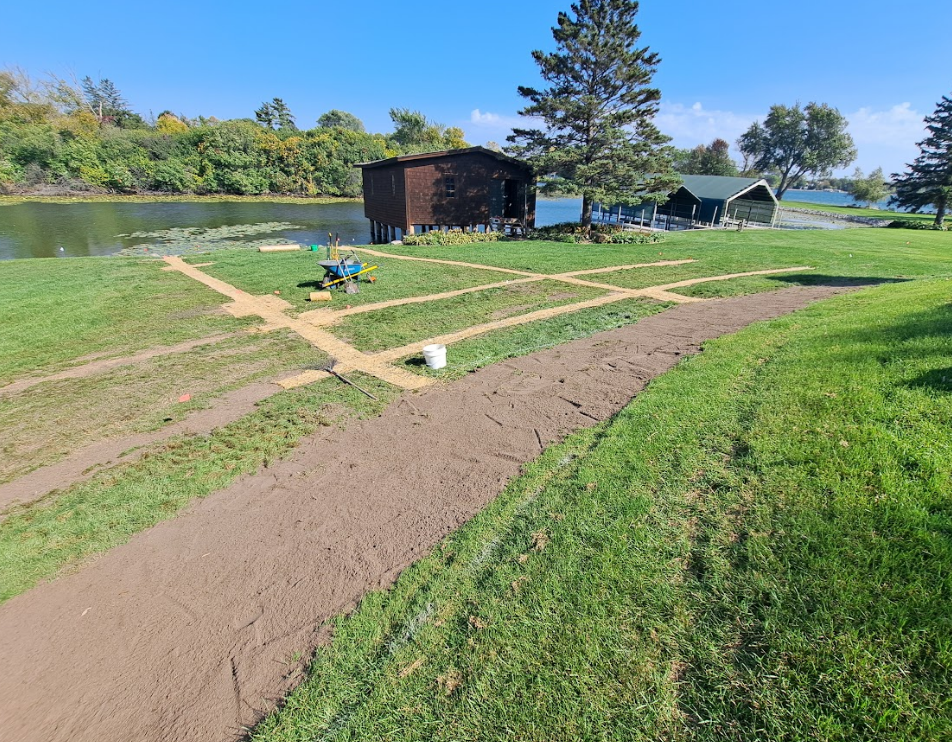
Walkways can be implemented in a whole new light near a lake. Drawing attention to the water with specified walkways is a great way to get started. You’re able to add elevated walkways or boardwalks as well. This allows you to create avenues that get right up to the water’s edge and don’t disturb the lake too much.
You’re also able to use different materials for your lakefront walkways.
There’s a ton of innovative freedom that can be worked into a walkway by the water — from aquatic focused geometry to a wide variety of materials.
Retaining walls
provide functionality and beauty. Retaining walls help with erosion control and keep your soil from washing away in the process. The majestic look they provide adds in a “wow” factor as well.
These level surfaces also provide great bedding for landscaped gardens and plants. Some popular materials used for retaining walls include:
Plant life
on lakefront properties looks gorgeous. There are a ton of different plants, shrubs, and trees that work well near the water. Depending on where you live, you will have to do some research or consult with a professional to ensure that the plant life you add will survive and thrive on your estate.
While you may have your hands full picking out new and exciting flowers, you’re also going to be fighting back against invasive species of plants. These types of plants exist everywhere but can be especially troublesome near lakes.
Their ability to swallow nesting opportunities or suffocate waterways makes them especially dangerous for the natural habitat. If lakefront property owners do not educate themselves on these species they risk endangering the environment along with their property value. Understanding what
type of algae or plant life is harmful is a homeowner’s responsibility — so it’s important to educate oneself on possible risks.
Overcoming Natural Obstacles
While owning a lakeshore property adds many benefits, it also creates challenges for landscaping as well.
When dealing with this type of home or commercial property, you’re essentially dealing with a new dimension as well. The difference this can make is seemingly small at first, but when you begin planning a new installation or landscape project — the headaches begin.
Lakefront properties naturally lie on a floodplain. We’re mentioning this because you’re first responsibility is to the integrity of your estate. Protecting your home from flooding and erosion will prevent disasters down the road.
In fact, many mortgage companies require flood insurance before a purchase can be made.
Some native plants give you a natural block from possible flooding. For a more in-depth look at what type of buffer you can create for the most secure home —
check out the DNR’s resource.
Your next hurdle comes in the form of wildlife and environmental preservation. Living near or on water is a responsibility as well as a privilege. You should understanding and research the chemicals or products you use for your lawn or garden. Things like pesticides or fertilizers have a much higher chance of seeping into the water and hurt wildlife, along with increasing the growth rate of unhealthy plantlife like algae or aquatic weeds.
We would also encourage lakefront property owners to upkeep regular maintenance for septic tanks to prevent further pollution.
So What Are You Waiting For?
Your lakefront property has almost endless landscaping potential. There are so many brilliant ways you can make additions to your home or yard to create something magical.
Here in Minnesota, we love our lakes. These waters are what make our state so special and it’s a gift we should continue to preserve.