
Fridley Snow Removal: Office Parks and Campus Lots
Hundreds of stalls and every entrance, ready before the lot fills.
Fridley Snow Removal Sized for a Campus Lot
Good Fridley snow removal on an office campus comes down to order, not horsepower. A lot with several hundred stalls can't be cleared in one sweep, so what matters is which parts open first. We start with the access drives and fire lanes, move to the stalls nearest each entrance, then work out to the far rows, with walks and doors cleared alongside. The whole property is completed inside a 12-hour window that opens when the flakes stop.
Our crews have plowed and salted commercial property since 2003. Kent Gliadon, KG's founder, completed the University of Minnesota's Landscape Design program and has led overnight plowing at office parks for over two decades. Before winter, our managers tour each building with you and turn what they learn into a written plan. Everything in it is part of our lineup of commercial snow services: plowing, walk clearing, salting and hauling.
What Fridley Plows, and What It Leaves to You
The City of Fridley plows 107 miles of roads, 80 cul-de-sacs, 17 parking lots and about 23 miles of sidewalks and trails, according to its streets page. Those 17 are city lots. A private office lot isn't on that list, and neither are the drive aisles, walks and doors inside it. City plows go out once two inches or more has fallen and the snow has stopped, and crews typically begin the redline routes between 3:30 and 4:30 AM, with the goal of clearing them in time for the morning commute.
Fridley doesn't declare snow emergencies. It handles winter parking a different way: the city closes its streets to parking between 2 and 6 in the morning, nightly, from November 1 through April 1. For an office park, that means the curb is never a fallback on a snowy morning. Every visitor and early employee needs a stall in your lot, and the lot has to be open when they pull in.
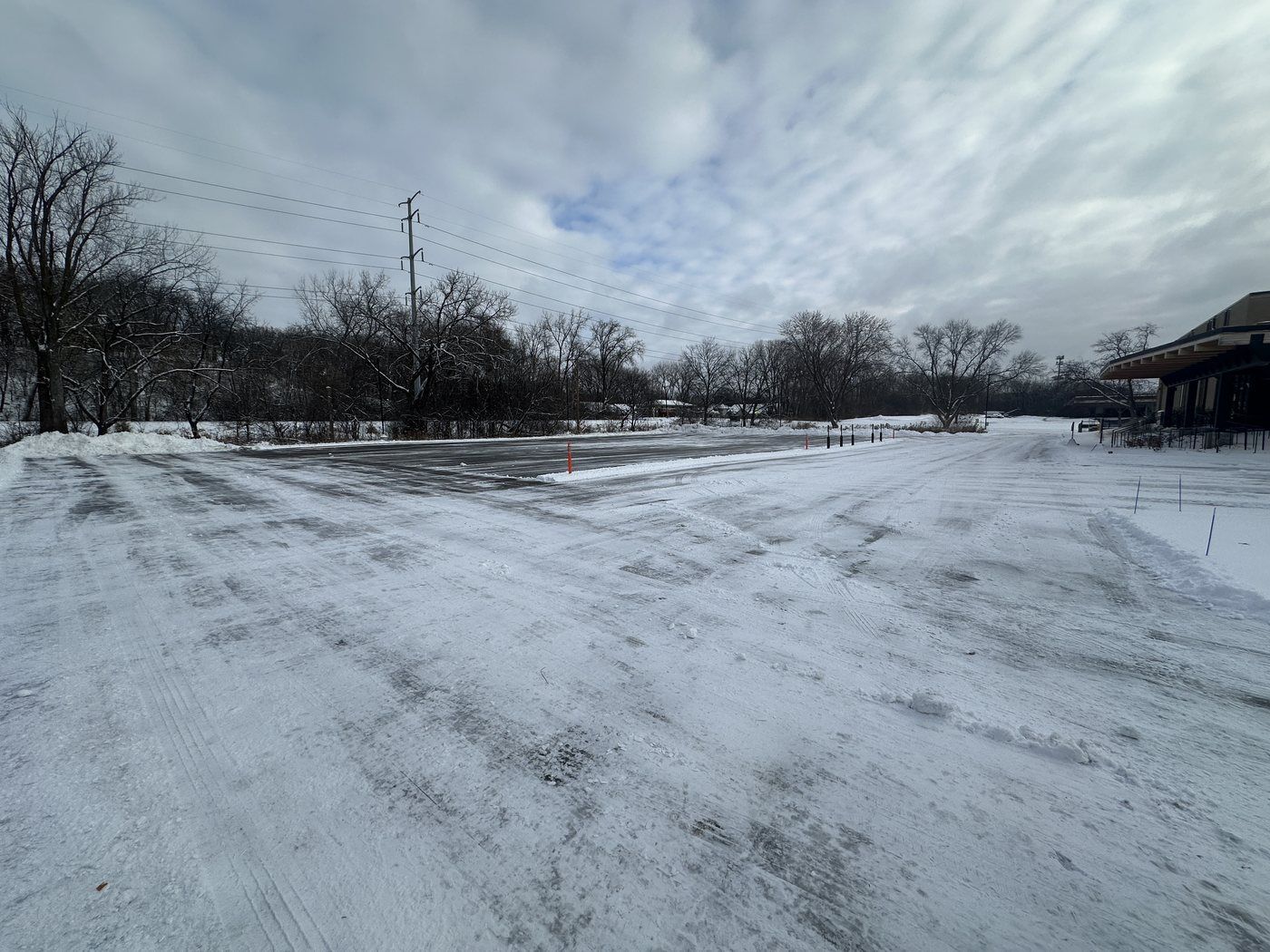 A wide lot after plowing, with the drive lanes open.
How We Work Through a Large Fridley Office Lot
Access lanes and fire lanes, then the stalls by the doors
Fire lanes and the drives into the property are cleared before anything else, keeping every building reachable by a fire truck or ambulance. Drive aisles come next, then the rows nearest each door, and overflow parking is last. If early staff arrive while we're still on the back rows, the spaces they actually use are already open. That sequence is the core of our parking lot plowing on large sites.
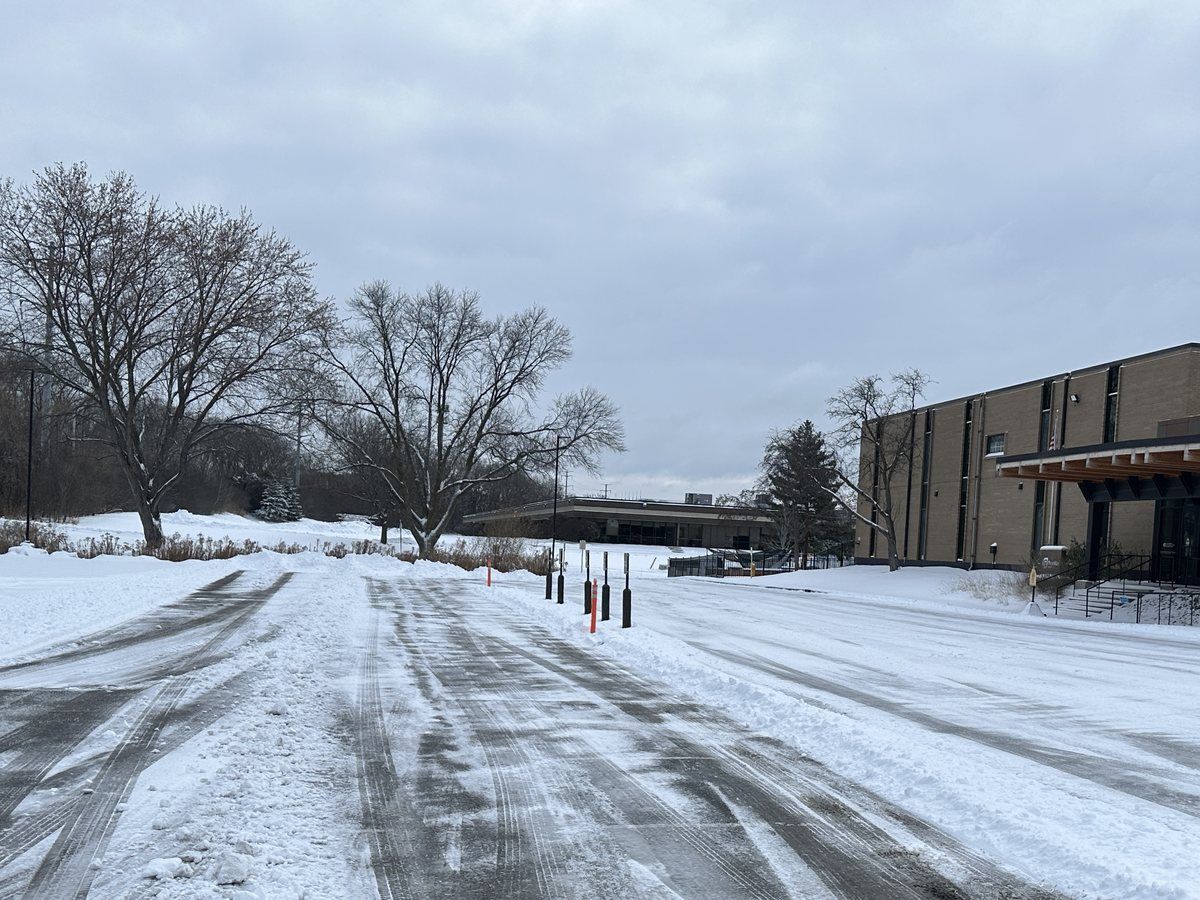
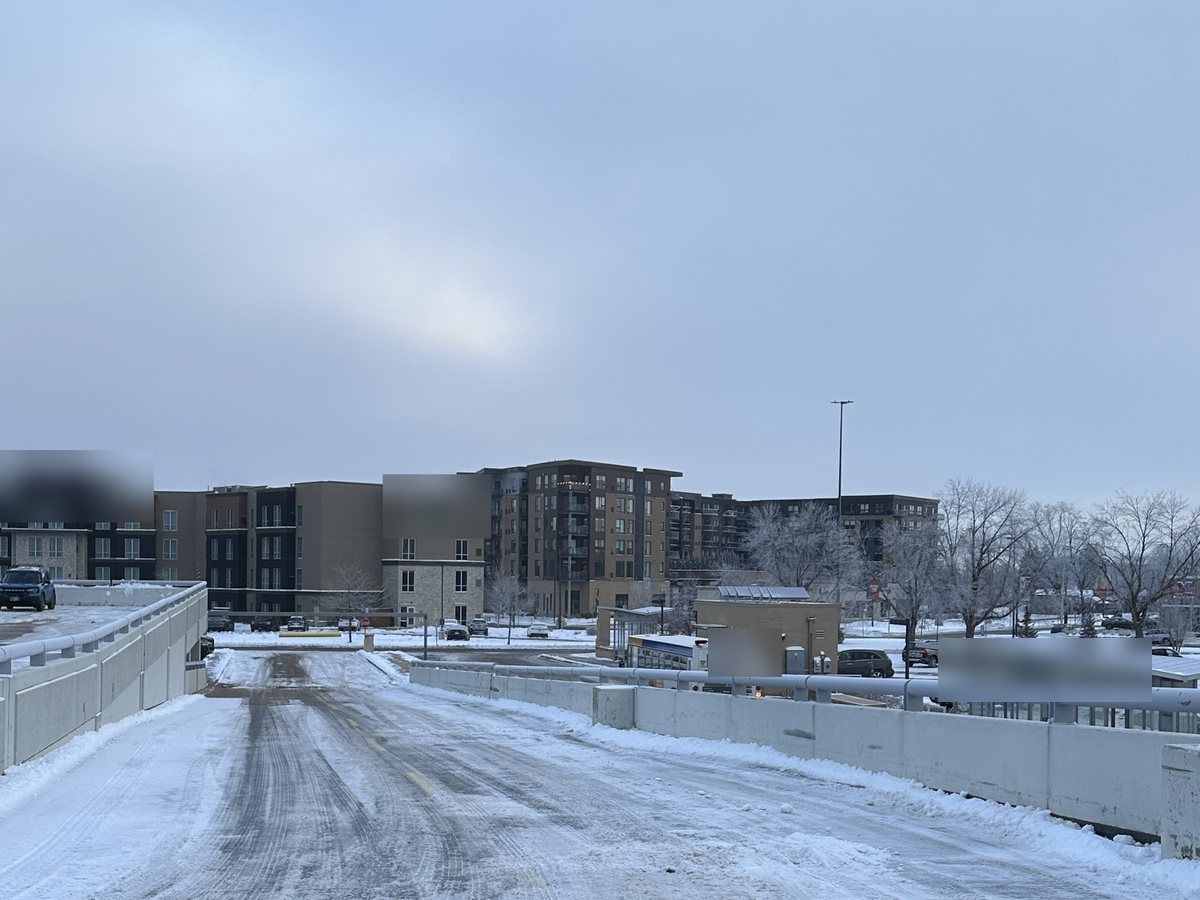
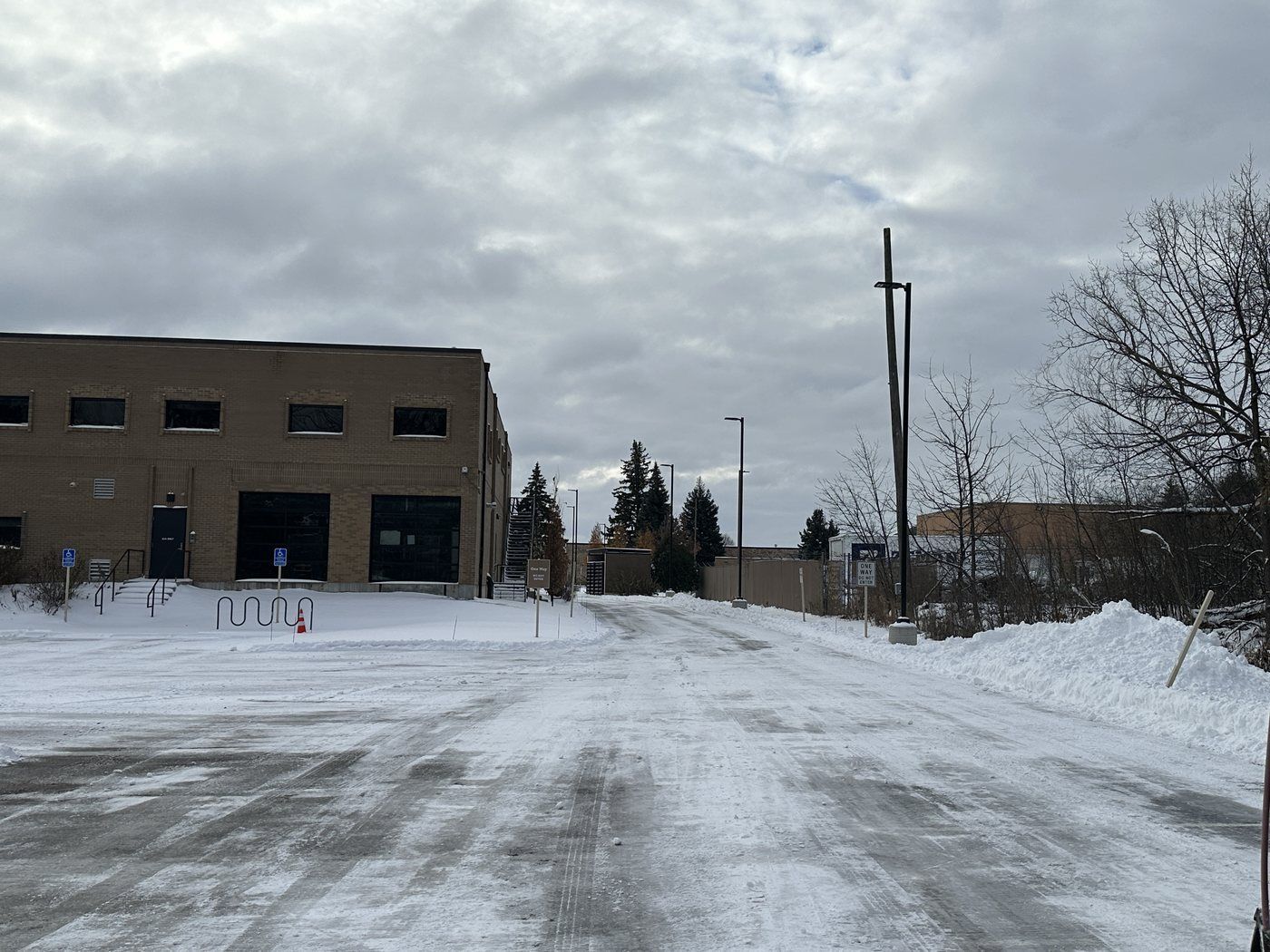 A cleared drive beside a brick building, with snow stacked along the edge.
One crew on the lot, another on the walks
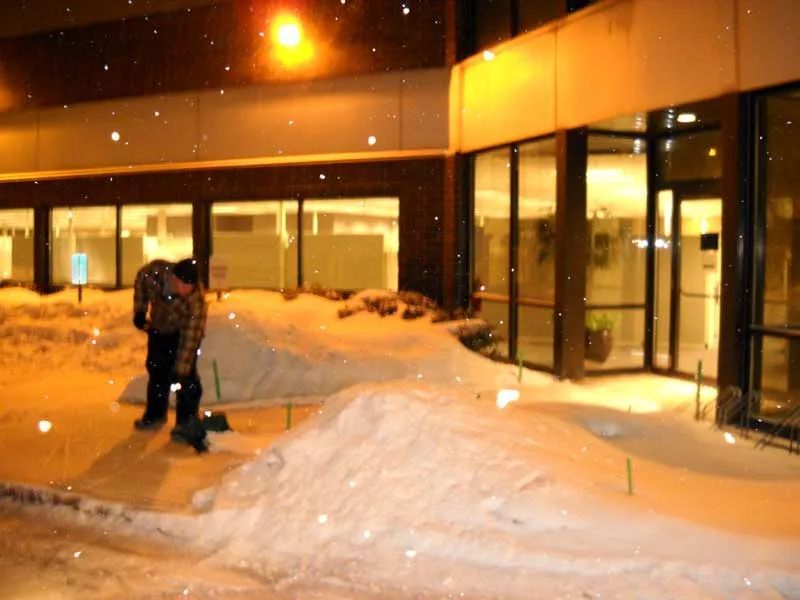
A plow can't clear a sidewalk, and walks can't wait for the lot to finish. On a campus, a second person works the walks, stairs and entrance aprons with shovels, a snow blower or a skid loader while the truck handles the pavement. Clearing walks is part of the plowing and shoveling every plan includes. The walk crew also clears the building edge with a blower before the plow arrives, so the blade has nothing to throw onto a finished walk.
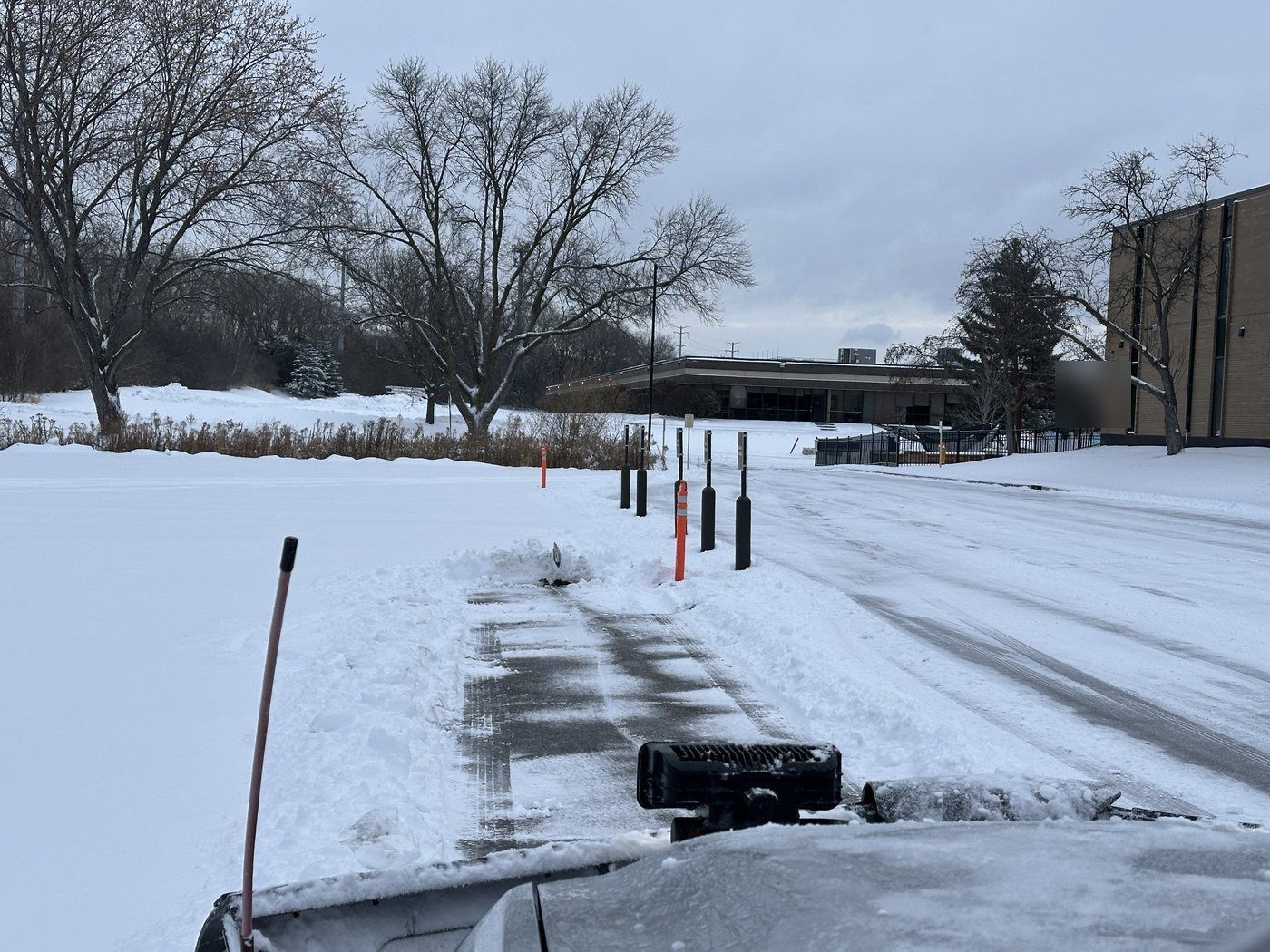 A plowed lot with posts marking the pavement edge, seen from the cab.
Islands, bollards and light poles
Big lots hide things a blade can catch: landscape islands, curb corners, bollards at the doors and light pole bases. We note each one at the walkthrough and stake the edges that vanish under the first deep snow. Where a full-size truck can't turn, compact equipment takes over.
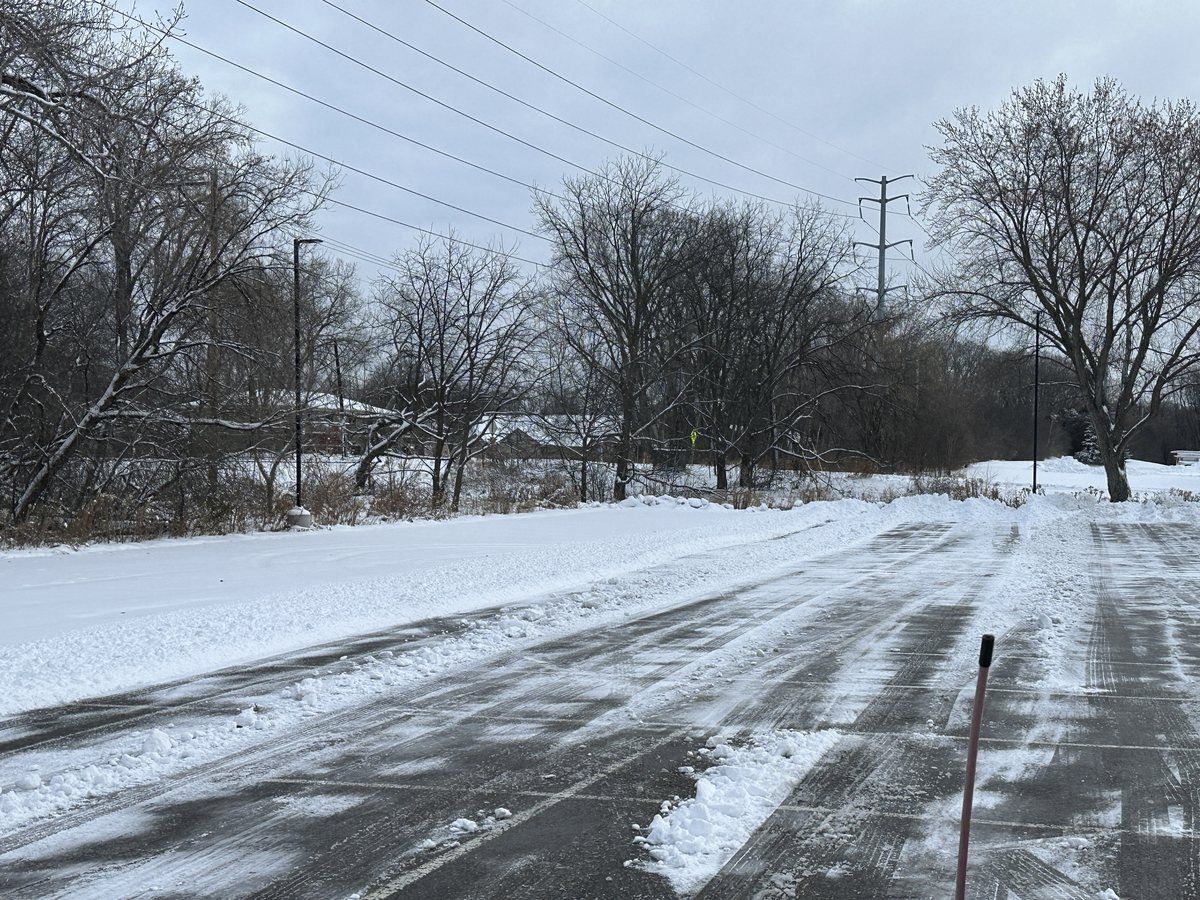
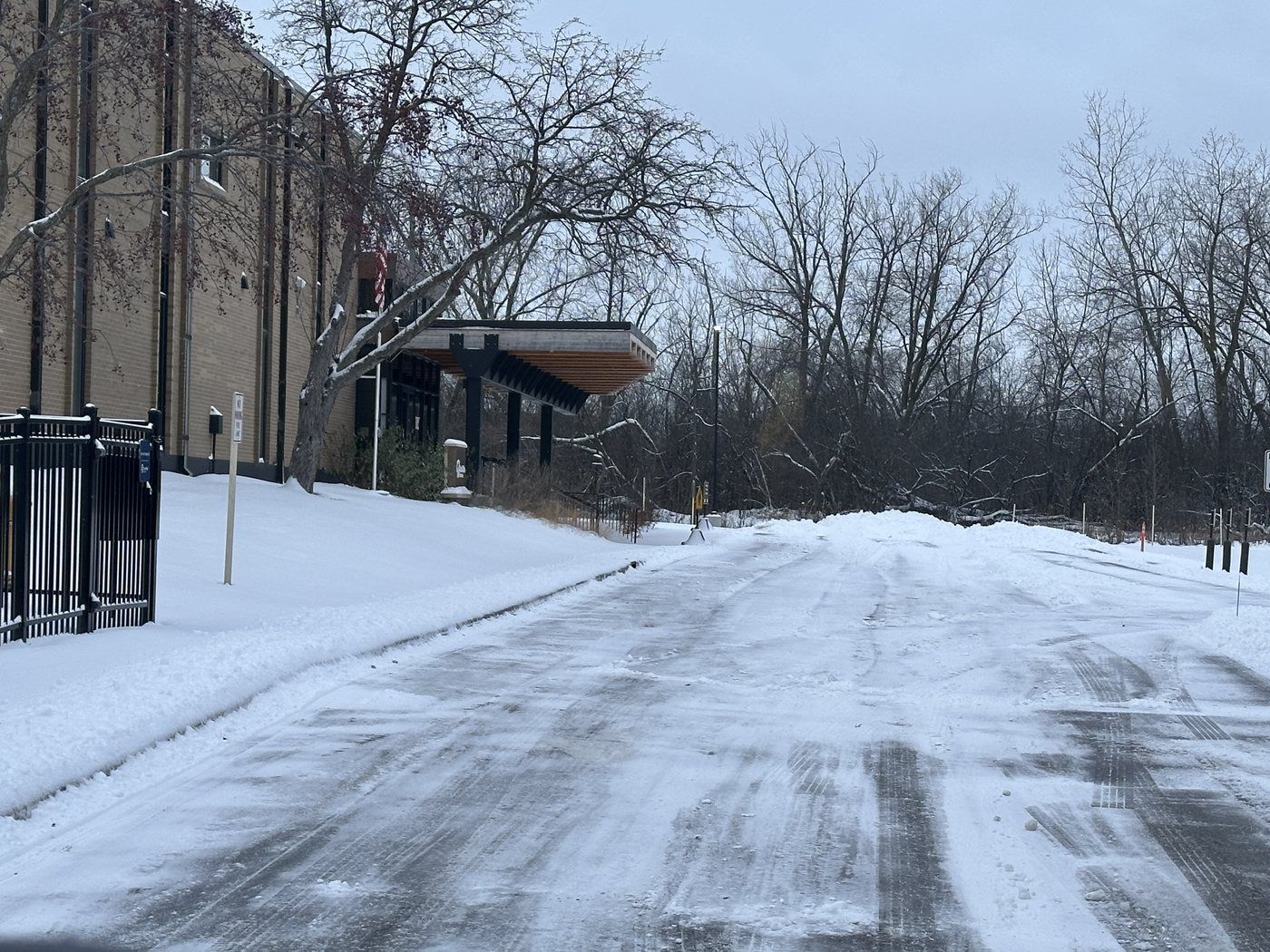 A plowed drive running past a brick building and into the trees.
Long storms: passes every few inches, crews rotated
Some Minnesota storms last a full day. Rather than wait for the end, crews return after roughly two to four inches of new snow, as your agreement sets out, to keep lanes and entrances usable. On long events, operators rotate on staggered shifts so the route never stalls on a worn-out crew. Once snowfall ends, the full cleanup follows.
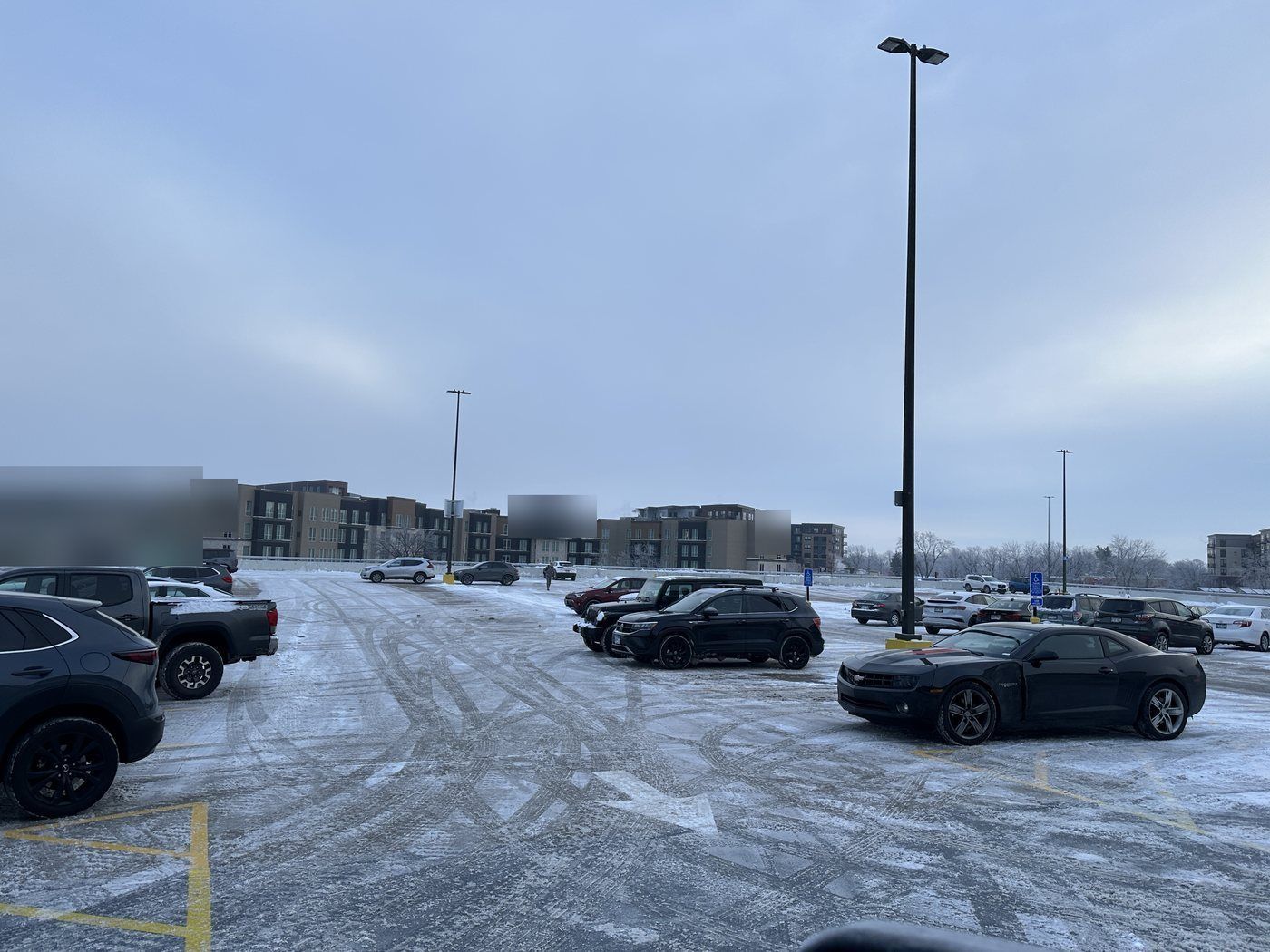 A plowed lot with cars parked and light snow left in the tire tracks.
Refreeze after a sunny afternoon
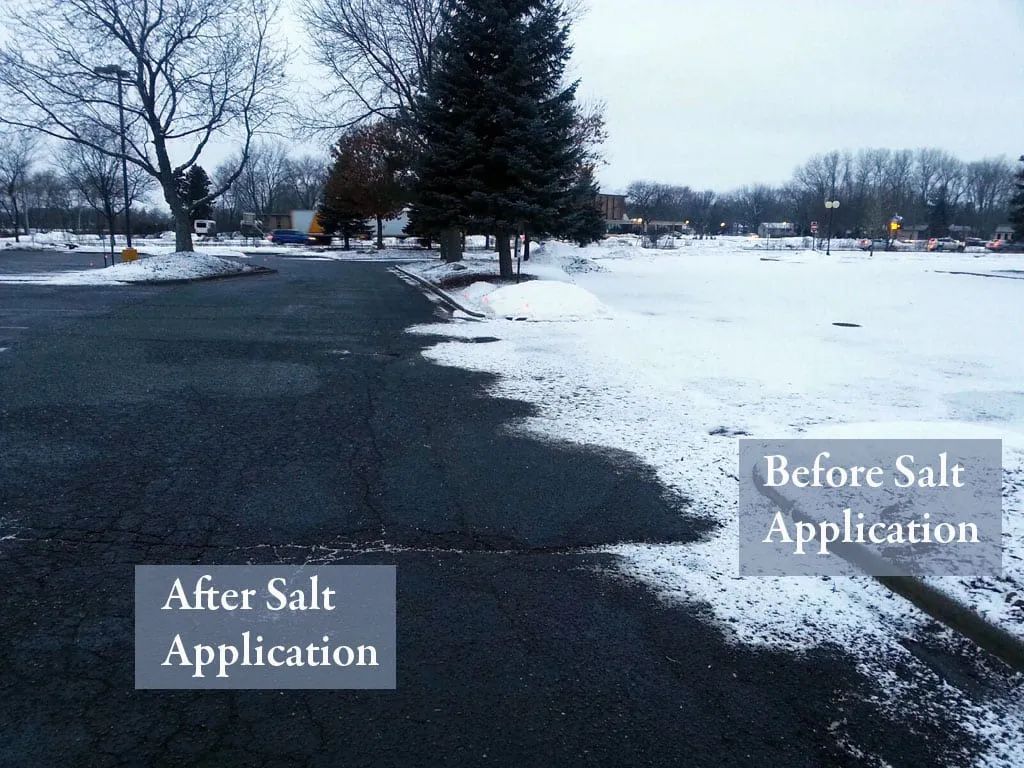
Snow melts on a bright afternoon, runs across the pavement and freezes again after dark. A lot plowed clean at noon can be slick by six. Salt goes down after each plow pass, with the amount worked out from a satellite measurement of your pavement. In the deepest cold, when salt stalls out, a sand and salt blend goes down instead. Read how our de-icing program works.
Fridley Snow Removal Plans for Multi-Building Sites
For a campus, the walkthrough goes building by building. We note which entrances open first, where the fire lanes run, which walks connect the buildings, and where piles can sit without eating stalls or hiding oncoming cars, or be hauled off site once stacking space runs out. You decide whether crews roll at one inch of snow or two. One account manager handles the whole site, and a storm-night phone line is staffed at all hours. A flat monthly rate holds the bill steady all winter, whatever the season brings; it's part of our package options. The rest of our commercial snow services are on the same page.
Campus Snow Services, Combined in One Plan
Choose the pieces your property needs; one plan and one manager cover them all.
More Reading for Office Property Managers
We've written in more depth about winter on commercial property. Our piece on why Arden Hills office parks get cleared before dawn walks through the overnight timeline. On the cost side, what skipping professional snow management actually costs looks at the risk of a thin contract. And a broader look at clearing commercial parking lots covers what belongs in a lot plan.
Fridley Snow Removal for Warehouses, Retail and Apartments
Office campuses aren't the only lots along I-694 and University Avenue. At a warehouse, the delivery bays come first: we open the truck route to each dock, then the rows where employees park. Apartment properties flip the office schedule, since residents' cars fill the stalls all night, so crews return once people leave for work. Shops and strip centers need customer rows and storefront sidewalks usable all day. Our Richfield retail snow removal page explains how storefront properties get handled. Fridley's rules above cover every one of these sites: no street parking between 2 and 6 AM through winter, and private lots aren't on the city's plow list.
Fridley Office Park Snow Questions, Answered
In what order does Fridley plow after a storm?
Priority routes come first. Fridley calls them redlines, and its streets page says they take about two to four hours in a routine storm. Local streets follow in 12 districts, which take another six to eight hours. Starting points rotate, so an area plowed last in one storm isn't necessarily last in the next. If snow keeps piling up, crews may start the night before and plow again early. Knowing that order helps you judge when tenants can expect clear streets outside your lot.
Does the city clear the public sidewalks along my Fridley property?
Mostly, yes. Fridley says it plows virtually all city trails and walks on two routes, with priority near schools. After heavier snow, though, that work can run a day or two behind street plowing, and county or state plows can bury a cleared trail again. That leaves a gap between the public walk and your own front door. We clear the walks, stairs and entrances on your property on every visit, so your tenants aren't waiting on the city's schedule to reach the building.
Can you clear more than one building on the same campus?
Yes. A multi-building site runs on one plan with one account manager, not a contract per building. During the walkthrough we rank the buildings and entrances by who arrives first, so the earliest tenants get their stalls and doors before the rest. Where we can, we keep the same operators on a property season after season so they know its layout. If a tenant changes hours mid-winter, let your account manager know and we'll reorder the route.
What happens if it's still snowing when people arrive?
The work shifts from clearing to keeping things open. Lanes, entrances and main walks stay passable while cars fill the stalls, and crews work around parked vehicles instead of waiting for an empty lot. Walks get treated between passes so the next inch doesn't pack into ice underfoot. Stalls that were full during the storm are cleared on the cleanup pass that follows it. Your account manager can update you on the next pass whenever tenants ask.
Where does all the snow go on a big lot by March?
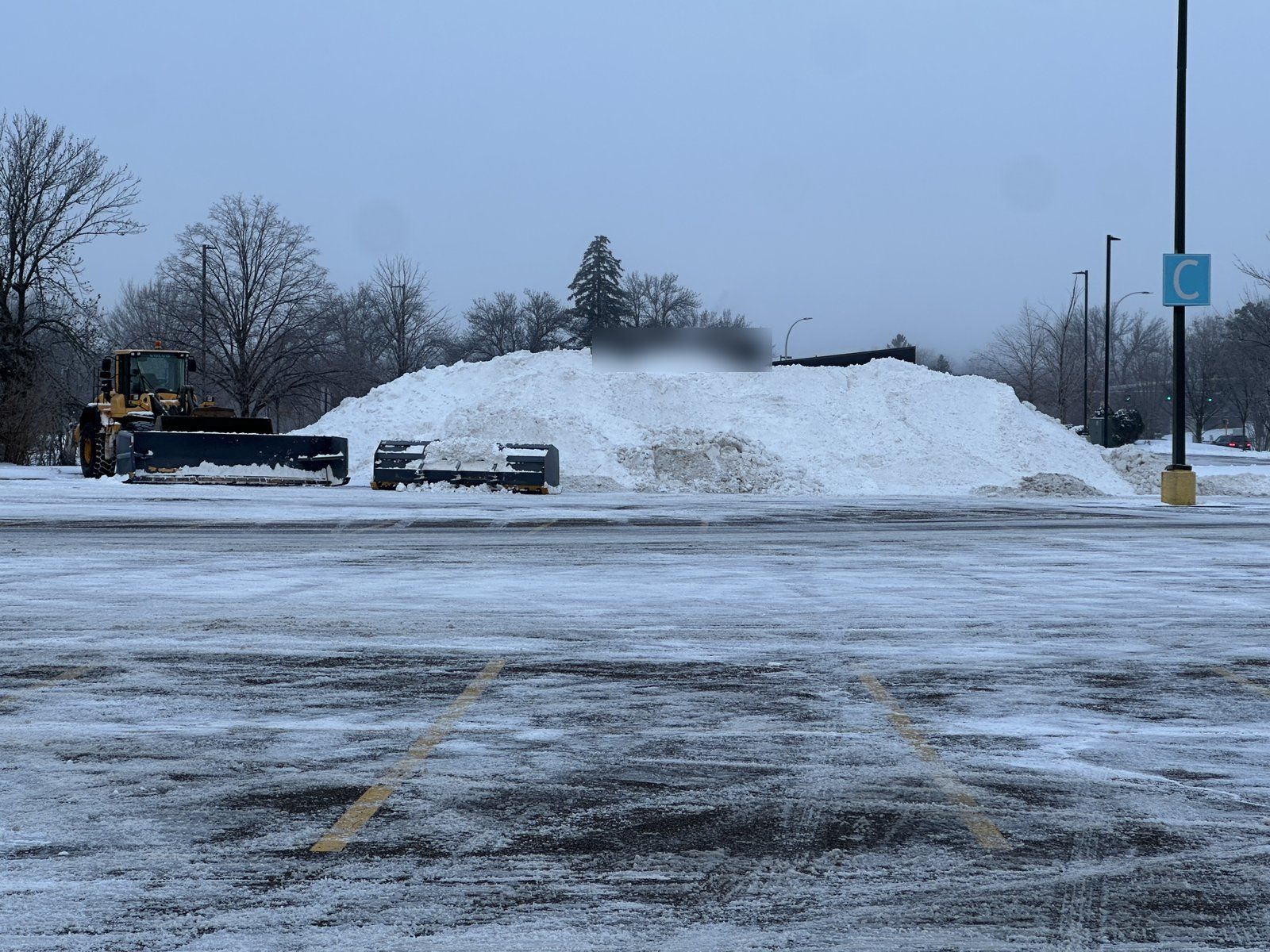
Every pile remains on site until spring, unless a haul truck takes it first. Fridley's guidance says snow shouldn't be pushed into the street or onto a neighboring property, so the curb is never a dumping spot. Loaders push piles back as they grow so they don't creep into the stalls nearest the buildings. By March, the piles still standing on a big lot are the ones in spots chosen at the walkthrough, not ones that crept forward all winter, and the rows by your entrances are still open for the people who use them most.
Let's Walk Your Fridley Campus Before It Snows
If you need snow removal in Fridley, MN, for a campus near I-694, along University Avenue or off Highway 65, we'll start by touring the grounds with you and noting each entrance tenants rely on. Phone (763) 568-7251 to set a date, or send a note. See our full winter lineup under snow removal services.
Other Service Areas