
Brooklyn Park Snow Removal at Industrial and Manufacturing Sites
Truck lanes, shift doors and walks, cleared around the clock.
Brooklyn Park Snow Removal That Starts With the First Shift
Brooklyn Park snow removal at a plant or warehouse should be finished before your earliest shift arrives, not by a generic 8 AM. A production site may start crews before dawn, take trucks at first light and change shifts mid-afternoon. The employee door, the lanes to the truck court and the walks in between set the deadline, so that's what our route is built around.
Since 2003, our crews have kept commercial properties moving through Minnesota winters, and KG's founder, Kent Gliadon, has run commercial snow routes for more than two decades. For snow removal in Brooklyn Park, MN, each site gets a plan written before winter, based on a walkthrough with you and built from the full commercial scope we offer.
Snow Emergencies, the 2 AM Ban and the 48-Hour Sidewalk Rule
Brooklyn Park can declare a snow emergency when snow, sleet or ice makes travel dangerous. Once it does, no one may park on a city street until its full width has been plowed, and vehicles left behind are ticketed and towed. Even without an emergency, the city keeps cars off its streets between 2 and 5 AM each night from November through March, regardless of weather. On a storm morning, every employee car has to fit on your property.
Sidewalks have a clock, too. The city plows a designated arterial sidewalk system only, and owners must remove snow and ice from their own sidewalks within 48 hours of the snowfall stopping. Minnesota law also bars plowing or blowing snow onto a public road, so whatever comes off your lot has to stay on your property or leave in a truck.
The city's 2040 Comprehensive Plan counted more than 1,500 businesses in 2017, and manufacturing was the largest industry by employment in its 2016 figures. The plan highlights growth along the Highway 610 corridor, and Northland Business Park is one of the business areas its development authority helped build. Sites like these share one winter problem: they rarely sit empty long enough for a crew to clear them on an office schedule.
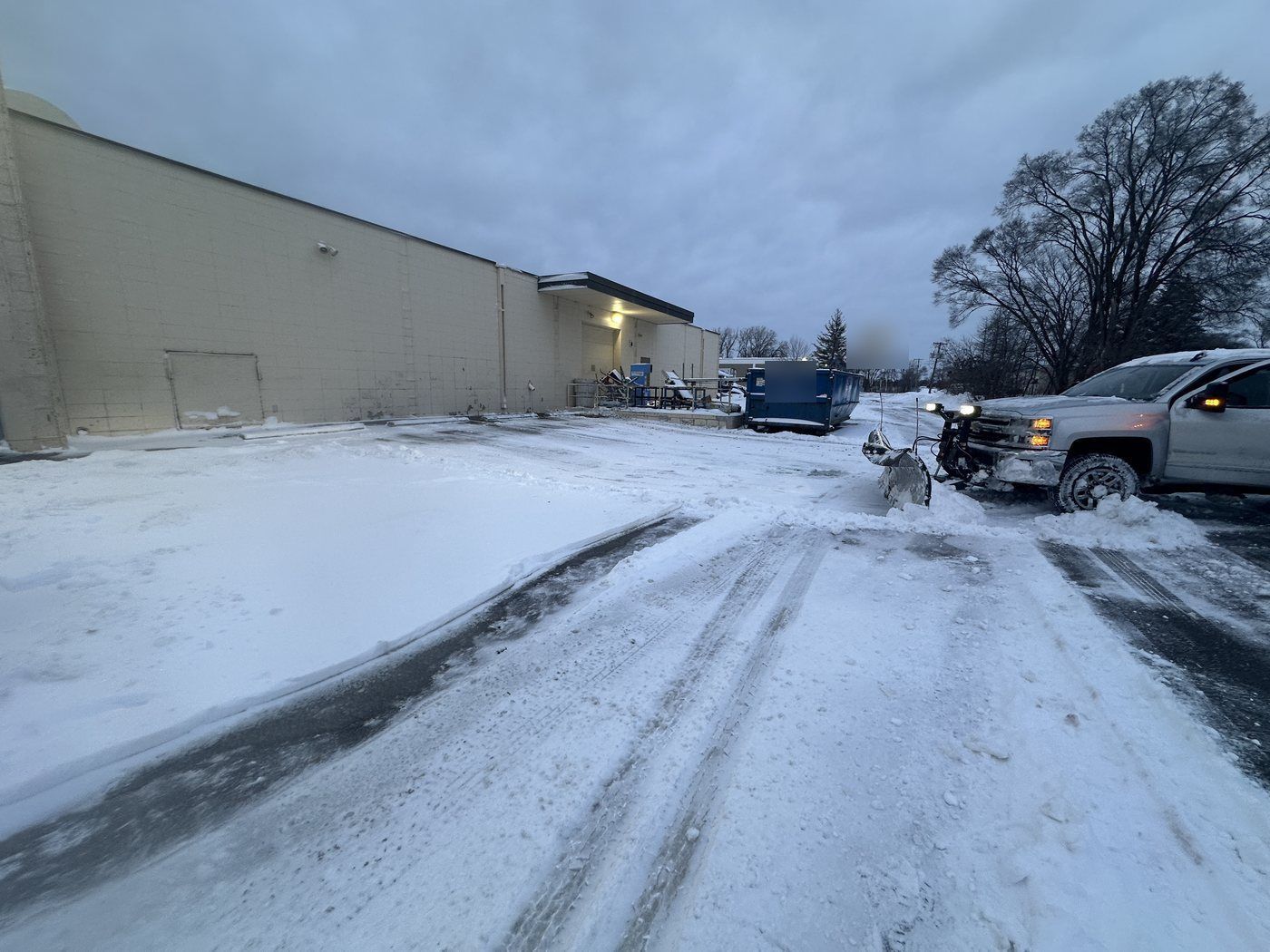 A pickup with a plow working a warehouse lot at first light.
Clearing a Brooklyn Park Industrial Site Around the Clock
Shift times set the route, not office hours
At the walkthrough we ask when each shift starts, when trucks arrive and which door each crew uses. Those answers decide where your site lands on our overnight route. Properties with early starts are placed ahead in the dispatch order, and the employee lot and door come first on site.
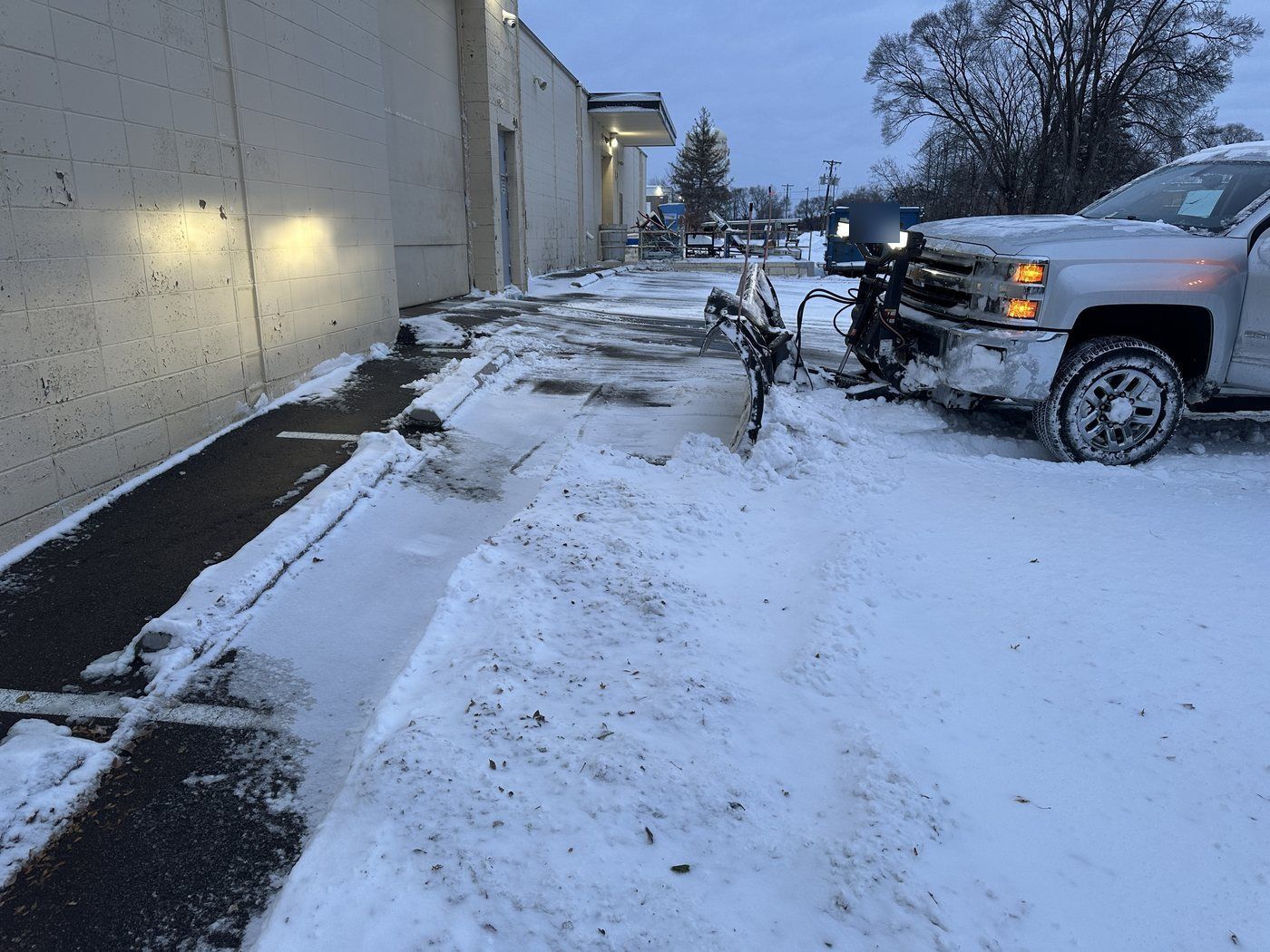 A plow working along a building wall next to a cleared strip of pavement.
Snow blown off the building line first, then the plow
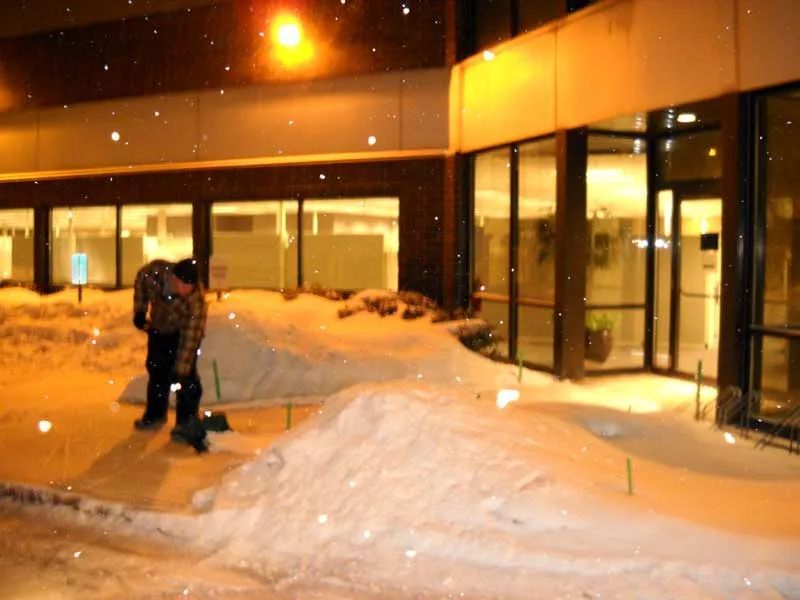
Along a building wall, snow collects where a blade can't reach without scraping siding or doors. A crew member blows that strip clear first, part of the hand and machine walk clearing on every site. The plow then runs the lane without leaving a ridge against the wall or tossing snow onto the walk beside it.
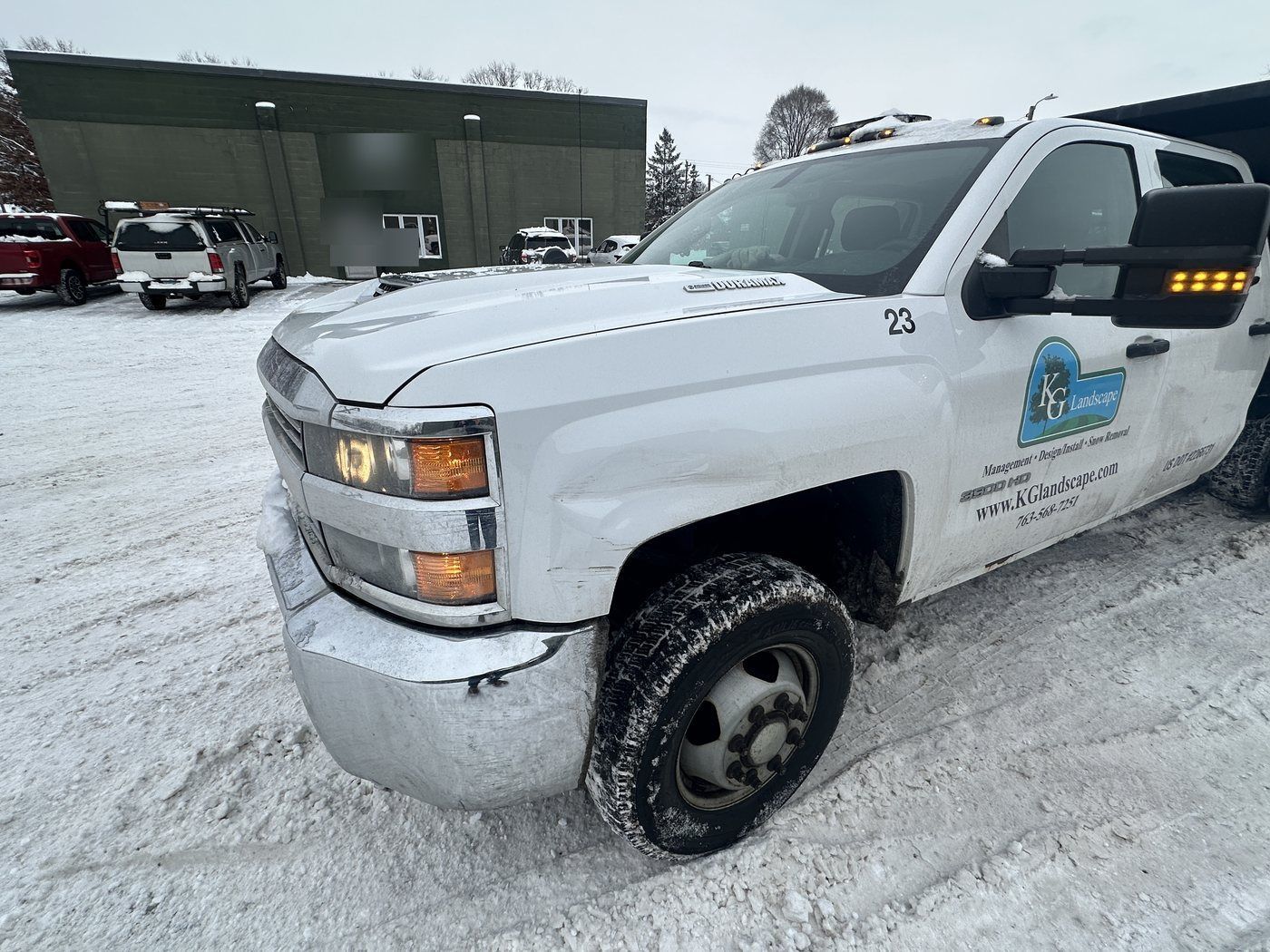 One of our trucks at an industrial lot after a snowfall.
Our trucks and machines on site
Industrial sites range from tight side yards to wide truck courts, so the equipment has to fit the space. Our crews bring plow trucks, skid loaders and walk-behind machines, and run straight blades or V-plows depending on the lot. Matching the machine to the property beats sending whatever truck happens to be free. An oversized blade on a tight side yard is how curbs and building corners get damaged, and the right machine also finishes the job faster.
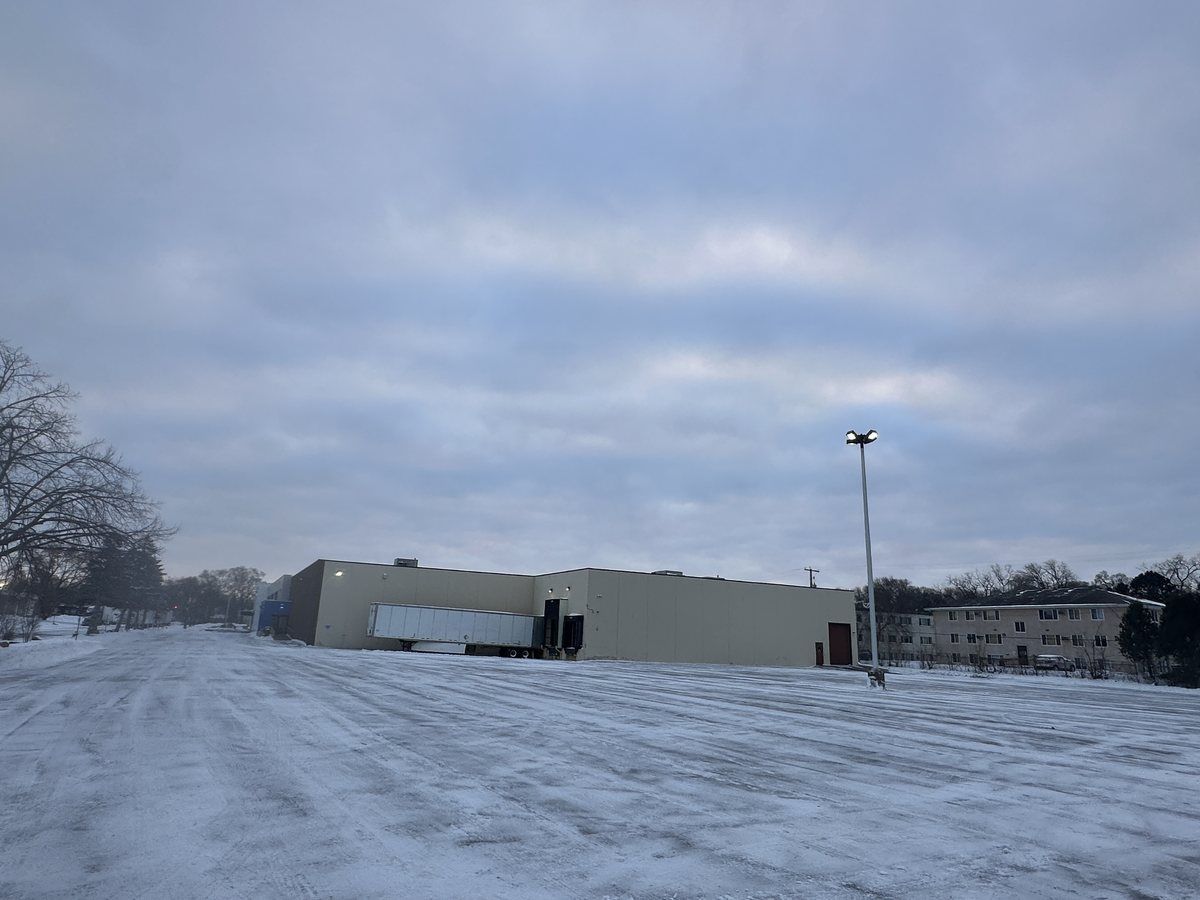
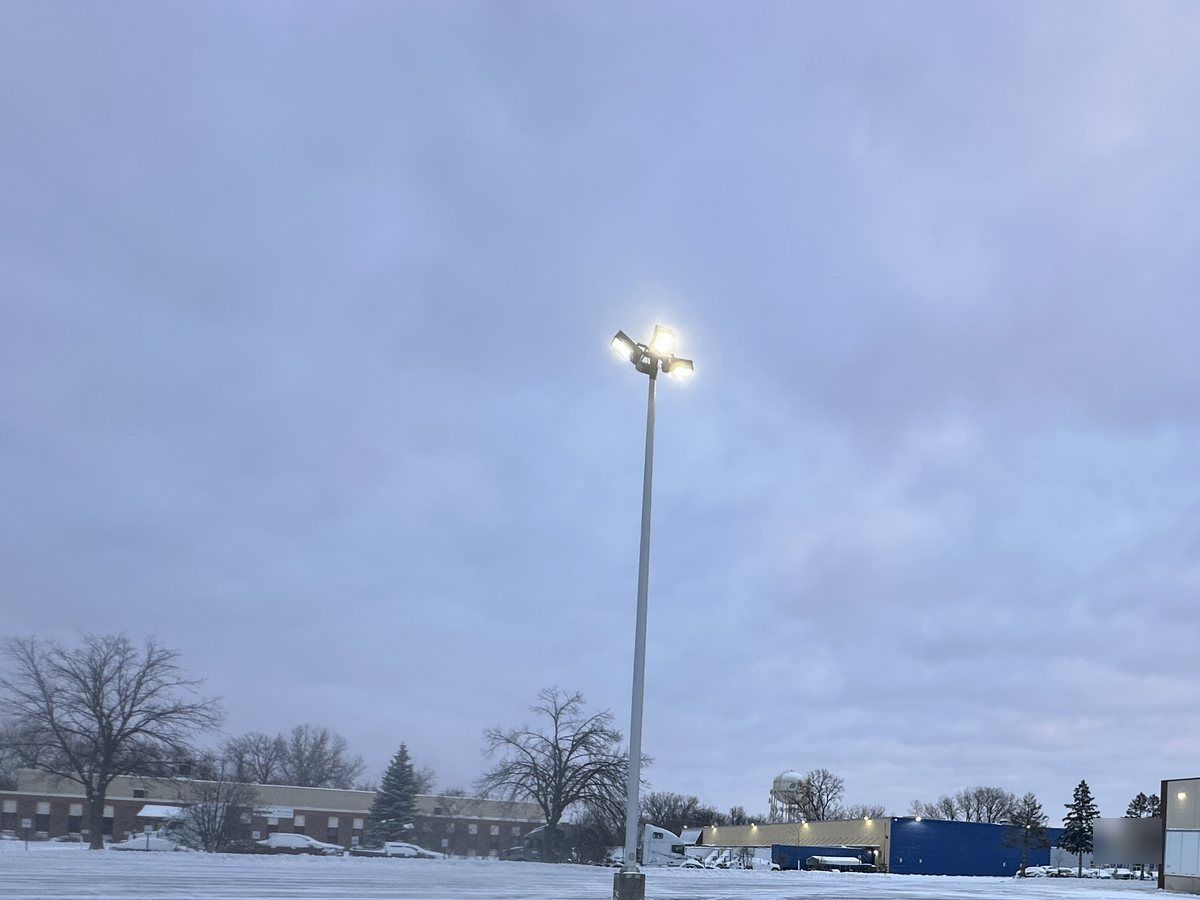
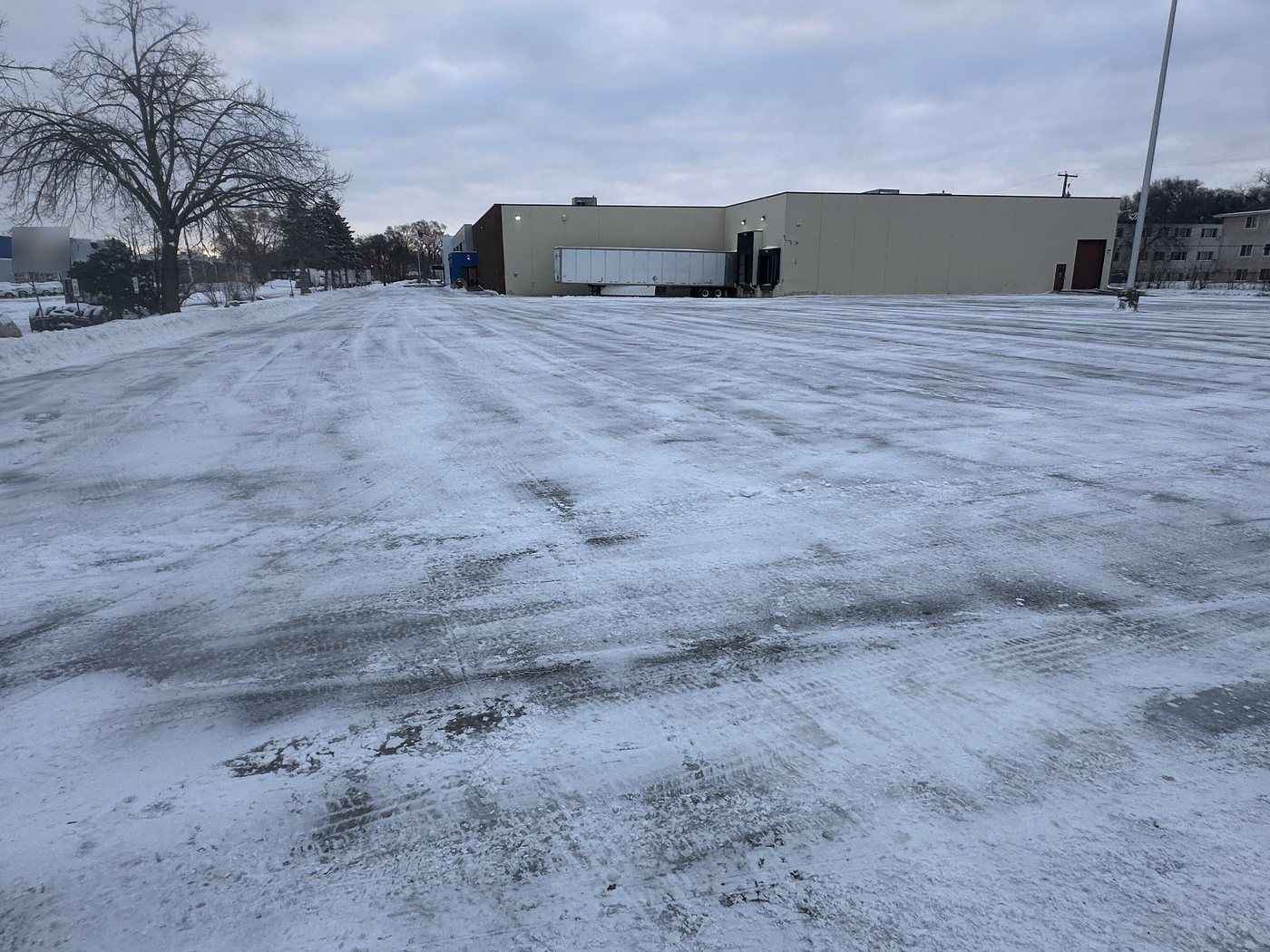 An open industrial yard with the snow pushed off.
Big open lots salted to pavement
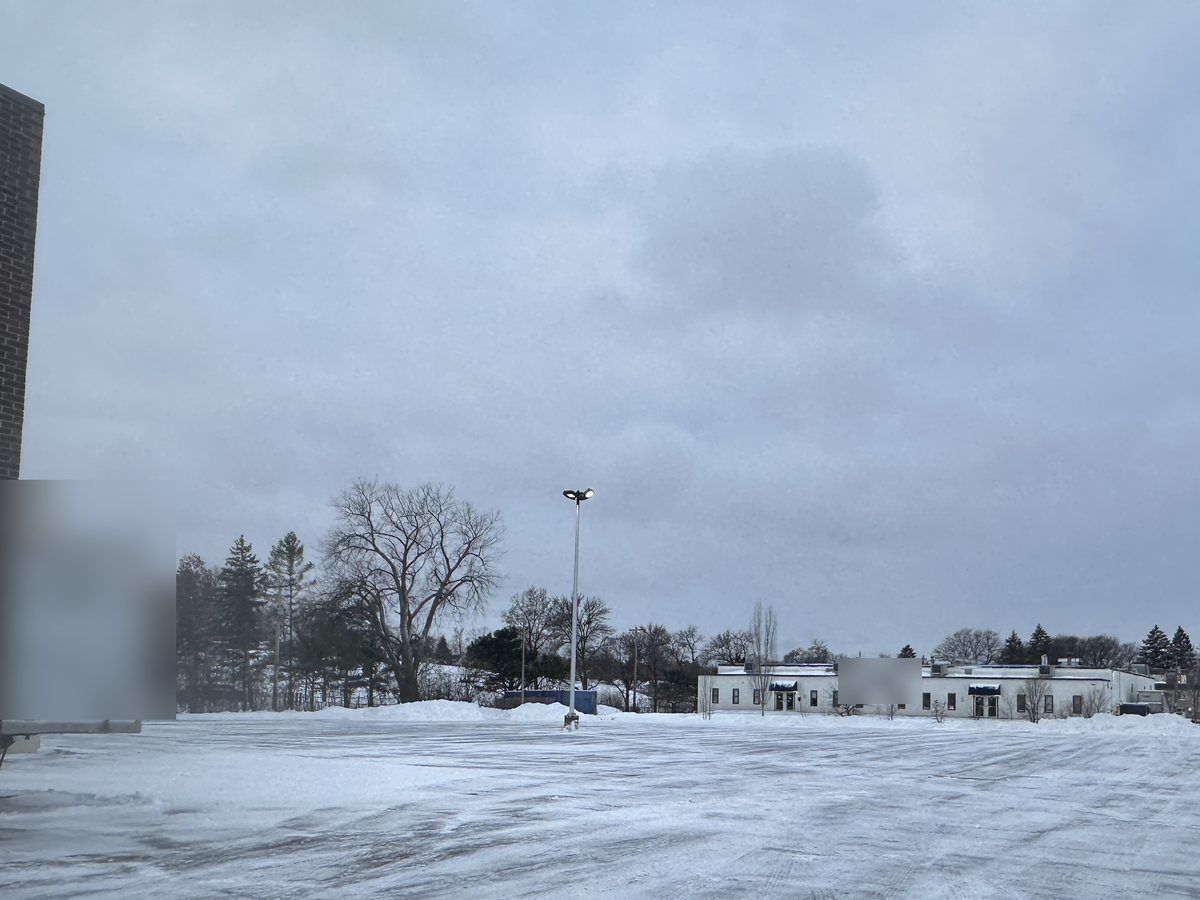
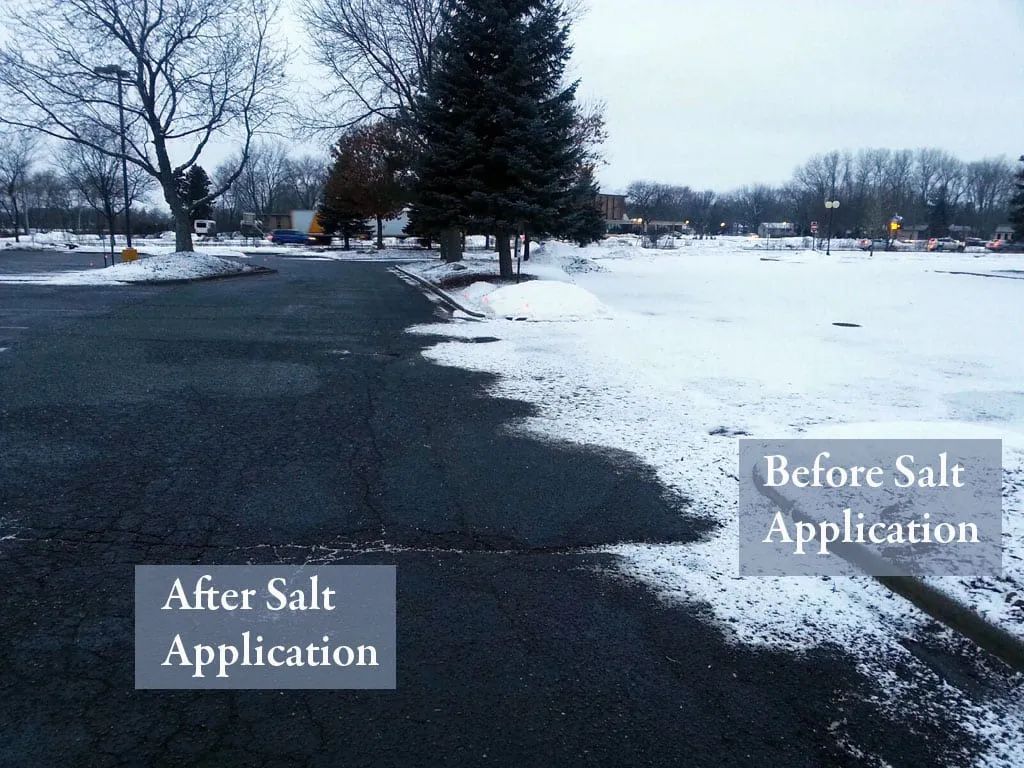
On a wide industrial lot, our salt trucks lay down pure salt until the asphalt shows through, sized to the paved area from satellite measurements. When temperatures fall below roughly 15 degrees, a sand blend gives tires grip. Read more about our ice control.
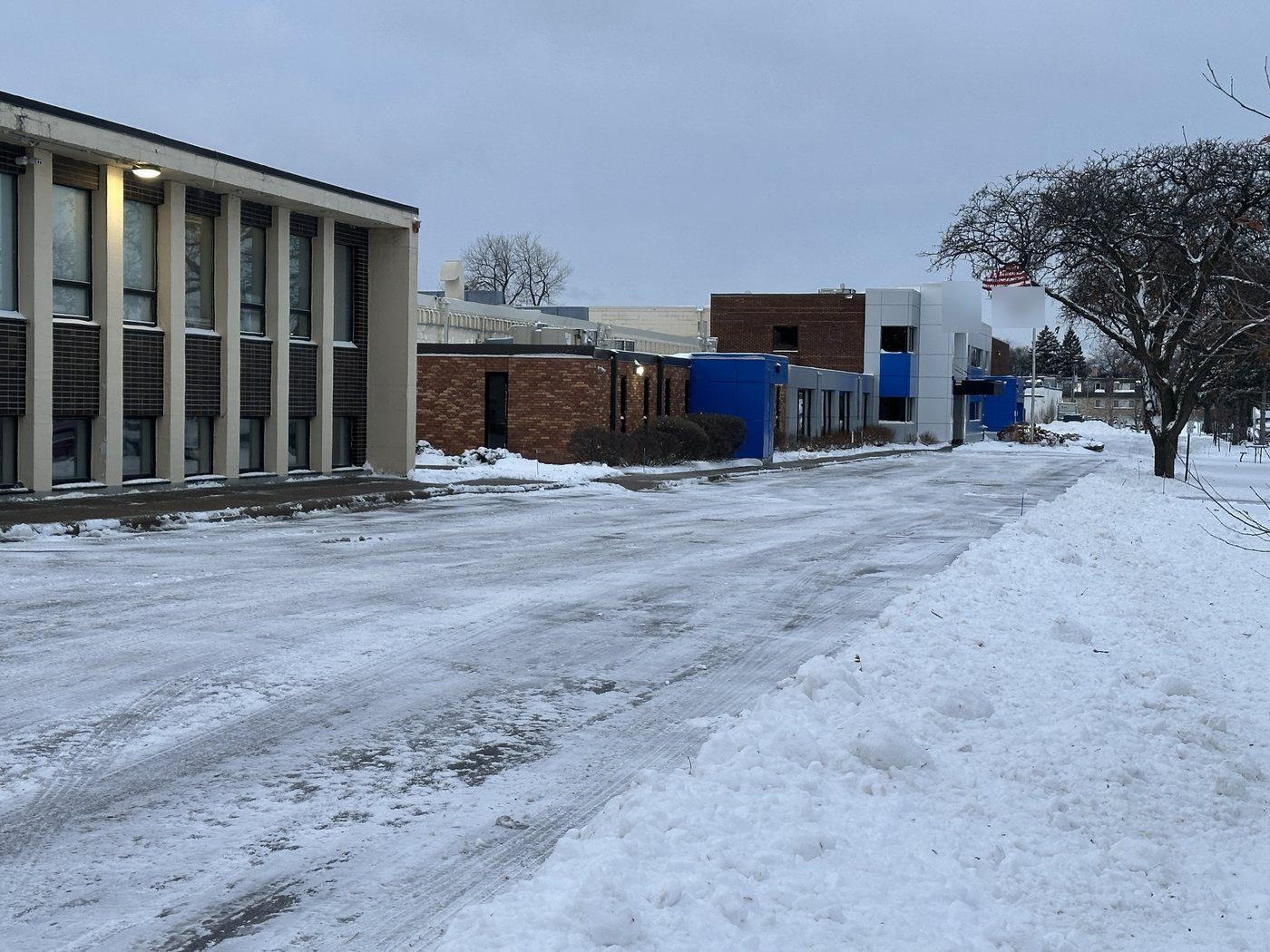 A drive cleared along a building, with snow banked on site.
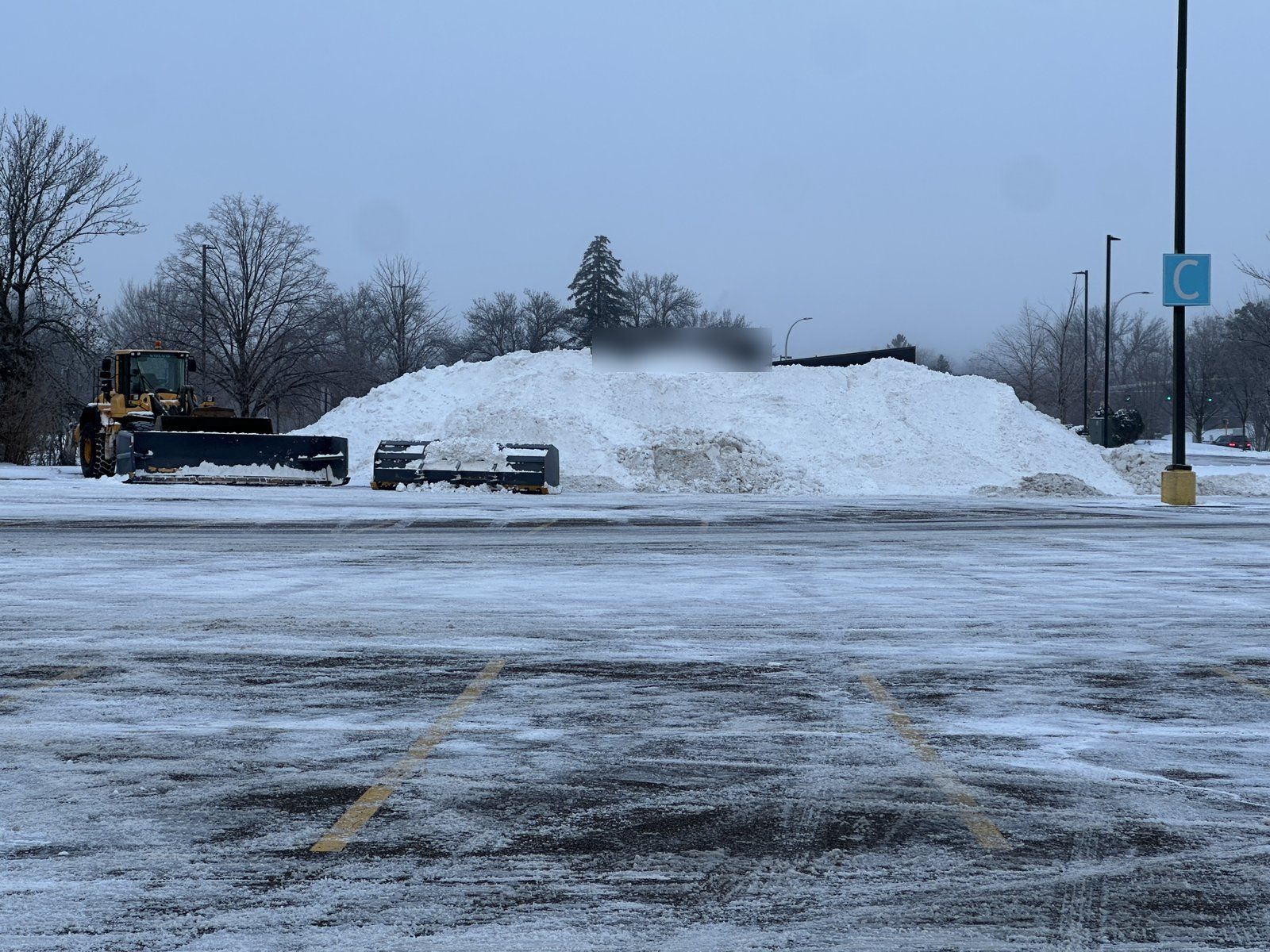
No snow pushed into the street
Every plan sets where snow goes on your property: corners that won't block trailer turns, exit sight lines or the stalls your crews need. When that space fills, we load and haul it away. Nothing gets pushed across the sidewalk or into the street. Piles at a truck exit also get kept low, because a driver pulling a trailer onto the road needs a clear view both ways.
Brooklyn Park Snow Removal Plans Start With Your Shift Schedule
The plan comes out of a walk around your site with you or your facility manager. We note each shift, each door, the truck routes, where trailers wait and the parking areas that fill first, then agree on a trigger of 1 or 2 inches. Our service window shuts 12 hours after the last snow falls, and your earliest shift's areas come first inside it. You'll work with one account manager, and our phones are covered all night during storms. If you'd rather budget by the month than by the storm, our snow removal packages include fixed monthly pricing. Each service call is recorded with its date, start time and the areas covered. Everything else is listed on our business snow removal page.
Winter Work for Plants, Shops and Warehouses
Pick the services your site needs; they run together under one agreement.
More on Snow Service for Working Properties
For a closer look at contracts and costs, start with what a full commercial snow scope looks like. If you're weighing pricing models, our guide to seasonal versus per-storm service compares the two. And our parking lot snow clearing overview explains how a large lot gets handled.
Brooklyn Park Snow Removal for Offices, Retail and Apartments
Plants and warehouses make up only part of Brooklyn Park's commercial base. Professional buildings go quiet after hours, leaving an empty lot that's simple to finish ahead of the morning arrivals. Stores and restaurants want parking aisles and front sidewalks passable for shoppers throughout the day. Multifamily properties are the trickiest, since residents stay parked overnight and crews plow around them before coming back once stalls empty. That routine is spelled out on our Crystal apartment snow removal page. Brooklyn Park's rules covered above reach each property type, including the nightly 2 to 5 AM street ban and the 48-hour deadline for walks.
Questions Brooklyn Park Plant Managers Ask
Which sidewalks along my Brooklyn Park property does the city plow?
Only the walks on its arterial system, and the city's snow page links a map showing exactly which frontages those are. Everything else along your property is on you. The city also asks businesses to clear about five feet around fire hydrants near their property so firefighters can reach them. On an industrial site that's easy to miss, since hydrants often sit along long, quiet frontage. We can add your public walks and hydrant clearings to the plan so they're done on the same visit as your lot and doors.
What changes for my lot during a Brooklyn Park snow emergency?
Street parking stops until each street has been plowed curb to curb. The city announces emergencies by email to anyone who subscribes and through local TV and radio, though stations don't guarantee the announcement will air, so the email list is the surer bet for a plant manager. Towed vehicles go to an impound lot, and owners pay towing and storage on top of the ticket. If any shift parks on the street, remind them that cars there are towed during the nightly 2 to 5 AM ban and on emergency days.
Do you plow on weekends and holidays when the plant runs?
Yes. Our commercial crews and equipment are scheduled for service 24 hours a day, seven days a week, because storms don't keep business hours and neither do most production sites. At the walkthrough, tell us which days you run, which you're closed and which holidays you work. That schedule shapes when your site is cleared inside the service window, so a plant running a Saturday shift isn't treated like an office that sits empty until Monday.
What if trucks or trailers stay parked in the lot overnight?
Tell us where they usually sit. The walkthrough maps how your site is actually used, including trailer parking, staging areas and any spots that are rarely empty, and the plan is built around that layout so the crew isn't guessing on a dark morning. Crews clear the lanes and spaces around parked equipment so trucks and loaders can come and go. Snow left beside a parked trailer is handled once the area is open, as your agreement spells out.
Do we pay per storm or by the season?
You can do either, but many industrial sites prefer a fixed rate. Per-push pricing charges for each visit, which can look cheap in a light winter and expensive in a heavy one, often with salt and sidewalks billed on top. With our flat monthly option, December and February cost the same no matter how much falls, and your trigger and scope are written into the agreement. Your account manager can walk you through both before you sign.
Let's Plan Your Brooklyn Park Site Before Winter
Whether you're along Highway 610, near 85th Avenue or inside Northland Business Park, we'll walk the site, note every shift door and truck lane, and build a route around your schedule. Call (763) 568-7251 to schedule the site walk, or message our team. Our other winter work is on the snow removal overview page.
Other Service Areas