
Crystal Snow Removal for Apartment Communities
Lots, walks and entrances cleared around the cars that never leave.
Crystal Snow Removal Built Around a Full Parking Lot
If you manage an apartment building, Crystal snow removal comes down to a problem other properties don't have: your lot is never empty. An office lot clears out at night and a store lot empties after closing, but an apartment lot is fullest around 3 AM, right when plow crews prefer to work. The residents who need the lot cleared are the same people whose cars are in the way.
Our crews have cleared commercial lots since 2003. Kent Gliadon, our founder and a graduate of the University of Minnesota Landscape Design program, has worked with apartment communities for more than 20 years. Before he signs an apartment contract, he walks the lot with the property manager, counts the stalls and asks how many are full overnight. That walk shapes the plan, from the order of the passes to where the snow will sit in March, and every piece of it is part of KG's commercial snow program.
Why Every Car Ends Up in Your Lot on a Crystal Snow Night
Crystal bans parking on its streets from 2 to 5 AM every night of the year, not only in winter. Once 1.5 inches of snow falls, the rule widens: no parking on any public street or alley until the snow stops and that street has been plowed edge to edge, and the city may ticket or tow while the restriction is on. Every resident's car and every overnight guest ends up in your lot. The rules are on the city's snow removal page, and its snow plowing FAQ is plain that privately owned lots and driveways are not the city's job.
Crystal also wants more apartments. The city's Town Center handout says it is actively encouraging new multifamily buildings in its main commercial area around West Broadway and Bass Lake Road, at 16 to 80 units per acre. Required parking there can be as low as one space per unit, with parking placed within or behind the building instead of out front. On a snow night those rules also mean a lot with few empty stalls and little room at the edges for piles.
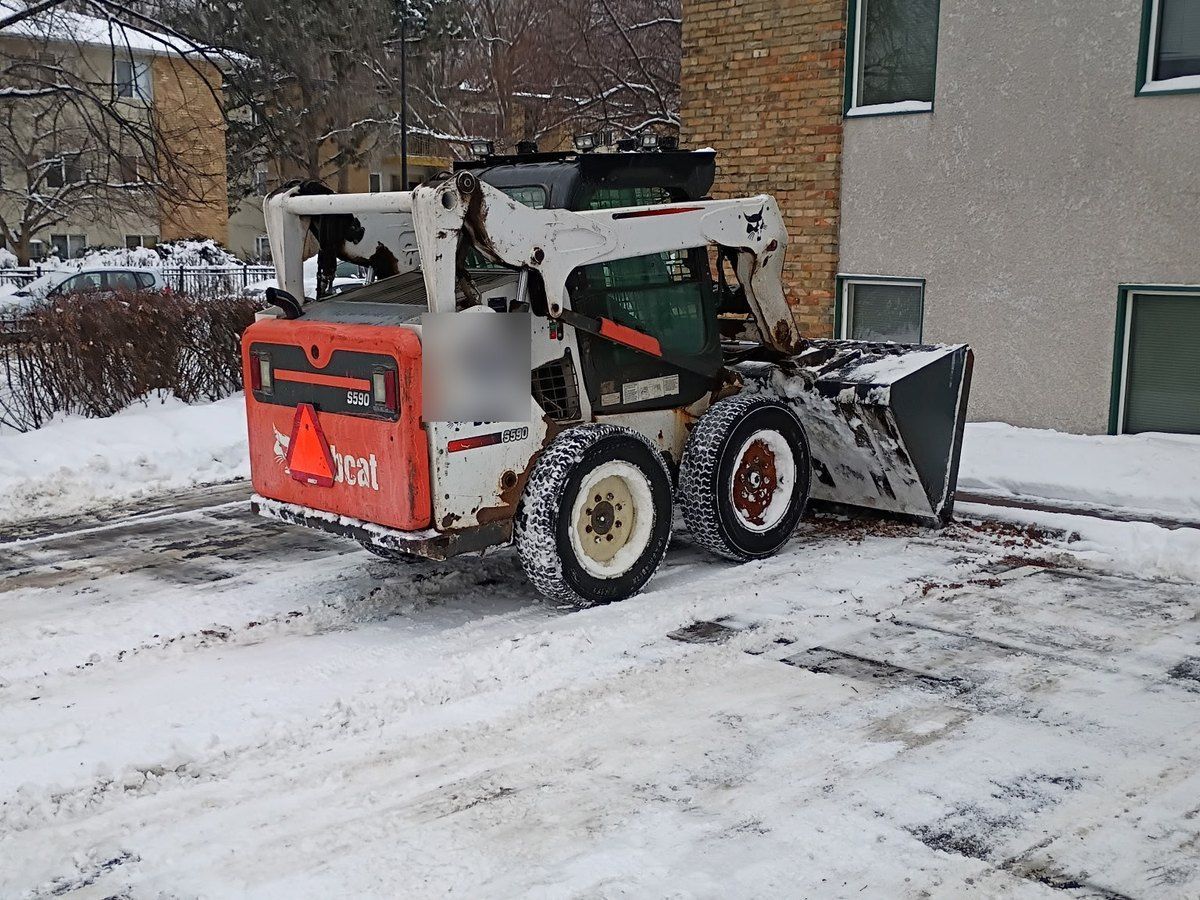
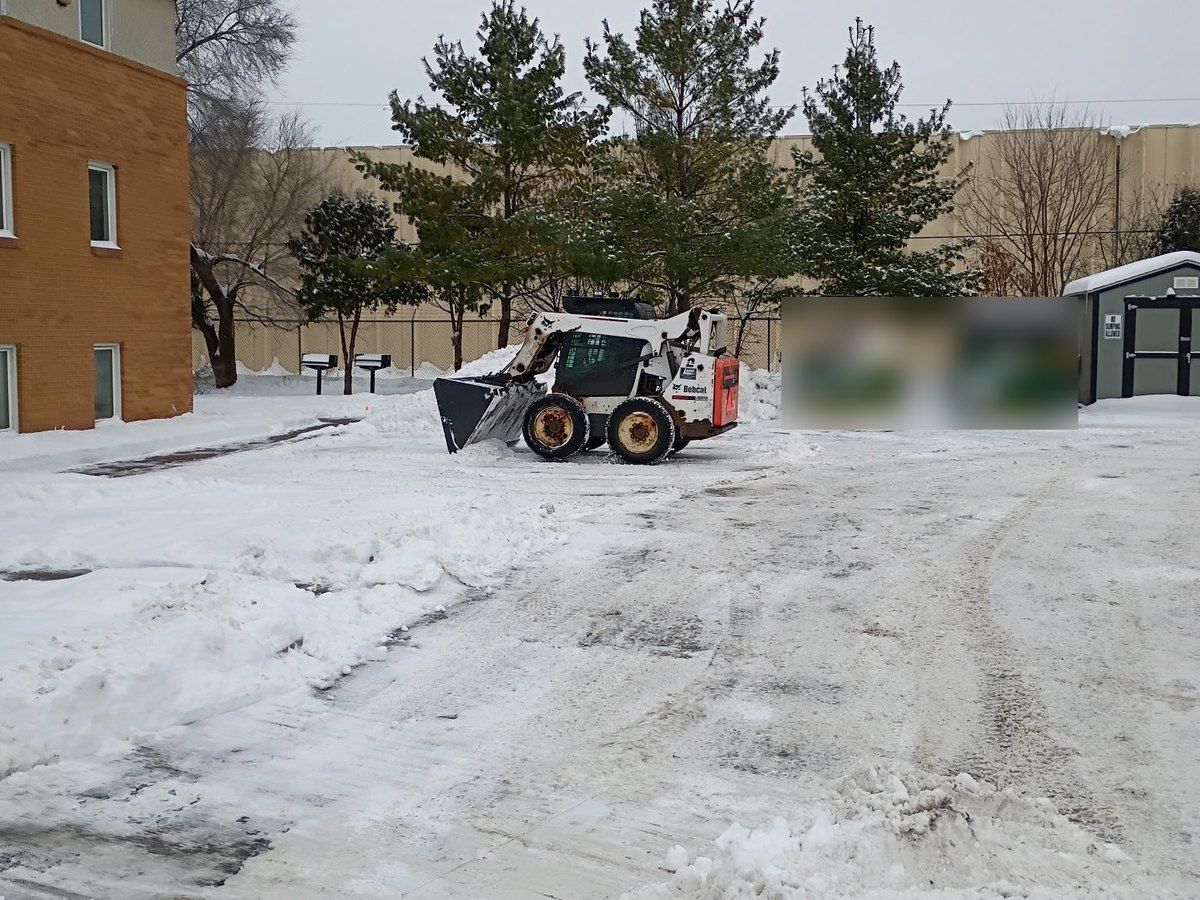 A skid loader at work in an open lot beside a building.
How We Plow an Apartment Lot With the Cars Still in It
First pass: fire lanes and drive lanes before the commute
The first visit comes early, usually between 3 and 6 AM. Fire lanes and emergency access go first, because they have to stay open whether or not a single car moved. Then the crew clears the drive lanes, the empty stalls, guest parking and any open stretch of the parking lot. The goal is a working lot: residents can get out for work, and a fire truck can get through. Crystal's own crews need around eight hours for a full plow of the city, so the street outside may still be rough at 6 AM. Your lot needs to be ready before the street is.
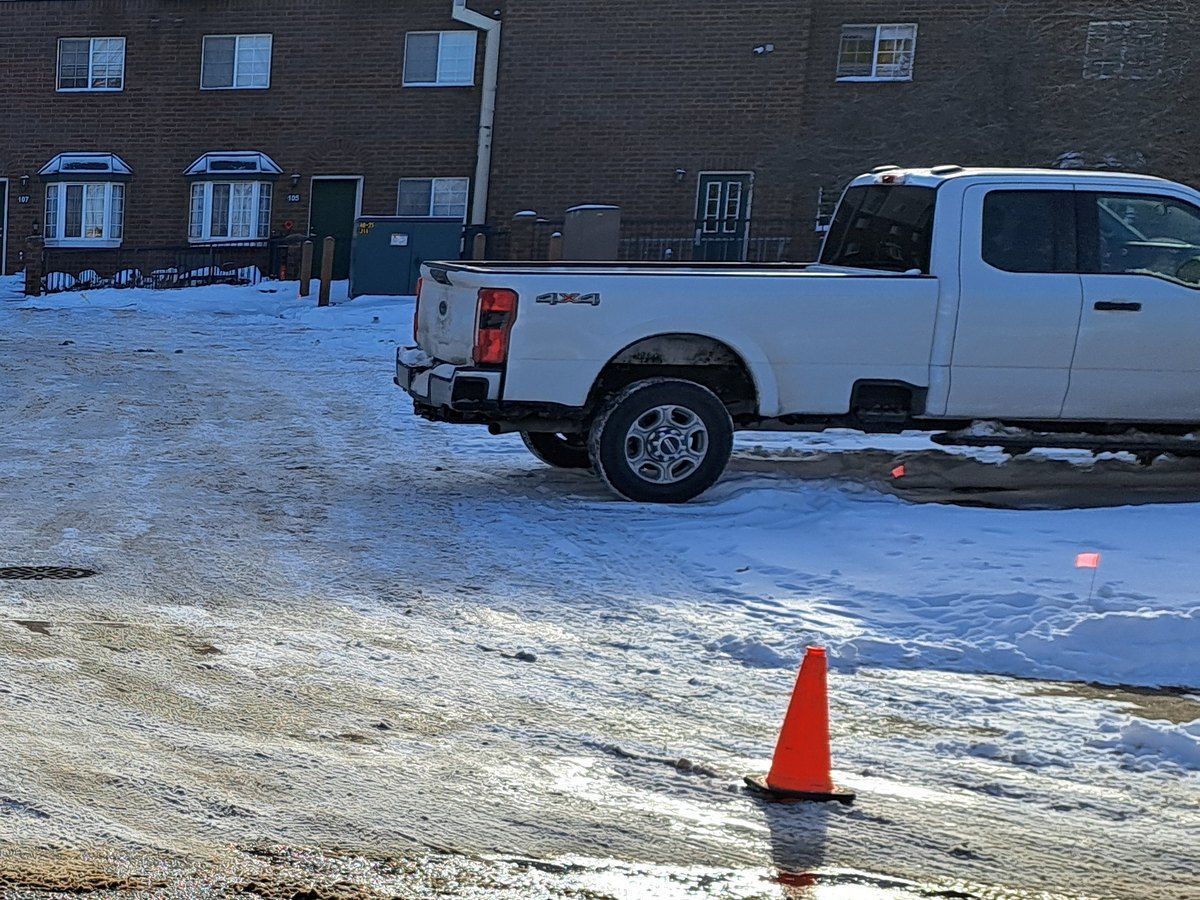
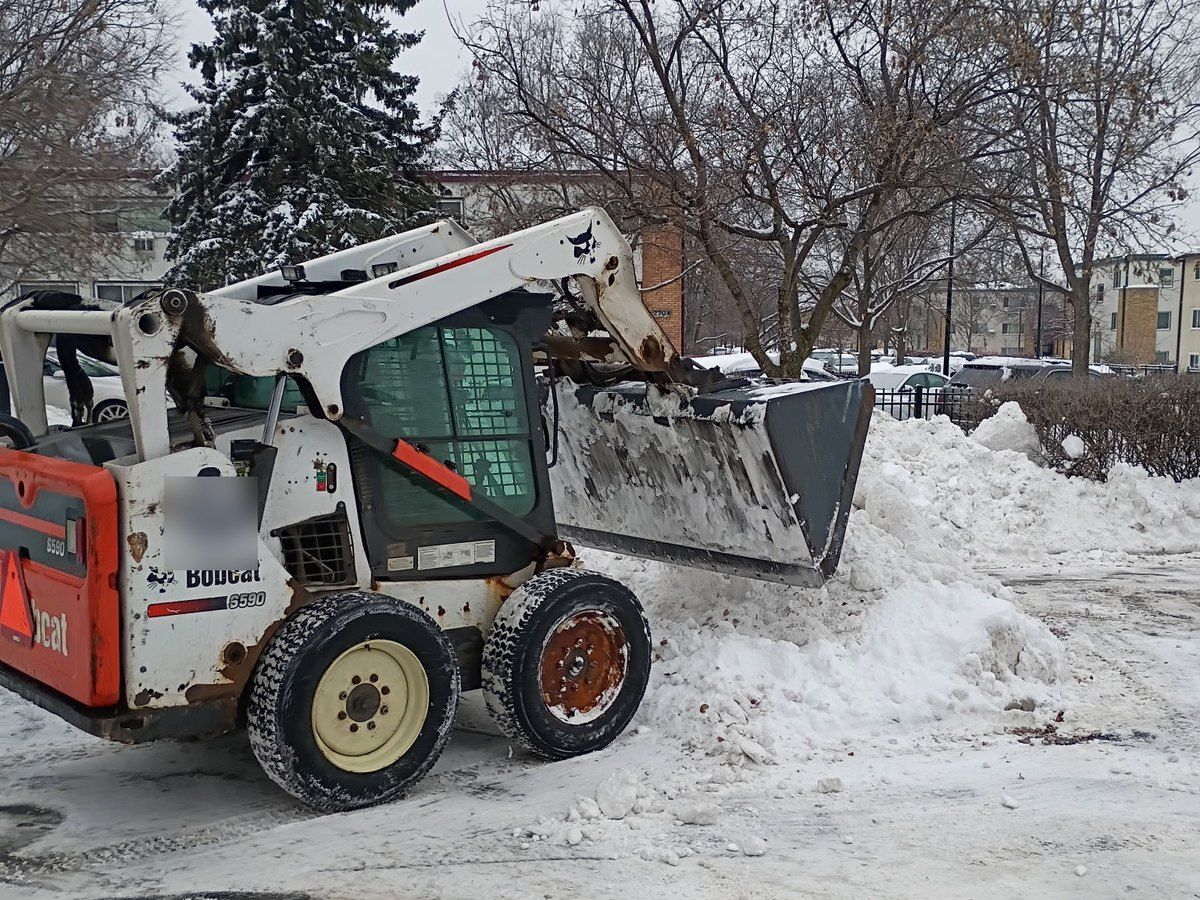
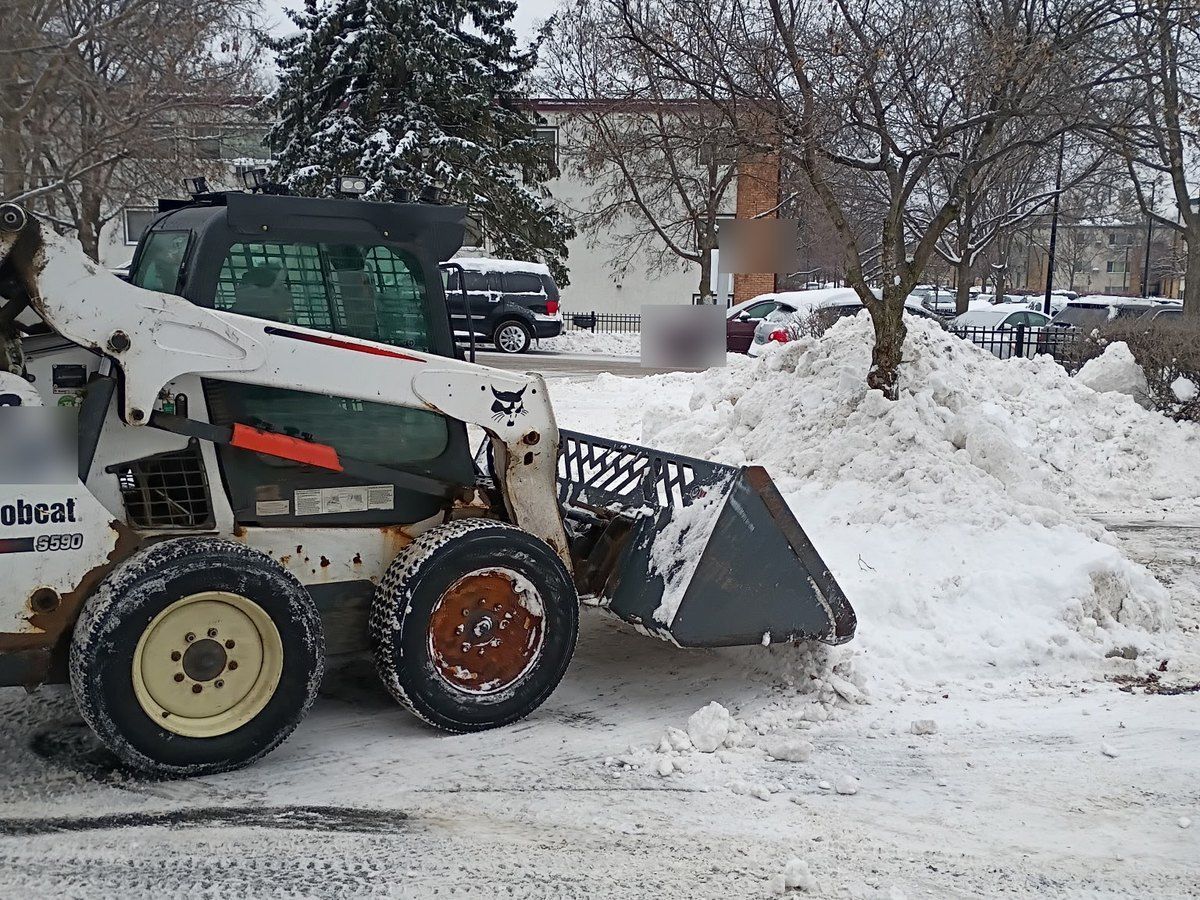 A skid loader working near a snow pile, with cars still parked in the lot behind it.
Second pass: the stalls residents just left
By mid-morning most commuters are gone, so the crew comes back, typically between 9 and 11 AM. The stalls that held cars at 4 AM are open now. The crew plows them out, cleans up the ridges left between the rows and tidies the piles started on the first visit. Crystal's FAQ notes that city plow operators won't lift or turn the blade at driveways, so lot entrances get checked again too. Any stall that still has a car in it waits until the car leaves, and we settle how that's handled with the property manager before the season.
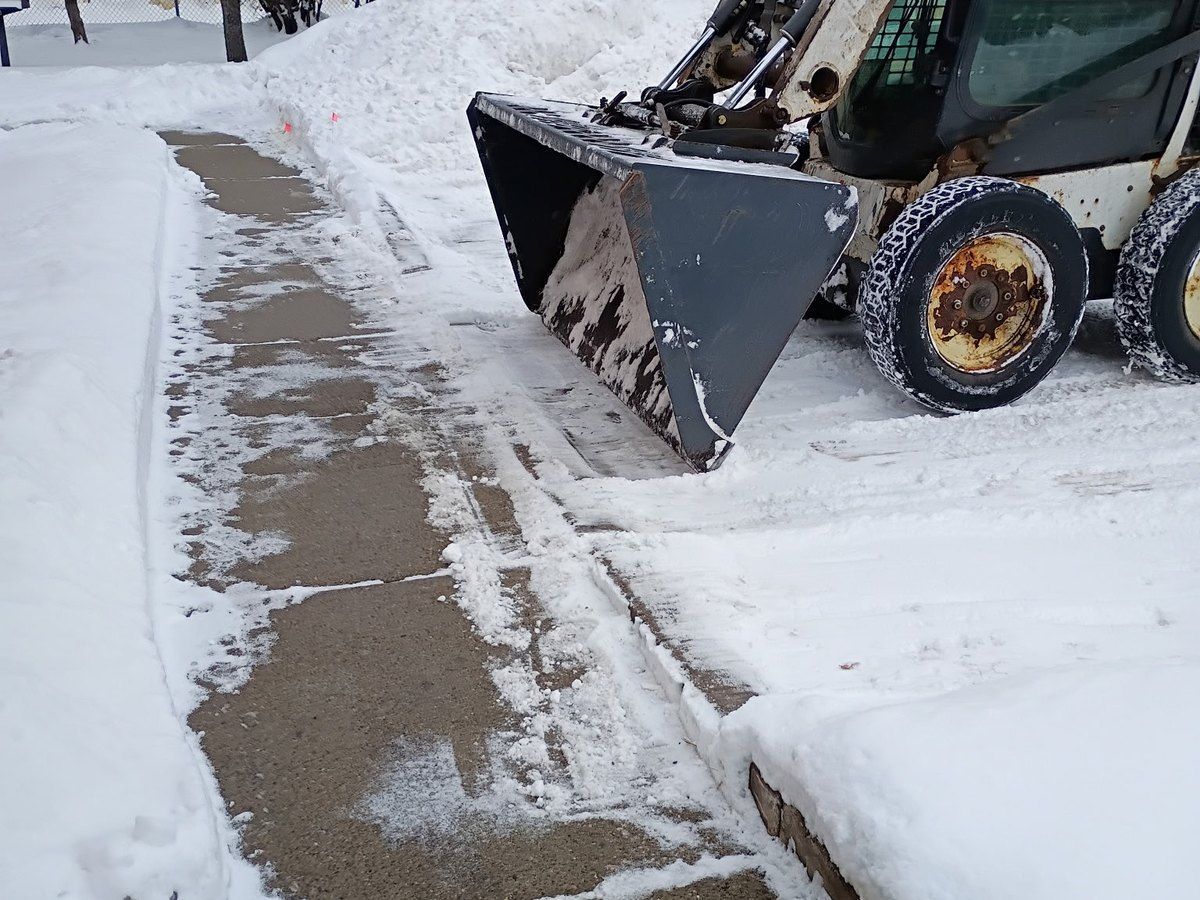
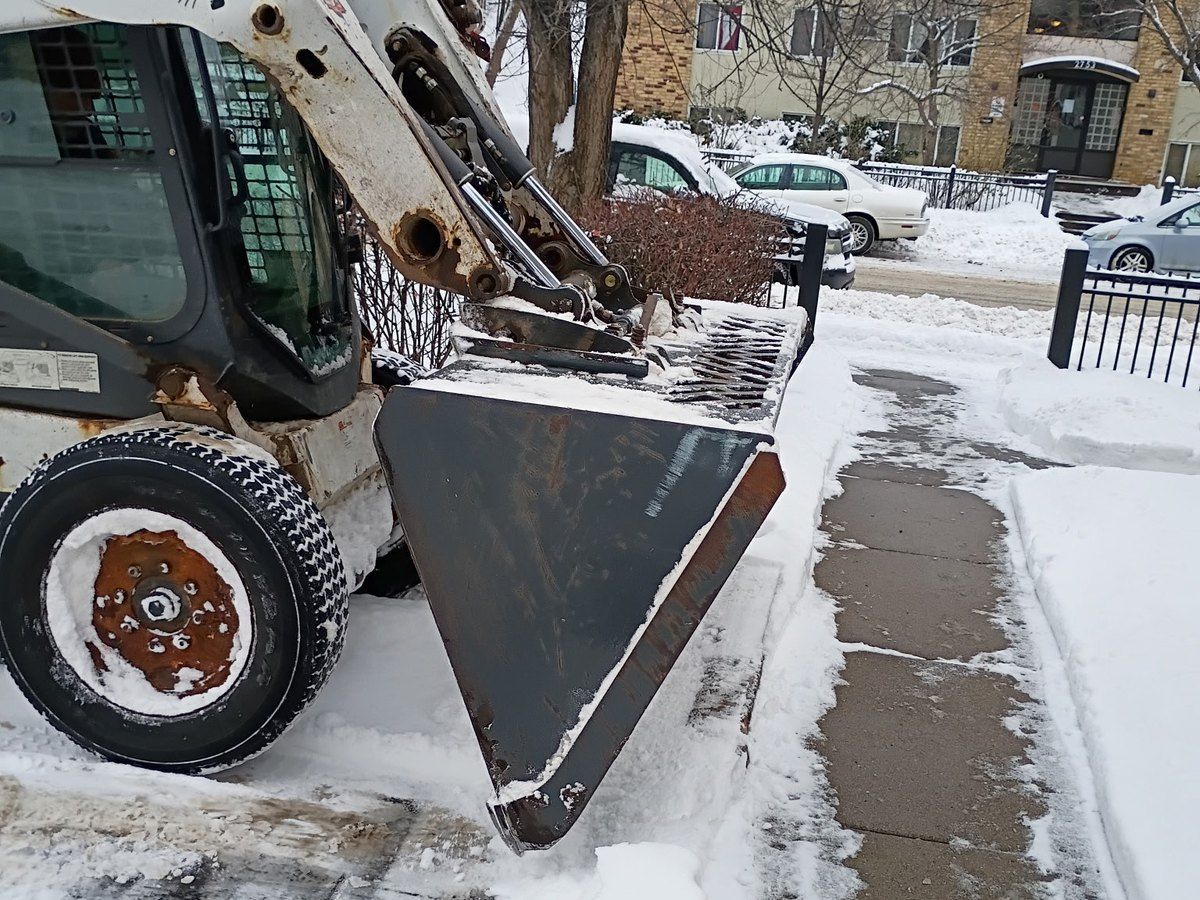 The bucket of a skid loader beside a walk that has already been cleared.
Walks to every door, the mailboxes and the dumpster
Residents also cross between buildings, head to the mailbox cluster and the dumpster, and use outdoor stairs and ramps. Plows can't clear stairs and small machines often don't fit on ramps, so those spots get hand shoveling, with extra care on the path linking the accessible stalls to each entrance. Crystal plows every public sidewalk in town with its own two sidewalk machines, but those routes start between 4 and 5 AM, after the street plows, and walks along county roads such as West Broadway and Bass Lake Road come first. The machines are built for bulk removal rather than bare concrete, and the walks on your property are a separate job.
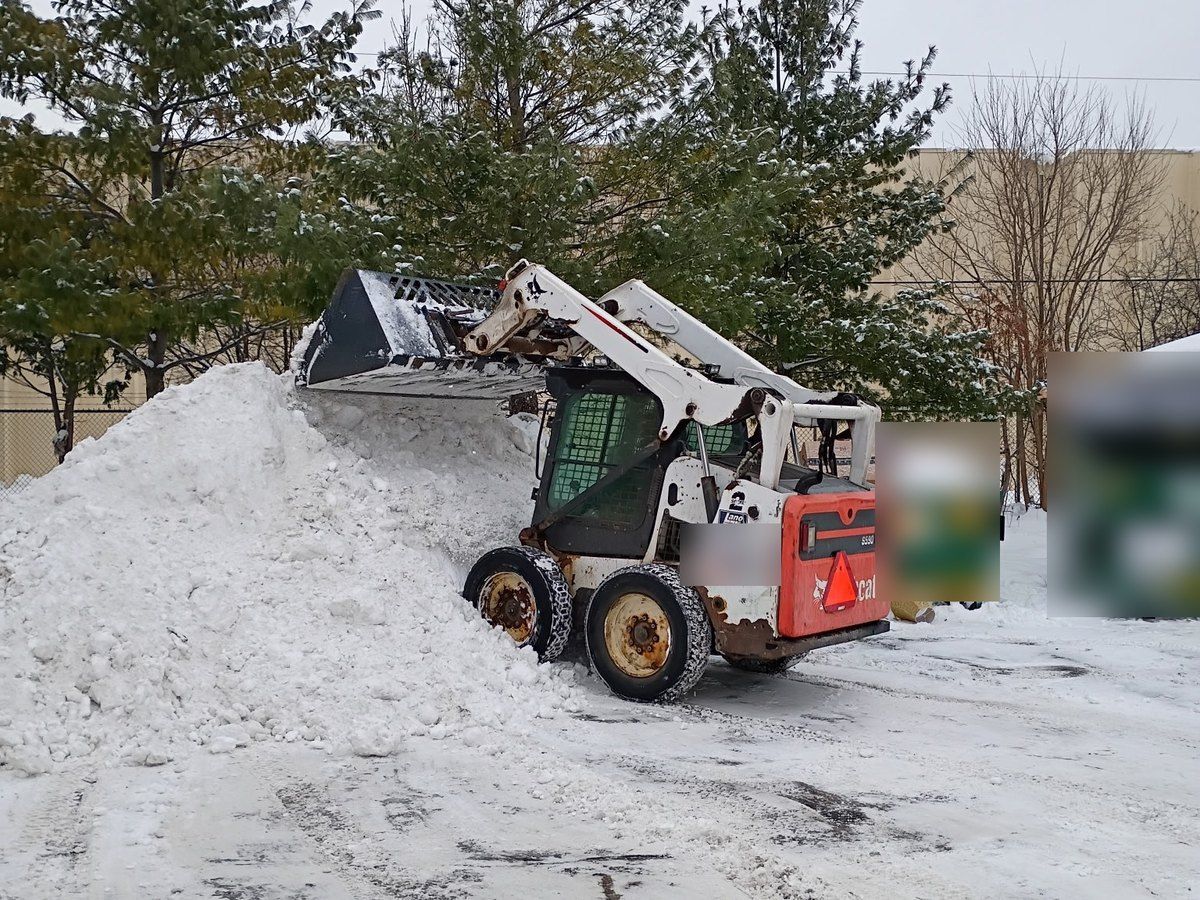 A skid loader pushing snow onto a tall pile near the dumpsters.
Where the snow goes when the street is off limits
There's no pushing lot snow out to the curb in Crystal. The city's FAQ cites State Statute 169.42, which prohibits pushing snow into or across a street, so whatever falls on your lot stays on your property until it melts or is trucked away. On an apartment site the places to put it are usually narrow: strips next to building walls, walks and landscaping. We stack it where it won't block the view of a driver backing out of a stall. Once piles begin eating into parking spaces, the next step is snow hauling. Apartment lots reach that point sooner than most commercial properties, which is why hauling is written into every apartment contract from the start.
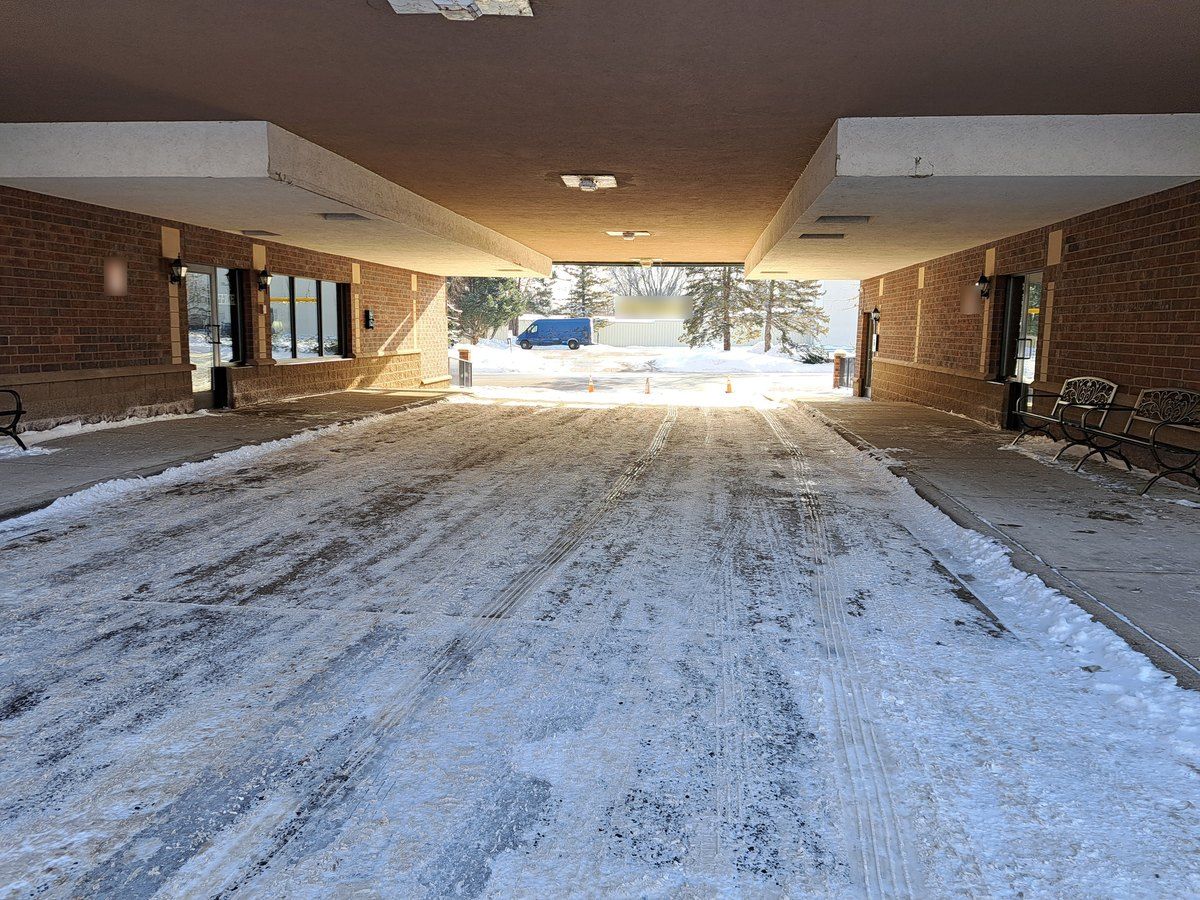 A covered drive-up entrance with the drive plowed and the walks on both sides clear.
Salt where residents track it in
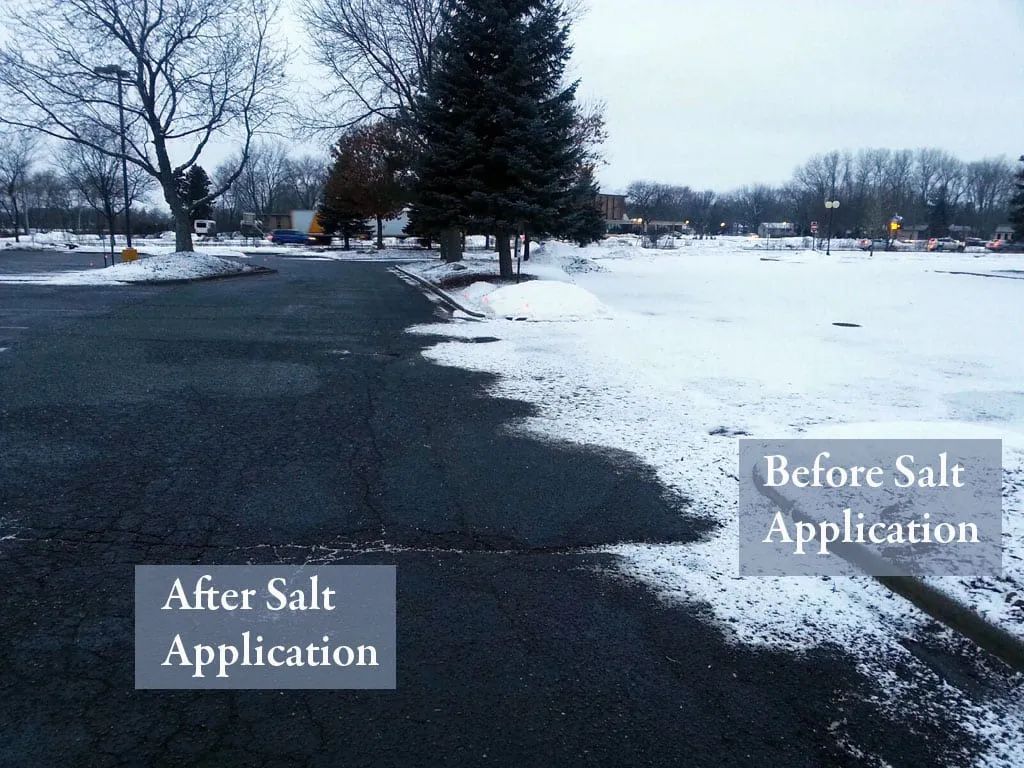
Crystal does not salt or sand its sidewalks; the city says that isn't feasible with its resources. On your property, the slickest ground is often the few feet outside each entrance, where residents carry snow in and out all day. Our crews treat those spots along with the walks, using walk-behind spreaders that put salt where people actually step. Once the temperature falls under about 15 degrees, salt does little, so the crew puts down sand with salt mixed in, which still gives tires and shoes some traction. Ice control for walks and lots has its own page if you want the details.
Planning a Crystal Apartment Snow Season
It starts with a walk of your property in the fall. We count what matters: the stalls, how many are full overnight, the fire lanes, the accessible stalls and each spot that can hold a pile without covering a stall or an entrance. You choose a trigger of one or two inches. We tell you roughly when each pass will arrive, so the notices you send residents carry real times. Every visit is logged with the time, the areas finished on each pass and the materials put down, which gives you an answer when a resident calls about a missed stall. You'll have one account manager all winter and a 24-hour line for storm calls, and properties that want a predictable bill can pay a fixed monthly price. Our snow removal packages sit alongside everything we offer commercial properties in winter.
What a Multifamily Snow Plan Can Include
Each of these can stand alone or sit inside one seasonal agreement.
More on Snow Removal for Residential Properties
Two of our articles go deeper. If residents at your building rarely move their cars, our piece on what to do when nobody moves their cars walks through resident notices, lease language and the two-pass plan in detail. If your building houses older residents, our article on senior living snow and ice liability explains how the standard of care rises when a fall is more likely to cause serious harm.
Questions About Crystal Snow Removal for Apartments
When will the whole lot be finished after a storm?
We complete service within 12 hours once the snow ends, and on an apartment lot both passes fit inside that window. The early pass is timed so drive lanes and fire lanes are open before residents leave for work, and the second follows the commute. During a long storm, the crew opens the drive lanes mid-storm so the lot never gets too deep to drive through. If many of your residents work overnight shifts or leave unusually early, tell us at the walkthrough and we'll time the passes around them.
What if residents still haven't moved their cars by the second pass?
Then that stall waits until the car leaves. Tracking down residents isn't part of the crew's job, and towing decisions belong to management. Some complexes accept a few uncleared stalls after each storm. Others send maintenance staff to knock on doors, or add snow cooperation language to the lease at renewal so there's a written policy to point to. Either way, our log shows when each pass came through and which areas were finished, so you can tell a resident exactly when the crew was there.
How much notice should residents get before you plow?
For a storm in the forecast, aim for about 24 hours of notice, then a same-day reminder two to four hours before the crew arrives. A specific message works better than a general one: which lot, what time to move by and where to park while the crew works. Use the channel your residents actually check. Texts and app notices tend to reach younger buildings fastest, while door hangers can work better where residents are older. Permanent signs get ignored after the first few storms, so cones with a notice at the lot entrances the night before get more attention.
Does hiring a snow contractor take the liability off the property?
No. The owner or management company stays responsible for keeping the property safe even when the work is contracted out, so check the specifics with your attorney or insurer. What a good contract does is define the scope, name every walk and entrance that gets serviced, set insurance requirements and produce a timed log of every visit. Those records, with times and materials, are what you'll want if someone is hurt on an icy walk and the question becomes what was done and when.
What happens to the lot after the snow melts?
Five months of plowing leaves marks. In spring we walk the property again with the manager and look for blade damage on the pavement, curbs and bollards that took a hit, and turf or plantings flattened under the snow piles. Finding it early settles whether it falls under the snow contract and gets it on the repair list. Melt can also show grading problems the snow was hiding, like low spots that hold water near a walk. If that turns up, we can look at drainage fixes for wet, clay-heavy areas while we're on site.
Let's Count Your Stalls Before the First Snow
The first step is a walk around your property with a count of the stalls and how full they are overnight. That holds for a newer building in the Town Center near West Broadway and Bass Lake Road and for an older complex on a side street. Phone us at (763) 568-7251 or send the form below to set one up, and our snow removal overview shows the rest of our winter work.
Other Service Areas