When you think of adding edging to your landscaping, you normally think of gardens. Edging, however, can also be used around patios, driveways, and walkways. We’ve discussed
landscape edging options
before, so after a quick recap, we’ll discuss where to place the edging.
Landscape Edging Options
Plastic:
Plastic edging is fairly popular, though it is perhaps the least attractive of the options. Especially if you’re edging along a curved line or on a slope, its flexibility makes it a good option.
Steel & Aluminum:
Metal edging is more inflexible than plastic, but can provide the same clean separation between lawn and garden or hardscape. It does require some labor to dig out a trench for the installation.
Natural Stone:
Stone helps give your yard a more natural feel, adding character to landscaped edges. It is the most expensive of the options, due to the cost of the stones themselves and even more labor (digging a wide trench and ensuring stones are level), but can really tie together your yard and hardscapes.
Hardscapes
Hardscapes, as the name implies, include any large hard surface in your yard, including
patios, driveways, and
walkways. Natural stone meshes well with these landscape design elements. One decorative edging method is to lay them flush with the existing pavers or concrete to outline edges. You won’t get any additional height benefit this way, but it will provide a color contrast for visual interest. When it comes to patios, stick with decorative edging—you don’t want to trip on a lip of stone!
Bricks or other stone can be installed to provide a raised edge for driveways or walkways. This is useful, for example, if you have a problem with people parking off the driveway and into the grass. A raised edge can also be more effective in keeping landscape elements separated. Physically, for example, the edging can keep mulch in garden beds and off your driveway or walkway. Visually, edging provides a line of contrast between lawn, driveway, walkway, and garden beds. Using edging around hardscapes in your front yard can also help increase
curb appeal. Even from the street, it’ll be clear that there are clean lines of separation. It looks neat and tidy up close, too, a big step toward making visitors
feel welcome.
A raised edge can also be made using steel edging. It’s designed to stick out of the ground a couple inches, which, like the stone, provides a very clear line between hardscape and lawn. It’s also easy to maintain—just keep the grass around it trimmed. You may need to exercise a little more caution around steel edging, as it blends in more with the landscape around it. For this reason, steel edging is more suited to walkway/garden bed edging than driveway edging. After all, driveway edging should be obvious to prevent people from driving over it.
Gardens
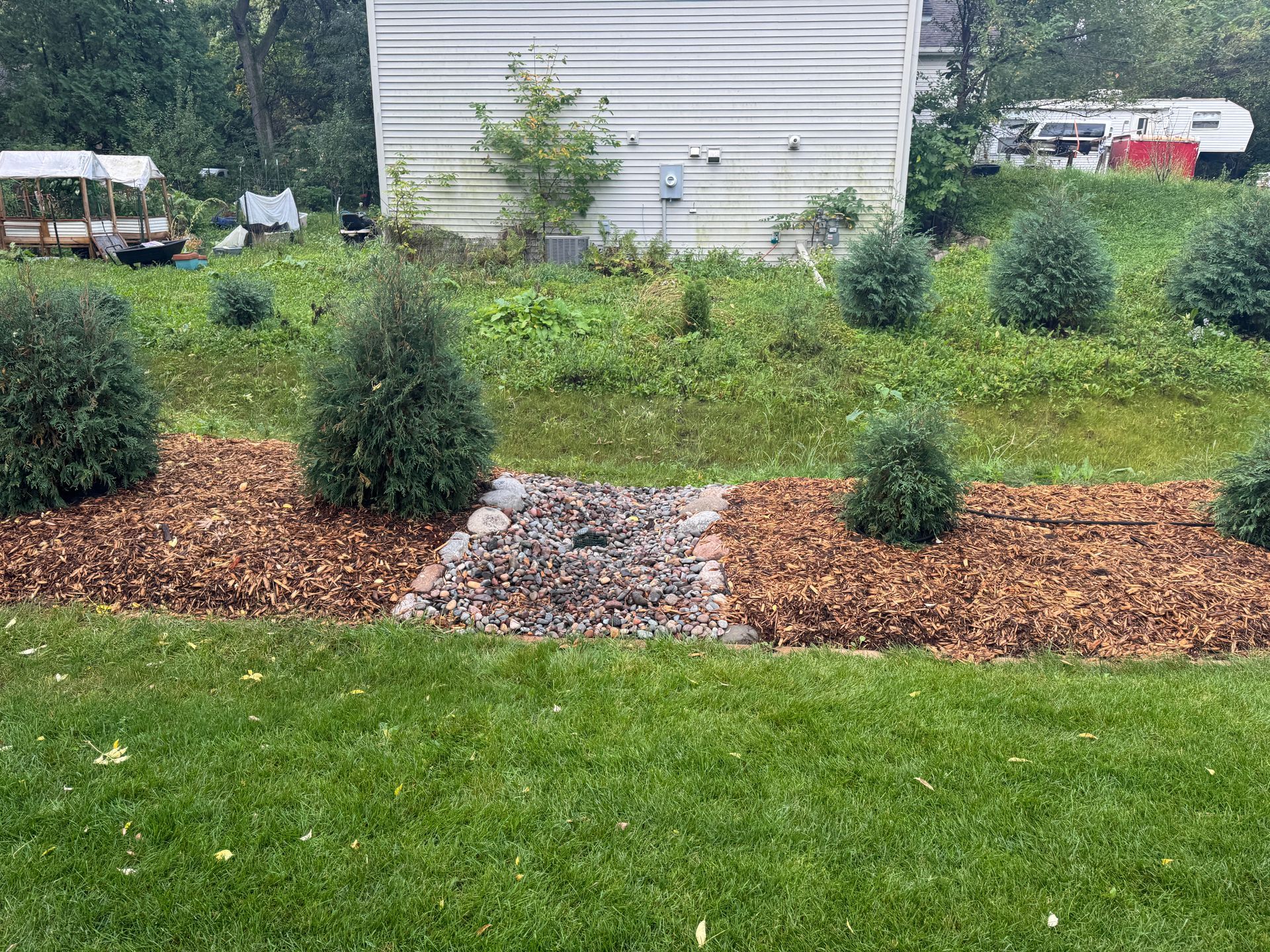
Any kind of edging can be used in gardens; it all depends what kind of look you’re going for. Paver stones or brick will give more of a homey look to your garden beds. This is perfect if you’re going for an informal or cottage-style look. As discussed above, using plastic, steel, or aluminum edging will give a clear, clean demarcation between mulch and your lawn. For one example of how steel edging can be used in gardens to keep grass out, check out this video from This Old House
:
When making your choice, take into account the shape of your garden bed, where the bed is located (whether it’s going to feature prominently in your yard and whether it’s on a slope), what sort of design aesthetic you’re aiming for, and your budget. Whichever kind of edging you decide upon, it can help keep mulch in your garden beds and the grass out.
Trying to decide if your hardscapes or garden beds need landscape edging? You can trust the experts at KG Landscape to lead you in the right direction. Give us a call at 763-568-7251 or use our
quote system to get in touch today.