Does your yard feel small and crowded? Do you wish you had more space? Well, we can’t increase your square footage, but we have a few tricks to help your yard feel a little larger.
1) Incorporate levels into your landscaping
Creating levels in the space you have can make it seem bigger, whether this is by creating an elevated or sunken patio, terraced gardens, or hanging baskets. A raised or sunken
patio
provides a clear entertaining space for you and your guests and helps divide your yard into “rooms.” While it may seem counter-intuitive, dividing the space like this (especially with walls,
hedges
, or other tall plants) means your eyes don’t take in the whole yard at once, creating an element of surprise as you move through the space. Terraced gardens can give more space for your favorite plants. As an added bonus, they are very visually appealing and can be used as part of
a
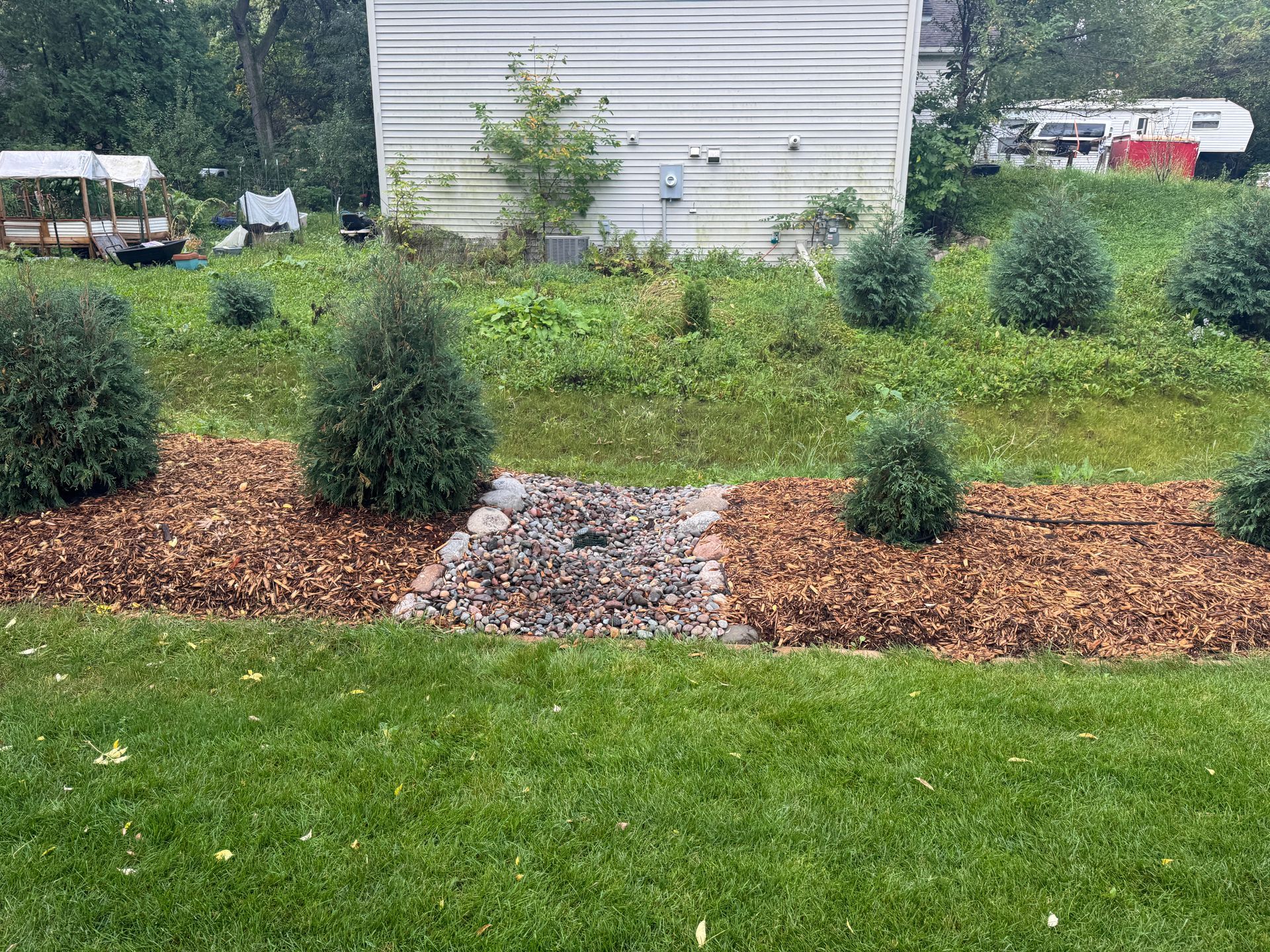
drainage solution
. F
inally, hanging baskets draw the eye up, and can be used throughout the year. Simply replace flowers with evergreens in the winter to keep your space looking fresh.
2) Create vertical gardens
Besides being a unique addition to any landscaping project, vertical gardens provide more space to grow your favorite plants. Fill vertical gardens with climbing plants such as morning glories, clematis, climbing hydrangeas, honeysuckle vines, or English ivy. You could also create a vertical pallet garden to grow herbs, an option that is both functional and beautiful.
3) Frame a view
Your yard may be small, but look at what sits outside your yard. Do you live in a particularly scenic area? Are there any landmarks near you? Highlight a visually appealing element to make your yard seem larger. This can be something in your neighborhood, or even farther, perhaps the Minneapolis or St. Paul skyline. This framing can be done by using a pergola, arbor
, or a couple of tall arborvitae. This framing method can also be used to create a destination within your own yard . . .
4) Create a destination
Maybe you’d really like to highlight your patio, a flower garden you’re especially proud of, or an awesome
water feature. Use this as a focal point for your yard. You can make this destination stand out by framing it in the same manner as you would a great view, or use
outdoor lighting
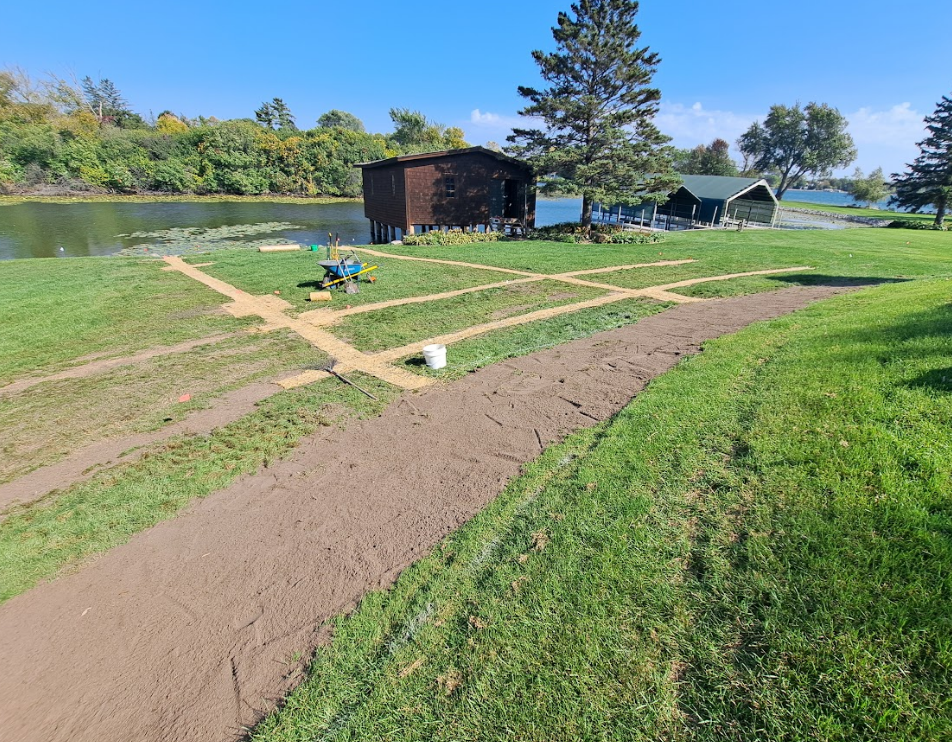
to make it really stand out. (Outdoor lighting has the added benefit of making your yard appear more inviting—and yes, larger!) Another way to use this focal point to its best advantage is by arranging long, straight lines of garden beds leading to this point. These lines will draw your eyes to the distance, making your yard feel larger.
5) Go fence-free
Using a fence around your yard can really hem it in. Fences are great if you have dogs or small children, but not so great if your yard feels too small. If it’s feasible, consider ditching the fence. When your eye can easily see beyond your property line, it makes your own yard seem bigger. If going without a fence is not an option, consider trading your fence for a line of trellis. Not only can you use the trellis to grow vines and other climbing plants, but the breeze and sunlight can come through, helping your yard feel more open.
6) Lay pavers and decking correctly
Diagonal paths make a space look larger than it actually is. Arrange paving stones in a diagonal pattern to trick the eye into thinking the space is bigger than it is, or lay decking diagonally for the same reason. Use a random pattern or more natural stone to emphasize the space that you do have.
7) Choose the right trees
If you’re looking to add trees to your yard, be sure to do your research. You don’t want to overwhelm the space with trees that grow too big too fast, overwhelming your space. Consider choosing smaller trees that are well-suited to our climate, such as flowering plum, dwarf red pine, flowering crabapple, dogwood, buckeye, or dwarf chokecherry.
Small evergreens and a flowering hydrangea tree are perfect for this small garden space.
Tall, thin trees can also be a good choice, providing height without all the width. Some good varieties for this include Colorado blue spruce, Eastern white pine, Dakota Pinnacle Asian white birch, Rocky Mountain juniper, arborvitae, and Swedish aspen.
The right trees will add depth to your yard and provide a beautifying touch for years.
8) Use textures in your landscaping
A mix of textures throughout your yard can be visually appealing. We recommend using large-leafed plants near the focal point of your lawn, and fine-textured plants near the edge of your space. The larger leaves create more shadows, giving your focal point depth, while the fine-textured plants are less visually demanding and will seem to fade into the background, seeming farther away. These textures can also include a paved patio, perhaps a walkway, and a grass lawn. A mix of textures is easy on the eyes, plus it could get boring if your whole yard is just grass!
9) Avoid bulky patio furniture
Nothing can clutter up a backyard faster than bulky furniture. Keep furniture simple and small, or choose furniture with a slim profile. One way to save space is to use seating that doubles as storage space, such as a bench with built-in storage. Another is to use folding patio tables and chairs. They can stay out of the way when not in use, freeing up visual space, and are easy to set up when needed.
10) Keep it simple
Keeping your landscape design simple will help keep it neat. A cluttered lawn can start to feel small very quickly, the opposite of what you want if your lawn is small to begin with! Clean lines and an uncluttered feel will help your yard feel larger than it is, and is easier to maintain in the long run. Keep your lawn
mowed
, your flowers deadheaded, and your shrubs
pruned
, and your yard will feel all the nicer for it.
Bonus tip: Before you start buying plants, trees, and patio furniture or start planning a new patio project, take stock of how much space you actually have and make a plan for how you’d like to use it. You want to be sure you’re using the space effectively—and you don’t want to be saddled with extra materials you can’t use.
Do you have a vision for your small space, but aren’t quite sure how to execute it?
KG Landscape
would be happy to help. Give us a call at 763-568-7251 or send us a message through our
quote system
, and we’ll be in touch.