
St. Anthony Snow Removal for Medical and Professional Offices
Accessible stalls, ramps and entrances, cleared before the first appointment.
St. Anthony Snow Removal for Clinics and Office Buildings
St. Anthony snow removal at a clinic or office should be done before the first staff member pulls in, with the accessible stalls, the aisle beside them and the entrance finished first. Patients at a medical office may be older, using a walker or heading home after a procedure, and staff usually arrive 30 to 60 minutes ahead of them. The walk from the closest accessible stall to the door matters more than the far corner of the lot.
We've cleared commercial properties since 2003, and our founder, Kent Gliadon, has handled commercial winter work for over two decades, including medical and dental offices. On storm nights, healthcare properties are slotted first on our route because their days start first. Each plan for snow removal in St. Anthony, MN, is written around your first appointment, using the services on our commercial snow page.
Winter Rules That Shape a St. Anthony Office Lot
St. Anthony's crews typically start plowing about 30 minutes before a snow or ice event ends, according to the city's winter page. Main roads come first, then residential streets and sidewalks. The city runs two sidewalk machines over two zones, and as a general rule it doesn't put rock salt on sidewalks. So a public sidewalk can be plowed yet still icy.
The owner's part is spelled out separately. The city's 2022 guide to right-of-way sidewalks says the owner or occupant of a property next to a public sidewalk must keep it safe for pedestrians and clear the walk of snow and ice within 12 hours. Plowing, shoveling or blowing snow onto any street or public way is prohibited. That 12-hour rule is the city's, and it's tighter than it sounds on a storm morning, so your walks go on our first pass, not the last.
In the city's 2040 plan, health care and social assistance was the largest single industry listed for 2016, though the plan says no one industry dominates. Its two main commercial centers are the Gateway District and Silver Lake Village.
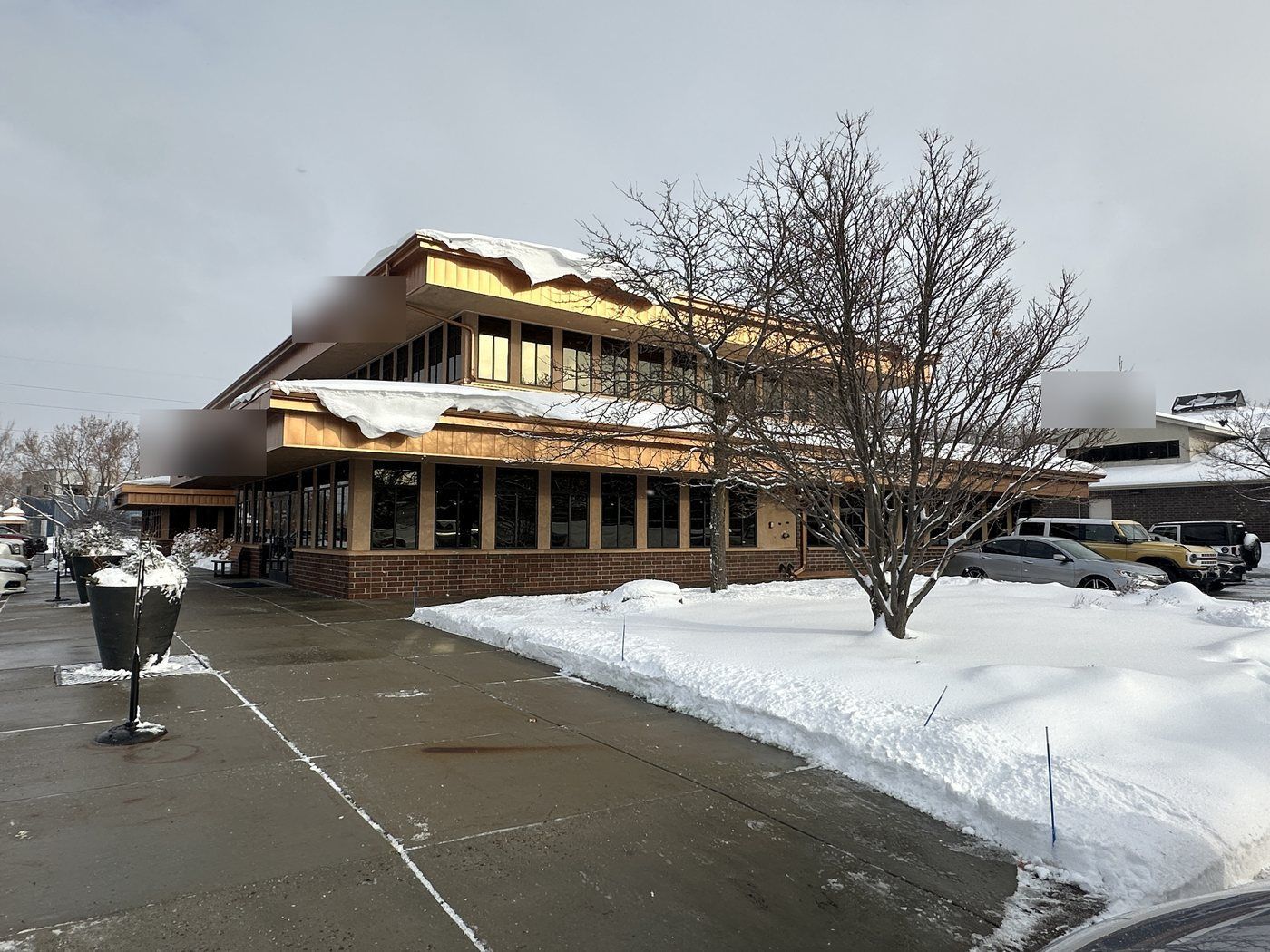 The walk and plaza in front of an office building after clearing.
What an Office or Clinic Entrance Needs After a Storm
Accessible stalls and aisles first
The striped aisle beside an accessible stall is where a wheelchair user opens a door or lowers a ramp, and it's the spot most often buried by a plow ridge. We clear accessible stalls, their aisles and the route to the door before anything else, then work outward through the rest of the lot. The walk crew handles this by hand and with small machines, one piece of our sidewalk and lot service. A lot that looks clean from the street but has a ridge across one striped aisle hasn't done its job.
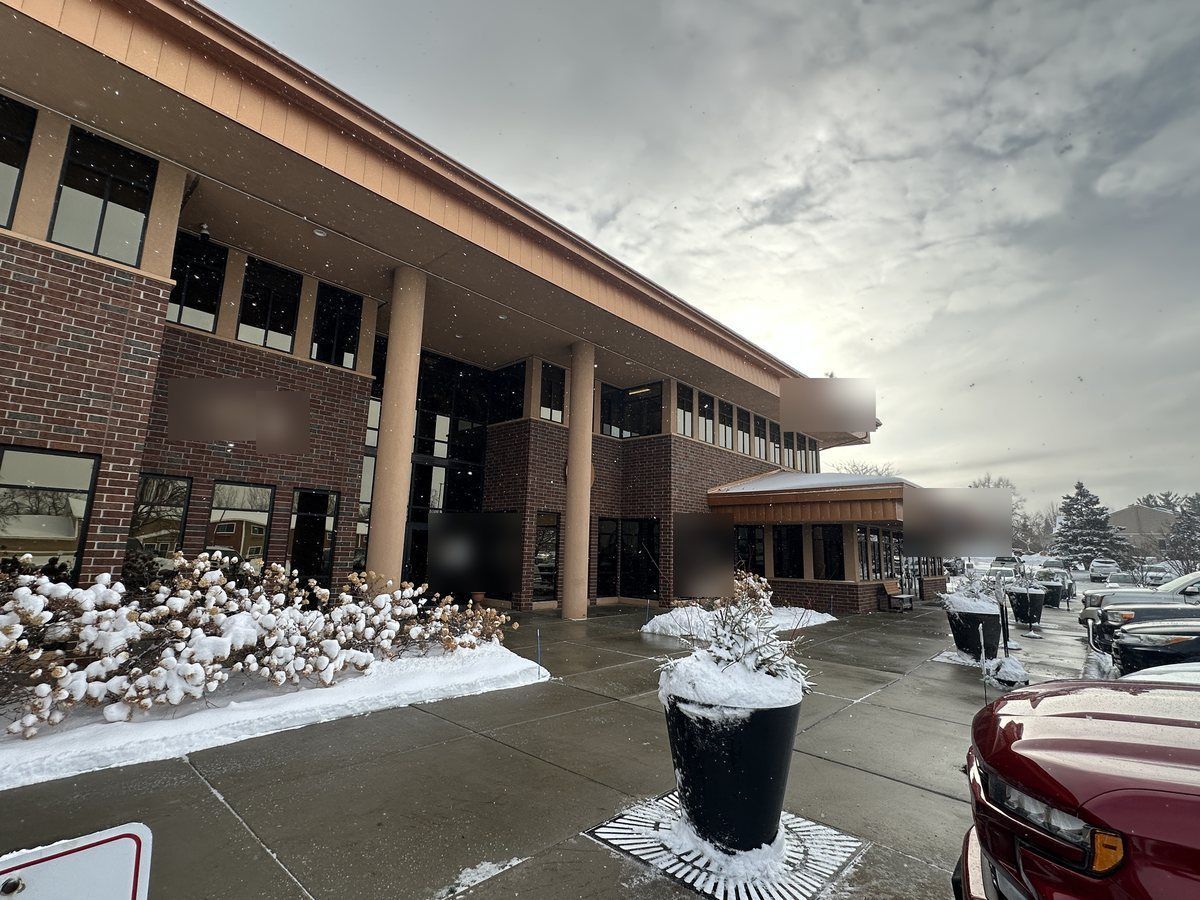
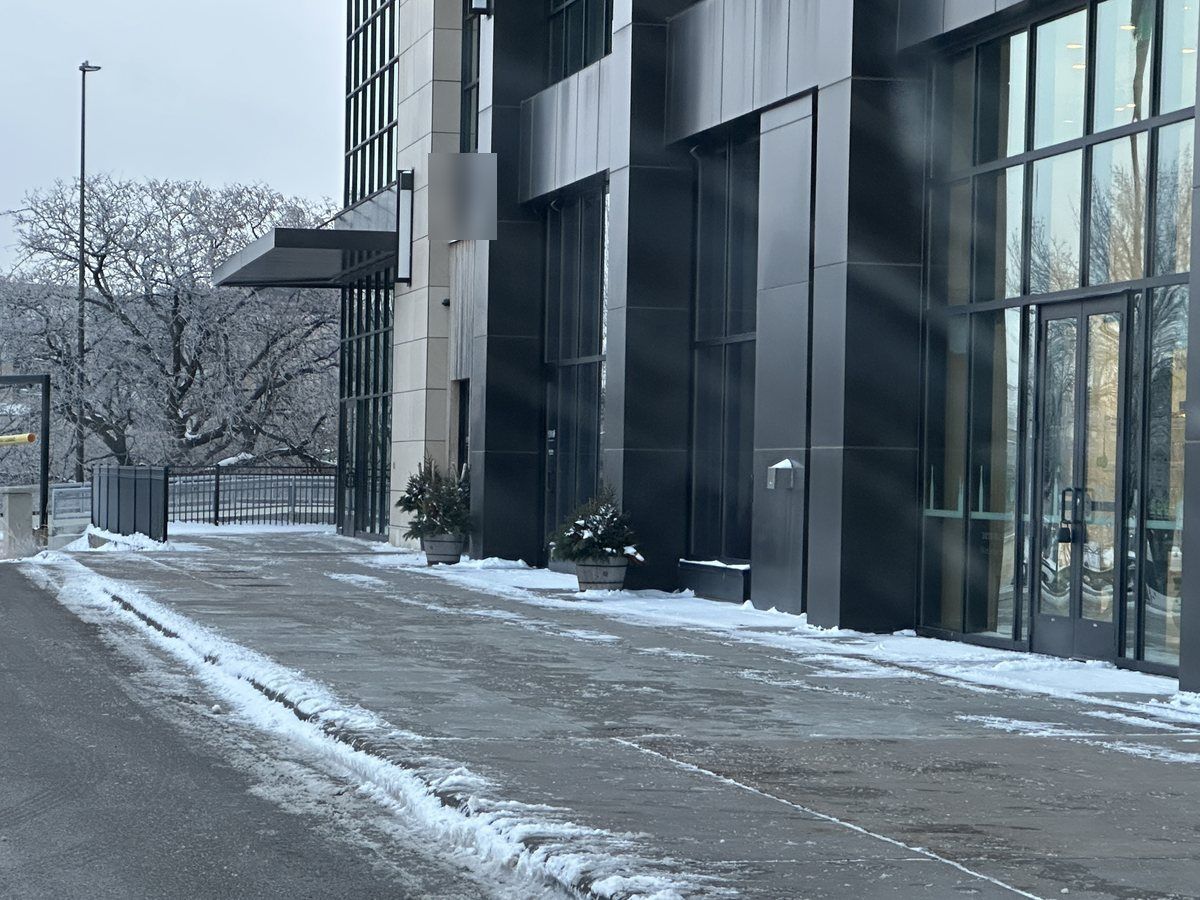
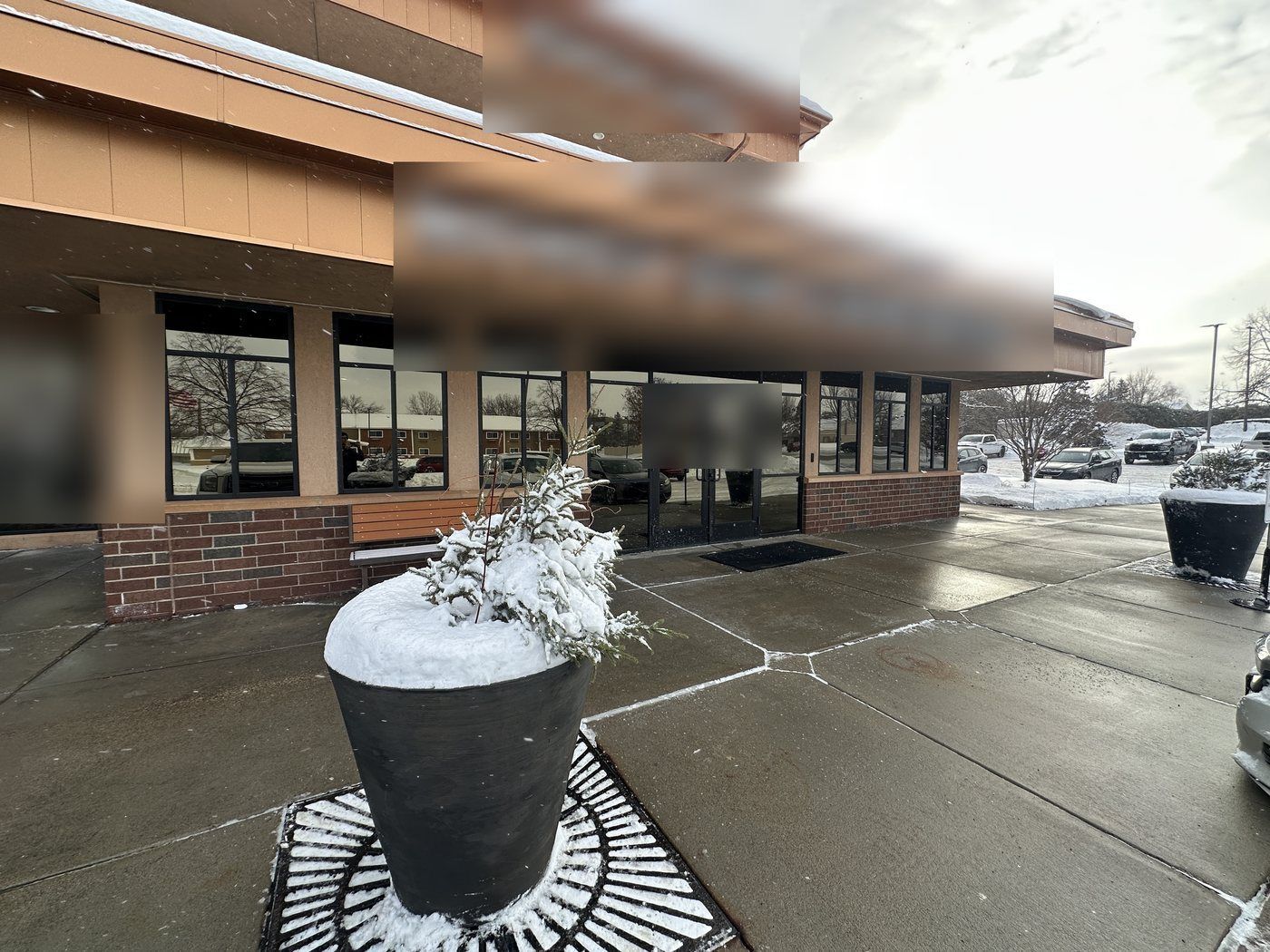 A walk cleared in front of an office building's storefront entrances.
Ramps, curb cuts and the door landing
Snow pushed against a curb tends to fill the ramp. Operators keep curb ramps open on every pass, and the landing in front of each door is cleared and treated so people step from the walk to the threshold on bare concrete. Our checks after a storm include the curb ramps, looking for any ramp the plow may have closed again.
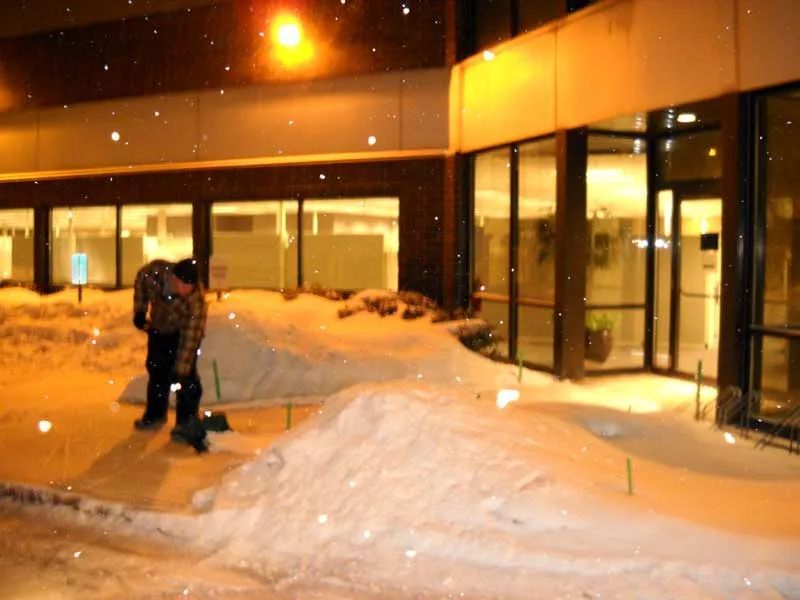
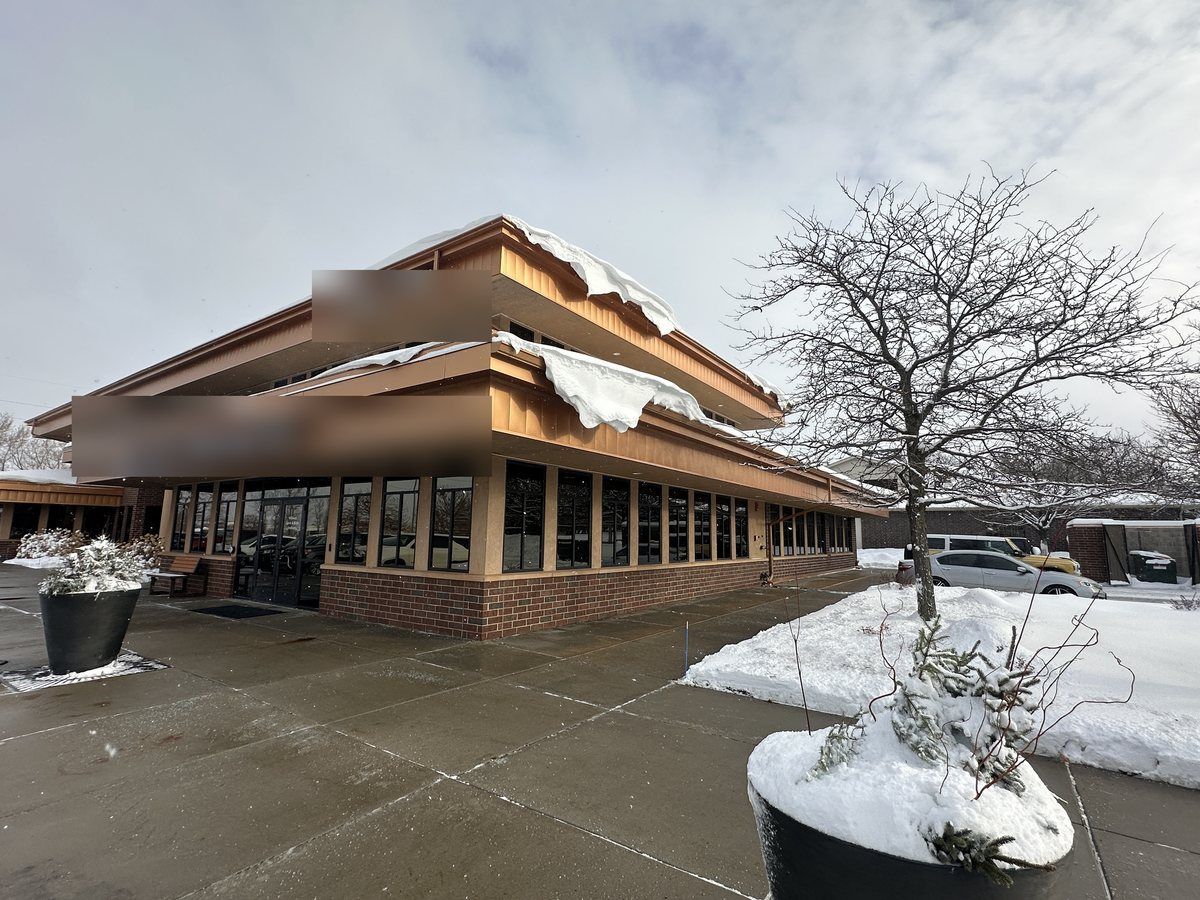
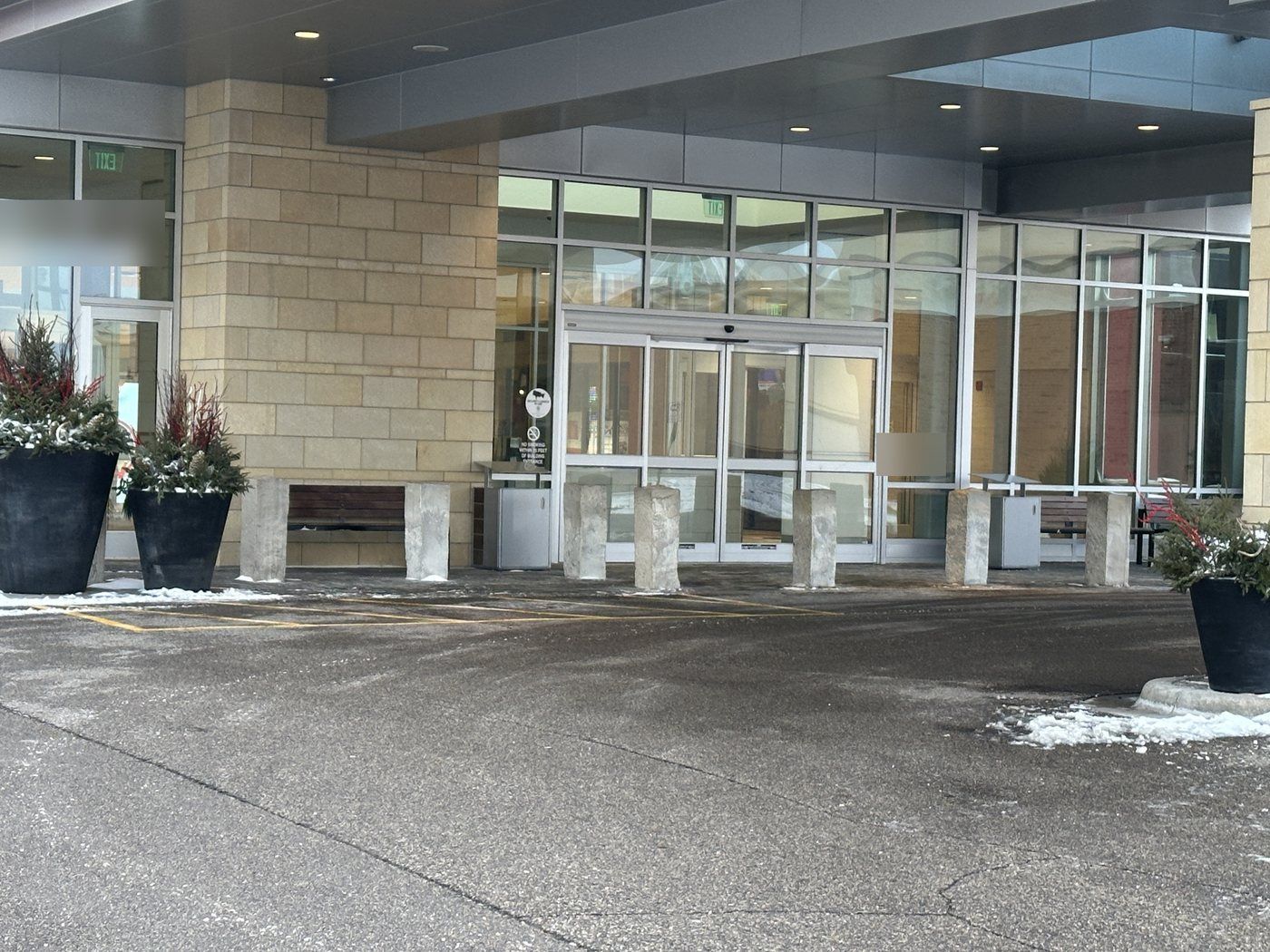 A covered glass entrance with the drive and walk cleared.
Canopy drip lines and refreeze
An entrance canopy keeps snow off the door but drips meltwater onto the walk below, and that line freezes again every night. We mark drip lines at the walkthrough and treat under them as a regular stop, along with shaded corners where ice hangs on longest.
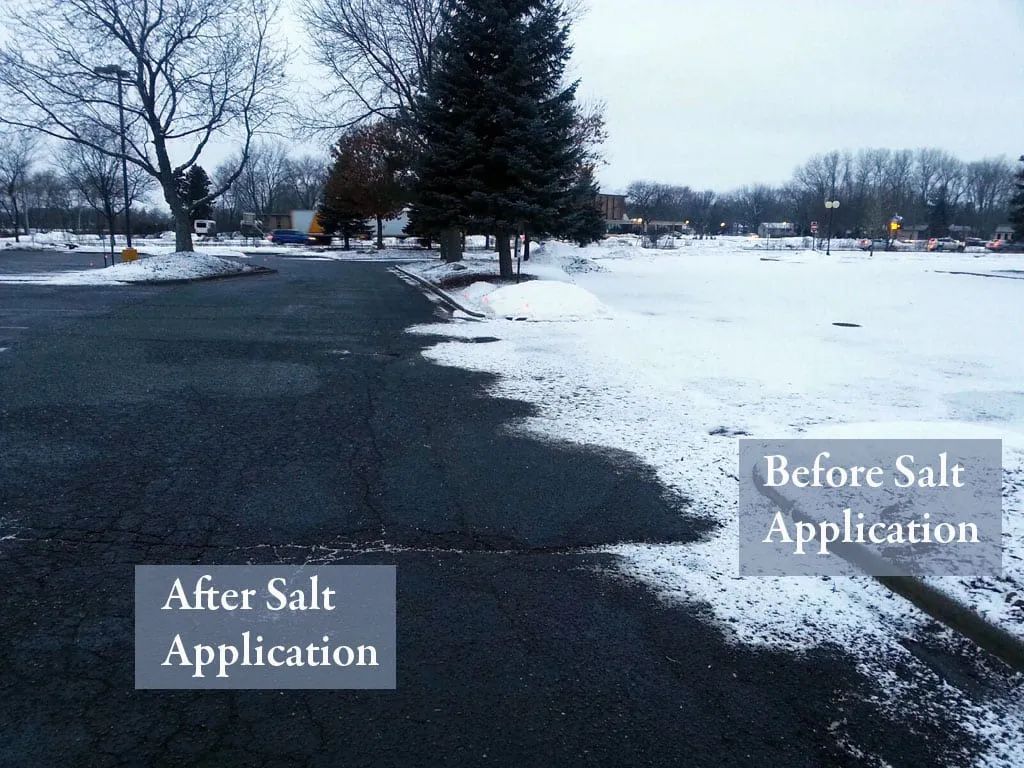
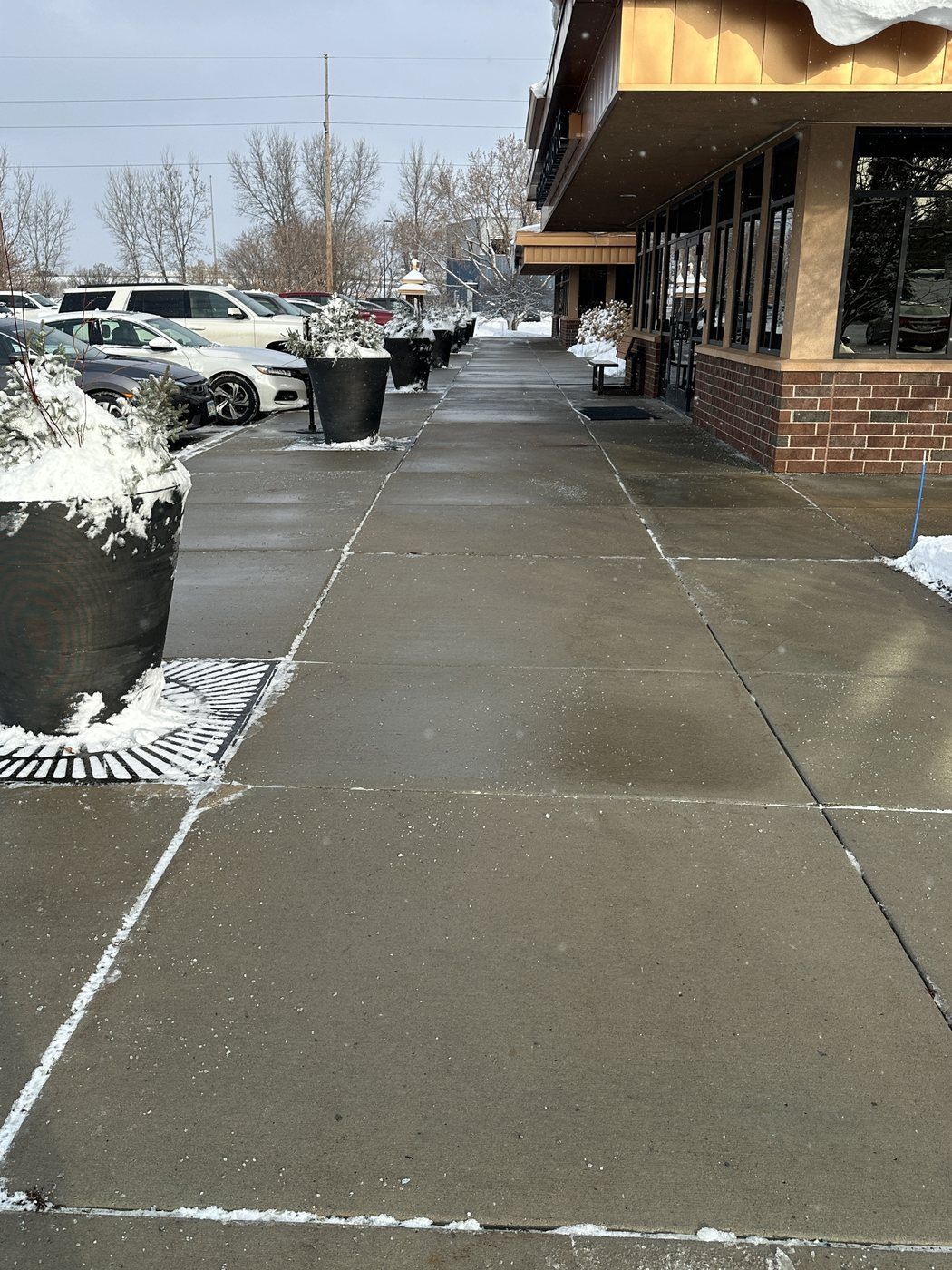 Bare concrete on a cleared walk beside offices.
Low-residue deicer where people walk inside
Salt tracked onto tile or polished floors becomes its own slip hazard. At entrances and the walks leading to them, some offices choose lower-residue materials such as calcium magnesium acetate, which costs more but leaves less behind, while the parking surface takes standard salt. In deep cold that salt can't handle, we add sand to the mix. Details are on our salting and sanding service page.
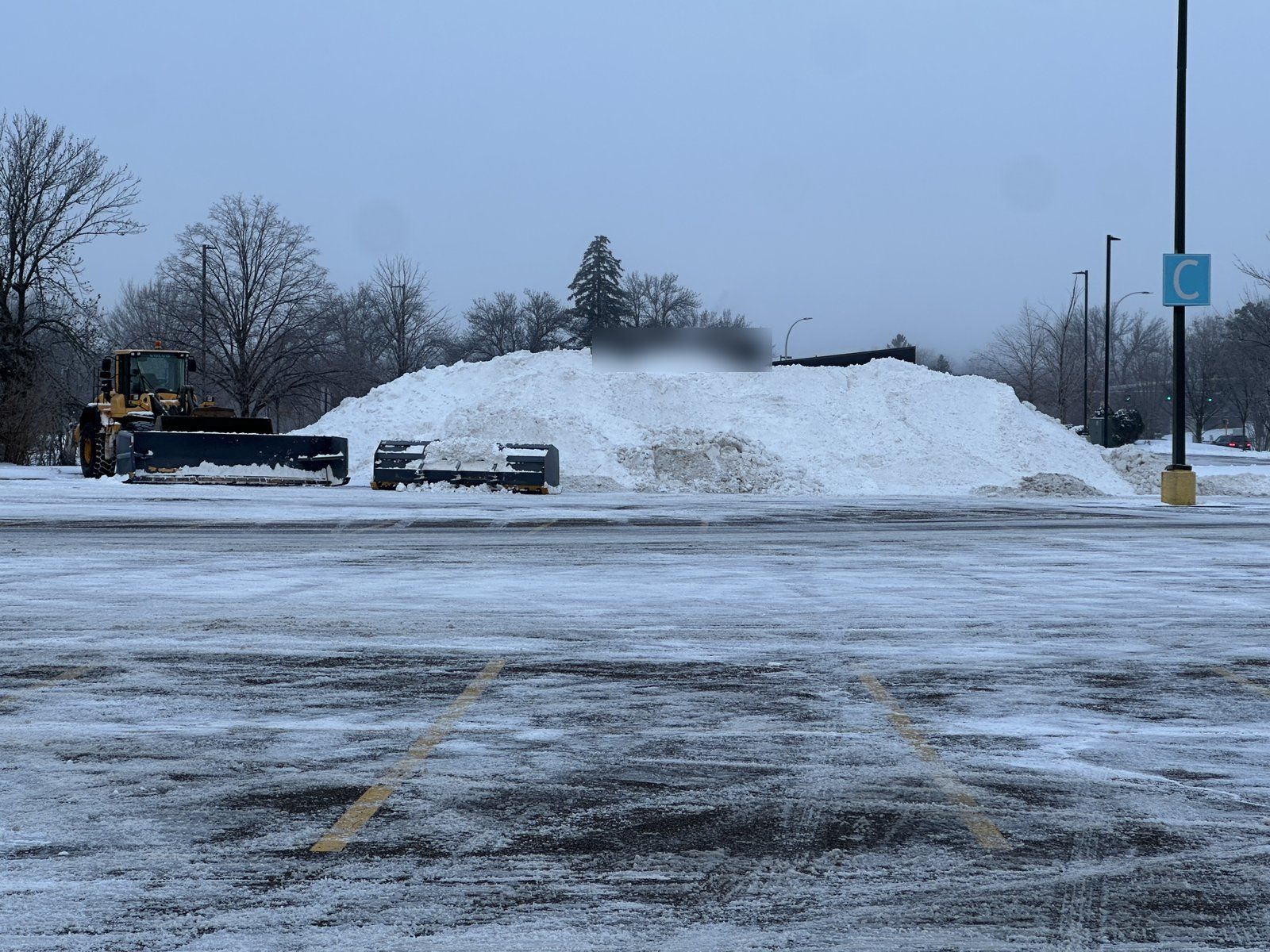
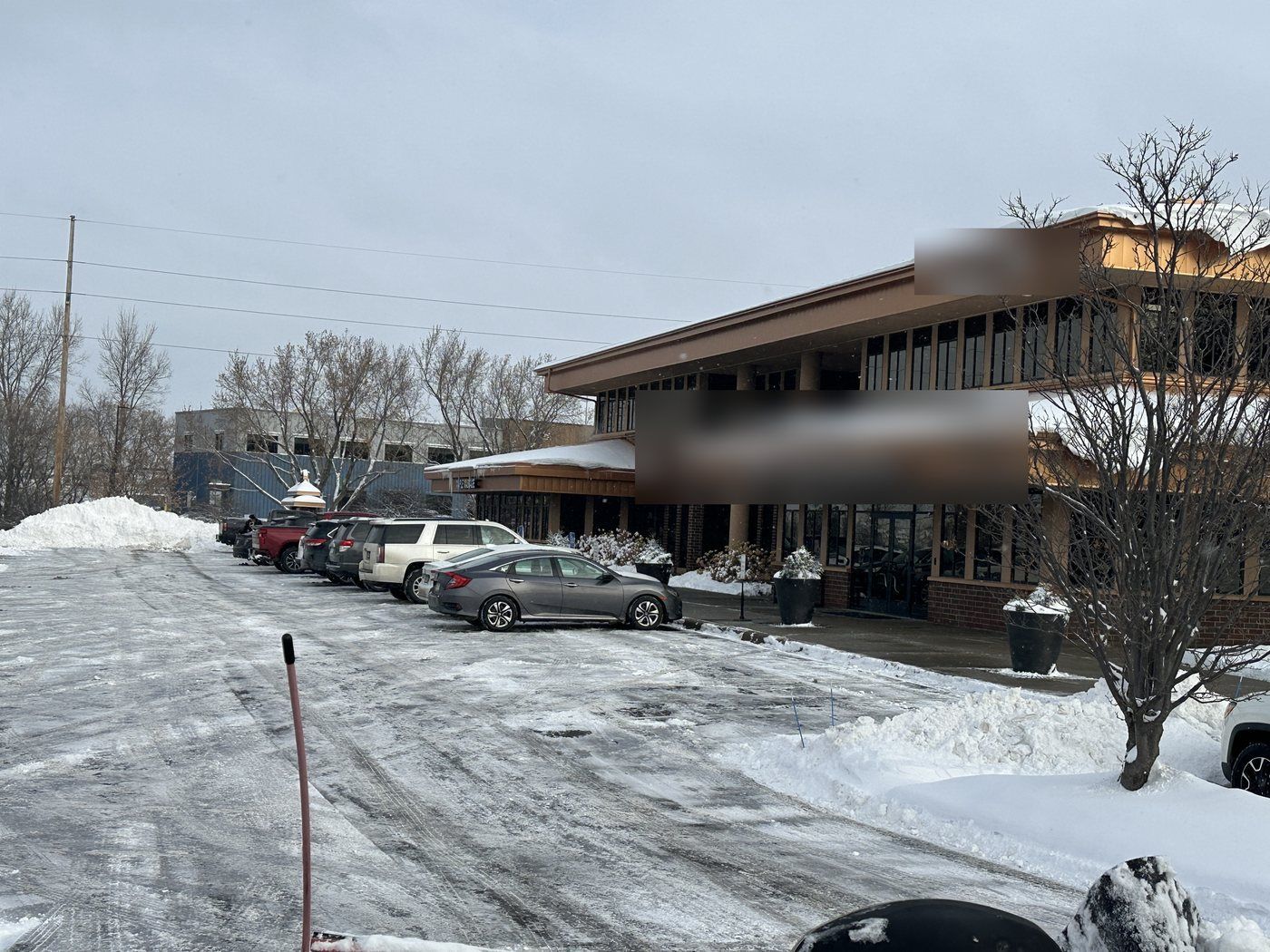 A plowed office lot, its snow piled to one side.
Coming back when ice returns mid-morning
Medical offices don't close for weather, and conditions can change after the crew leaves. Re-service during business hours, built into the plan or at a set callback rate, means a report of ice at 10 AM gets a response that day instead of at the next storm. During a storm that runs into clinic hours, maintenance passes hold the drive lanes, patient parking and walks open rather than waiting for the snow to stop.
St. Anthony Snow Removal Timed to Your First Appointment
Instead of "before business hours," your plan names a completion time based on when your first staff member arrives. Together we go over the property to mark accessible stalls, ramps, entrances, canopies and the best places for snow storage or removal. You choose whether crews roll out after the first inch or the second, and our standard is a finished property within 12 hours of a storm's end, with the patient areas done first. One account manager knows the site, and storm calls are answered at any hour. Our records for each stop list when the crew arrived, what was cleared and which materials went down. A flat monthly price is among our package choices. You'll find lot plowing and other commercial services on the main commercial snow page.
Winter Care for Clinics and Office Buildings
Each service can join one plan, timed to your earliest arrival.
More on Snow Care for Healthcare Properties
Two of our articles cover this ground in more depth. Why Edina medical offices need their lots ready first explains the early timeline and accessibility standards. Snow removal liability at senior living facilities looks at the higher standard of care when residents or patients are especially vulnerable.
St. Anthony Snow Removal for Retail, Apartments and Warehouses
Not every St. Anthony property is a clinic or an office. Shops count on customer aisles staying open all day. Industrial buildings need their loading doors reachable first thing. Apartment residents keep their cars parked overnight, so those lots take an early round and a later one. You can see how we plow Crystal apartment lots for the full residential approach. The 12-hour sidewalk requirement explained above applies whatever the building.
What St. Anthony Clinic and Office Managers Ask
What happens if my sidewalk isn't cleared in time?
The city can step in. Its 2022 guide says the city sends written notice to the taxpayer address on record, and conditions must be corrected within five days of receiving it. If they aren't, the city may correct them itself at the owner's expense and send an invoice, and unpaid invoices become a special assessment on the property. Keeping your walks on the first pass of every storm avoids that chain, and it keeps patients off an icy walk in the meantime.
Who's responsible if a patient slips on ice in our lot?
Property owners and practices have a duty to keep their property reasonably safe for patients and visitors, and a contractor can share liability if it failed to do work it agreed to do. We're not lawyers, so talk with your own counsel and your insurer about your situation. What protects a practice day to day is a clear written scope, timely service and records showing when each area was cleared and treated, which we keep for every visit.
How early does a clinic lot need to be finished?
It depends on your specialty and your first booking. A practice seeing patients at 7 needs a finished lot by 6 or 6:30, dialysis centers that see patients at 5:30 need it earlier, and surgical practices may need the lot done by 5. We write the completion time into your agreement to the half hour, so the commitment matches your schedule rather than a generic "before business hours." If several practices share a building, the earliest one sets the time for the shared entrance and walks.
Do you clear the patient drop-off area at the door?
Yes, and early. Many medical offices have a spot by the entrance where patients with limited mobility are dropped off close to the door. That zone gets cleared and treated with the accessible stalls, ahead of the general lot, because it's where people step out of a car onto pavement while holding a door, a cane or someone's arm. Mark it on the walkthrough, along with any covered entry, so it stays on the first-pass list all winter.
Does a 1-inch or 2-inch trigger make sense for a clinic?
For most clinics, 1 inch. The trigger is the snowfall that sends crews out, and a lower one means more visits, a higher cost and a cleaner lot through the storm. For a property where patients walk from car to door, a 1-inch trigger usually keeps walks and accessible stalls safer between passes. A 2-inch trigger can suit an office with later hours and fewer visitors on foot. Your account manager can price both so you can compare.
Let's Map Your St. Anthony Entrances Before Winter
Near Silver Lake Village or along Stinson Boulevard, the first step is the same: a walk of your lot, your accessible route and each entrance before the season starts. Our office line is (763) 568-7251, and you can also contact us online. Our wider winter work is described under snow removal services.
Other Service Areas