
Minneapolis Sod Installation
Instant lawn, installed in the order that makes it last.
Sod Installation That Takes Root and Stays
Sod installation is the fastest way to go from bare dirt to a finished lawn, and on a Minneapolis lot it is often the only thing that works. City yards are small, they get walked on, and they sit next to driveways and sidewalks where bare soil turns into mud and washes toward the street. When a lawn is thin, weedy, uneven, or simply worn out, and the site and budget allow it, sod is what we recommend for a full lawn replacement. Kent Gliadon, our founder and a graduate of the University of Minnesota Landscape Design program, has spent more than twenty years working on these properties, and our crews do this work all season, every season. His rule holds here too: our designs are planned to succeed. That means the grade, the drainage, and the soil get sorted out before the first roll comes off the pallet. You can see the full range of options, including topdressing and seeding, on our lawn renovation page.
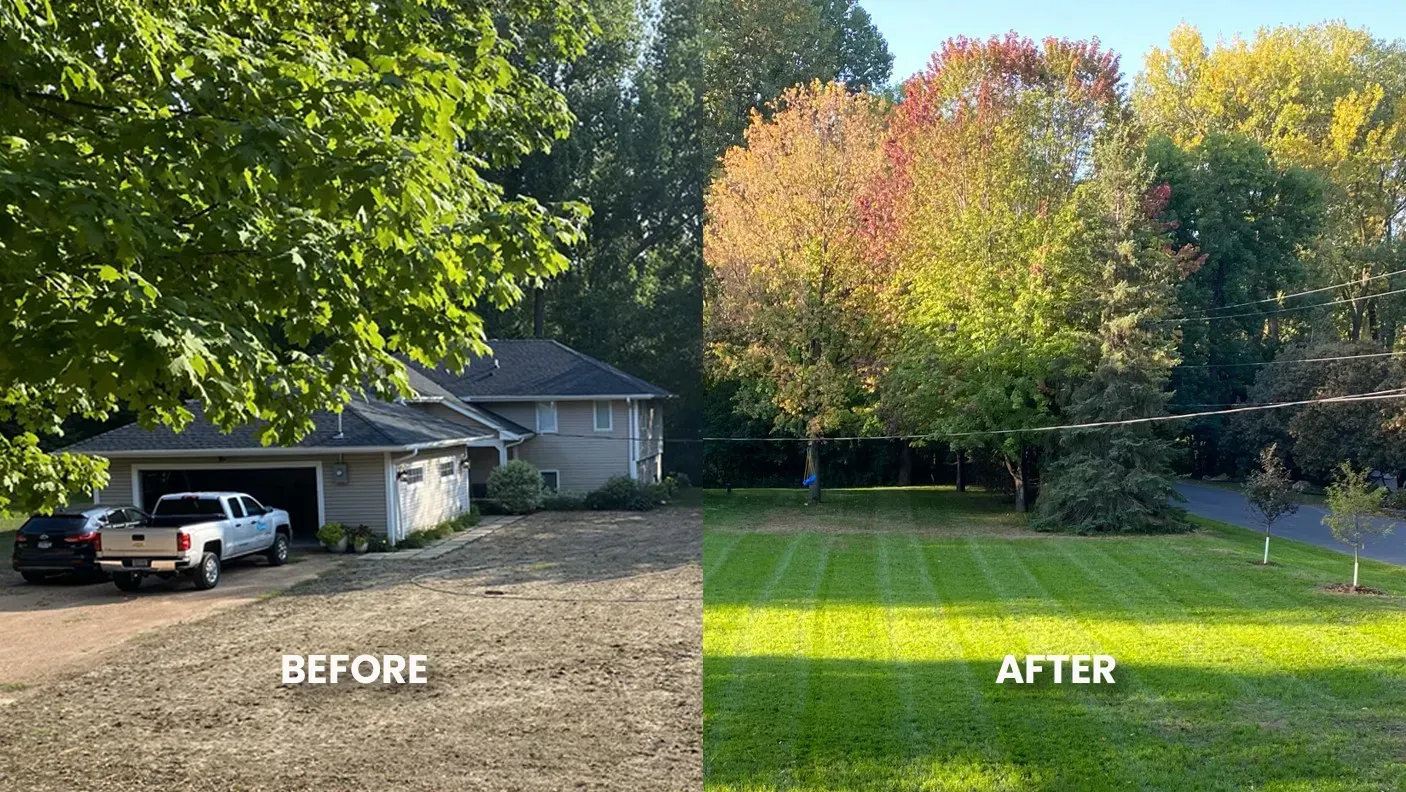
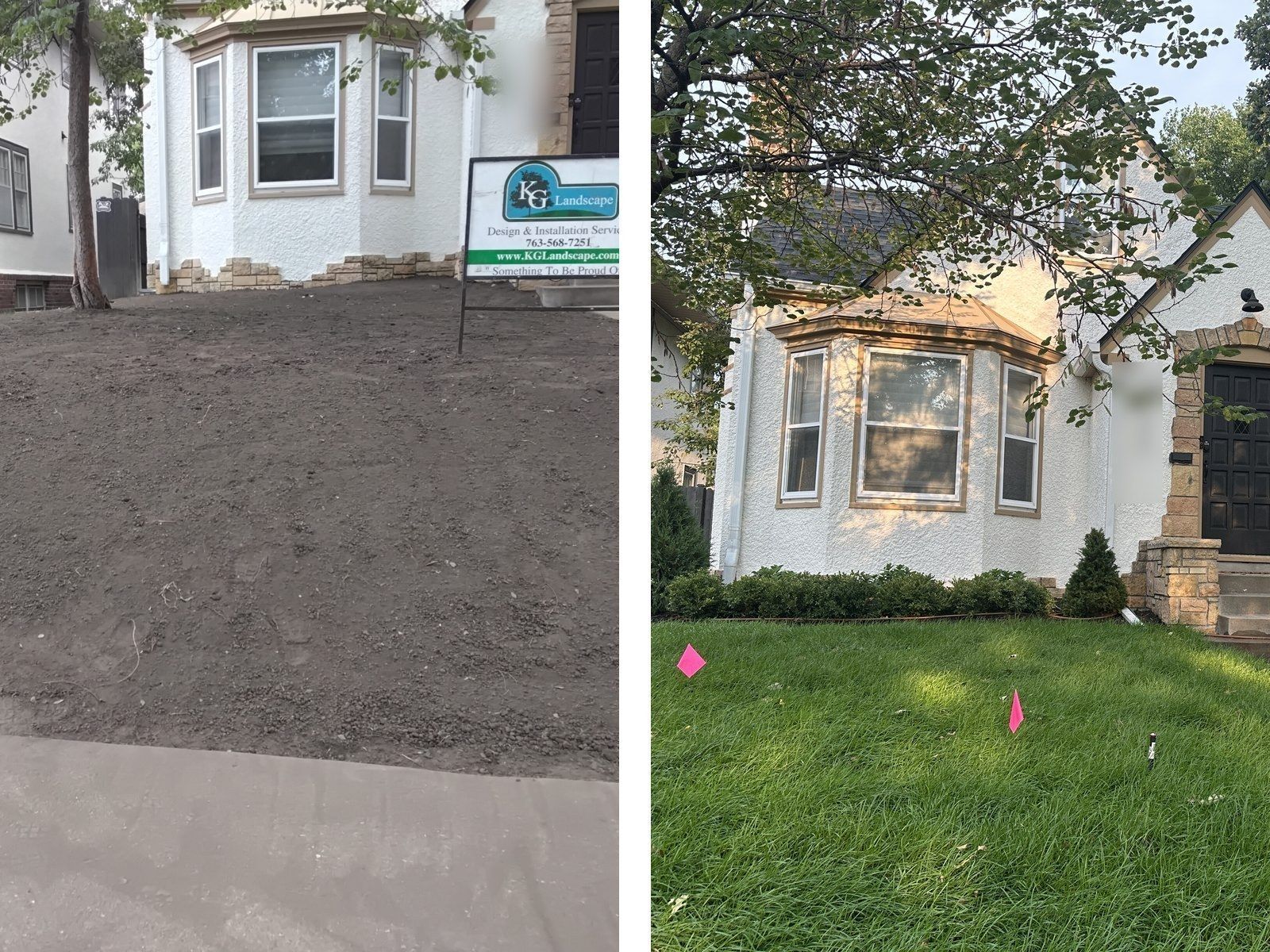 The same Minneapolis front yard, stripped and graded, then finished with new sod.
What Makes Sod Installation Work on a Minneapolis Lot
The grade under the sod decides everything
Sod is a finish material. It follows whatever is under it, which is why most of a sod installation goes into the part nobody sees. The existing grass and weeds come out rather than getting covered over, because sod laid on old turf sits high, dries out at the roots, and gives you a spongy lawn that scalps the first time you mow. Then the grade gets fixed. Starting over is what makes real regrading possible. When part of an old lawn has to be saved, the grading stops at its edges. When the whole lawn comes out, our crew can shoot elevations across the yard, cut the high spots, fill the low ones, and level the yard with grading equipment before the sod goes down. Water has to move away from the house, away from the garage, and away from your neighbor's lot, and a new lawn is the cheapest chance you will ever have to correct where the water goes. We are a landscape design and installation company, not a crew that only lays sod, so the transitions to the house, the walks, the patio, and the planting beds get planned with the lawn. In the Whittier neighborhood our crew worked in a backyard with a skinny driveway and almost no room to maneuver, and the sod that went down at the end of that project only looked as good as it did because the grading and the patio elevations had been settled first.
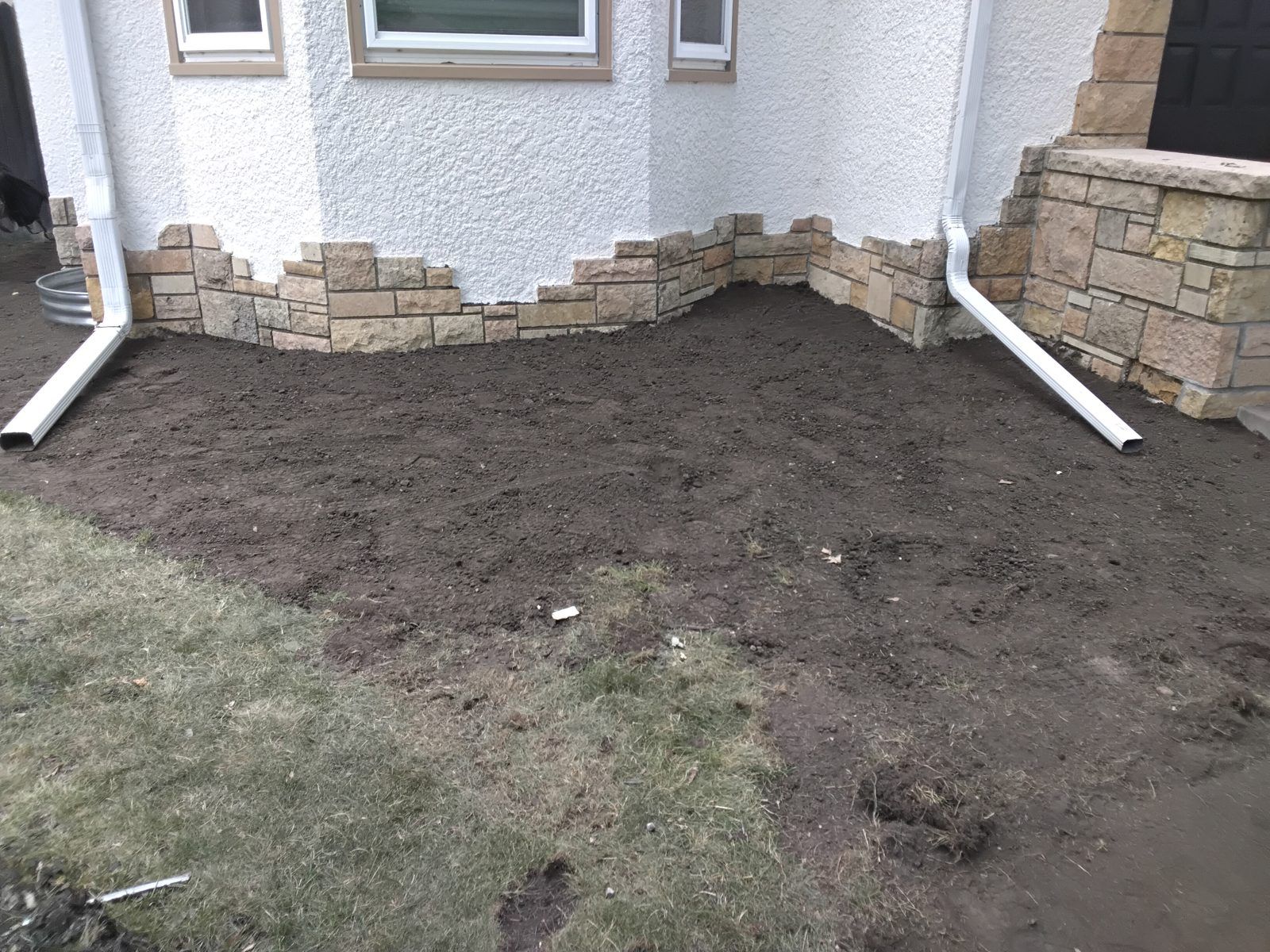 Soil prepared along the foundation before a single roll goes down.
Soil preparation for sod
A new lawn is only as good as the soil it roots into. Older Minneapolis yards often have compacted ground, a thin layer of topsoil, or fill left behind by past construction, and laying sod over that hides the problem for a season or two. Once the old lawn is off, we can see what we are working with and build the soil back up before the sod goes in. Depending on the yard, that means compost, peat, a leveling mix, or new topsoil worked into the top layer so the roots have somewhere to go. The University of Minnesota Extension makes the same point: soil preparation should be the same whether you seed or sod. On a recent Minneapolis front yard renovation, we stripped the old lawn and the tired boulevard plantings, brought in new topsoil where it was needed, and graded it all before the first roll went down. The goal is not a lawn that looks good on installation day. It is a lawn that roots deep and holds up for years.
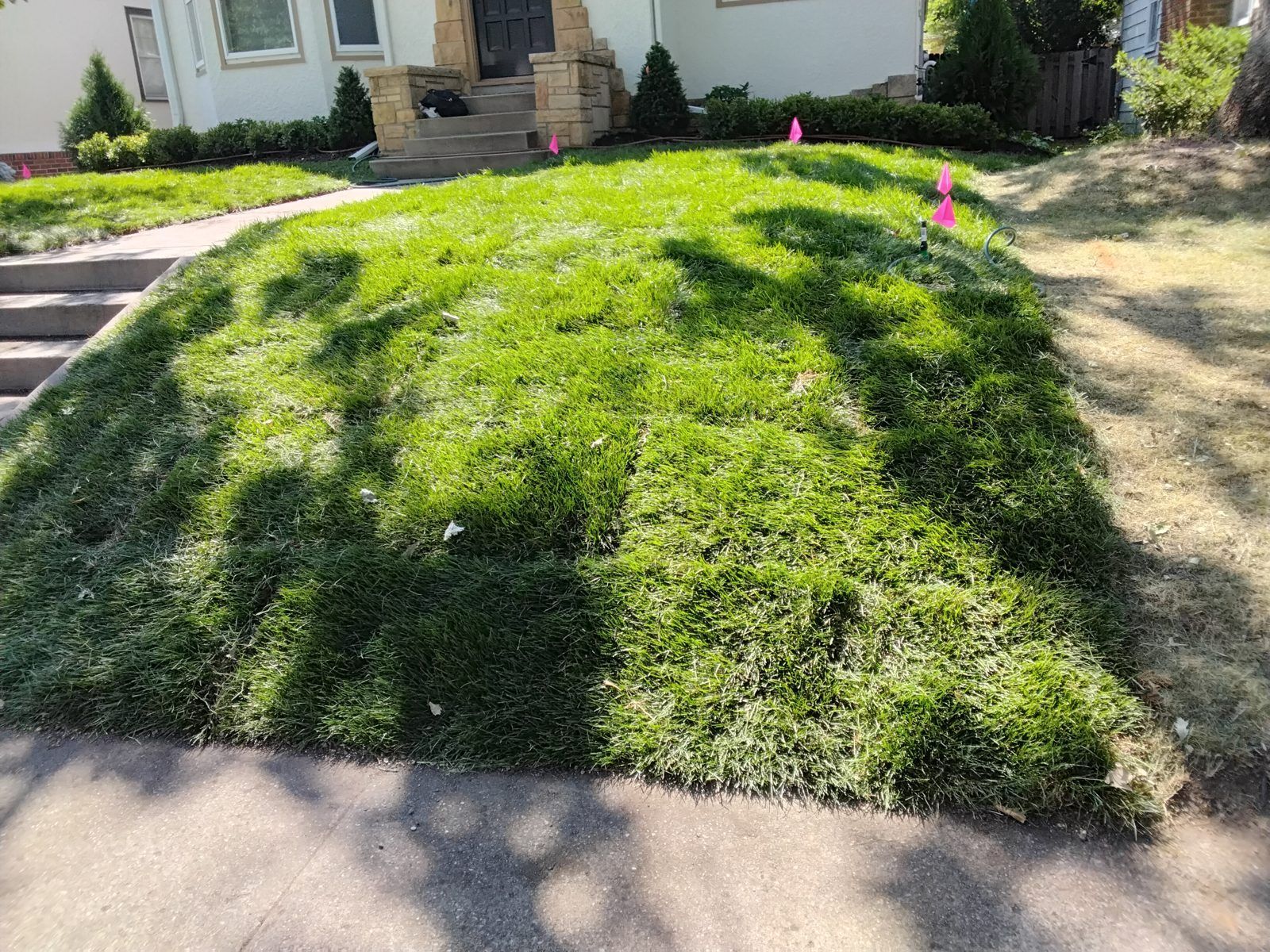 Fresh sod laid on a Minneapolis front lawn.
Laying sod is the simple part
Once the ground is right, laying sod is the straightforward part of the job. The rolls run in staggered rows so the seams never line up, the pieces sit butted tight, and the edges along beds and walks get cut clean so the sod sits flush. What decides whether that sod takes is everything around it: the grade, the soil, the light, and the water. Watering matters most in the first few weeks, while the roots knit into the soil below, so we leave every homeowner with clear watering and care instructions for the establishment period. At the 1902 house near 50th and Lyndale we irrigated the front lawn for exactly that reason, with drip line running to every planting bed alongside it.
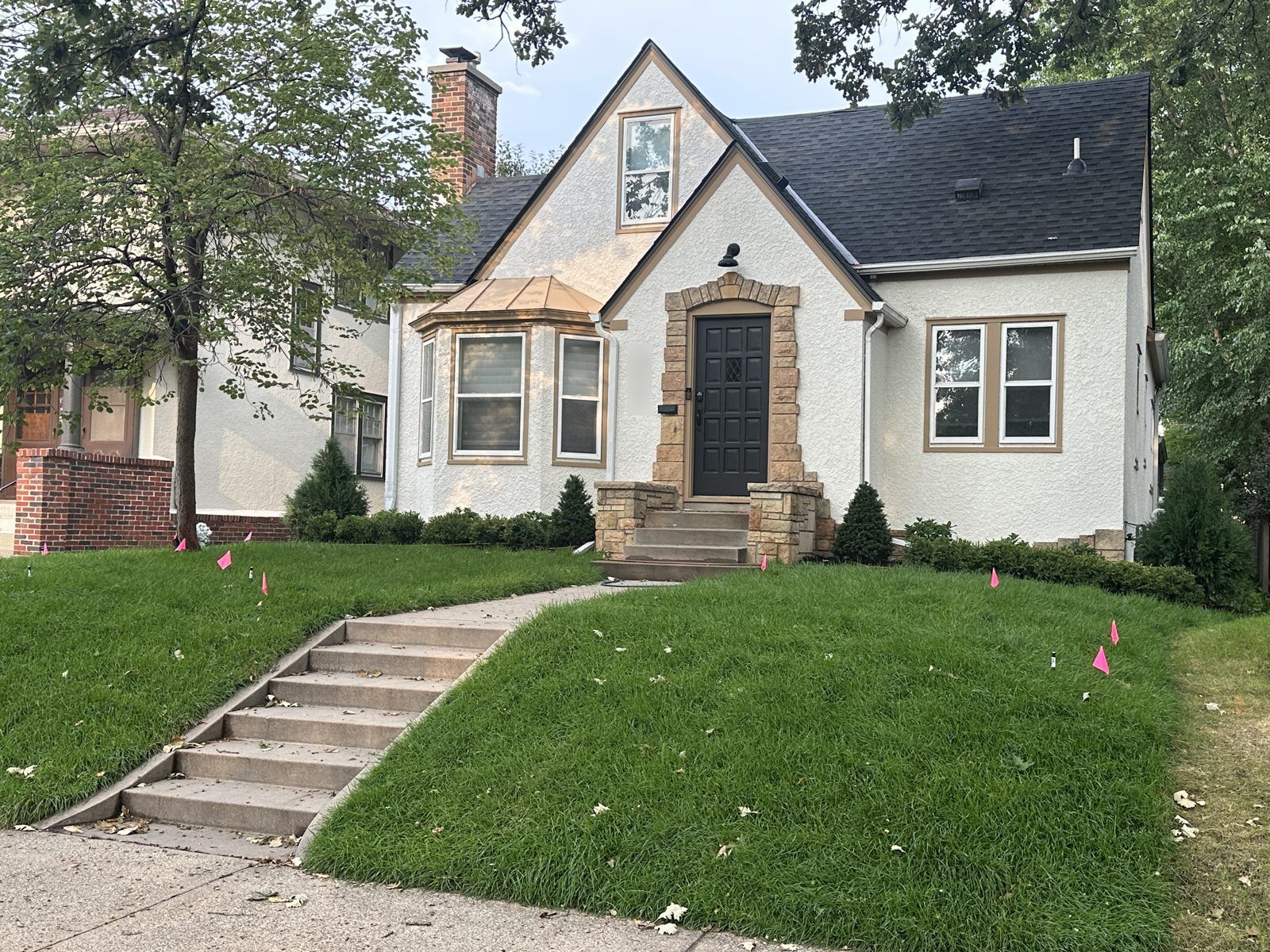 New sod holding a front yard slope beside the steps.
Sod on slopes and hills
Slopes are where sod earns its price. Seed on a hill has to stay in place until it roots, and one heavy rain before then can wash the seed and the soil right down the grade. Seeded slopes often need erosion control blankets and a round of repairs before they fill in. Sod covers the ground the day it goes in, which is why the University of Minnesota Extension calls it a good choice for slopes and areas prone to erosion. On a slope we lay the rolls across the grade rather than down it, and on steeper ground we stake or staple the sod in place until it roots. Knowing when a slope needs that extra step comes from doing it, year after year. The Minneapolis front yard above had a short hill between the house and the sidewalk, and it was sodded the same week as the rest of the lawn.
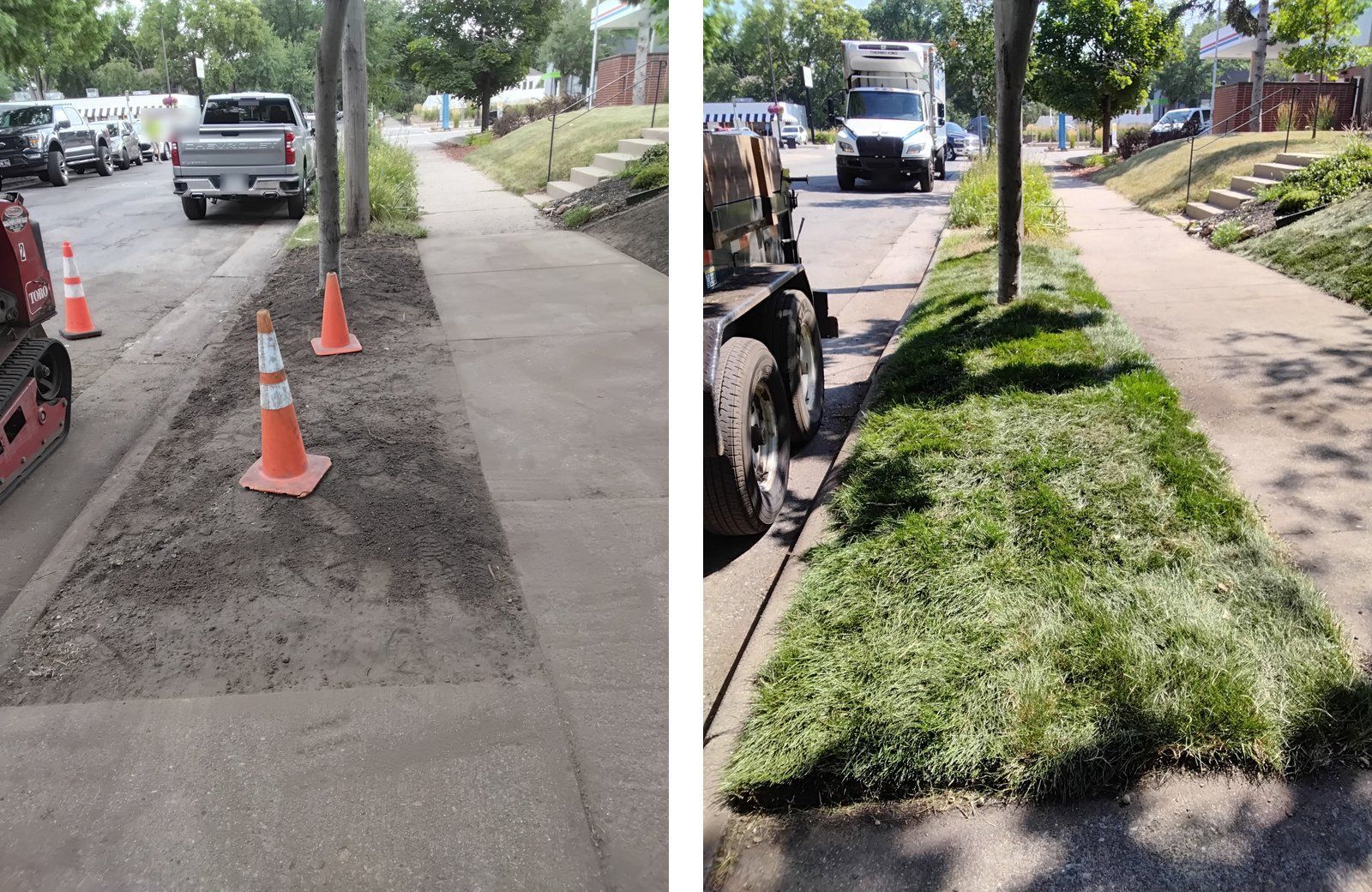 The boulevard prepped, then finished with new sod.
Sod for Minneapolis boulevards
The boulevard, the strip of grass between the city sidewalk and the street, is the hardest piece of lawn in Minneapolis to keep alive. People step onto it getting in and out of cars, it bakes between hot concrete and asphalt, and the soil underneath is often poor and dries out fast. Seed rarely gets the chance to establish there, because young grass gets trampled and scorched long before it can take the traffic. Sod goes down as mature turf, so the boulevard is green and dense from the first day. On the front yard project above, we pulled out the old boulevard plantings, prepped the soil, and laid sod from the sidewalk to the curb along with the rest of the lawn.
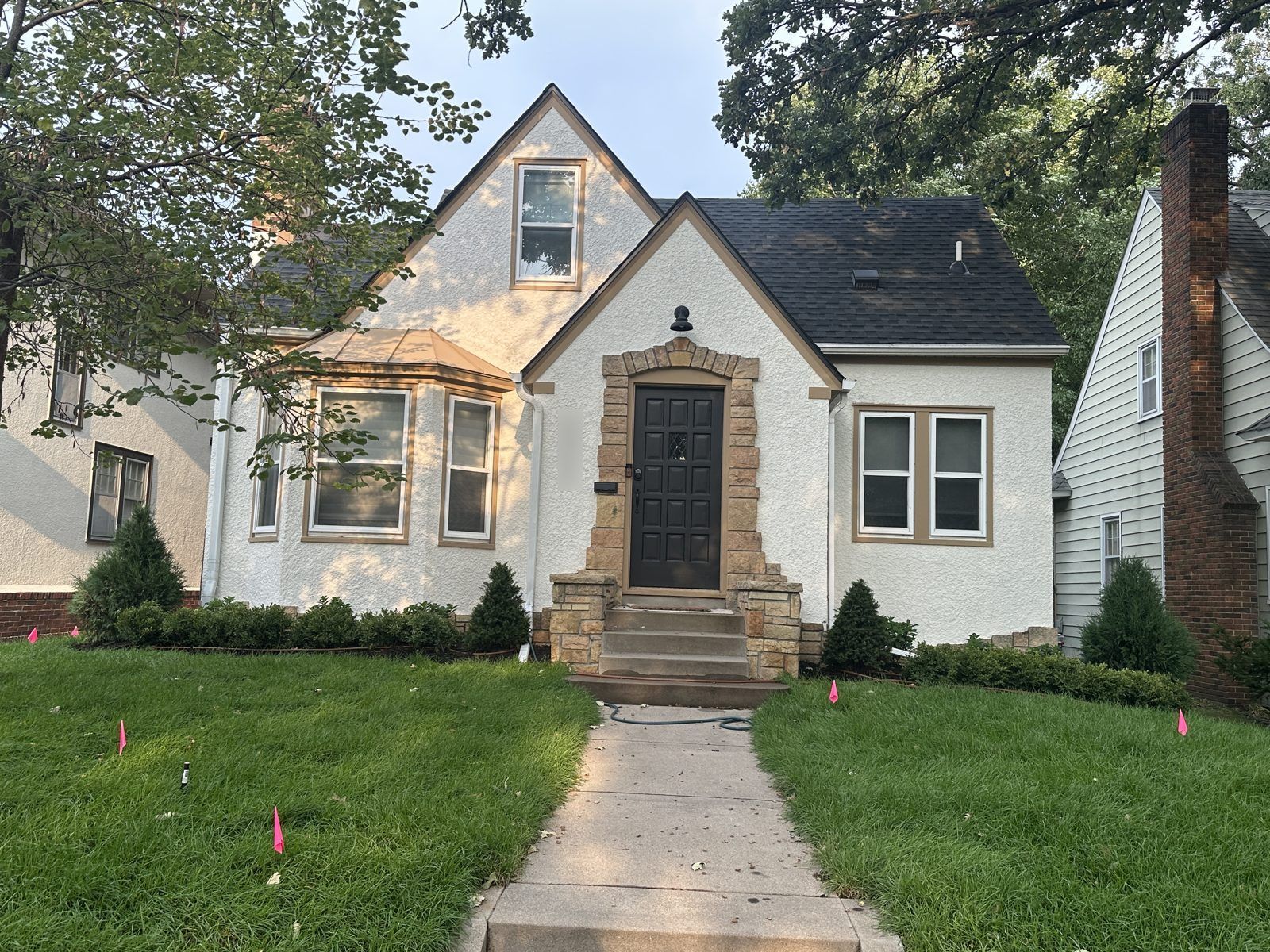 The finished front lawn, with new sod from the walk to the house.
When sod is right, and when it is not
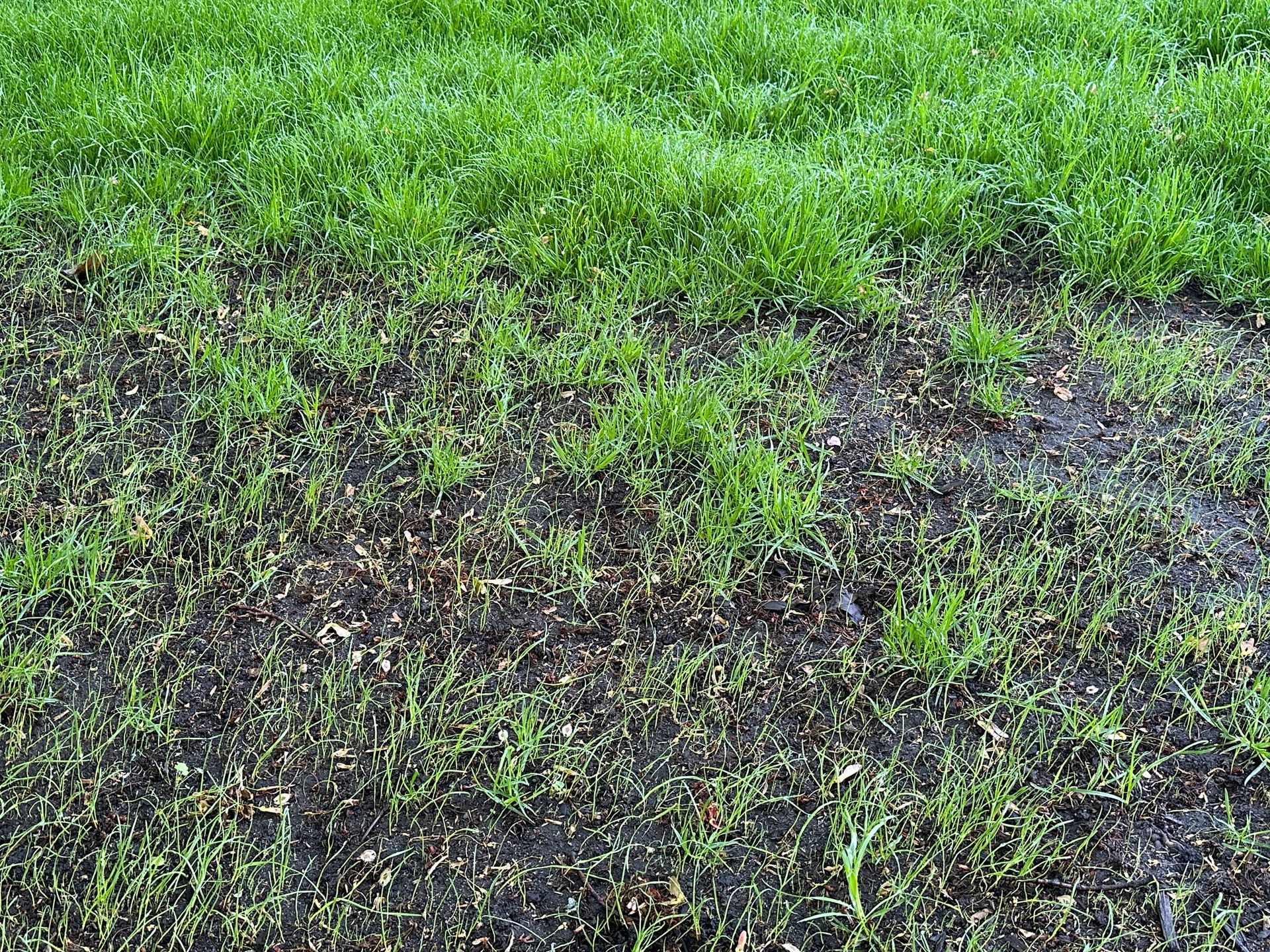
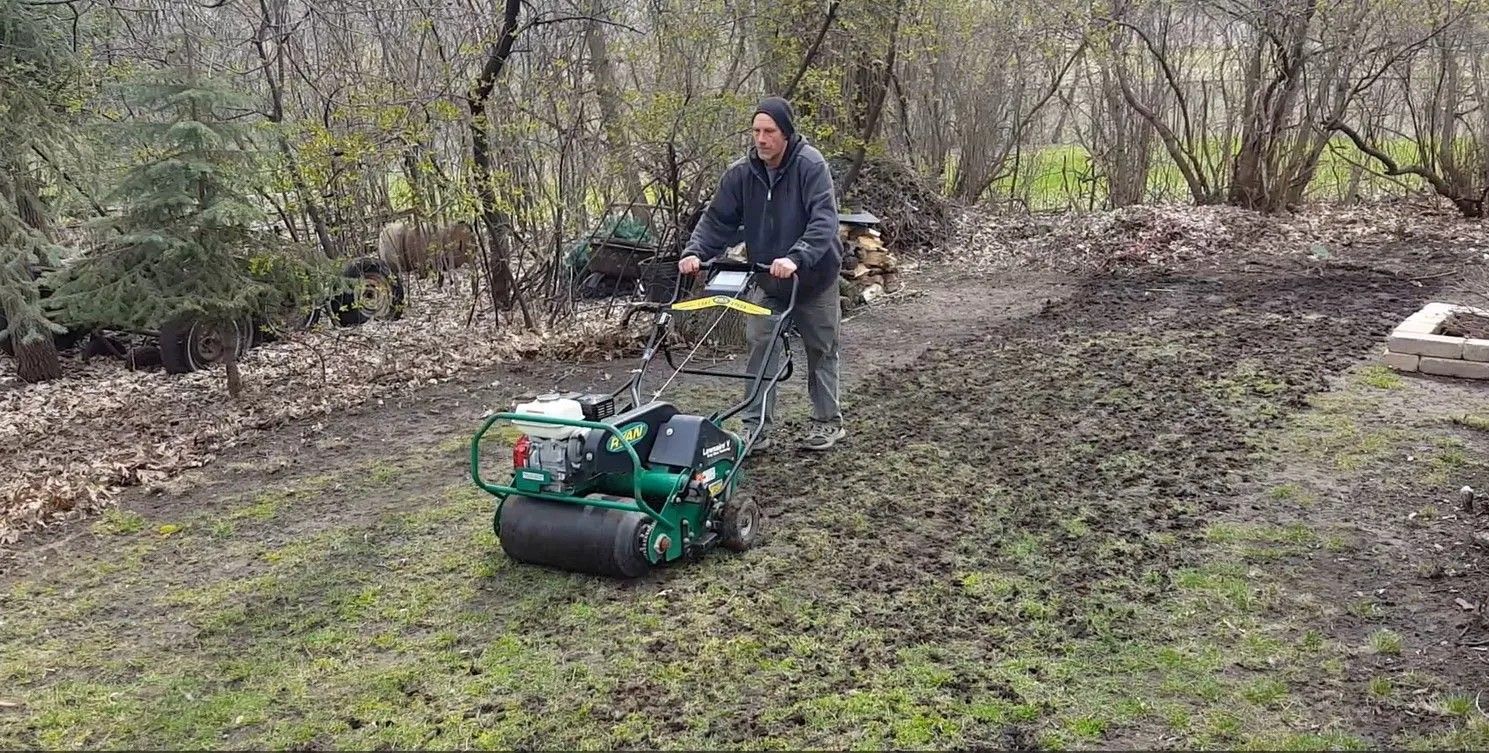
Sod is the right call when a lawn needs to be replaced rather than patched: thin, weedy, bumpy, or torn up by construction. For a complete lawn renovation, replacing the lawn with sod gives you a finished result the week it goes in. It is also the right call when you need results now, for a yard that is washing out, a house going on the market, or a family that cannot wait a season for seed to fill in. If the existing lawn is in reasonable shape and just needs to thicken up, you may not need to start over. Aeration and overseeding can renew a compacted, neglected front lawn for far less money, which is exactly what we did on a Minneapolis property where the soil, not the grass, was the problem. Topdressing can do the same for a lawn that is bumpy and tired rather than gone. We will tell you honestly which one your yard needs.
Sod vs. Seed: What You Are Actually Paying For
A price for sod and a price for seed are not prices for the same thing. Sod arrives as a mature lawn that has already spent a long time growing on a farm, in flat, well prepared ground with full sun, regular feeding, weed control, and watering adjusted to the weather as it changes. Those are conditions almost no backyard can match. Seed puts that entire growing period in your yard instead. You take on the watering, the weed control, the mowing at the right height, the repairs after a hard rain, and often a second round of overseeding before the lawn looks the way sod looks on day one. That time and effort cost something too, even if they never show up on a quote.
The math also shifts on a small city lot. Most Minneapolis yards have considerably less lawn than a suburban property, so the total difference between seeding and sodding shrinks along with the square footage. On a small lawn, the gap is often much smaller than people expect, and it buys a predictable result instead of a year of waiting. That is a big part of why we recommend sod so often in the city.
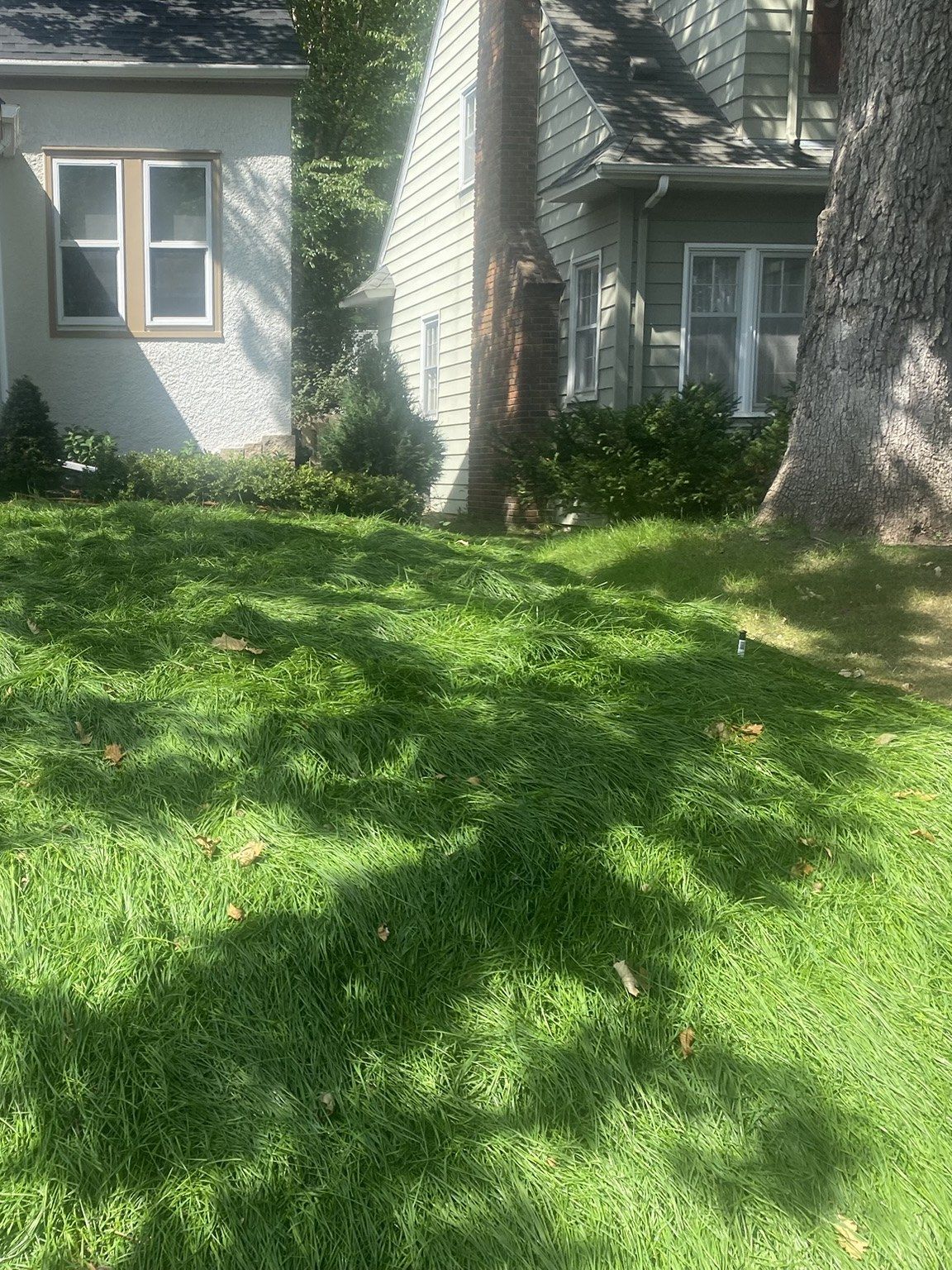 New sod growing in the shade of a mature tree in Minneapolis.
Kentucky Bluegrass Sod and Shade Sod for Minneapolis Lawns
For most Minneapolis lawns, we install high quality Kentucky bluegrass sod. It makes the dense, deep green lawn most people picture, and it does well in sun and part shade with proper watering and care. It is also the standard here: the University of Minnesota Extension notes that most of the sod grown in Minnesota is a mix of Kentucky bluegrass varieties.
Heavy shade is different. Under mature trees, bluegrass thins out no matter how well it is cared for, so for those yards we can install a specialty shade sod made mostly of fine fescues and other shade tolerant grasses. Fine fescues tolerate shade better than other cool season grasses, which gives a shaded lawn a real chance. We do not recommend shade sod where it is not needed, because it costs more and, in our experience, fine fescue goes more dormant in the heat of midsummer than bluegrass does. Matching the grass to the light is part of the plan.
And in the deepest shade, under a full canopy in an older neighborhood, even shade sod may not hold. Near Lake of the Isles the homeowners had reseeded a shaded lawn every spring for years and watched it thin out by August, so we replaced the whole thing with designed ground cover instead. Sun, part shade, deep shade: each gets a different answer.
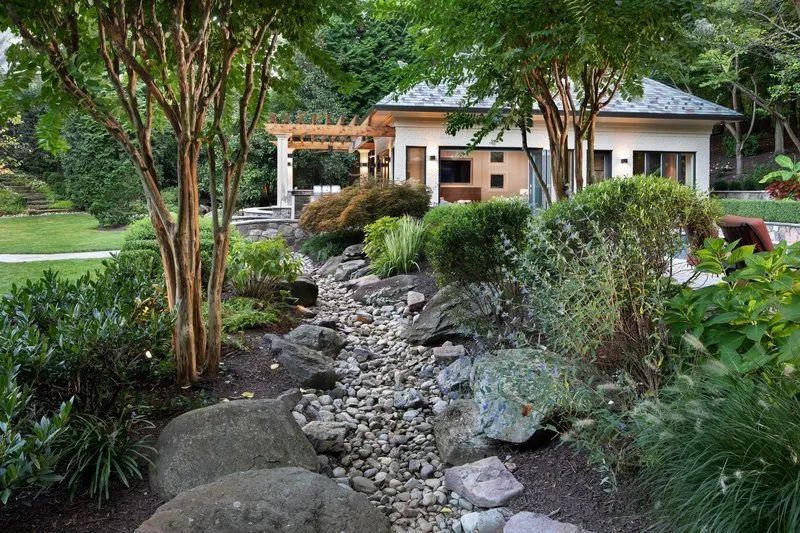
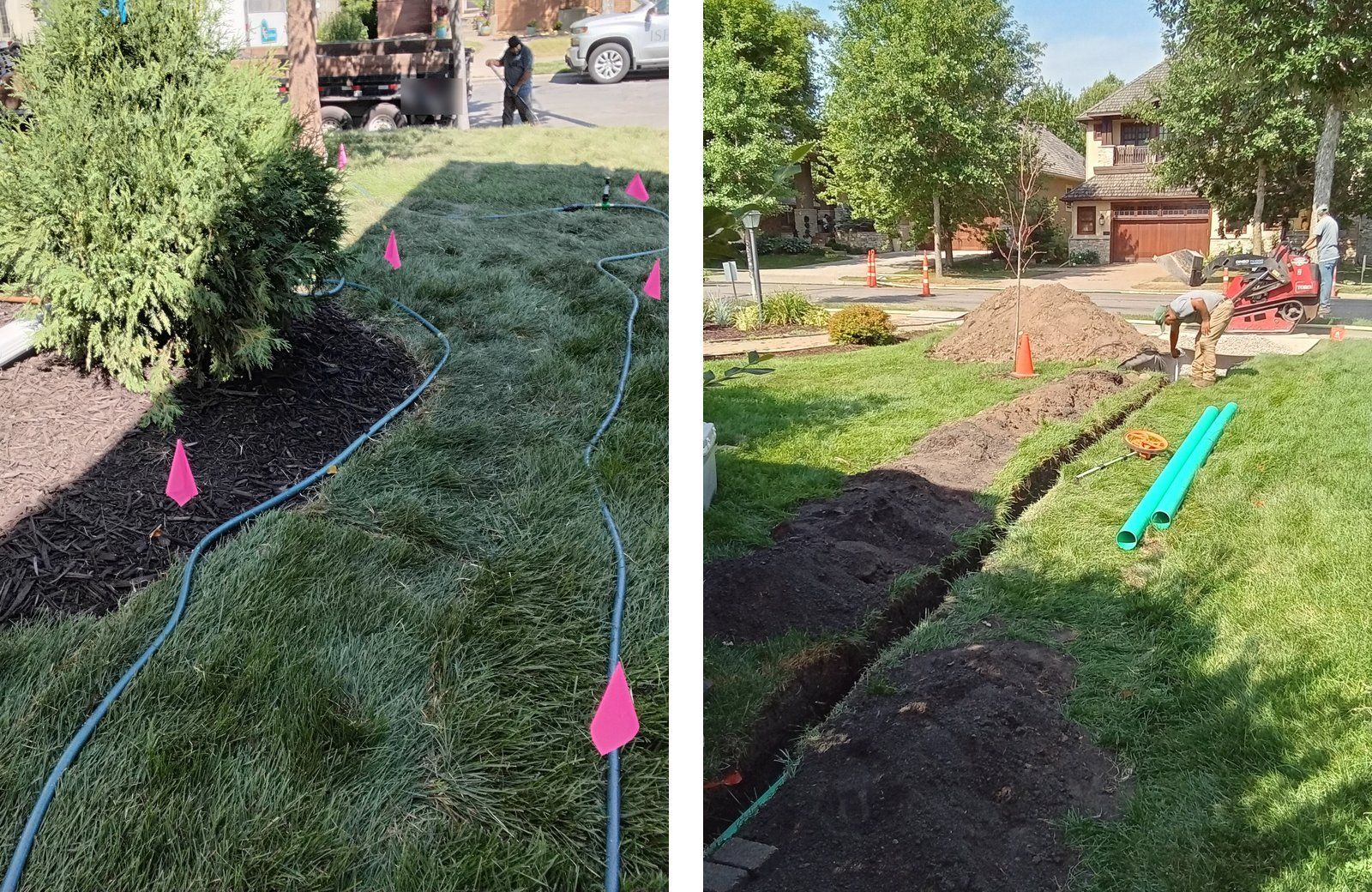 Watering lines set out on new sod, and our crew trenching a drain line to a dry well.
Irrigation and Drainage, Planned Before the Sod Goes Down
Water decides how a new lawn performs, both the water you add and the water you need to move. If the yard already has an irrigation system, we work around it during the renovation, reset the sprinkler heads to the new finished grade, and adjust coverage for the new lawn. We can also install a new system, or a temporary one just for the establishment period.
The same goes for drainage. If a yard has wet spots, a soggy side yard, or water running toward the house, we fix that as part of the same project, with regrading and swales, underground downspouts, catch basins, French drains, or sump pump discharge lines. Planning it all before the sod goes down means nobody has to dig up a brand new lawn later to fix a problem that was already there.
Lawn Care and Renovation Expertise in Minneapolis, Since 2003
Every project starts with an on-site visit. We look at the grade, the drainage, the light, and how you actually use the yard, then tell you honestly whether sod is the right answer or whether your money is better spent on renovation. When a design is part of the work, we develop several concept options and credit the design fee back toward the project when we build it.


A Minneapolis Sod Project We've Built
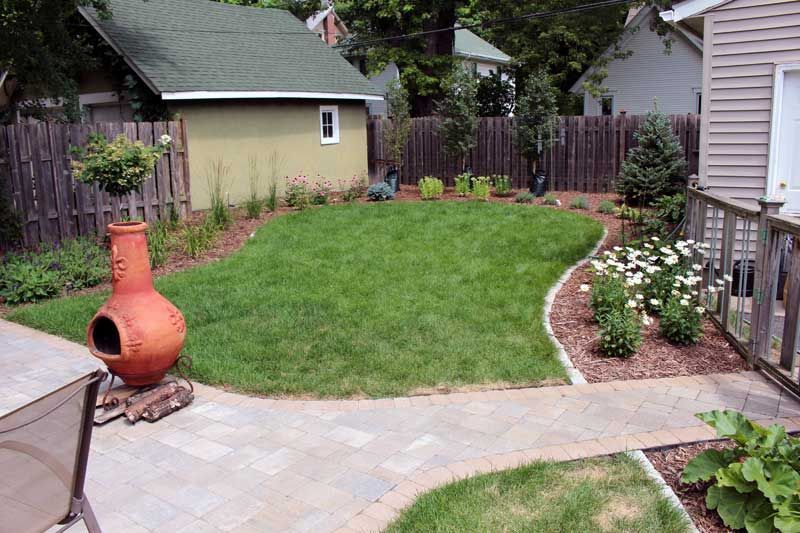
Whittier neighborhood
New sod finished a three week project in a backyard tight enough that the crew had to work around a skinny driveway.
The Whittier project is the clearest example of how sod fits into a bigger plan. The homeowners wanted a usable backyard with room for a dining table and a seating area, and a way to walk from the house to the garage without crossing the lawn. We matched the new patio to the original side stairs, worked out where the water would go, and finished with new sod that made the whole yard read as one design rather than a patio dropped into a tired lawn. You can see that project in full on our Whittier patio and plantings page, and compare sod against topdressing and seeding on our lawn renovation page. For more finished front yards, see our curb appeal gallery.
From Bare Ground to Finished Lawn in South Minneapolis
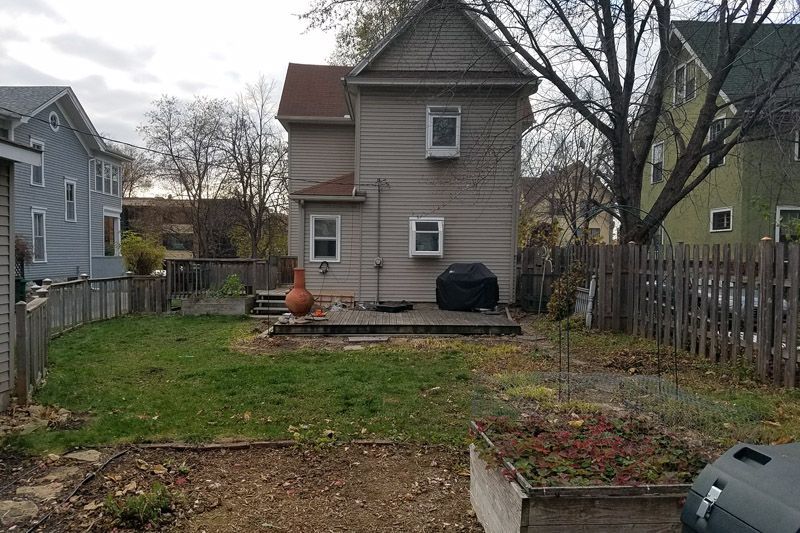
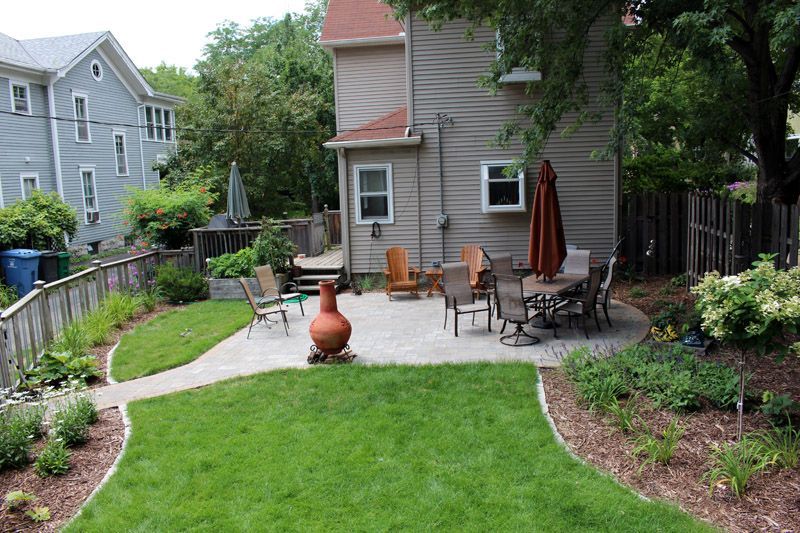
The Whittier backyard. Before: a rough deck, sparse plantings, and no usable lawn. After: a Belgard Charleston paver patio set level with the original stairs, new plantings, and fresh sod, three weeks start to finish. See the full project.
A Minneapolis Front Yard, Start to Finish
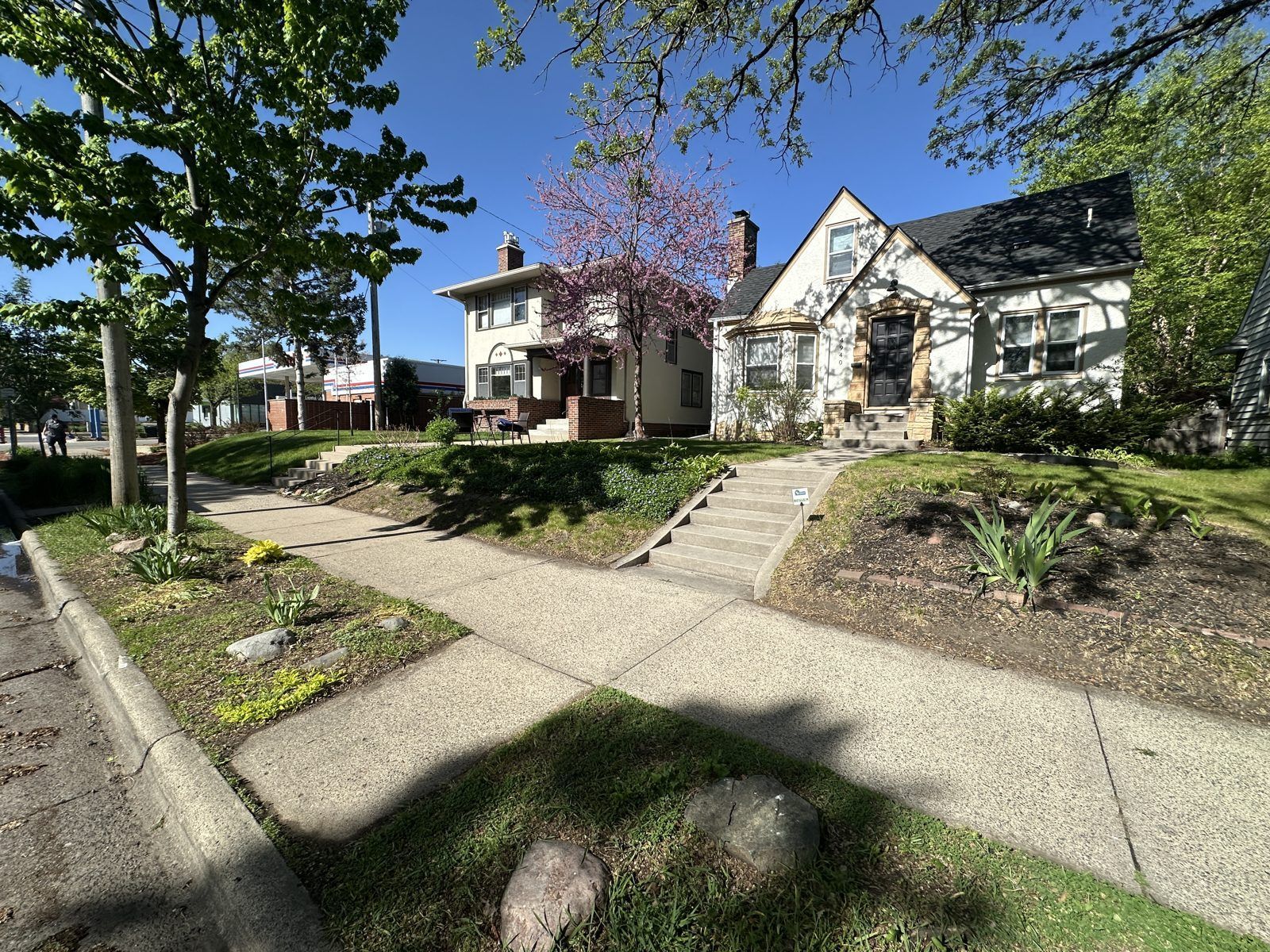
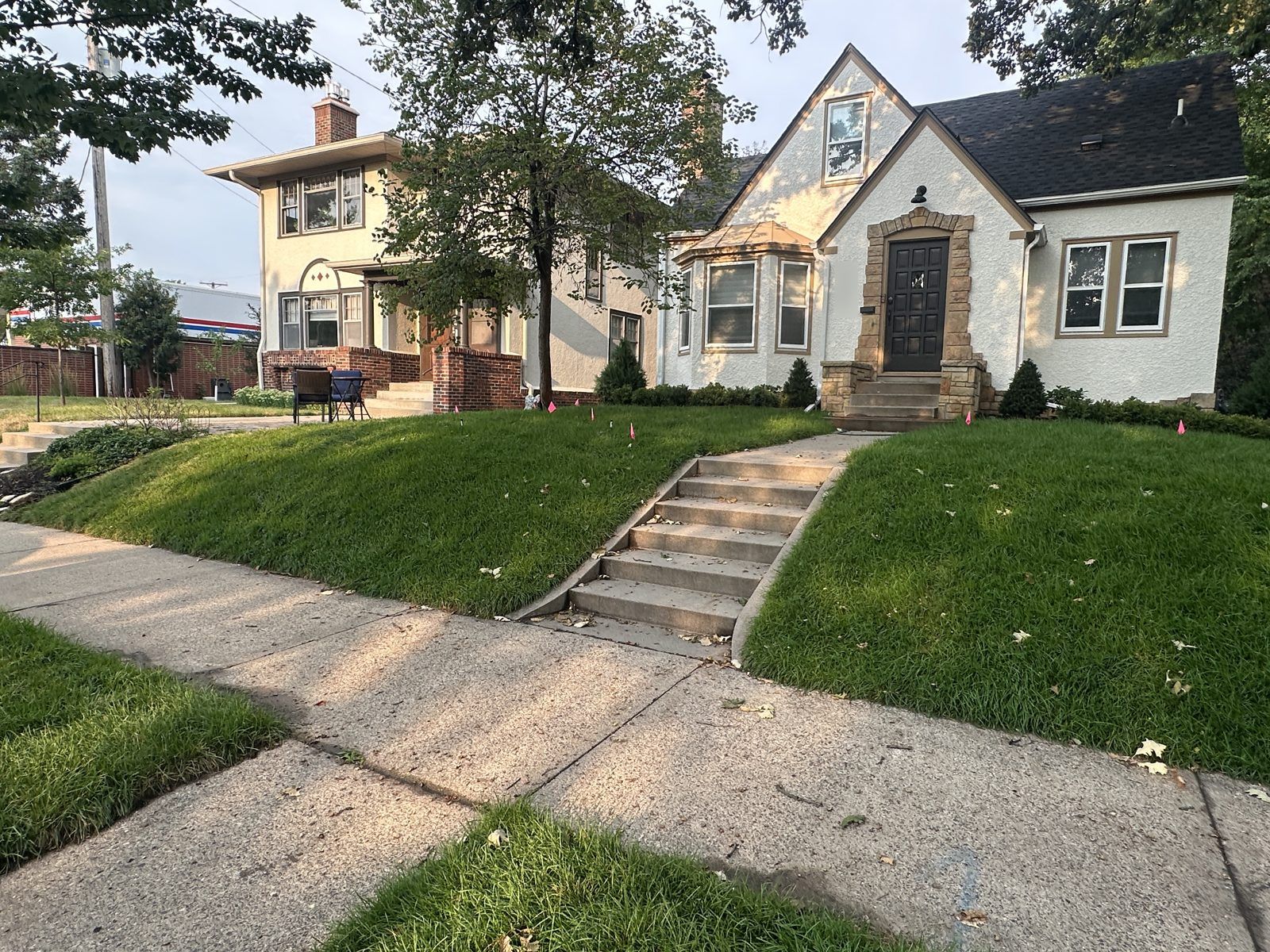
Before: a thin, patchy front lawn and overgrown beds. After: the old lawn stripped, the yard regraded, and fresh sod across the front yard, the hill, and the boulevard.
One Company, One Plan for Your Whole Yard
Your lawn is tied to everything around it. How it looks and how long it lasts comes down to the grade, the drainage, the soil, the downspouts, the sprinklers, the shade from the trees, and the patios, walks, and walls around it. That is why we would rather look at the whole property than quote a lawn in isolation. Kent and our team can plan the sod, the grading, the drainage, the irrigation, the planting beds, and the hardscape together, then build it all at once or in phases over a few years. Either way, each piece is designed to work with the next one instead of undoing it.
That matters most when you know several things about your yard need work but not which should come first. Some people call us about an ugly lawn and that is all they need, and we are glad to replace it. Others find the lawn is failing because of something underneath or around it. Either way, one company plans it, one crew builds it, and you get one plan instead of four contractors working around each other. If a bigger change is on your mind, our Minneapolis landscape design page shows how we approach the whole property.
Sod Installation Questions From Minneapolis Homeowners
How much does sod installation cost in Minneapolis?
It depends on the square footage, how much prep the yard needs, and how hard it is to get material into the space. A flat back yard with a wide gate is a different job than a fenced city lot where every pallet gets moved by wheelbarrow. We quote after an on-site visit rather than over the phone, because the prep is where the real variation lives. If the grade and drainage need work first, we will tell you that before you commit to sod.
How long until I can walk on new sod or mow it?
Stay off it as much as you can for the first two weeks while the roots knit in. Light foot traffic is usually fine after that. For mowing, wait until the sod resists a gentle tug and the blades have grown past normal mowing height, then cut high with a sharp blade and take off no more than a third. Water determines that timeline more than the calendar does, so a hot dry stretch will push it out.
Should I sod or seed my Minneapolis lawn?
Sod when you need the lawn now, when the yard is eroding, or when construction has torn it up. Seed when the area is large, the budget matters more than the timeline, and you can protect it while it fills in. There is a third answer people forget: if your lawn is thin because the soil is compacted rather than because the grass is gone, aeration and overseeding may renew it for a fraction of the cost of replacement.
Can you sod a shaded Minneapolis yard?
Often, yes. The answer depends on how much direct light the lawn actually gets through the day, which we check on the site visit rather than guessing from a photo. Many shaded city yards get more sun than they seem to, and bluegrass sod does fine in part shade. Where the shade is heavy, fine fescue shade sod is the better match. Under a dense canopy, ground cover may be the honest answer. One yard can land in more than one of those categories, and we will walk you through it.
When is the best time to install sod in Minnesota?
The University of Minnesota Extension notes that sod can be laid virtually any time during the growing season, which gives you more flexibility on timing. The tradeoff is water. Sod laid in the heat of midsummer needs more attention to keep from drying out while it roots, while spring and early fall are more forgiving. We schedule around your project and leave you with watering instructions that match the season it goes in.
Ready for a Lawn That Actually Holds Up?
Whether you are finishing a patio project, repairing what construction tore up, or finally dealing with a yard that has never quite worked, we would like to walk the property with you. We will tell you what the grade is doing, whether sod is the right answer, and what it takes to make a new lawn last through a Minnesota winter and the summer after it.
Other Service Areas