
Minneapolis French Drain Installation
For the side yard that never dries out, the corner that always puddles, and the water headed for your foundation.
French Drain Installation for Minneapolis Drainage Problems
Most calls about french drain installation start the same way. Water stands in the side yard a day after it rains. The corner by the garage never dries out. There is a wet spot in the basement that shows up every spring. Minneapolis makes all of that worse, because older lots sit on heavy clay, houses are close together, and a century of added sidewalks, patios, and downspouts has quietly changed where the water goes. Kent Gliadon, our founder and a graduate of the University of Minnesota Landscape Design program, has spent more than twenty years designing drainage into landscapes rather than bolting it on afterward. The full technical detail lives on our french drain installation page. This page is about how we approach these drainage problems on a Minneapolis property.
How We Approach Drainage Problems on a Minneapolis Lot
Find out where the water is going first
A french drain is a tool, not a diagnosis. Before we agree to install a french drain we walk the property and work out what is actually feeding the water: the slope of the yard, where the downspouts discharge, whether a sump pump runs constantly, what the neighbor's grade is doing. That step changes the answer more often than people expect. On a South Minneapolis property we were called about pooling water and found the cause was a very active sump pump discharging into a yard with nowhere to send it, so the fix was a permanent dry well rather than a drain line to nowhere. Skipping the diagnosis is how homeowners end up paying twice.

What a french drain actually is
The concept is simple and the execution is where it is won or lost. We dig a trench along the wet run, sloped consistently so water always moves in one direction. The trench gets lined with filter fabric to keep soil out. Washed rock goes into the bottom of the trench, then a perforated pipe set on that bed so water collecting in the rock has somewhere to go. More rock goes over to cover the pipe, the fabric folds closed over the top, and the surface gets restored with soil and sod or with decorative rock, depending on how the yard is used. That fabric wrap decides whether the system still works in ten years, because a drain that silts up is just an expensive trench. On the Lake of the Isles project we ran drain tile behind every section of new retaining wall, so water filtering through the soil collects and passes out through built-in grates instead of pushing on the wall.

Where it ends matters more than where it starts
Every drain has to discharge somewhere, and in a city yard that is the hard part. Sometimes we can daylight the line at a low point where the water can spread out and soak in. Often there is no such place, and the system needs a dry well: a buried reservoir of rock that holds water and lets it release into the soil slowly. On the Lake of the Isles property we built a large dry well between the garage and the new retaining wall, then cut into the hill and regraded so the slope moved away from the garage instead of toward it. That one system takes runoff from the hill, water from half the garage roof through underground downspouts, and the first ten feet of sidewalk that used to pool against the foundation. Before the work, standing water had already cracked the stucco. A drain that just relocates a puddle is not a solution, and Kent's standard applies here as much as anywhere: our designs are planned to succeed.
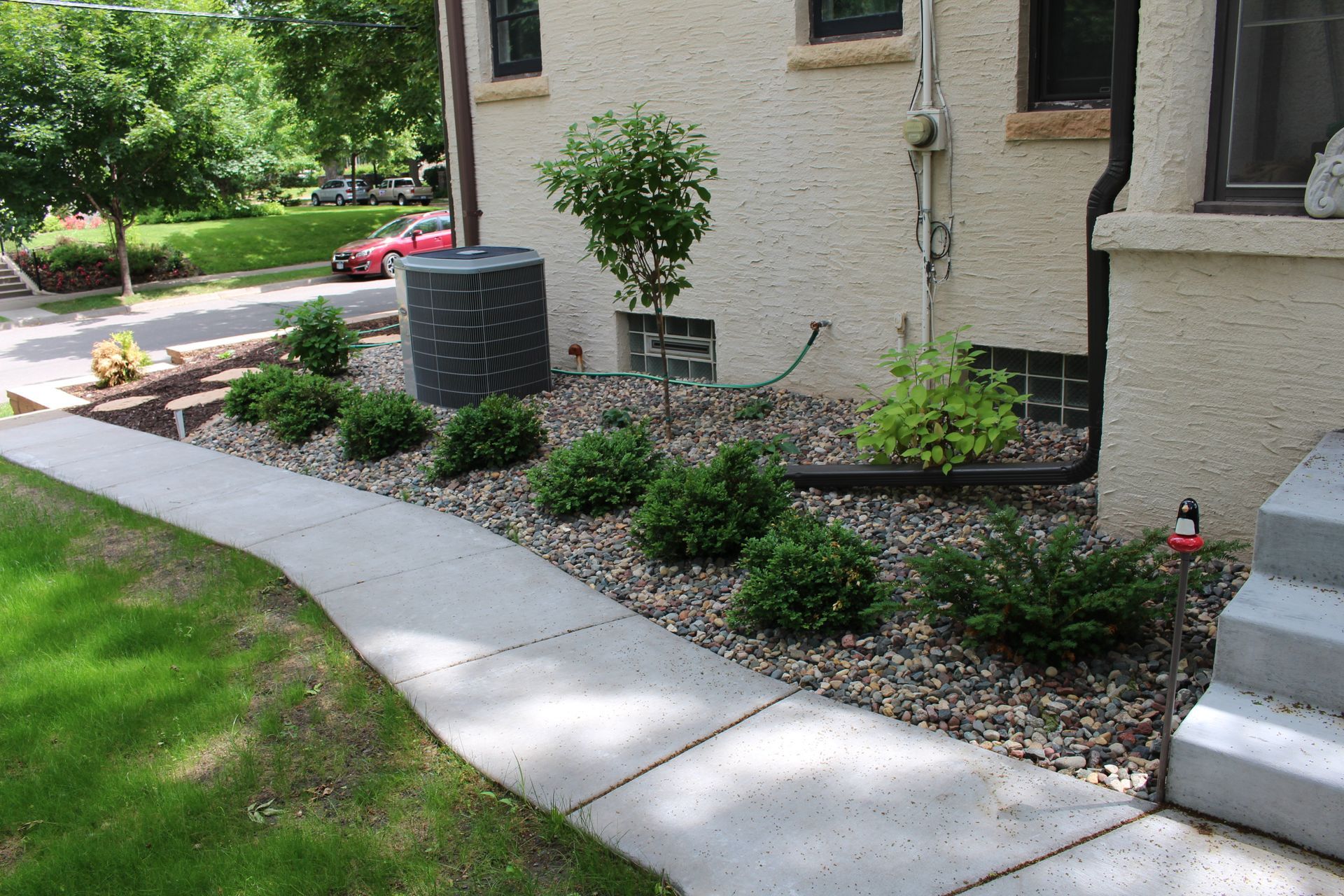
Drainage Design and Installation Expertise in Minneapolis, Since 2003
We start with an on-site visit and a look at the whole water path, not just the wet spot. From there we recommend the smallest system that will actually solve it, whether that is a french drain, a regrade, a downspout rerouting, or a combination. When a design is part of the work, we develop several concept options and credit the design fee back toward the project when we build it.

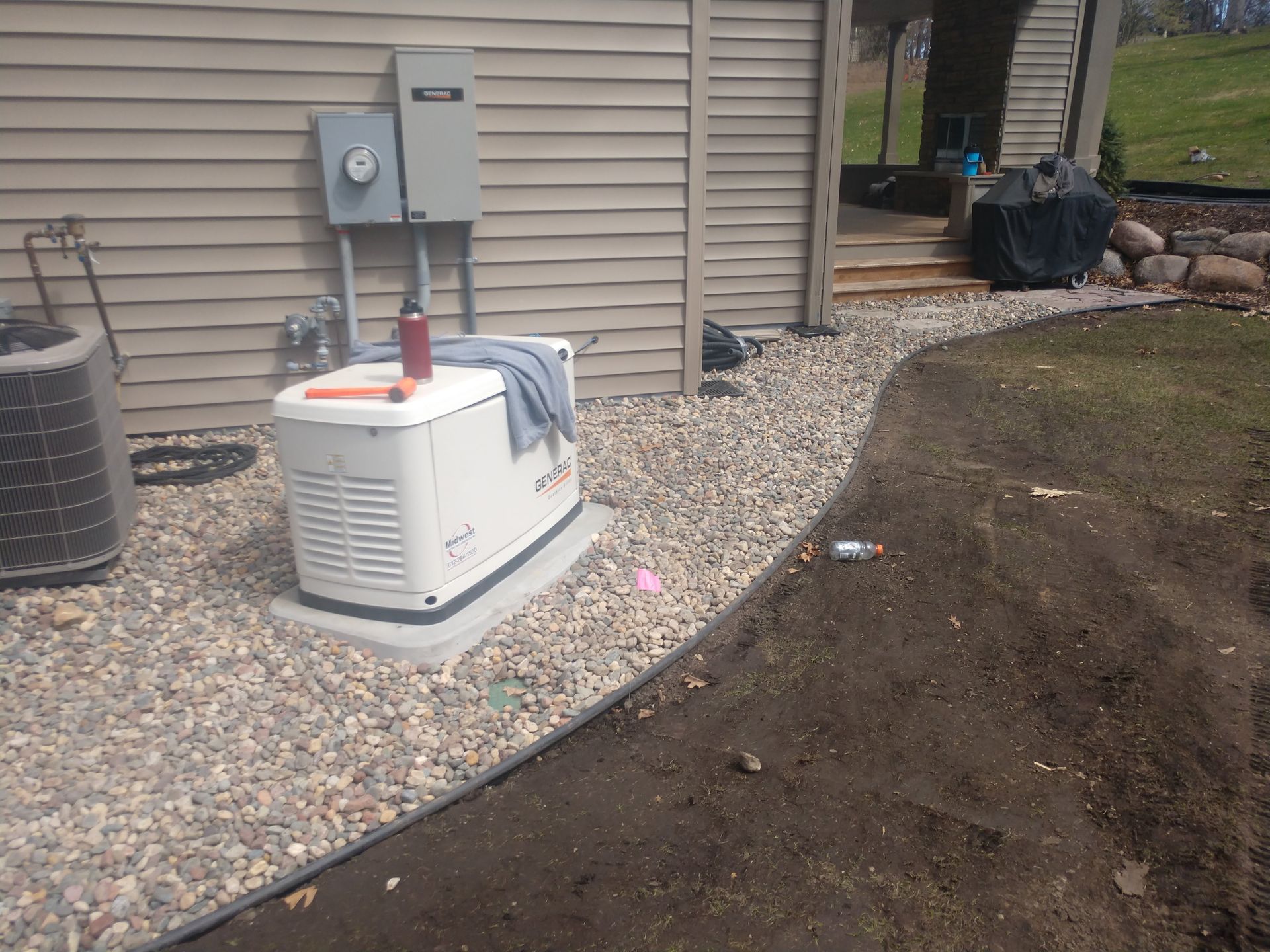
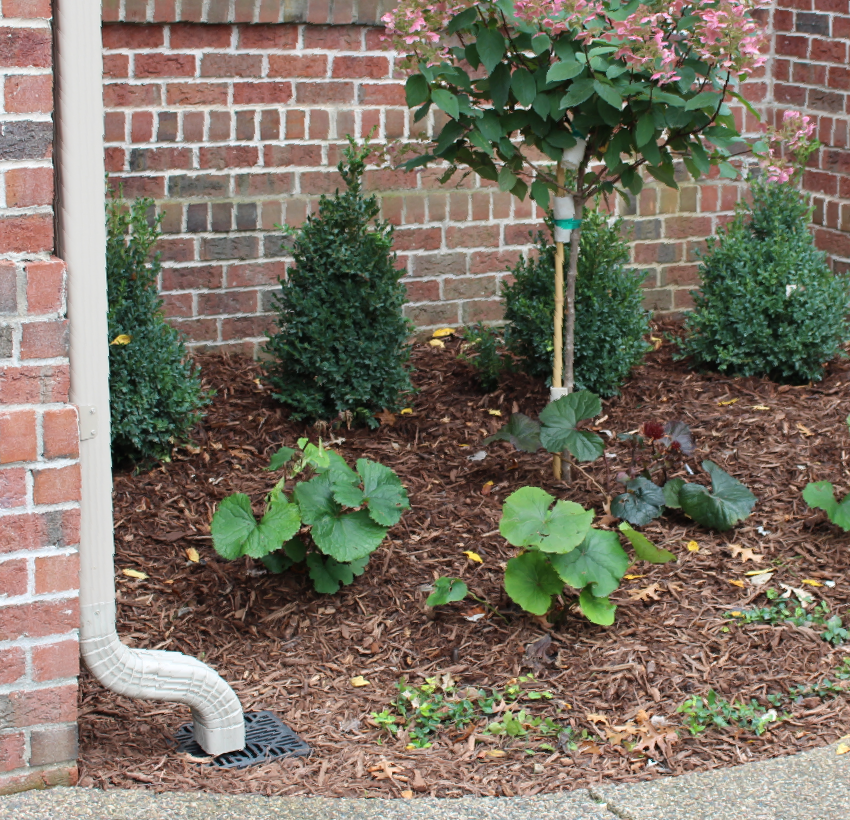
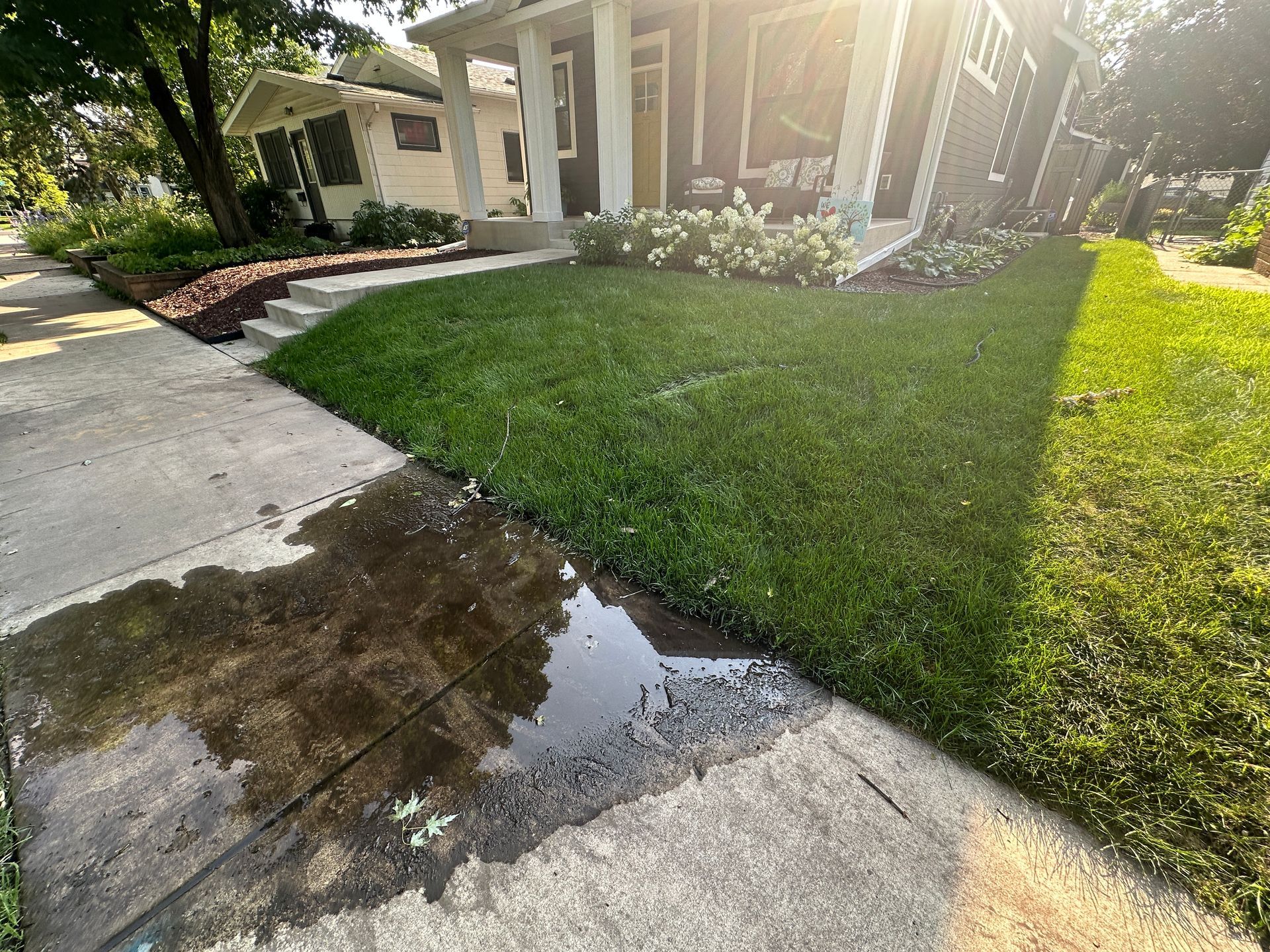

Minneapolis Drainage Projects We've Built

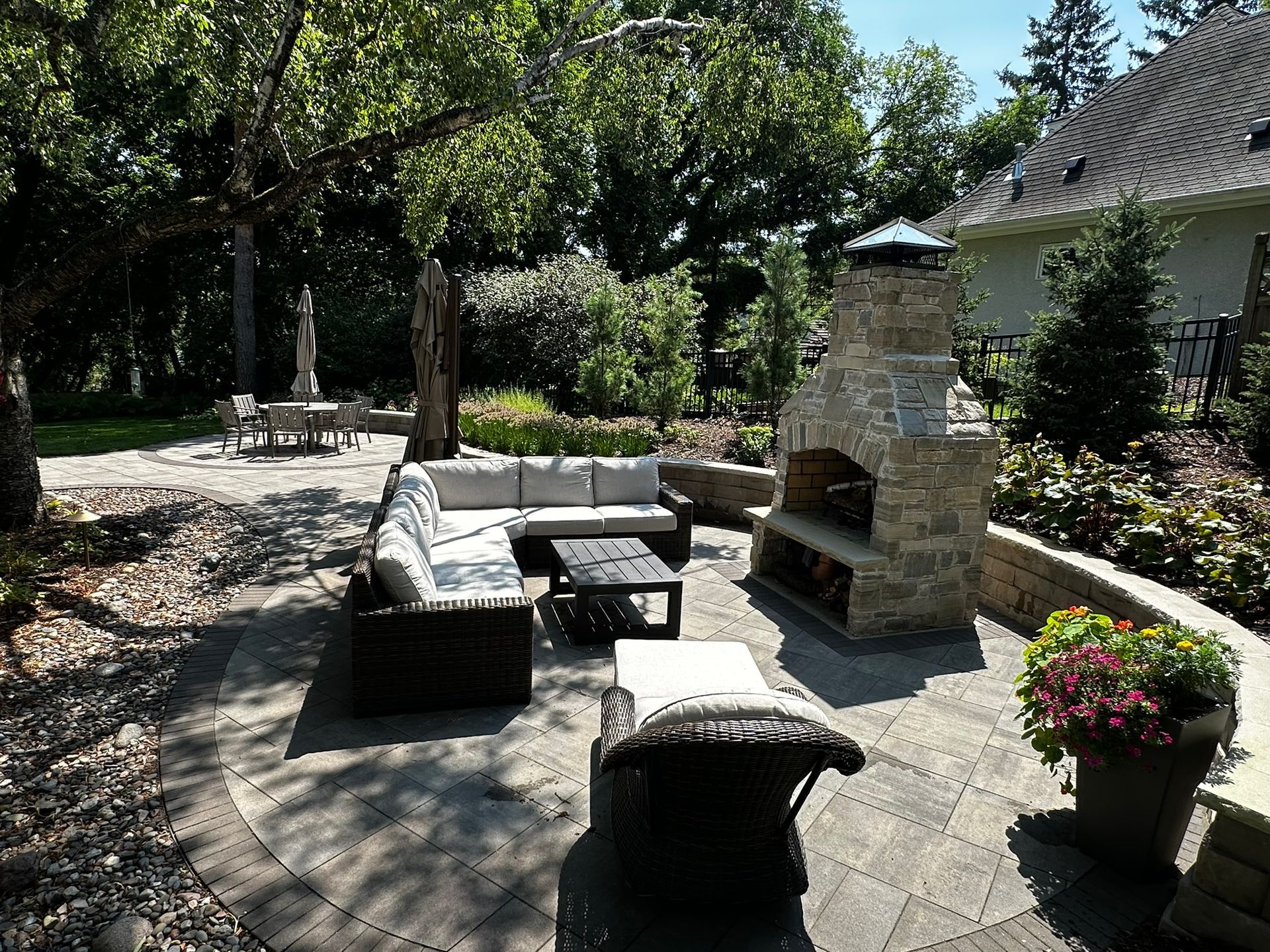
Lake of the Isles
Drain tile behind every section of new wall, underground downspouts, and a dry well between the garage and the wall, after years of water running downhill at the foundation.
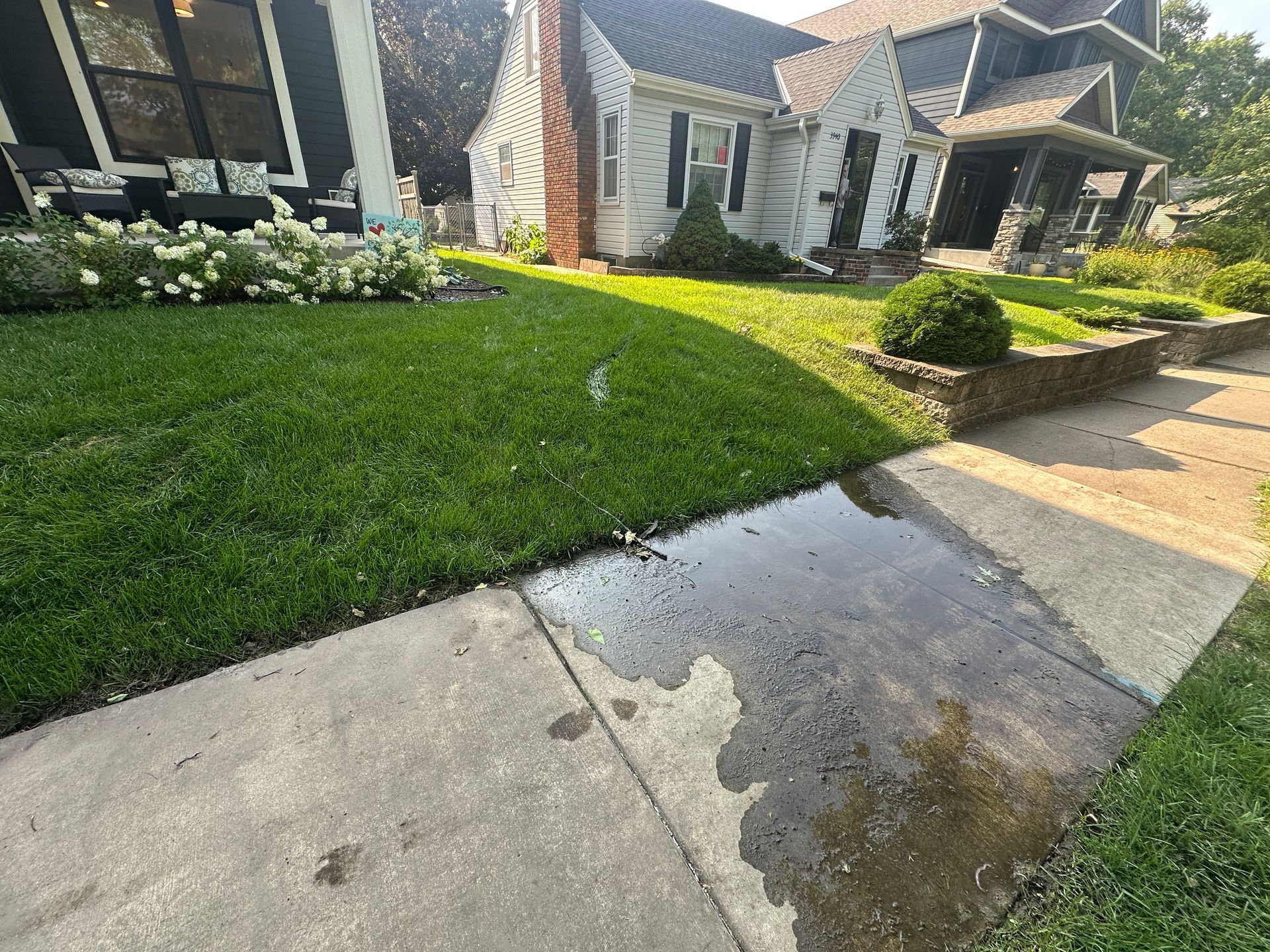
South Minneapolis
A very active sump pump was flooding the yard it discharged into and the sidewalk beyond it. We worked through the options with the homeowner before choosing the fix.
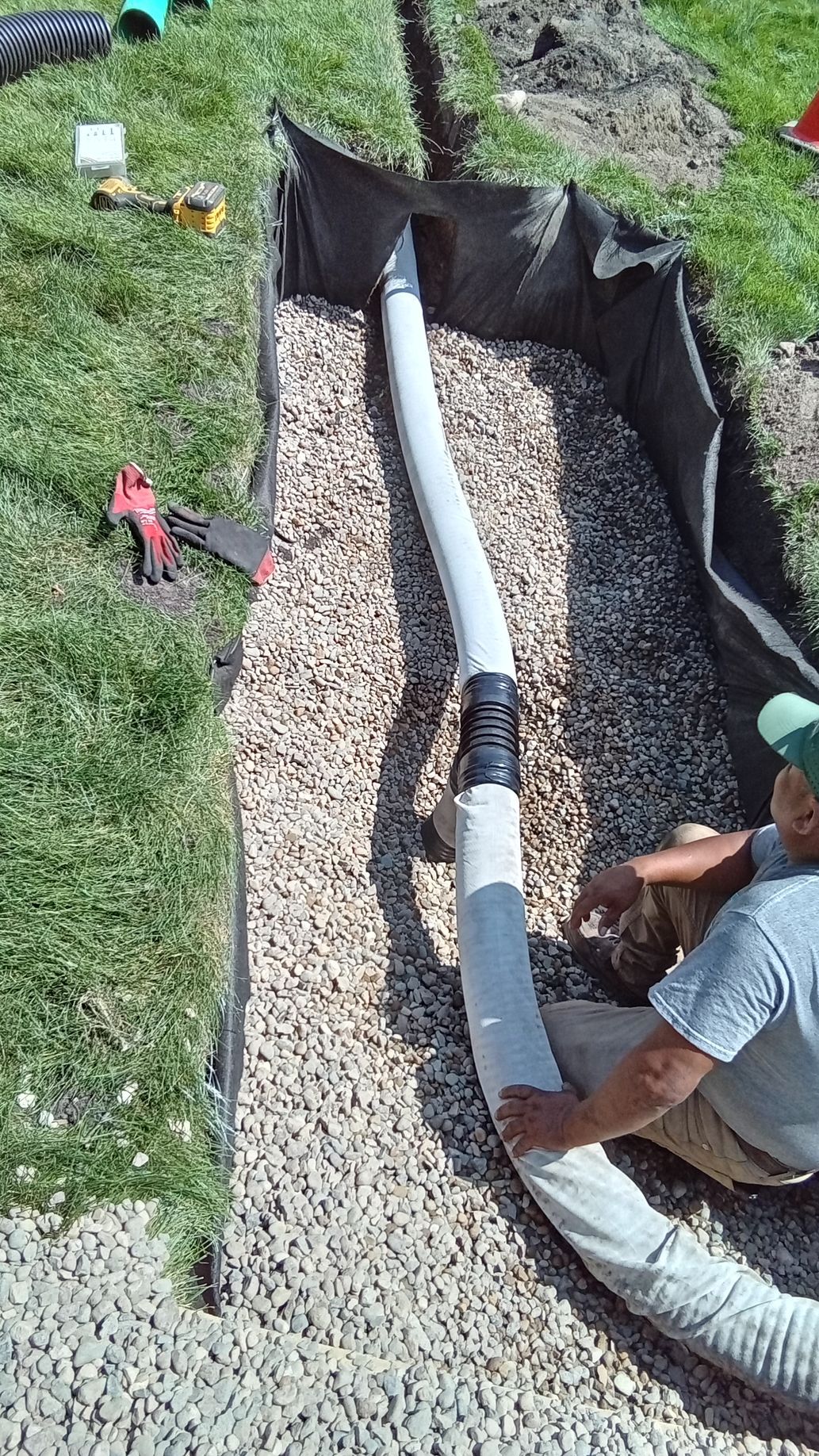
Southwest Minneapolis
A custom dry well built to take sump pump discharge water that had been pooling with nowhere to go.
The Lake of the Isles project shows what a layered system looks like when drainage is designed in with the rest of the landscape rather than added later. Underground downspouts feed catch basins, drain tile sits behind the walls, and a dry well handles the water from three separate sources. We built it in two phases, with the infrastructure going in first and the plantings following two seasons later once everything had settled. You can read the whole project, including the options the homeowners considered, in our Lake of the Isles case study, and see how we handle the tightest city lots in our article on french drains in narrow Minneapolis side yards.
French Drain Questions From Minneapolis Homeowners
How much does a french drain cost in Minneapolis?
It depends on the length of the run, how deep it has to go, what a machine can reach, and where the water ends up. A straight run along an open side yard is a different project than a line that has to get around a garage, under a walkway, and into a dry well because there is nowhere to daylight it. We quote after an on-site visit. If a regrade or a downspout change would fix the problem for less, we will tell you that instead.
How deep and how wide does a french drain need to be?
Deep enough to intercept the water, and sloped so it keeps a consistent fall along the whole run, which is what actually makes it work. The trench is only a little wider than the pipe and the rock around it, so most residential runs are measured in inches wide rather than feet. We size it to the water we are moving and to what is in the way, since a line squeezing between a house and a property line has different constraints than an open back yard. What matters more than the dimensions is the fabric wrap and clean washed rock, because a drain that fills with silt stops working no matter how big it was.
Will a french drain fix water in my basement?
Sometimes, and sometimes it is the wrong tool. An exterior french drain handles water moving through the yard and soil toward the house. It does not fix a failing foundation, a bad window well, or a sump system that cannot keep up. What we usually find in Minneapolis is a combination: roof water discharging next to the foundation, a yard sloping the wrong way, and no relief for the soil behind a wall. Fixing the yard often reduces what the basement has to deal with.
How long does a french drain last, and does it need maintenance?
A properly built drain with filter fabric and clean washed rock should keep working for many years with very little attention. The failures we get called about are drains built without fabric, built with the wrong rock, or built with no real discharge point. Keep grates and catch basins clear of leaves in the fall, and watch for any area that starts holding water again, since that is usually the first sign something upstream has changed.
Ready to Stop Working Around the Wet Spot?
If you have a side yard you cannot walk on, a corner that never dries, or water finding its way toward the foundation, we would like to see it. We will walk the property, tell you where the water is actually coming from, and recommend the smallest system that solves it. Sometimes that is a french drain. Sometimes it is dirt, a downspout, and a better place for the water to land.
Other Service Areas