
Columbia Heights Snow Removal for Storefront Lots
Small lots, apartment drives and the sidewalk out front, cleared on one plan.
Columbia Heights Snow Removal Where the Lot Meets the Sidewalk
A storefront in Columbia Heights usually has two snow problems, not one. The small lot in front or behind needs to open before customers arrive, and the public sidewalk by the street needs clearing too, often after the city plow has already thrown snow back onto it. Handle one and skip the other, and the shop still looks closed from the street. Commercial snow removal here has to cover both.
We have cleared commercial lots and walks around the Twin Cities since 2003. Each property's plan is written before winter, after walking the lot and the frontage with you, and the services come from our storefront and business snow service.
Who Clears the Sidewalk in Columbia Heights
Columbia Heights spells this out in its snow and ice control policy. The city says it will maintain some of the sidewalks. Residents and property owners are responsible for all other sidewalks along public streets, including any snow plowed from public streets onto the sidewalk. Unless the city maintains it, the street-side walk is yours to clear, plow ridge and all.
The city's own list of priorities covers municipal building parking lots and sidewalks, designated sidewalk routes and the pedestrian bridges, plus snow removal around bus benches on Central Avenue between 37th and 43rd Avenues. Check with the city for the full list of walks it maintains.
The policy also explains where street snow ends up. Plows open the center of the road first, then push the snow to the curb and onto the boulevard, and the boulevard includes driveway entrances. The city says it doesn't clean driveways, so the ridge across your lot entrance after a plow goes by is yours as well. The Public Works Director decides when plowing starts, with 3 inches of snow among the listed triggers. From 2:00 to 6:00 a.m., November 1 through March 31, every city street is closed to parking unless the city has issued a permit. Once a 3 inch snowfall hits, parking is off every street until the plows reach both curbs.
The city's own salting is limited, too. Its policy says salt and sand go down when ice or slippery conditions are hazardous, with use held back for environmental reasons, and quieter streets get only limited treatment. The side street beside your shop may stay slick longer than the avenue out front, which makes the treated walk and entry on your own property count for more.
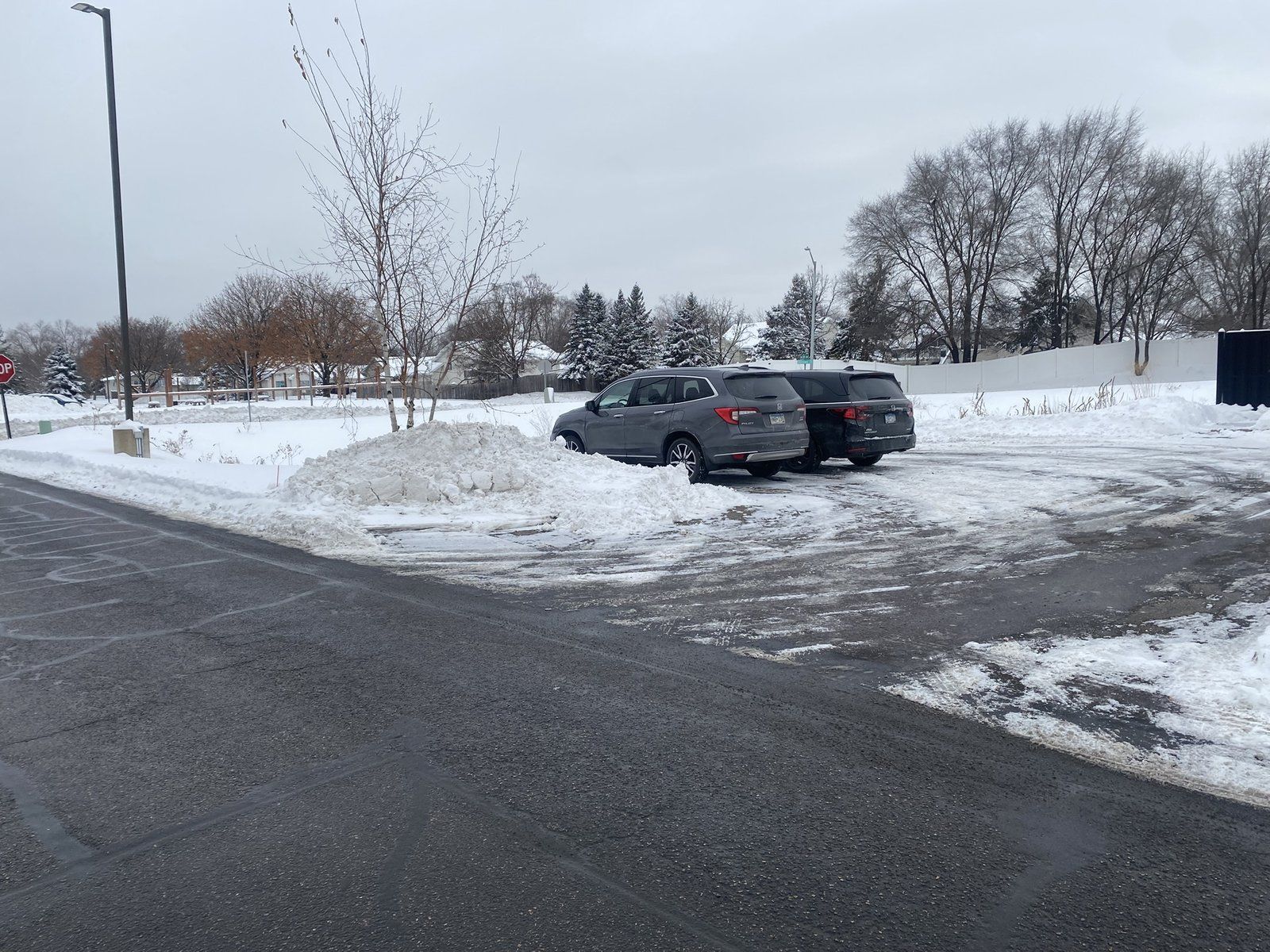
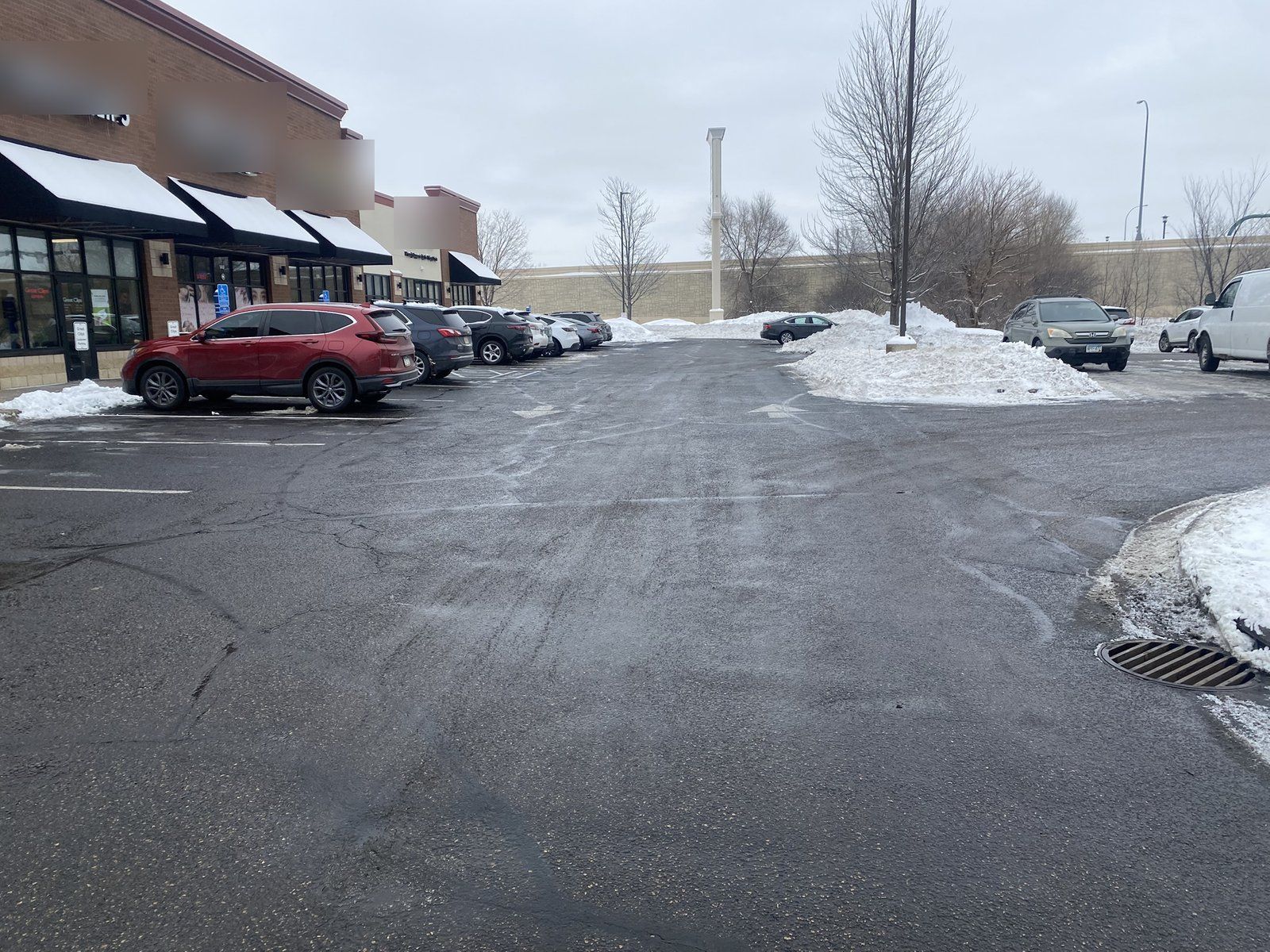 Shops behind a freshly cleared lot.
Storefront Lots Once the Street Plow Has Gone By
Parking by the shop windows
The stalls right in front of the shops are the ones customers want, so they're the first ones cleared. On a small lot, that often means the whole front row is done before the truck turns around. Stacking spots are picked at the walkthrough, away from the windows, so piles don't hide the shop from the street. Our parking lot plowing handles the whole lot, but the front row sets the tone.
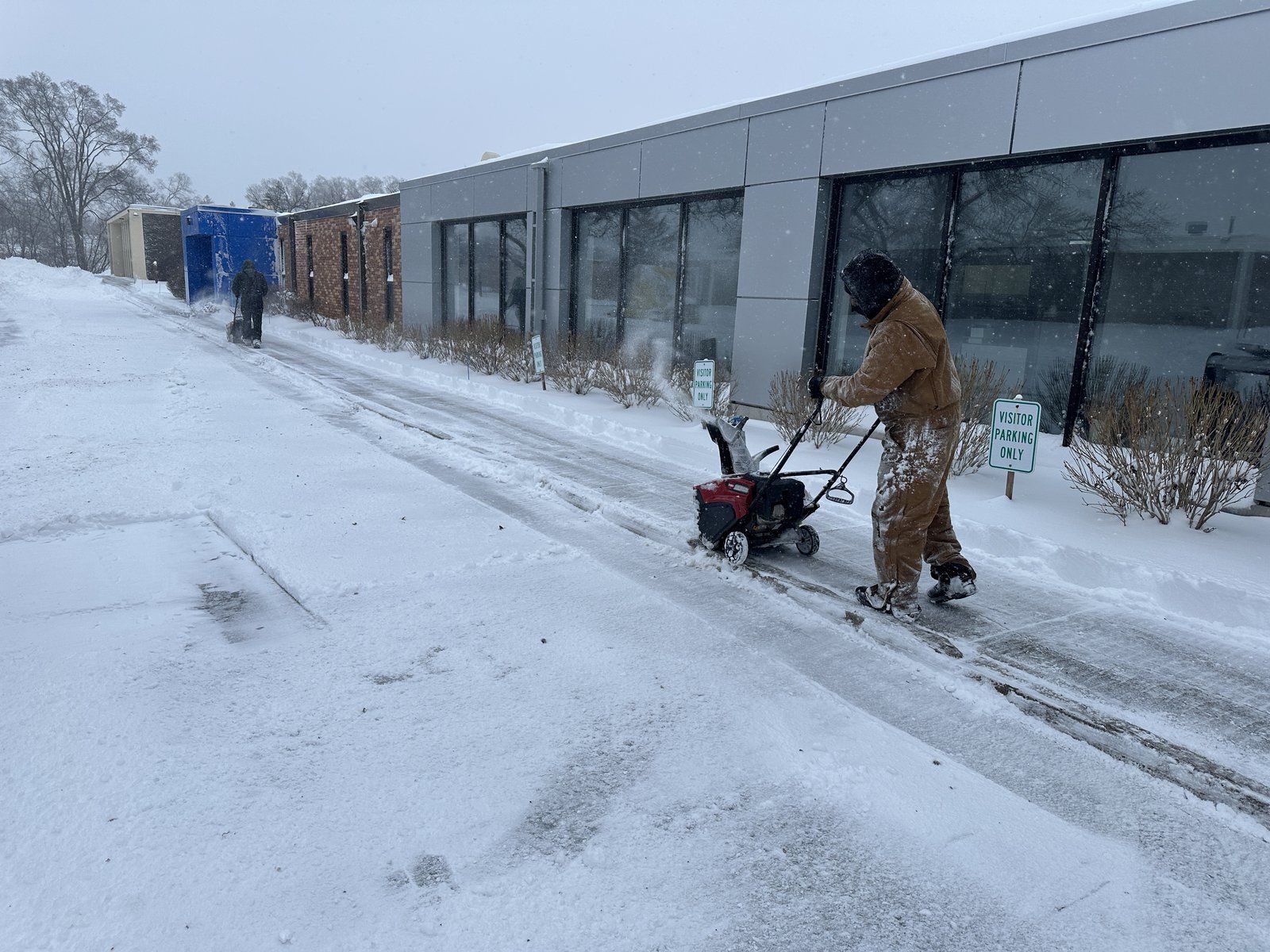
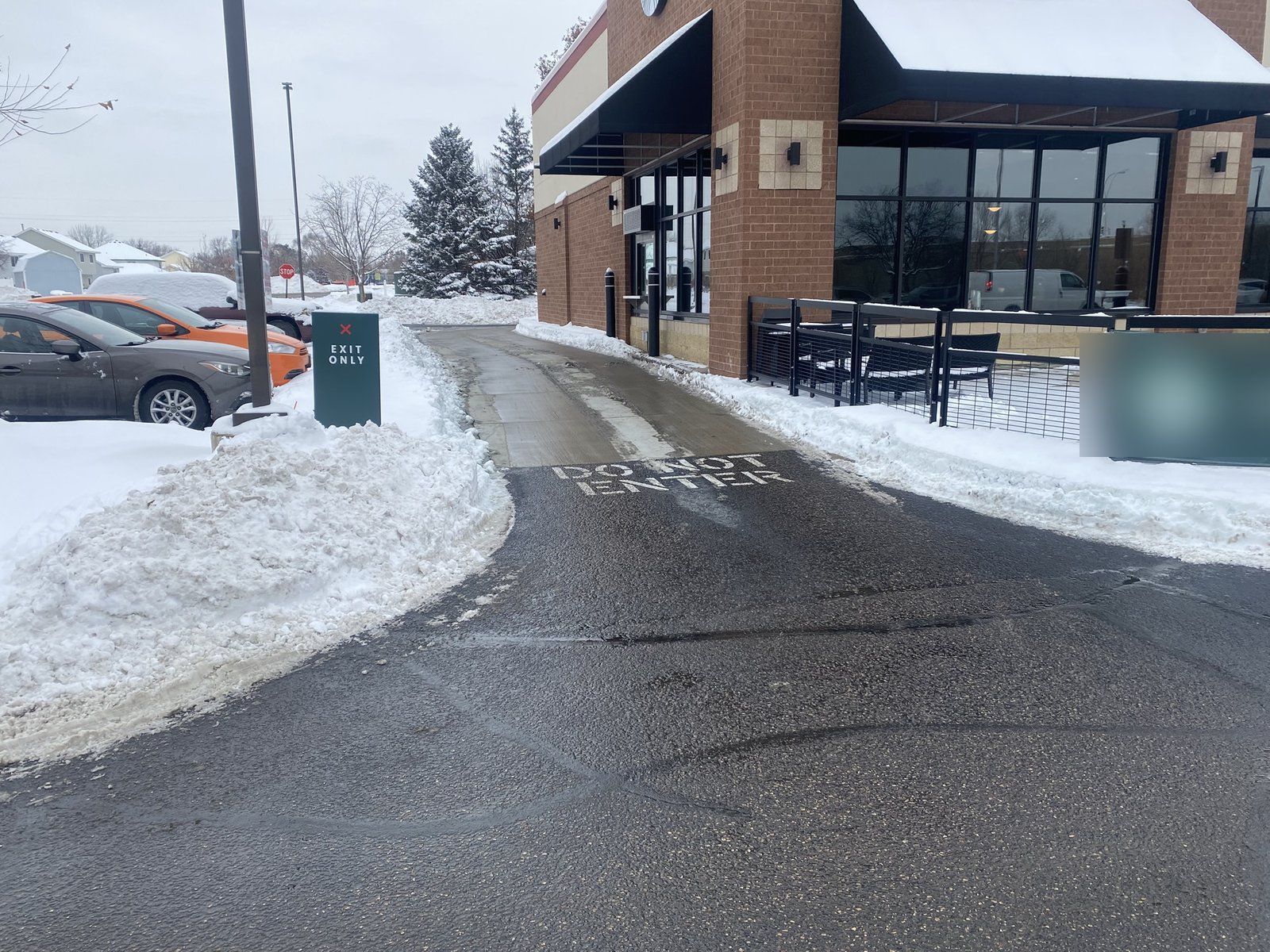
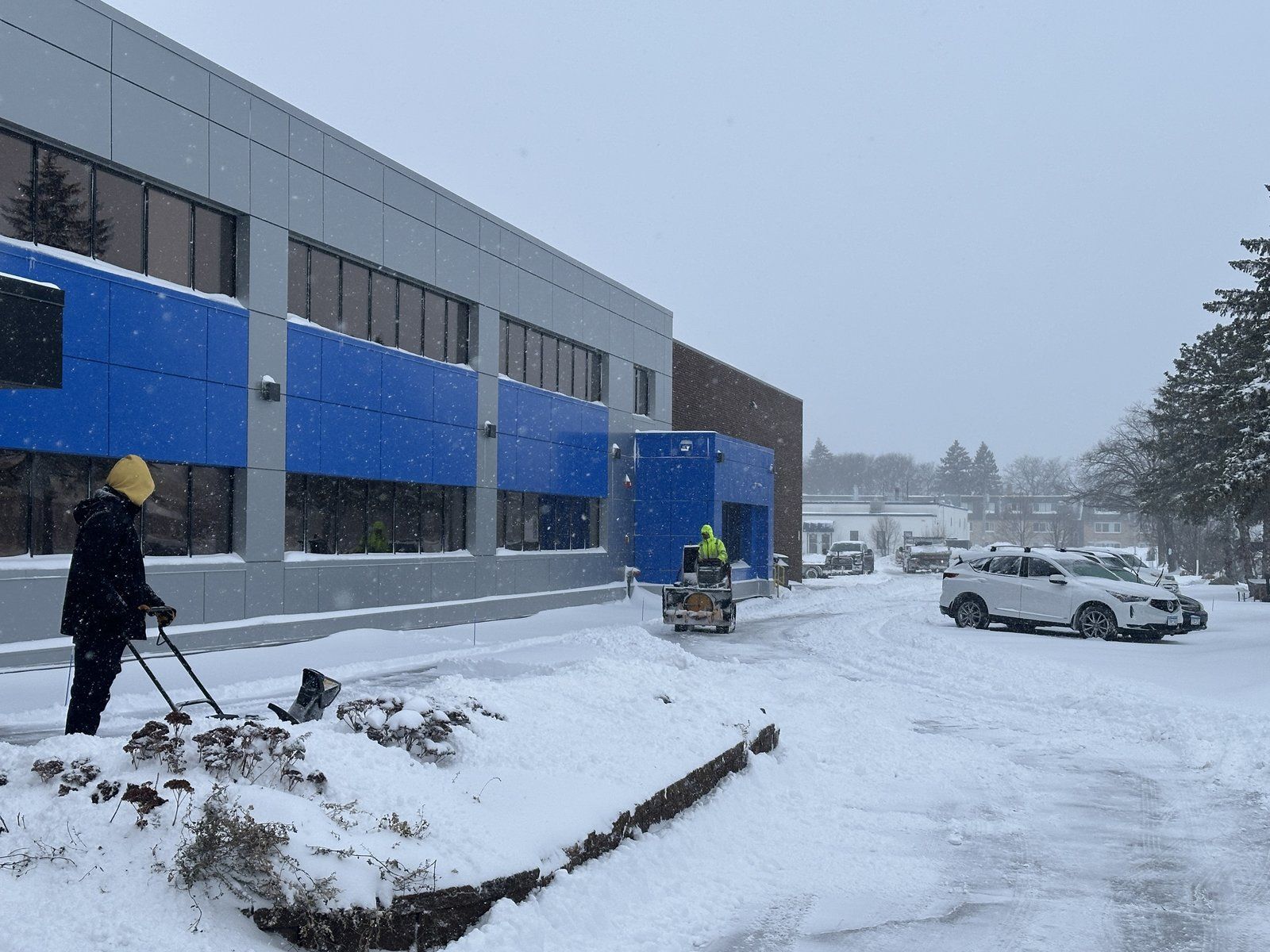 A crew working the walk along a building's face.
The walk out front
That's the walk Columbia Heights leaves to owners. We clear it to the concrete, ridge from the street plow included, and treat it to help keep it from refreezing into ruts.
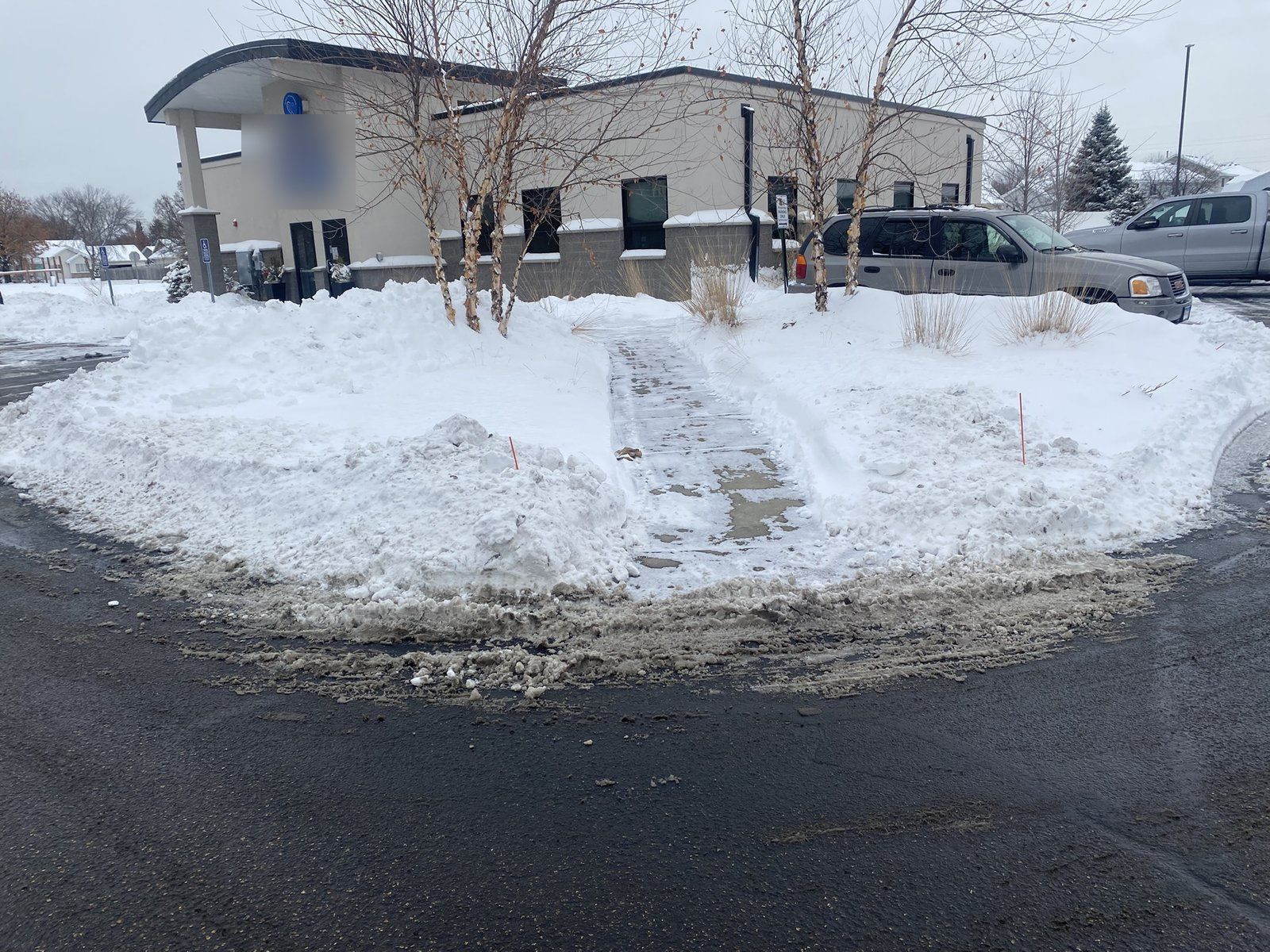
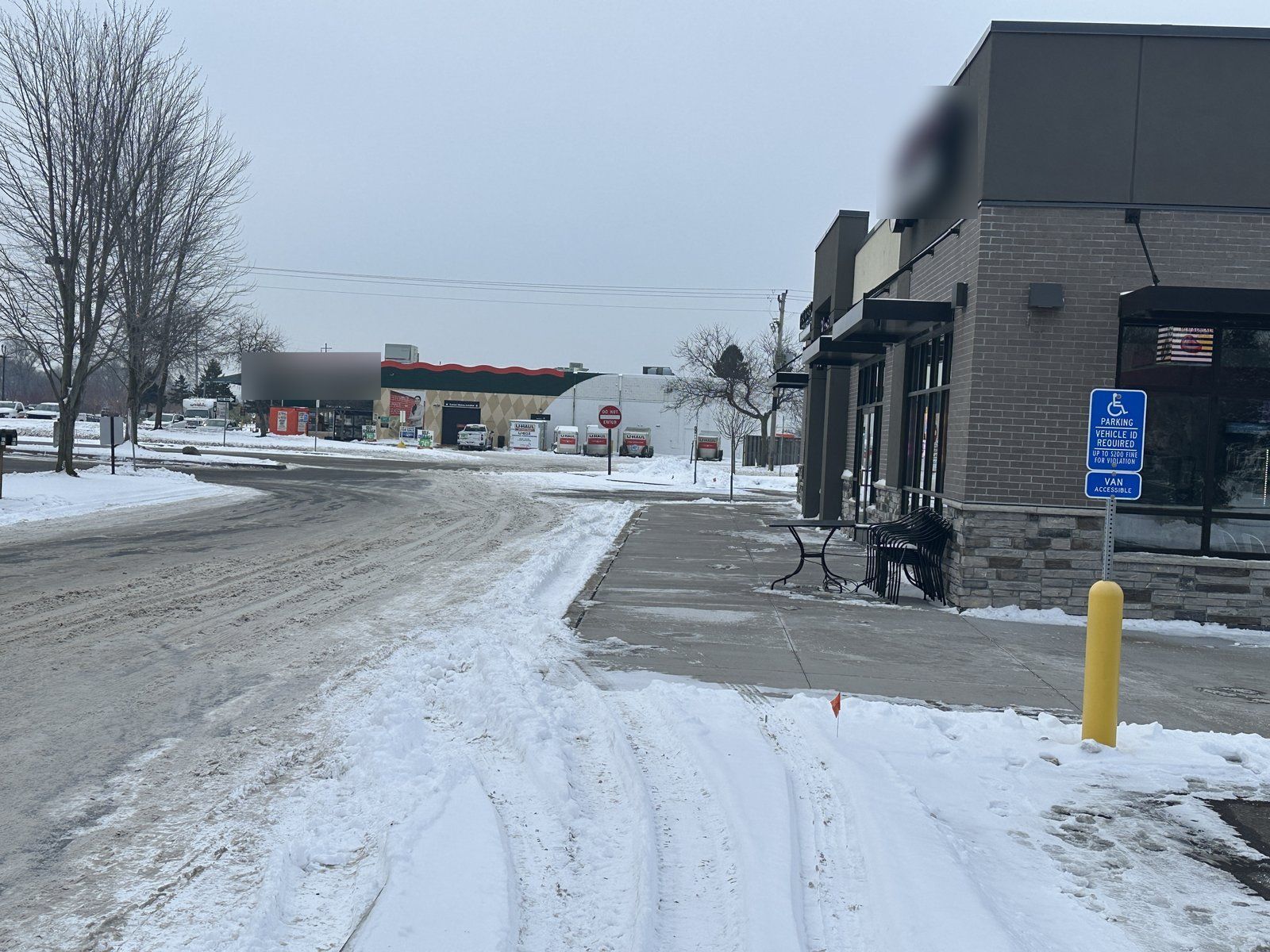 A cleared side entrance and walk next to a small shop building.
A side entry off the main lot
Small commercial buildings often have a second door off the parking lot that staff and regulars use more than the front. We put every door on the plan, so the side entry gets done every time the front walk does.
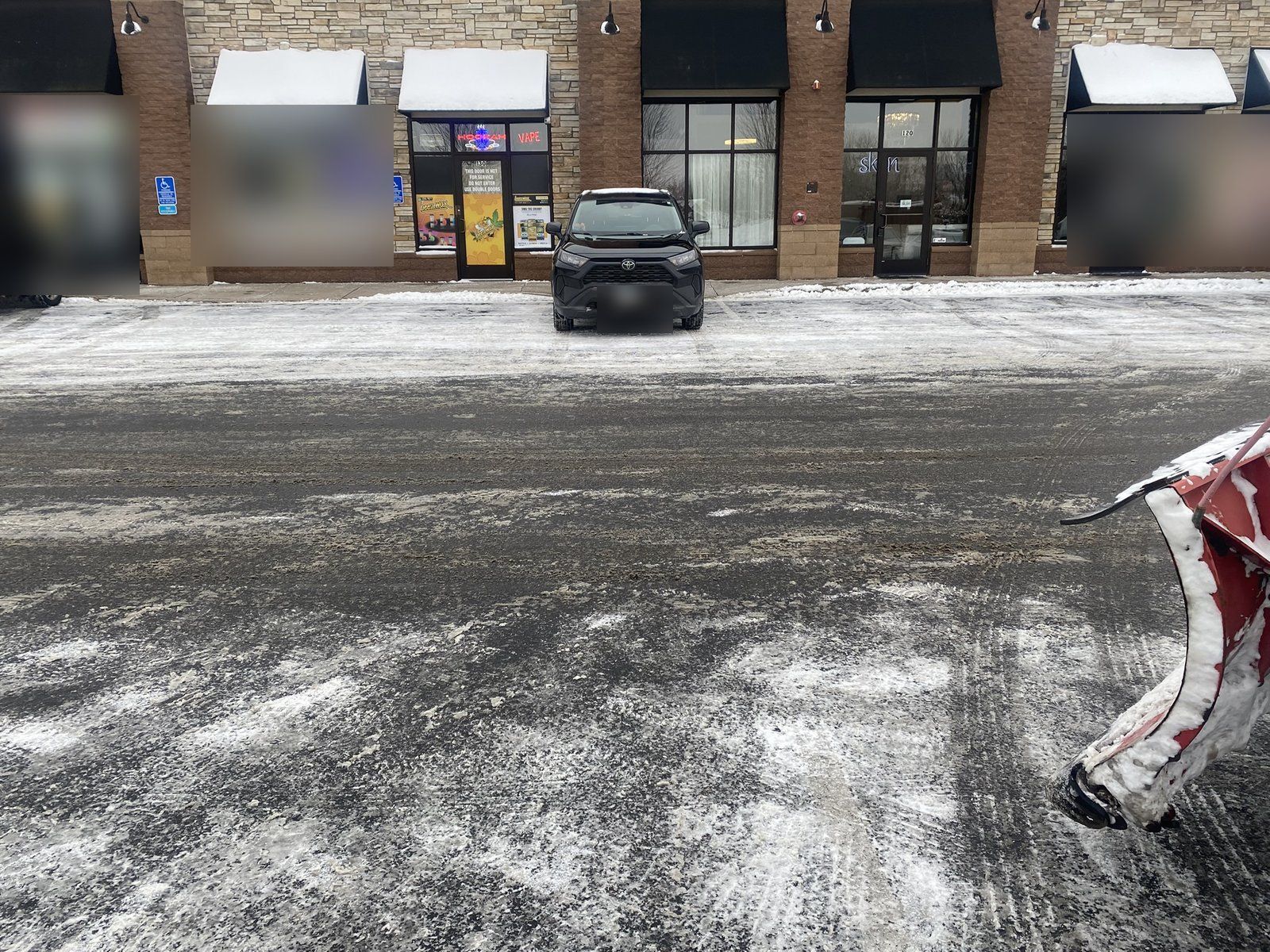 Our plow working a storefront lot with cars parked nearby.
Plowing a busy storefront lot mid-morning
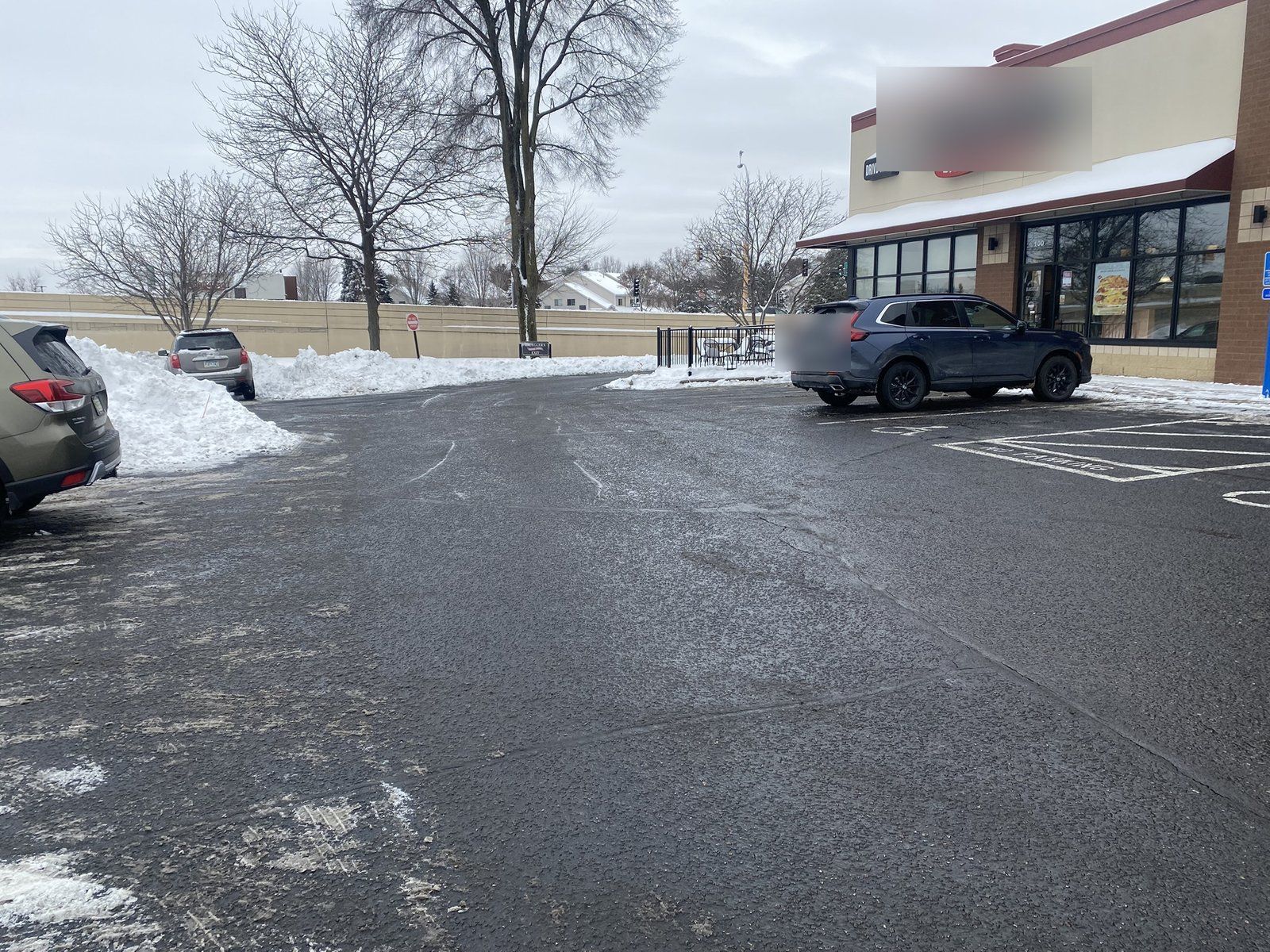
Snow doesn't always stop before business hours. When it keeps falling, the crew works between the parked cars, holds the entrance and exit open, and clears the stalls as cars leave.
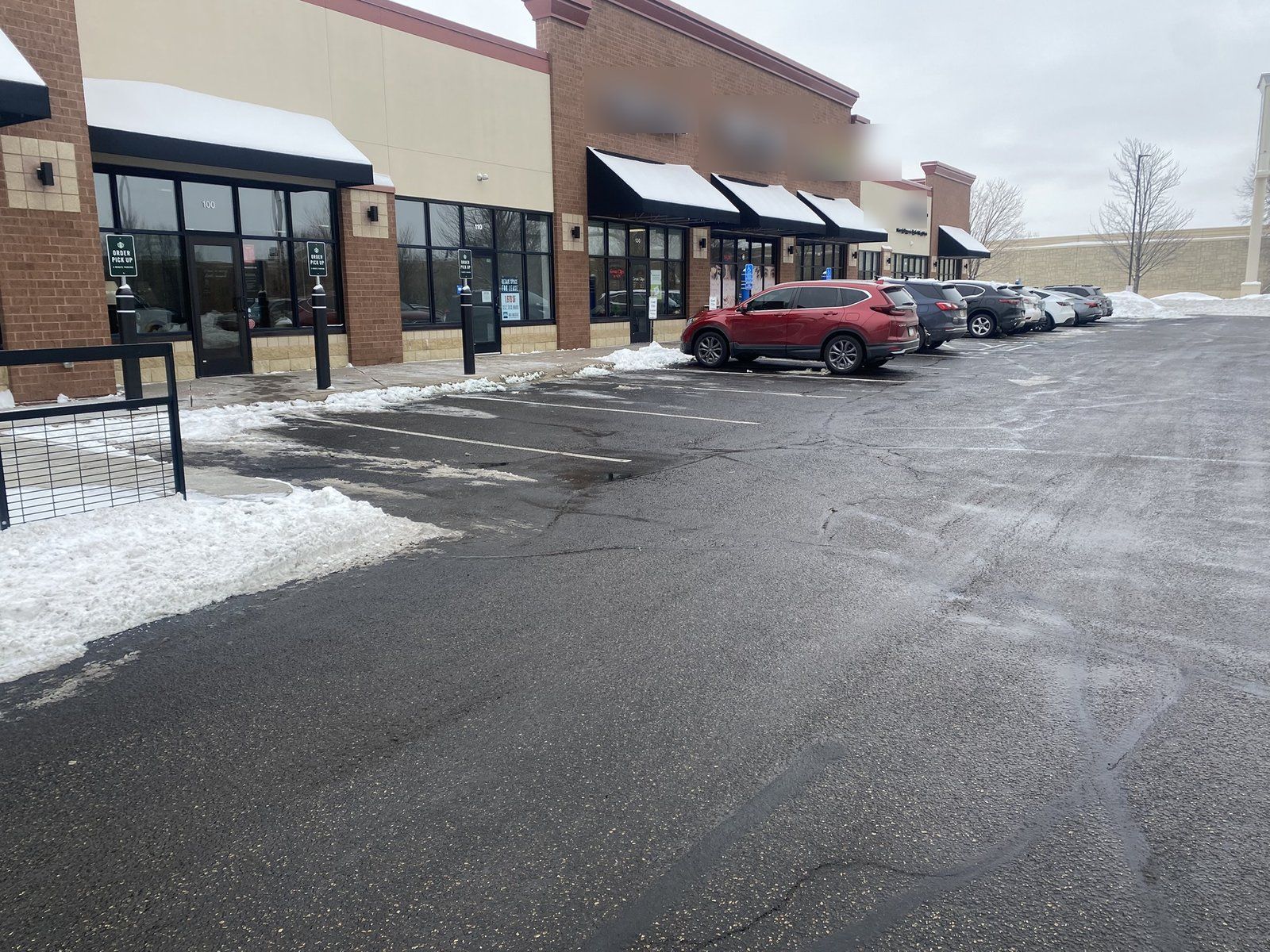 A cleared lot alongside a row of shops with cars parked in front.
Shared lots behind a row of shops
Many Columbia Heights shops share one lot with their neighbors. We plan that lot as a whole, so piles don't land in front of one tenant's door and stalls stay open for everyone. When tenants keep different hours, the plan notes who opens first, so that tenant's stalls and door can be done first.
Lot and Sidewalk on One Columbia Heights Plan
Before the season, we walk your lot and frontage and write down every stall, door and walk that needs clearing, plus where snow can go on a small lot without covering parking. Service starts at 1 inch or 2 inches, as you choose, for one fixed monthly price. Lots are finished about 5 to 6 hours after snowfall stops, on average, and one person on our team looks after your account. If a small lot fills up with piles, we stack or haul the snow. Every service is listed on the business snow removal page.
Snow Services for Columbia Heights Storefronts
Mix and match services, all under one plan.
Apartment Buildings Get the Same Columbia Heights Snow Removal
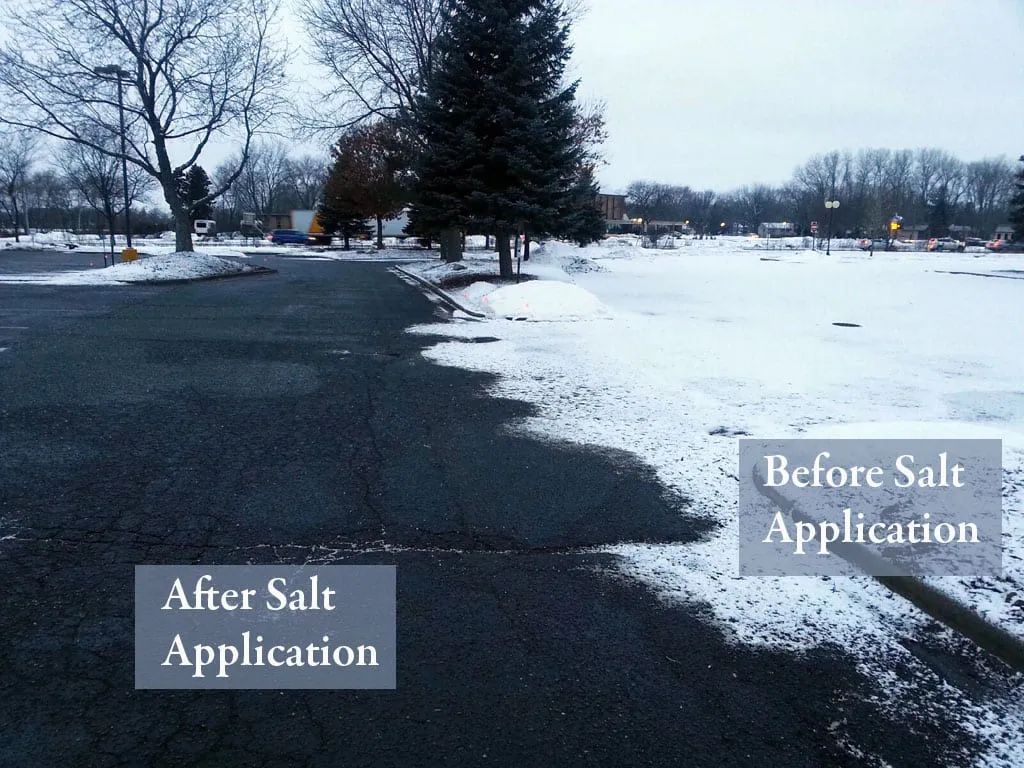
Apartment and rental lots in Columbia Heights work differently from a storefront. Tenants' cars sit in the stalls overnight, so drive lanes and doors come first and stalls get cleaned up as cars leave. The city's overnight winter ban means tenants without a permit can't move those cars to the street, so they stay in the stalls. The sidewalk rule is the same: if the walk runs along a public street and the city doesn't maintain it, the owner clears it. To see how a lot full of residents' cars gets plowed, see our snow service for Crystal apartment lots.
For single-family homeowners
Single-Family Homes and Their Sidewalks in Columbia Heights
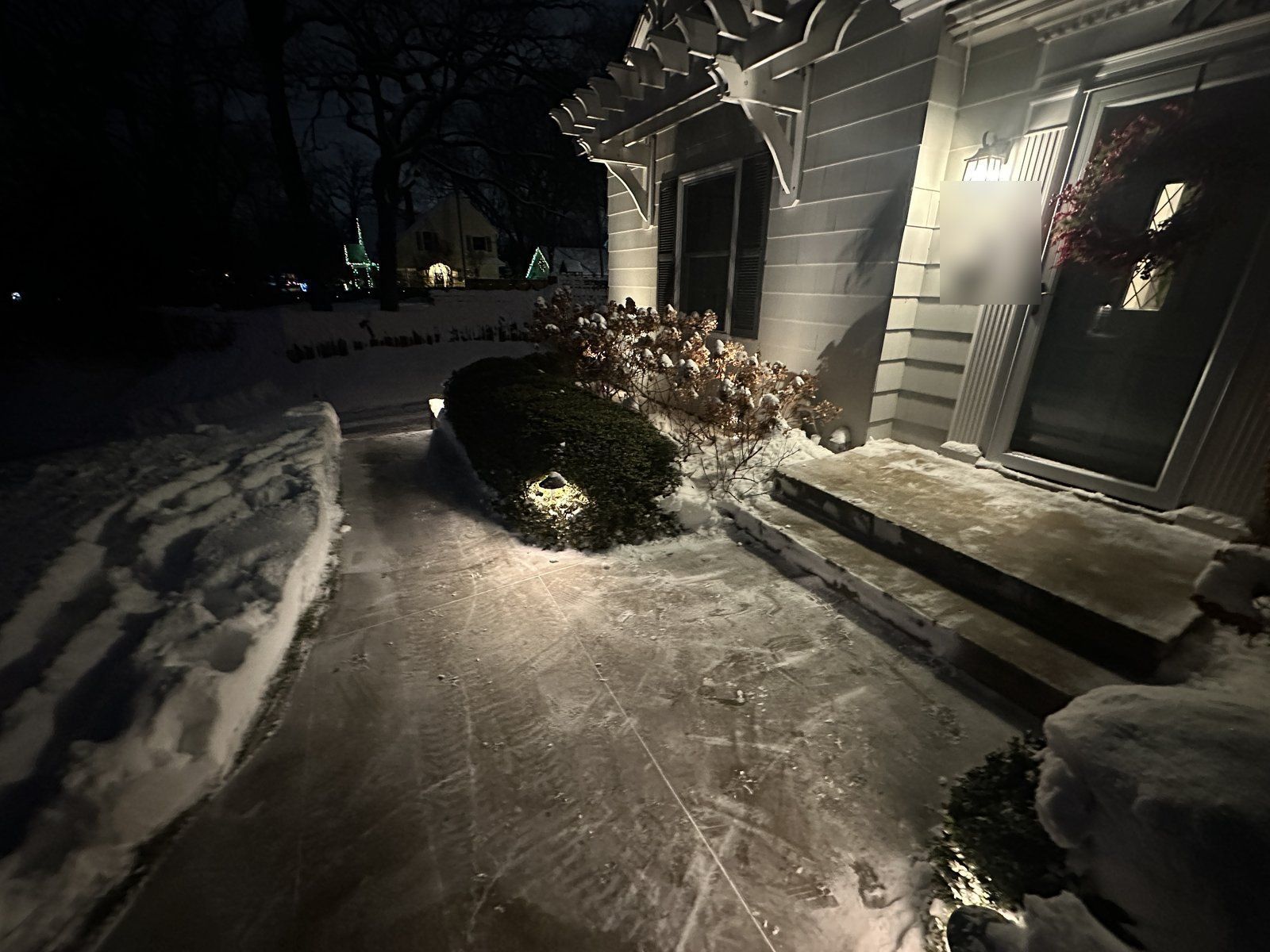 A front walk cleared up to the door at night.
Columbia Heights homeowners can hire us too. Homes are handled by residential crews on routes of their own. Unless the city maintains your walk, homeowners have the same sidewalk duty as businesses, including whatever the street plow throws back onto the walk. Residential hydrants come near the end of the city's priority list, so a hydrant by your house may wait a while for city crews, and the Adopt-a-Hydrant Program invites residents to help keep them clear. The city's policy also makes residents responsible for final clearing around mailboxes, so the carrier can reach them.
- Driveway cleared with a truck or snow blower
- The public sidewalk in front of the house
- Front steps cleared with a shovel
- That heavy windrow left by the street plow, broken up and cleared
Pricing is seasonal, November 1 to March 31, and your account manager stays the same all winter. Details are on our driveway and walk service page.
Columbia Heights Snow Removal: What Storefront Owners Ask
How do I know if Columbia Heights clears my walk?
Columbia Heights says it maintains some of the sidewalks in town, not all of them. Its snow and ice control policy names its priority walks, such as designated sidewalk routes and the pedestrian bridges, and anything off that list falls to the owner. Residents and property owners clear all other sidewalks along public streets. If you aren't sure whether your building's sidewalk is on the city's list, ask the city before winter so the walk is covered either way.
Who clears plow-thrown snow on my Columbia Heights sidewalk?
You do, for the sidewalks the city doesn't maintain. The Columbia Heights snow and ice control policy makes residents and property owners responsible for those walks, and it says that includes any snow plowed from public streets onto the sidewalk. The street plow often comes through after your walk has already been cleared, so the ridge it leaves is part of your responsibility. Putting the sidewalk in your snow plan, next to the lot, means both are covered and it's clear who is handling the walk.
Can a Columbia Heights storefront lot be plowed after just 1 inch?
Yes. Our commercial plans trigger service at either 1 inch or 2 inches, and you choose which. A Columbia Heights storefront lot with steady morning customers often benefits from the lower trigger, because even an inch of packed snow on a small lot makes parking and walking harder. A lot that sits mostly empty until midday may be fine at 2 inches. Your account manager can talk through the choice during the walkthrough, and the trigger is written into your plan.
Does a Columbia Heights snow plan cover the sidewalk as well as the lot?
It can, and for most storefronts it should. Sidewalk clearing is part of what our commercial crews do, and it goes in the plan beside the lot, so both are covered under one agreement. In Columbia Heights, the walk along the street is usually the owner's responsibility, so leaving it out of the plan means someone at the shop has to grab a shovel. Put both on one plan and you have one contact and one monthly rate for everything.
Is there a set monthly price for a Columbia Heights storefront lot?
Yes. Every commercial plan has one monthly rate, which makes the season easier to budget for. The price is set after we walk your Columbia Heights lot and frontage and see how many stalls, doors and walks are involved and where the piles can go. Salting, sidewalk clearing and hauling can all be included, and you'll see what the rate covers before signing. Asking in the fall leaves time to settle it before snow arrives.
Plan Your Columbia Heights Lot and Walk This Fall
We'd like to see your lot, your doors and the sidewalk out front before the first snowfall. Call (763) 568-7251, use our contact form, or read about our snow and ice services.
Other Service Areas