
Brooklyn Center Snow Removal for Big-Box Retail Lots
Acres of parking and long building fronts, cleared and salted by the square foot, not by the bucket.
Brooklyn Center Snow Removal for Lots Open Morning to Midnight
A big-box lot rarely gets a quiet stretch. Shoppers pull in when the doors open, stocking crews park at the back after close, and delivery trucks need the drive lanes in between. Commercial snow removal on a lot that size is less about one fast pass and more about order: which rows open first, where the piles go so they don't eat stalls, and how much salt all that pavement really needs.
We have plowed, salted and hauled snow for Twin Cities businesses since 2003. Ahead of winter, we walk every commercial site and write its plan, using our snow contracts for businesses.
Brooklyn Center Snow Events and the Shingle Creek Salt Problem
Brooklyn Center calls a snow event when 2 1/2 inches or more falls. Brooklyn Center's winter street page says that once a snow event is called, cars must be gone from a street until crews have plowed it out to both curbs, and overnight, from 2 until 6 in the morning, no car may be parked on a city street. At any other hour, a car can stay on a city street for 6 hours in a row at most, and crews begin plowing as soon as the storm subsides. For a store, that means staff and contractors can't leave vehicles on nearby streets through a long shift or a storm, so more of those vehicles stay on the lot.
Salt is the other half of the story here. Shingle Creek runs through Brooklyn Center, and the city says it is listed as impaired because of chloride. In its guide to a low salt diet for Shingle Creek, the city estimates about 85 percent of that chloride comes from road salt, with the rest from parking lots, walkways, driveways and private roads. A retail lot has a lot of pavement, so the way it gets salted matters.
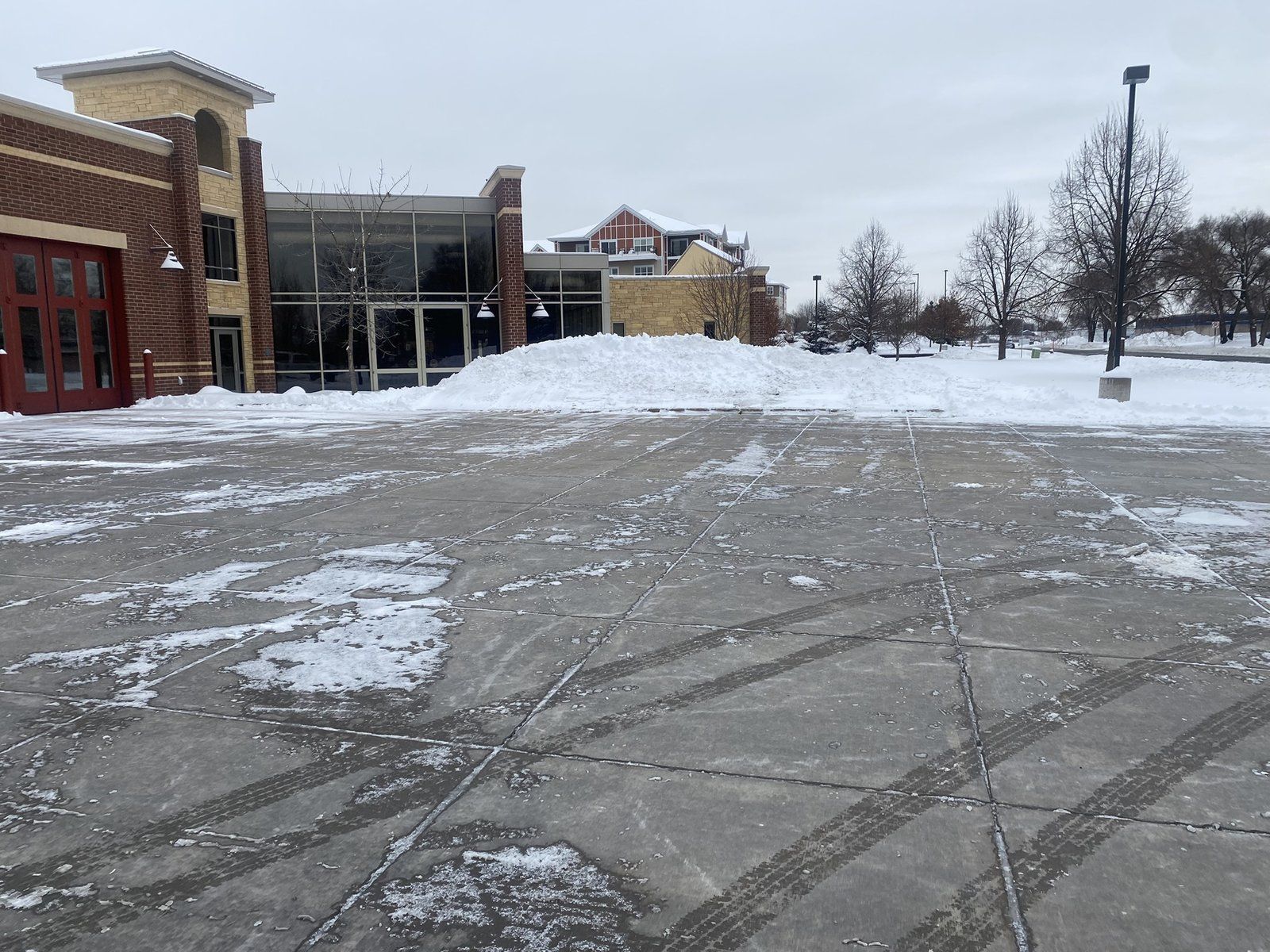
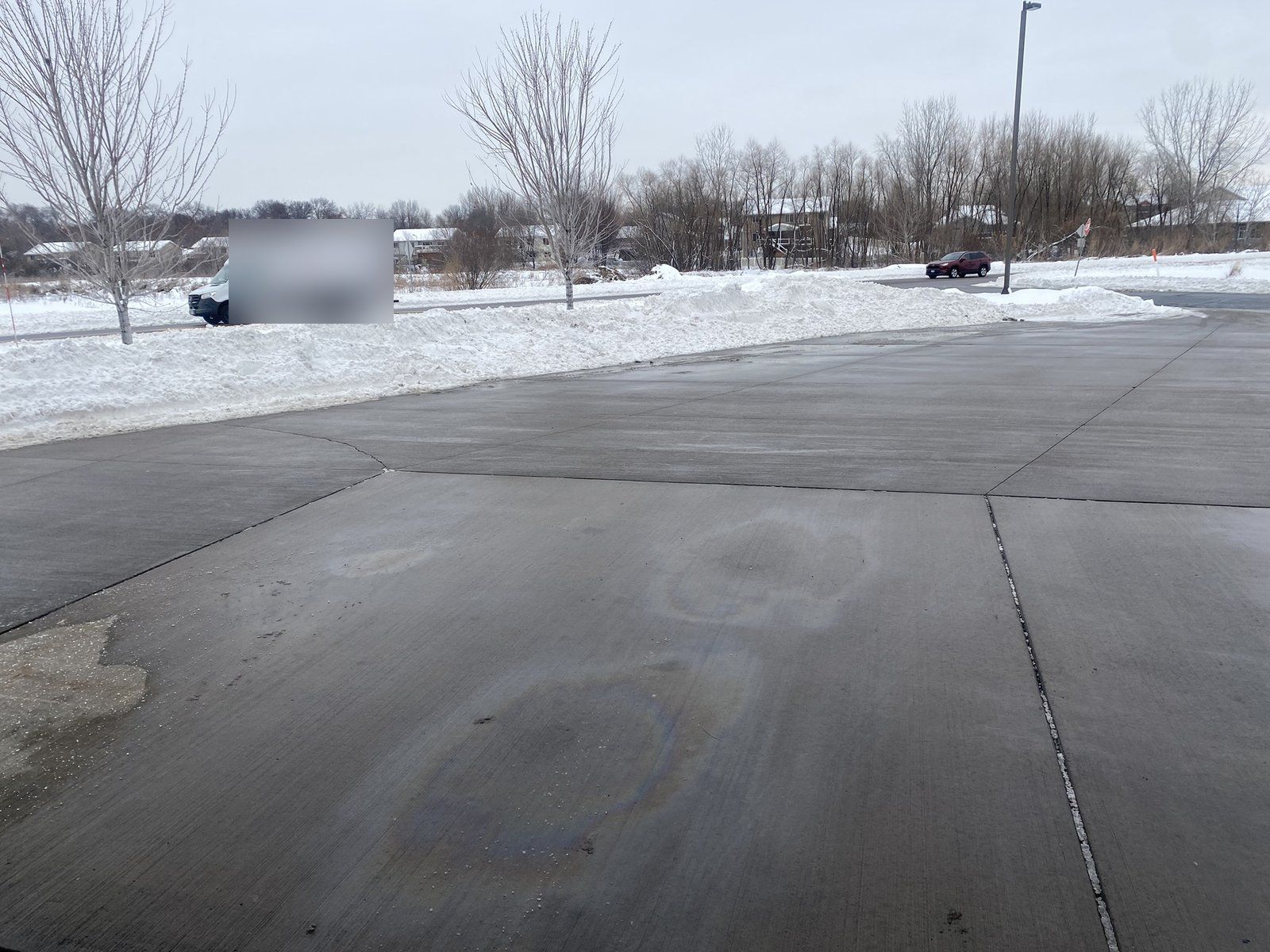 A wide concrete lot cleared to the pavement on a quiet morning.
Clearing a Big Lot Aisle by Aisle
Wide-open rows on a quiet morning
On a lot this size, the rows by the entrances get cleared ahead of the rest, then the far rows, so the store can greet customers while plowing continues. Drive lanes get pushed wide, and lot plowing reaches every open stall, with parked spots cleared once cars leave.
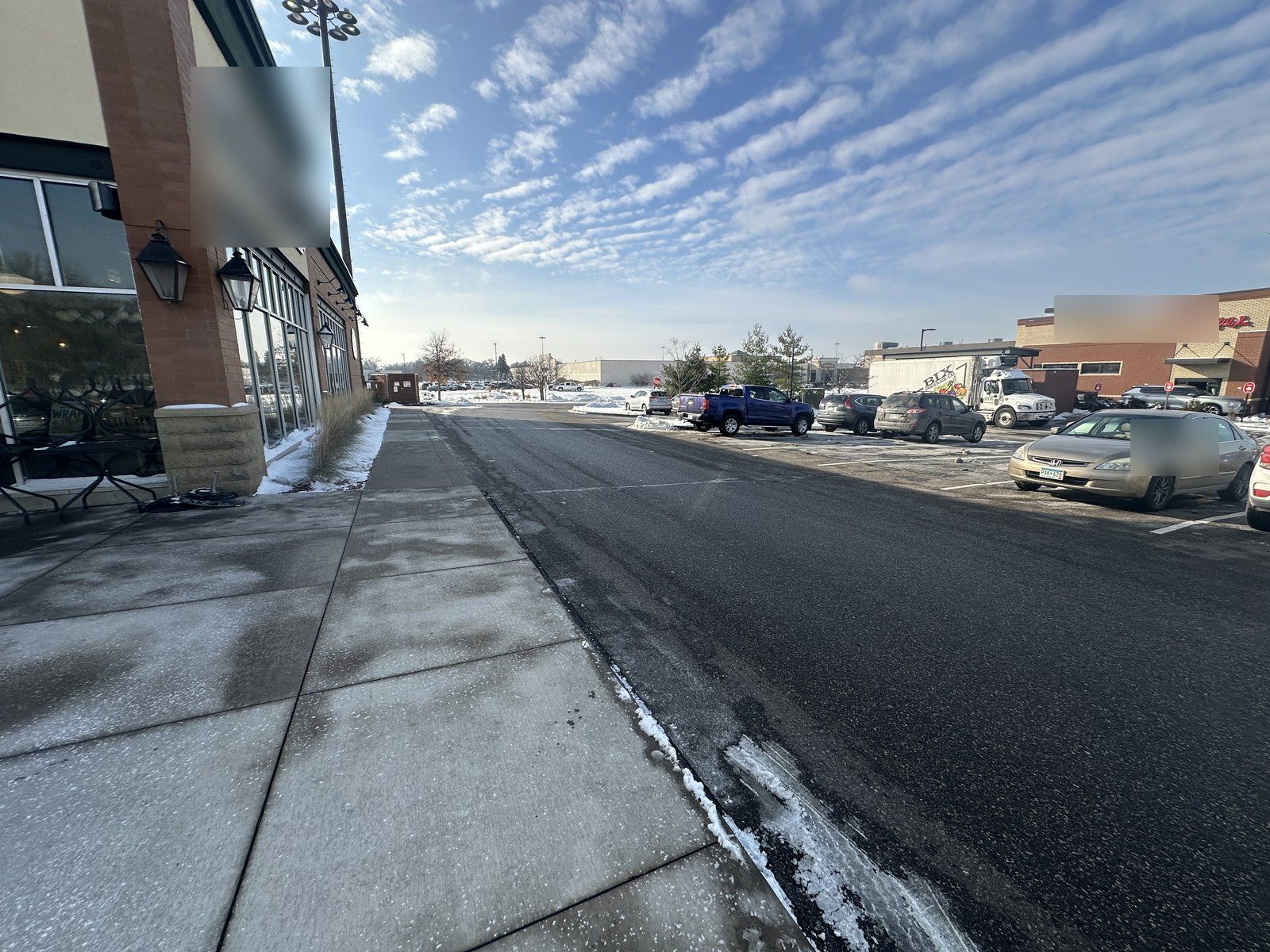 A shoveled concrete walk stretching the length of a retail building.
Walks along the building front
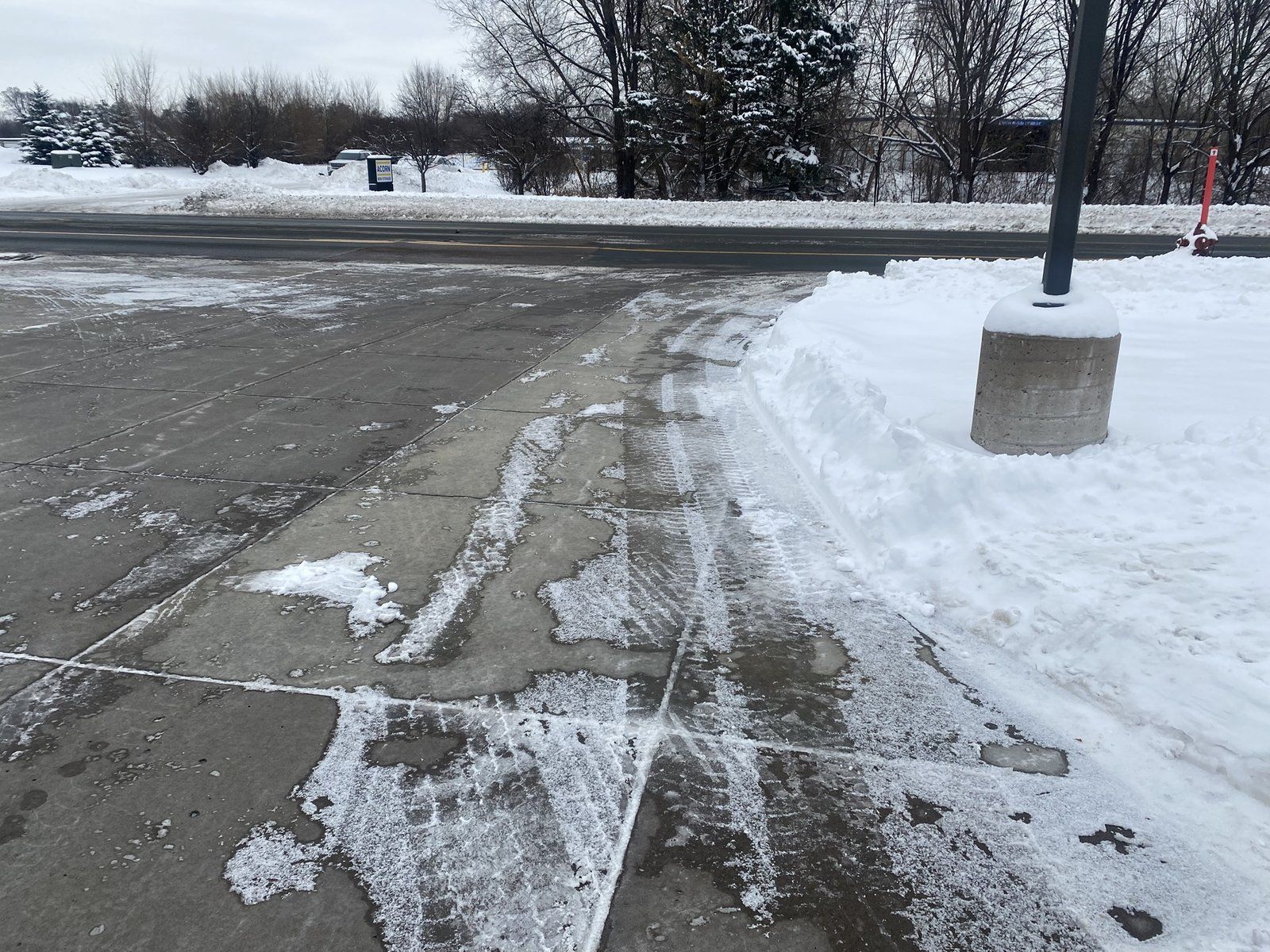
A big-box front walk can run the full length of the building, past several entrances, cart returns and pickup doors. Our walk crews use blowers and shovels to reach bare concrete, then spread salt to keep leftover slush from packing into ice. Pickup doors and the cart returns near the entrance get the same treatment, since shoppers stop there with full carts.
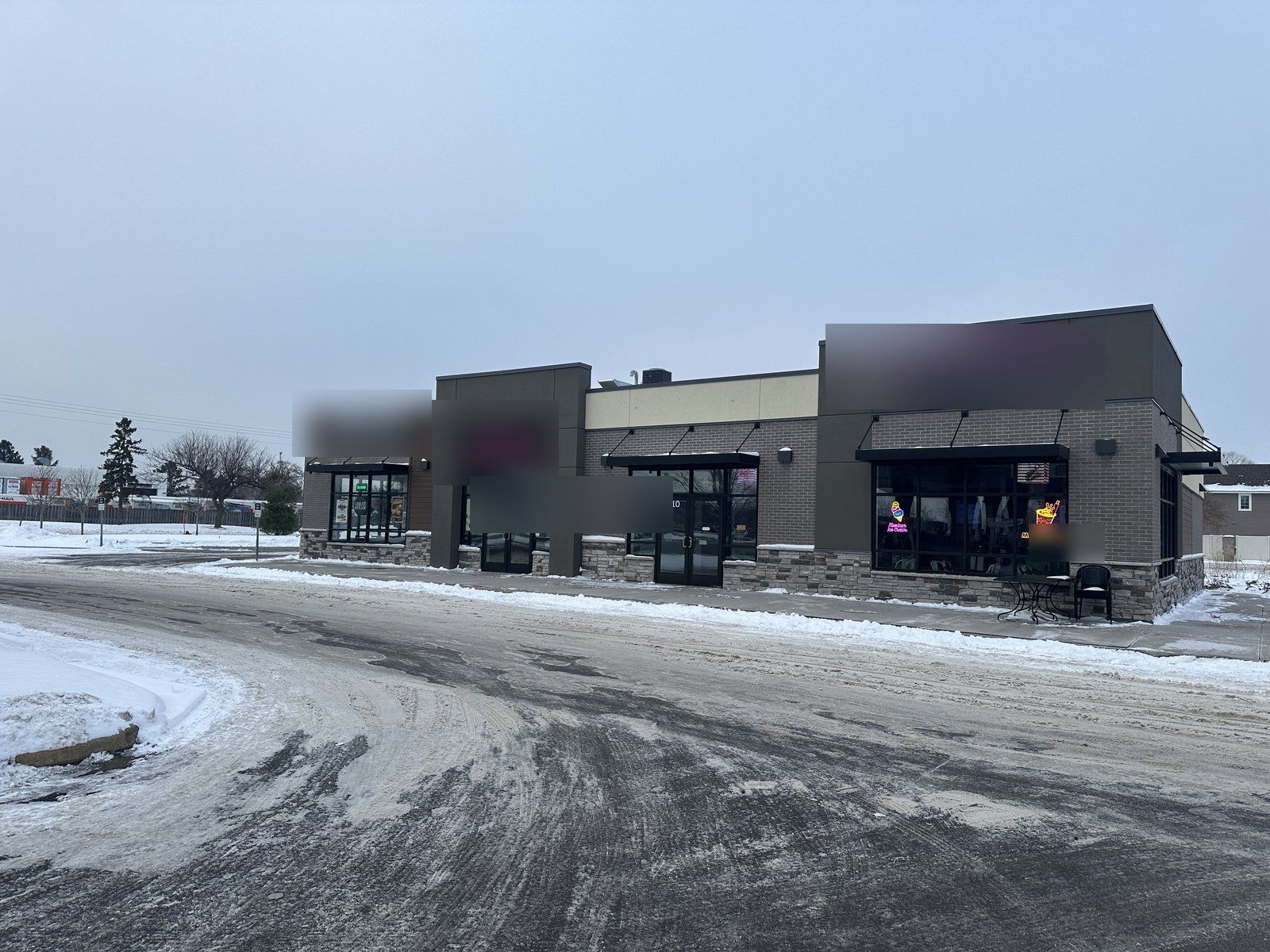 Small shops along one side of a plowed retail lot.
Outlot buildings at the lot's edge
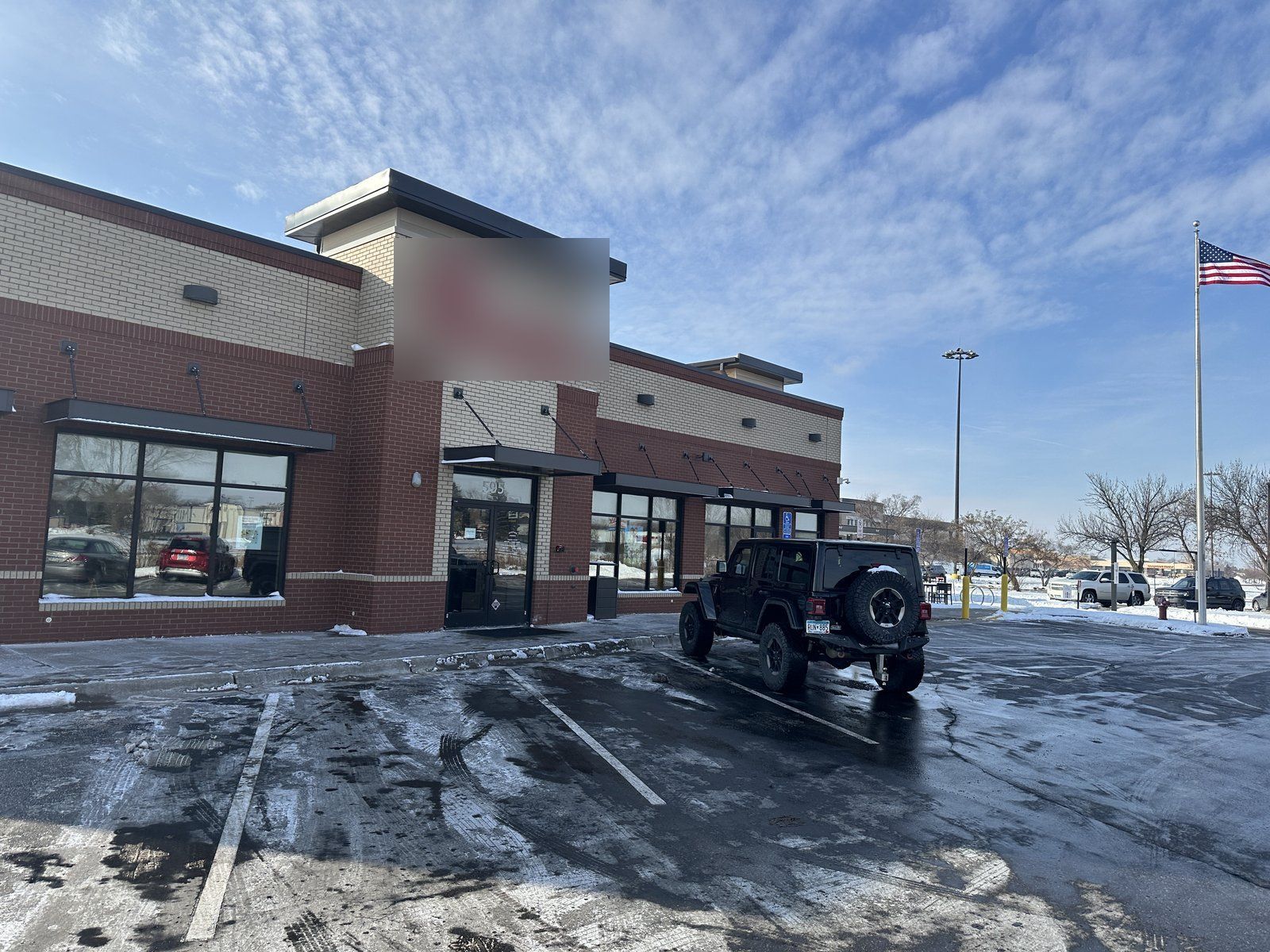
Smaller buildings on the fringe of a big lot often get their own entrances and their own parking. We map them as separate zones in the plan, so their stalls and walks are not an afterthought late in a long route.
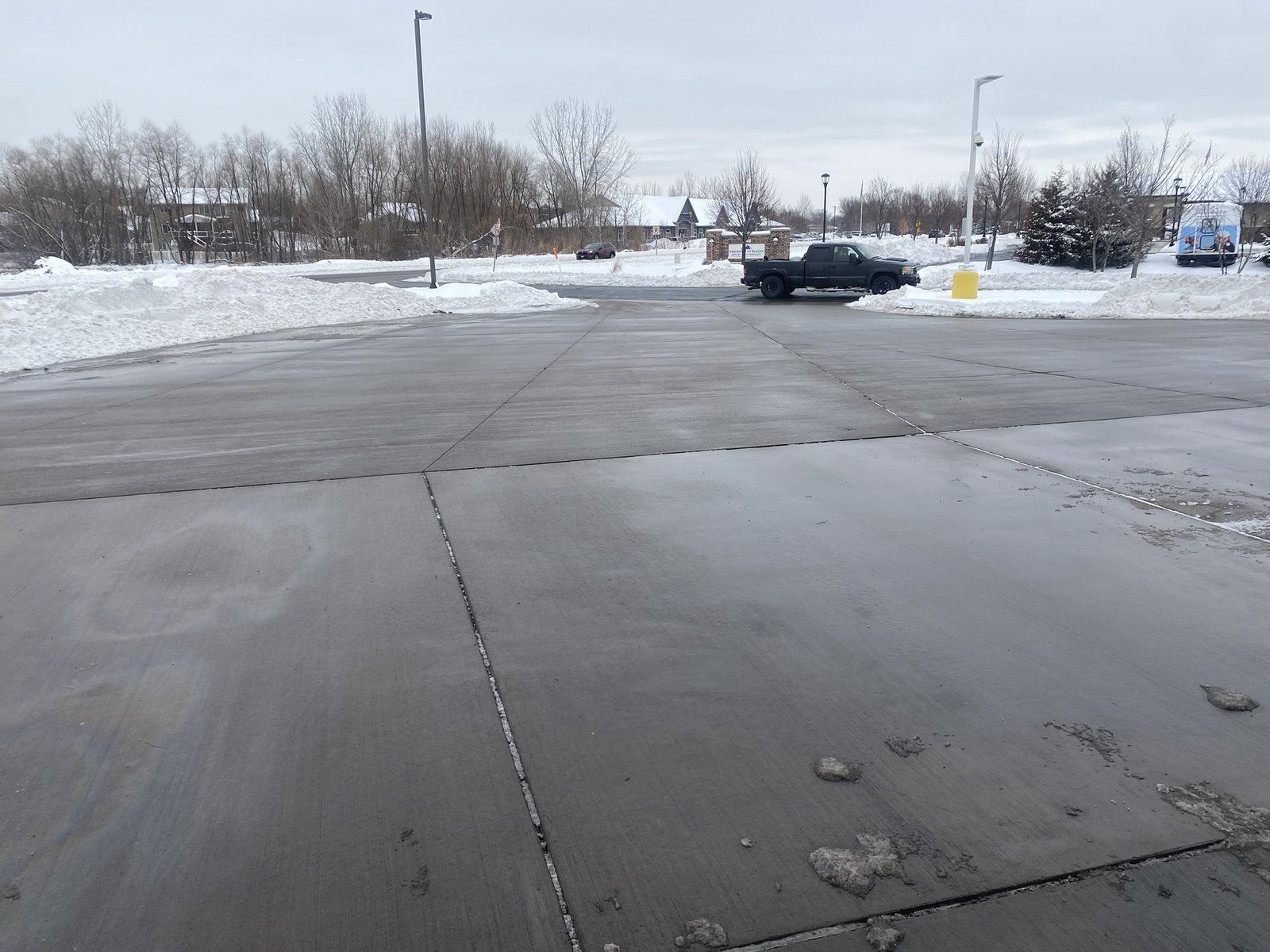 Snow pushed to the far edge of a cleared concrete lot.
Pile placement that keeps rows usable
Every pile takes stalls away from customers, so where it goes is decided before the first storm. We pick spots that don't block signs, the main lanes or sight lines at the exits, where shoppers pull out onto busy roads, and when piles outgrow their spots by February, we pile them taller or truck them off-site.
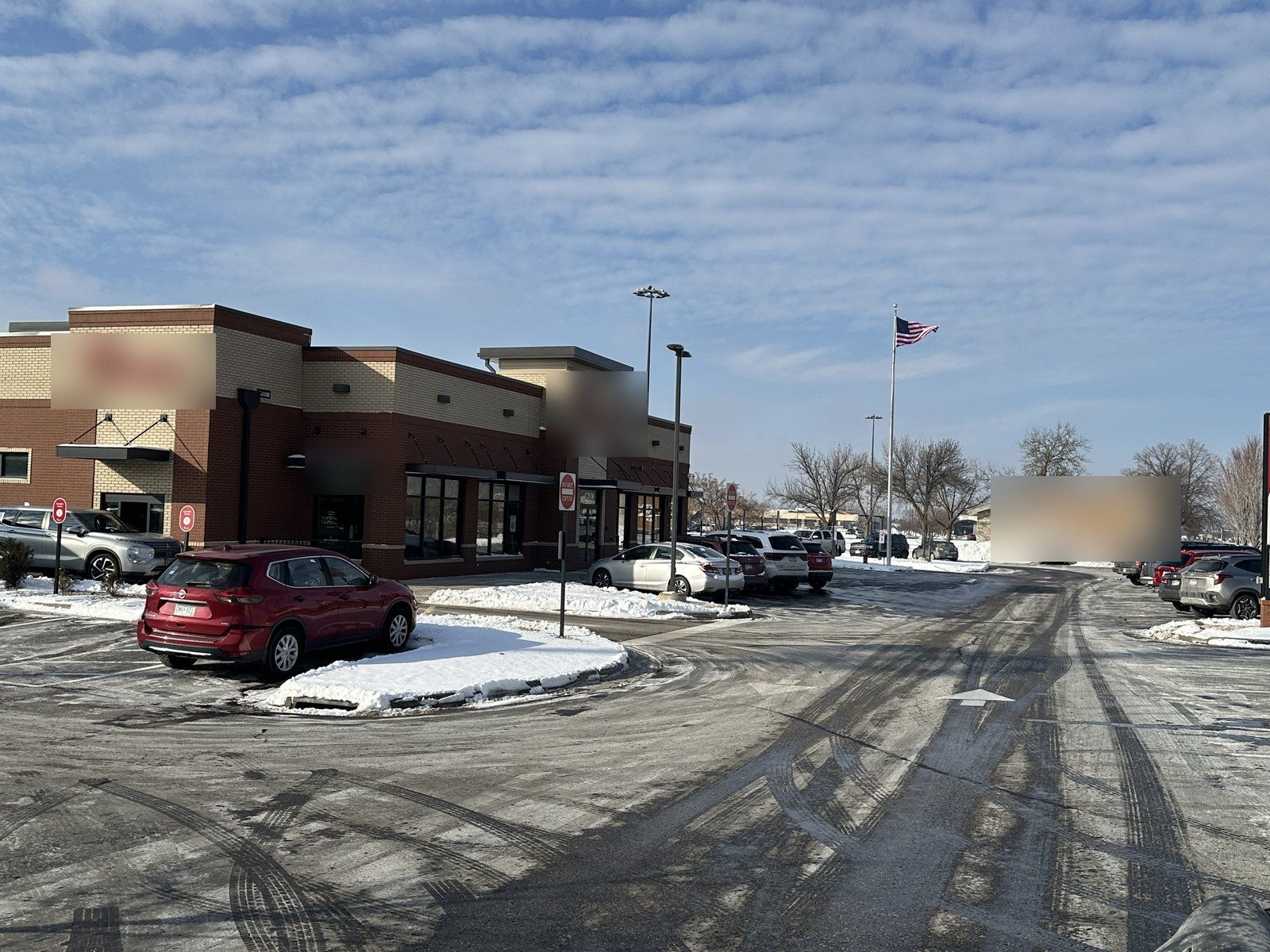 Clean plow tracks between lot islands, with shoppers' cars parked.
Working around lot islands
Islands, light poles and cart corrals break a lot into pieces that a plow has to work around. The crew clears around each one so carts roll and the stalls beside them stay usable, instead of leaving a ridge of snow at every island. Curbs and pole bases are easy to hit once fresh snow covers them, which is one more reason the lot is walked before winter.
Salt Measured by the Square Foot
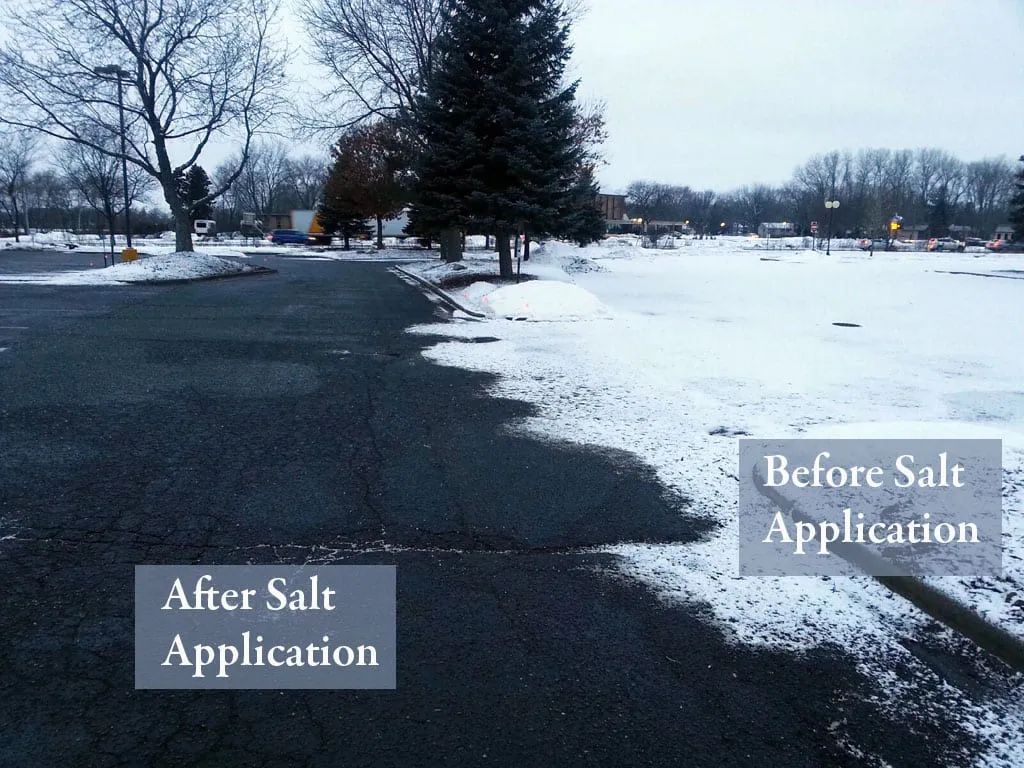
Before the season, we measure the lot on satellite imagery, and that sets the salt amount for the real square footage, not a guess. On the lot itself, our trucks carry hydraulic salt dispensers the driver controls, so the amount and the spread can be set for the conditions. Walks get walk-behind spreaders for more control on narrow concrete. That's how we treat a lot without using more salt than it needs. Read more about when we use salt versus sand.
The plan also sets your trigger at 1 inch or 2 inches, locks in one monthly price that doesn't change with the weather, and assigns one account manager to your site. Lots are finished about 5 to 6 hours after snowfall stops, on average. Browse all of our commercial services, and read our tips for plowing a parking lot for more on how a big lot gets cleared.
Snow Services for Brooklyn Center Retail Lots
Pick the services your lot needs and we write each one into the plan.
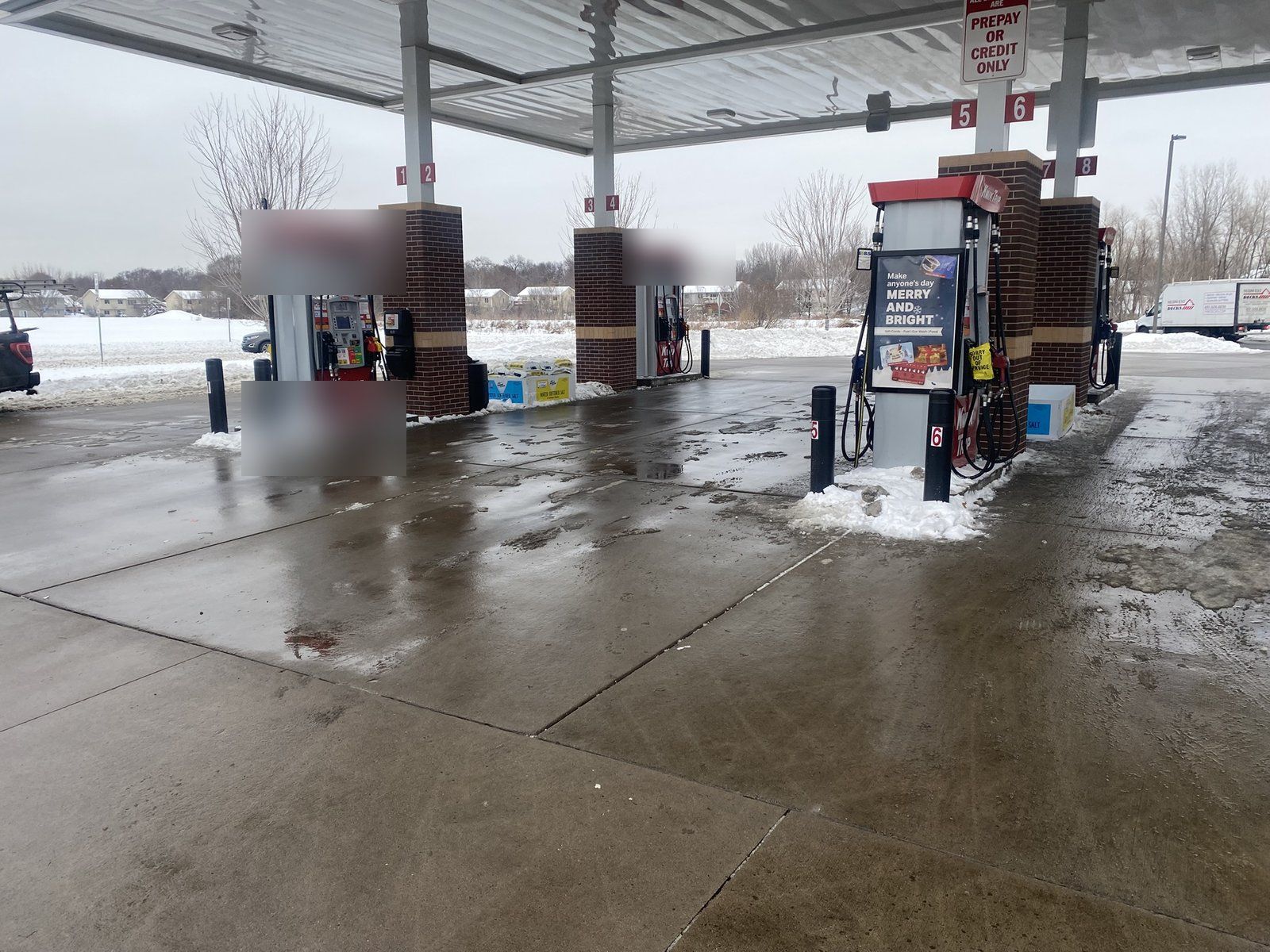
Beyond Retail: Offices and Warehouses in Brooklyn Center
Not every Brooklyn Center property is a store. An office wants its pavement and walks done before employees show up and rarely has traffic overnight, so most of the work happens in the early morning. A warehouse needs its truck routes and dock areas open first, with employee parking next. The same planning applies: we walk the site, set the order of work, and pick pile spots that won't block a door. To see how we handle docks and small industrial buildings, read about snow removal for Shoreview warehouses.
For single-family homeowners
Brooklyn Center Snow Removal at Home: Driveways First
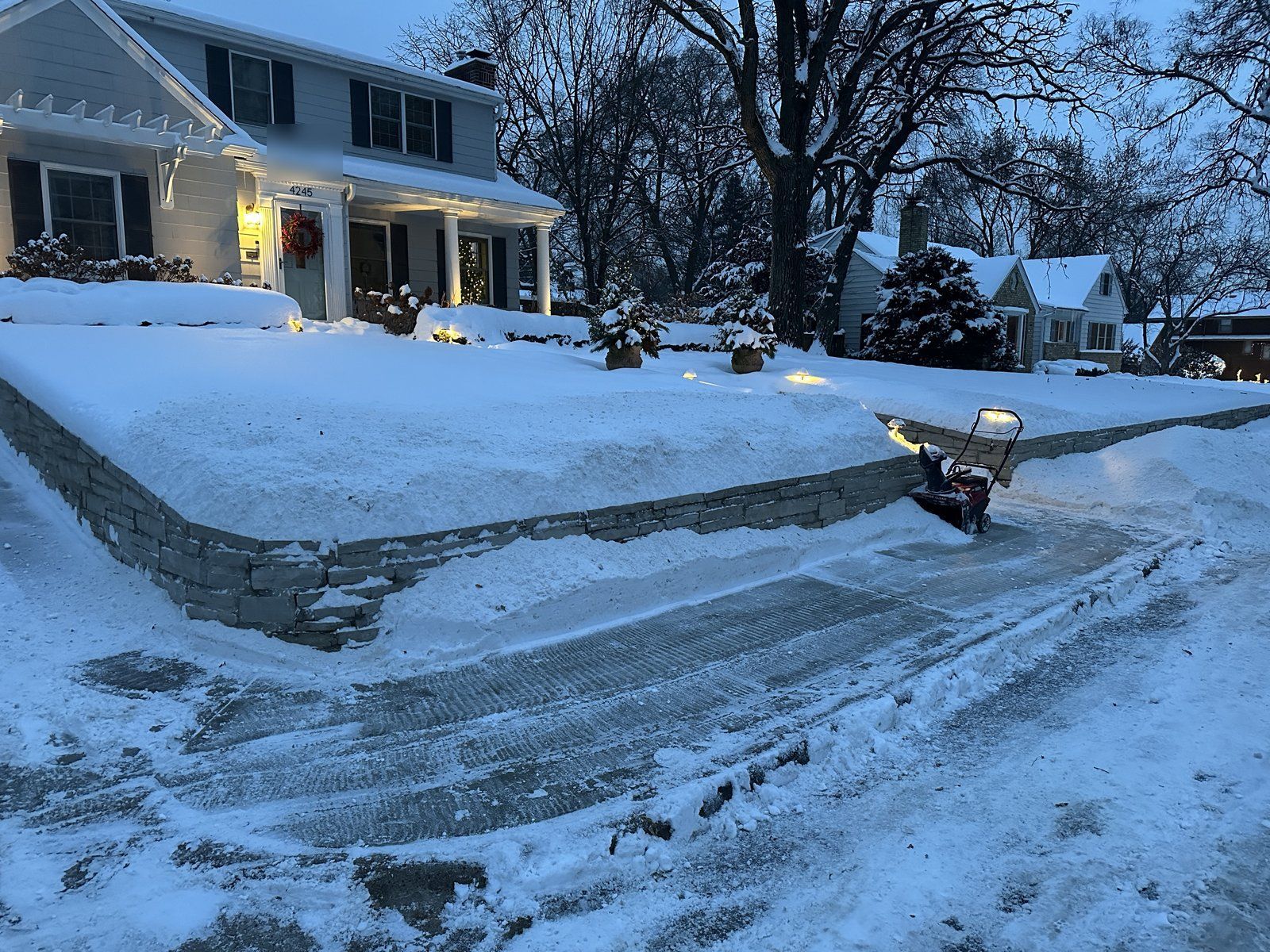 A snow blower partway through clearing a driveway beside a stone wall.
We also clear driveways, steps and private walks at Brooklyn Center houses, using residential crews that never share a route with our commercial trucks. Brooklyn Center clears residential public sidewalks itself once an inch falls, with a goal of finishing within 8 hours, so our crews focus on the parts the city doesn't touch.
- Driveways cleared by plow or blower, curb to garage
- Steps, stoops and the path up to your door shoveled by hand
- Salt on icy spots
- The ridge a passing city plow leaves at your driveway's mouth, removed
Homes are billed one seasonal price covering November 1 to March 31, and every home gets an account manager. Learn more about residential snow plans.
Snow and Salt Questions for Brooklyn Center Retail Lots
How much does parking lot salting cost in Brooklyn Center?
Our parking lot salting and sanding pricing starts as low as $147.50, and the price depends on the size of the area being treated. A Brooklyn Center big-box lot is larger than most, so its price is higher, but measuring the lot first keeps that number honest. We take the square footage off satellite imagery before the season, so each application is priced and spread for the pavement you actually have. We'll walk you through the estimate before the season starts.
When does Brooklyn Center declare a snow event?
Brooklyn Center calls a snow event once snowfall reaches 2 1/2 inches. That number is the city's threshold for its own street rules, not for your lot. Our commercial plans trigger sooner: we offer service at 1 inch or 2 inches, so a big-box lot can be plowed during storms that never reach a snow event at all. Picking the right trigger depends on how busy your lot is in the morning and how much risk a thin layer of snow creates for your customers.
Are Brooklyn Center storefront walks salted differently than the lot?
Yes. On a Brooklyn Center retail lot, our trucks spread salt across the pavement with a hydraulic dispenser the driver controls, so the rate can be adjusted to the conditions. The walks along the storefronts are treated with walk-behind spreaders. A walk-behind spreader gives the crew finer control on a narrow walk than a truck would. On a busy storefront, using two methods also means each surface gets the amount it needs rather than one setting for everything.
How long after snow stops is a Brooklyn Center retail lot finished?
On average, our commercial lots are finished about 5 to 6 hours after snowfall stops. A big-box lot is a lot of pavement, so the order of work is set ahead of time: entrance rows, drive lanes, then the far stalls. Brooklyn Center plows its own streets once snowfall tops 2 1/2 inches or conditions call for it, starting as soon as the storm lets up. The city's streets and your lot run on separate schedules, so we settle your lot's plan in the fall.
Why does salt use matter more near Shingle Creek in Brooklyn Center?
Shingle Creek runs through Brooklyn Center and is listed as impaired because of chloride, which comes from road salt and other de-icers. Road salt is the largest share, but the city counts parking lots and walkways among the other sources. Every lot owner in its watershed has a small part in that. Salting by measured square footage and spreading walks with walk-behind spreaders are two ways we avoid putting down more salt than a property needs, while still keeping customers on their feet.
Ready to Plan Your Brooklyn Center Lot Before Snow Flies?
Let's tour your lot, the building front and the back lanes before snow covers them, and write a plan for the season. Call (763) 568-7251, reach us online, or look over every winter service we offer.
Other Service Areas