How We Fixed a Lawn Area Too Wet to Mow in North Oaks, MN Using a French Drain
Project Example Overview
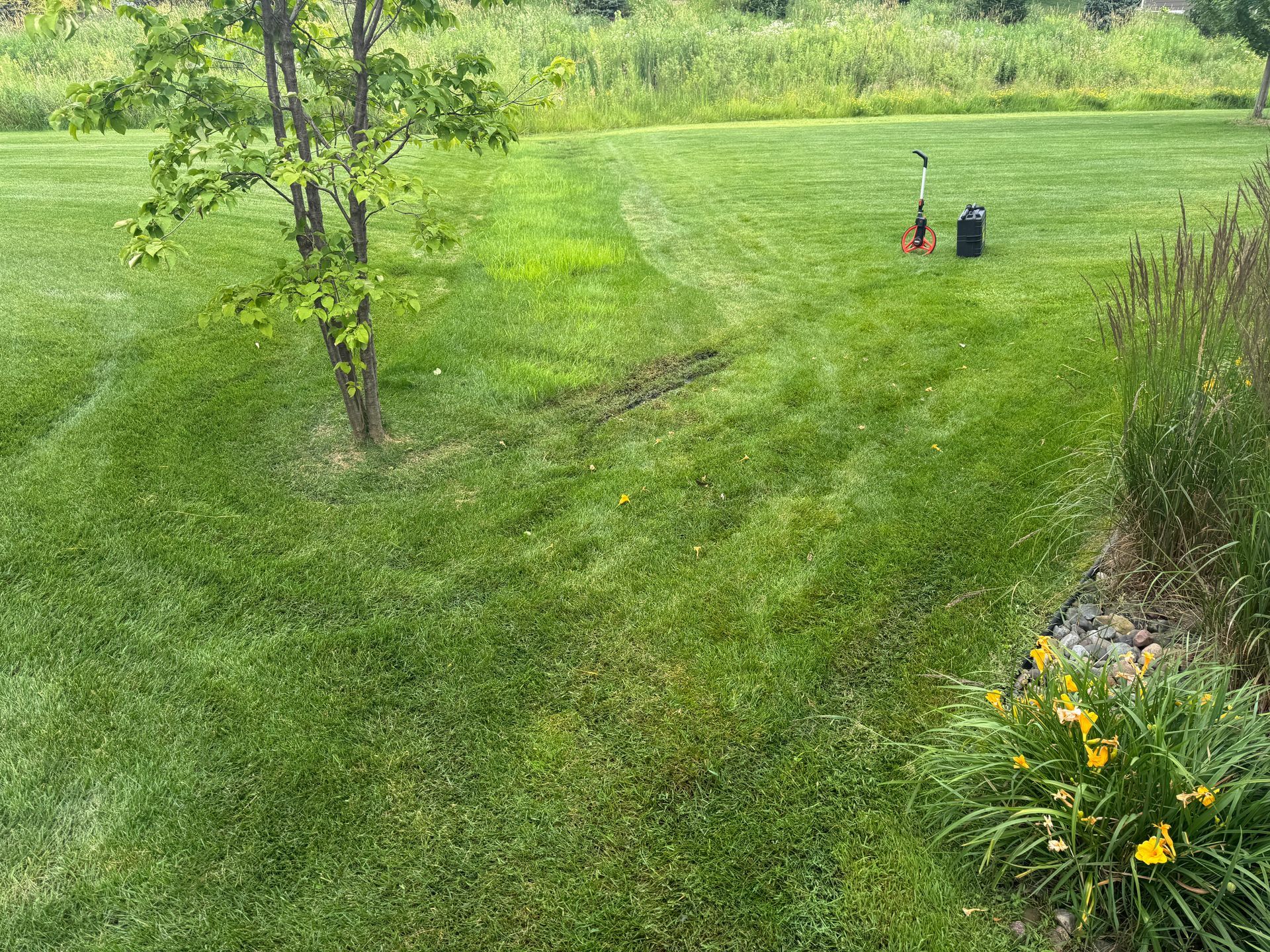
This project took place in North Oaks Minnesota in a very nice newly developed neighborhood, where all of the homes were built within the last 10 years. The homeowner was experiencing a large wet strip of lawn space in their backyard along the property line that was way too wet to even walk in. So, this customer reached out to KG Landscape to see how we could help.
After performing an onsite outdoor drainage consultation with the customer to perform a careful evaluation of the precise issues taking place, existing slope of the yard, soil types and evaluating the amount of water needing to be managed, our expert team developed a custom solution and proposal to solve the underlying issue forever.
This case study outlines the lawn drainage problem, the options considered, and a step-by-step explanation of how the final solution was installed
The Problem - Lot Sits Lower than Neighbors
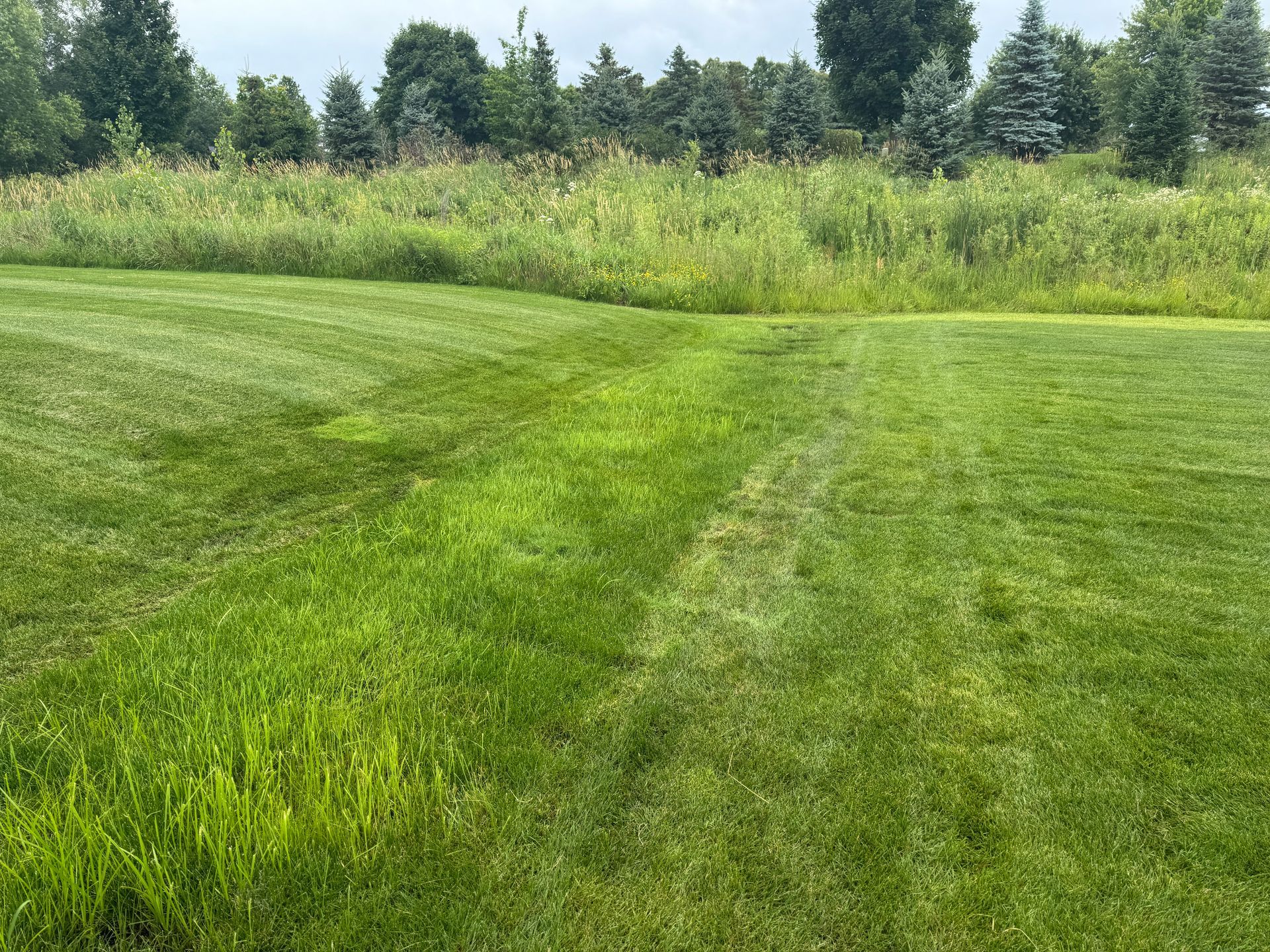
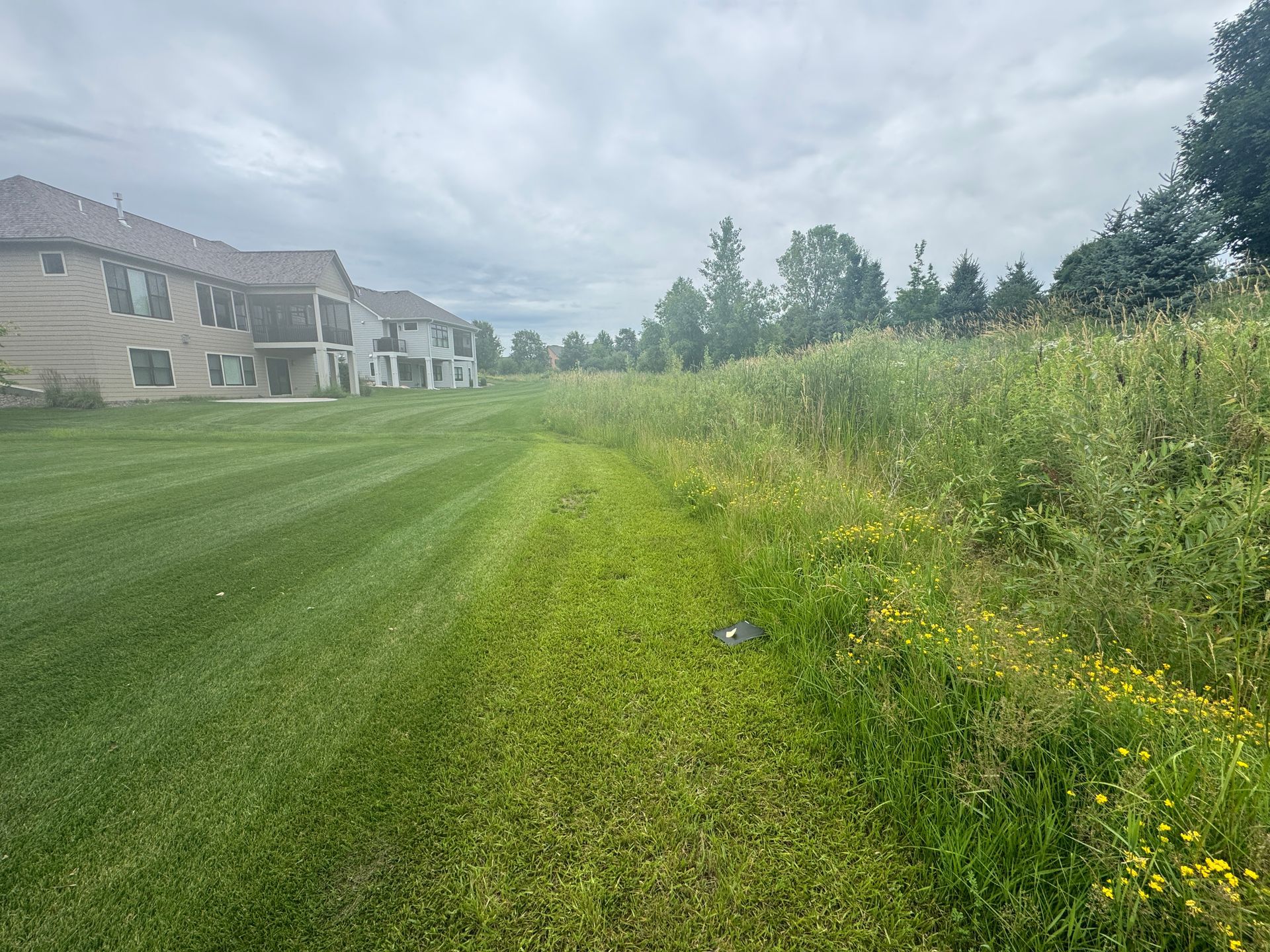
Our customer had an extremely wet section of lawn space in his backyard along an existing property line swale that was graded by the builder / developer. This Swale collected water not only from the customers yard and roof, but also received water from several additional adjacent neighbors yards and roofs that are higher in elevation and drain into his yard. The existing slightly graded swale was designed to send water to the naturalized area in the far back of the lot. However, the swale was so ineffective our customer was physically unable to mow this strip of grass without causing major lawn damage and experiencing mud up to his ankles.
The problem comes down to a few key factors:
- Drain large volume of water - This section of backyard swale space has to handle large volumes of water running into from our customers yard and several adjacent properties.
- Not enough pitch in swale - The swale as built does not contain enough slope to sufficiently send water back into the naturalized space without extreme amounts of water soaking into ground within the swale, causing wet and muddy lawn space for weeks after rain event.
- Outlet area not low enough - The naturalized area where water is meant to drain into from this swale, is not low enough in elevation to allow for proper surface grading of the swale.


How we Determined the Best Plan for Our Customer After Weighing all Options
At KG Landscape, we take a lot of pride in not only educating our customers on each of the available options that would improve their drainage problems in North Oaks MN, but helping them find the solution option that is the best fit possible given the goals and budget discussed during our consultation. This is easier said than done as a lot of thoughtful consideration takes place for every outdoor drainage situation we evaluate.
Below, is a list of other options that could have been appropriate solutions to solve this exact drainage problem. We will show you why the customer ultimately did not go with these options and instead decided on the French Drain we recommended as our Option #1 preferred solution to solve their unique training problem given all the factors outlined above.
Options we considered, chose not to recommend, and why:
Drain Tile
- We considered drain tile within the existing swale as "good," and also the lowest cost viable option to improve the drainage problem. Yes, drain tile would have improved these issues, but drain tile is not as robust of a solution for a swale as slight sloped as this one, and with such a large volume of water draining in from neighbors yards. So in this case, drain tile alone wasn't the best option.
Regrading Only
- The naturalized space wasn't low enough to drastically increase the slope of the swale. Our team felt that gains that would be achieved by minor grading improvements alone, would not be enough to fix the issue long term.
Dry Creek Bed
- Turning this entire strip of poorly drained lawn swale into a Dry Creek bed, would have certainly solved the muddy lawn problem. A dry creek bed covered with rock, with built in drainage below would worked great. And rock doesn't need to be mowed of course, so if the rock is wet, it's not a problem anyway.
- However, installing a new dry creek bed drainage feature, along the property line in this specific scenario, without a large redesign/planting around it, did not fit ideally with the aesthetics of the adjoined backyard lawn spaces. To do this in a beautiful way that looks intentional, the cost is much higher than a French drain.
Rain Garden
- Turning this entire strip of poorly drained Swale into a Dry Creek bed certainly would have solved this issue by converting this wet lawn area to a rock bed with built in drainage. however a large Turkey Creek but along the property line did not really fit ideally with the Aesthetics of the adjoined backyard lawn spaces.
Our Top Recommendation for this Scenario: A French Drain with light Regrading Work to Fine Tune Swale
Our Solution
After thoughtful consideration are design team recommended a French drain as the best long term drainage solution this customer and scenario. In addition to the French drain, we included light regrading of the swale, as well as carving out soil around the French drain outlet (end of pipe) within the naturized space to provide a new lower space for water from the French drain to discharge.
Why a French Drain was the Best Option
A French drain is best used to drain subsurface water that is concentrated along an elongated strip of wet yard space, such as a narrow side yard with limited slope to drain surface water, or in this case a slightly sloped swale.
1) French drains help drain slightly pitched swales like this one, by providing an underground pathway for the slow moving water that saturates the soil in the center of the swale and path of least resistance and route to drain out and away from the problem area in the swale.
2) French drains have a very large capacity to drain water because of the large trench backfilled with drainage rock, and are much more durable long term that drain tile because of the heavy duty filtration fabric liner wrapped around the entire system of rock and perforated pipe.
3) French drains can pull water from super saturated soils easily up to 10 ft on either side of the French drain, helping drain an area roughly 20' wide. The soils closest to the French drain will demonstrate the fastest ability to drain and show the greatest improvements in subsurface drainage.
In addition to the French drain they were light grading improvements that we were able to make after measuring the slope divided by the length of the Swale that will speed up the flow of water and increase the effectiveness of this area to drain surface water in addition to the protection from supersaturated subsurface water in the soils offered by the primary solution which is the French drain self.
Below is a set of Step by Step photos showing how our French drain was constructed for this customer in North Oaks Minnesota.
We used all forms of social media to meet the audience in their most comfortable locations, and talked in their own language.



Related Projects